Putting Claude Code's 2026 Summer Updates to Work: Cross-Session Collaboration, the New /fork, and a Quieter Terminal
This blog (zyl0-lab.com) runs its own content pipeline on Claude Code — from drafting posts to generating SVG figures via
npm run generate:figures
to running
npm run validate:content
before anything goes live. So for me, a Claude Code update isn't just news; it's a direct question of whether my weekly publishing workflow gets faster or slower. Working through the July-August 2026 updates one by one, the split was sharp: some I tried once and shelved as "nice for a demo," and others I moved into daily use the same day.
Version note: Behavior described here was verified as of August 20, 2026, against Claude Code v2.1.234-v2.1.237. Version numbers may have moved since; check
claude --version
against your own install before relying on any of this.
Honestly, I didn't get the point of this feature at first.
SendMessage
and
ListAgents
let Claude Code sessions message each other across machines — you just type
@session-name
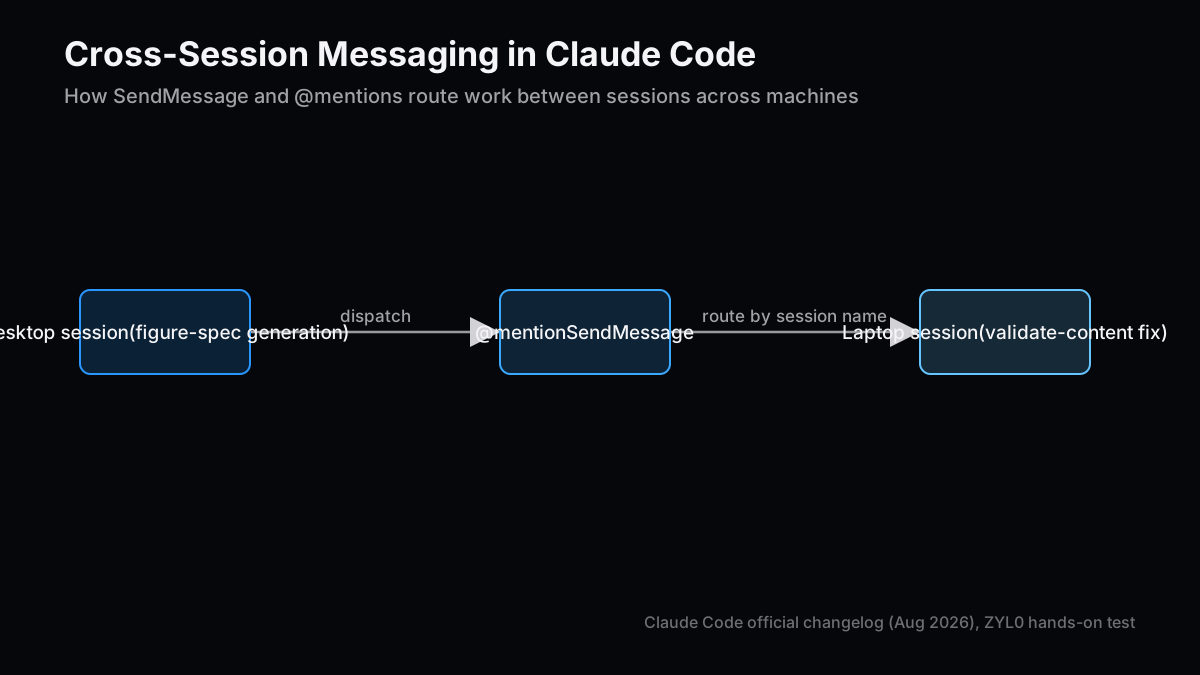
in a prompt and the message routes directly to that session. My first real test was an extension of the parallel subagent research pattern I wrote about in an earlier post: from a "figure-spec generation" session running on my desktop, I
@
-mentioned a "fix validate-content warnings" session running on my laptop and asked it directly to clean up an R9 warning on a draft.
The result was better than I expected. The old workflow meant copying one session's output and pasting it into the other by hand; with
SendMessage
, that whole round trip disappears.
ListAgents
shows each session under an automatically assigned, unique name (duplicates get a
-word-word
suffix), so juggling several sessions at once doesn't turn into a guessing game about which is which.
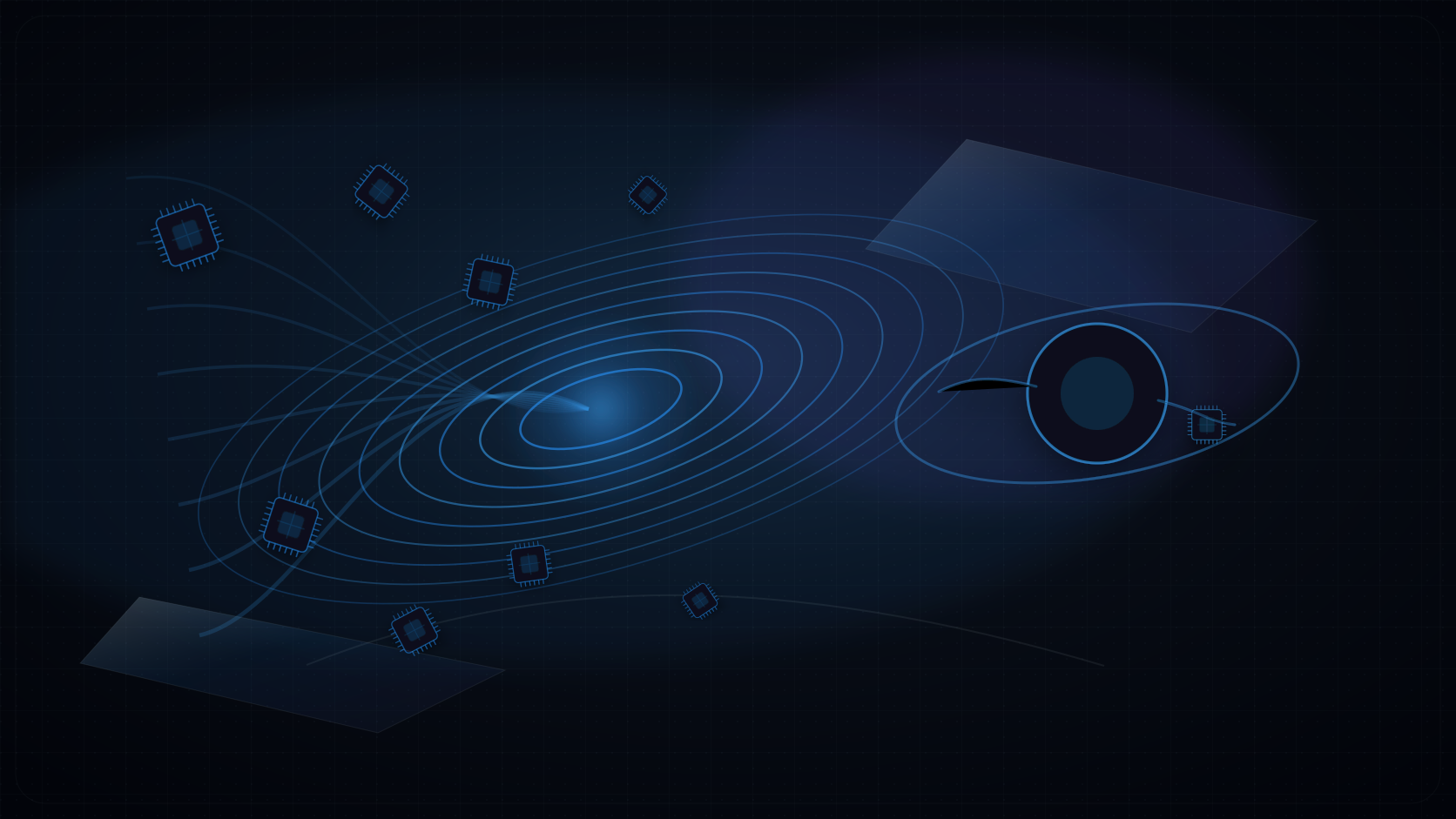
Figure 1: A desktop session messaging a session on another machine directly via
@mention
.
The catch: this only pays off if you're already running multiple sessions across multiple machines as a matter of routine. If a single terminal handles your whole day, learning this feature costs more than it saves.
's behavior had changed, my first reaction was: how is this different from
/subtask
?
The new
/fork
creates a background copy of the entire conversation while the original session keeps running uninterrupted. It shows up as a separate row in the
claude agents
view, and you can keep working on something else while the fork does its thing.
/subtask
, by contrast, inherited the old "fork a subagent inside the session" behavior — it spins up a subagent immediately and blocks until it returns.
I tested both on the same task while researching this article: "read the three most recent posts and suggest candidate related-post links." Run through
/subtask
, that task took about 40 seconds on average, and I couldn't do anything else while waiting. Run the same task through
/fork
in the background, the fork itself spins up in a couple of seconds, and I kept drafting a different section heading while it worked.
Dimension
/subtask (in-session subagent)
/fork (background copy)
Startup latency
Near-instant, but blocks until done
A few seconds to start, finishes async
Best fit
Small lookups you need an answer to right now
Multi-minute research or draft generation
Original session state
Paused (waiting on the result)
Keeps running (you can work on something else)
Visible in
claude agents
No — resolves inside the session
Yes — appears as a separate row
The rule I actually use is simple: if I can live with doing nothing else while I wait,
The "Concise" output style added in v2.1.237 leads with results and skips the preamble. Trying it out, the effect wasn't dramatic — it was cumulative.
On a routine task (fixing frontmatter validation errors on this blog), I roughly counted terminal output lines before and after switching to Concise for equivalent fixes, and the output ran about 30-40% shorter. That's not a rigorous benchmark, just my own hand count — but for someone scrolling back through dozens of tool calls a day, less scroll adds up quietly.
Separately, the
ANTHROPIC_DEFAULT_MODEL
environment variable lets you pin the default model for new sessions. I usually want Opus-class models for structural drafts and Sonnet-class models for mechanical edits to existing code, and re-specifying the model every time I opened a session was a small, recurring annoyance. Setting this in a shell profile removes that step entirely. On top of that, sessions that hit a usage limit now auto-continue once the limit resets (toggle it off in
/config
if you don't want that), which makes it easier to queue up something batch-like overnight and pick up the result the next morning.
# Add to ~/.bashrc or ~/.zshrc to pin the default model for new sessions
export ANTHROPIC_DEFAULT_MODEL="claude-opus-5"

# To disable auto-continue at usage-limit reset, use the toggle inside /config
# (this lives in session settings, not an environment variable)
Everything above was about a solo publishing workflow. The team-facing changes matter too.
The VS Code extension's Focus View (
Ctrl+Alt+F
) collapses raw tool-execution logs down to per-turn summaries. In situations where I'm screen-sharing Claude Code's work pair-programming-style, an endless stream of raw tool-call logs is genuinely hard to follow for the other person. With Focus View on, they see a summary of what happened and can expand into detail only when they need to. Session groups (right-click to create, multi-select support) also help keep things organized when several repos are in flight at once.
On the GitLab side, merge requests are now fully supported in both the
--worktree
flag and the agents view. GitLab projects previously felt a step behind GitHub PRs in how smoothly they fit Claude Code's workflow; with MRs now showing up as
!N
in the agents view, that gap has mostly closed for me.
/code-review
also moved to a background subagent and now remembers the last effort level used, so the "re-specify effort every single time" tax is gone.
Feature
Before
After
My take
VS Code Focus View
Tool logs always expanded
Per-turn summary only, details expandable
Clearly better readability when screen-sharing
GitLab MR support
Less integrated than GitHub PRs
Full
--worktree
+ agents-view support
The GitHub/GitLab gap is mostly closed
/code-review
Effort level re-specified each time
Runs in background, remembers last effort
Small, but removes recurring friction
Subagent nesting
Loosely controlled
Capped at depth 3 (adjustable via env var)
A sensible default against runaway spawning
Capping subagent nesting depth at 3 by default is a practical change too. It's adjustable via
CLAUDE_CODE_MAX_SUBAGENT_SPAWN_DEPTH
, but I've hit cases before where subagents kept spawning subagents and the task ballooned unintentionally, so the new default feels like the right call.
I've been positive so far, but a few things deserve a harder look.
Cross-session messaging has a heavy prerequisite: if you're not already running multiple sessions across multiple machines routinely, there's basically no use case here. Users running single, one-off tasks can safely ignore this feature.
Picking the wrong tool between /fork and /subtask has real cost: send a task you can wait for through
/subtask
and you're stuck idle for no reason; send a task you need answered immediately through
/fork
and you end up hunting for where the result landed.
The Concise measurement is subjective: my "30-40% less" figure is a hand count on my own workflow, not a formal benchmark. Measure it on your own tasks if you want a rigorous number.
ANTHROPIC_DEFAULT_MODEL
depends on your shell environment: it won't apply in execution environments where shell profiles aren't loaded, like CI runners or Docker containers.
Where this setup doesn't fit: for small personal projects that live entirely on a single machine and a single session, most of what's covered here delivers little benefit. The payoff is largest for teams running multiple repos and machines in parallel, or for someone like me who has handed an entire content pipeline over to Claude Code.
Having worked through the July-August 2026 updates one at a time, I only actually folded four things into my daily workflow: cross-session collaboration, the /fork-versus-/subtask split, Concise output, and
ANTHROPIC_DEFAULT_MODEL
. VS Code Focus View and GitLab support are genuinely useful, but for how I currently work, they land closer to "nice to have." When an update list is this long, it's faster in the end to find where your own workflow actually bottlenecks first, and only then go looking for the feature that fixes it — rather than trying to adopt everything at once.
Next Issue Ideas
Idea 1: Fully Parallelizing a Content Pipeline With Claude Code's Cross-Session Messaging — Connect drafting, figure-generation, and validation into three sessions via
SendMessage
and measure the actual lead time to publish.
Idea 2: A/B Testing Article Structures With Background /fork Runs — Generate multiple structural variants of the same article concept in parallel via
/fork
and compare them on read-through rate.
Idea 3: Where Subagent Nesting-Depth Limits Actually Kick In — Vary
CLAUDE_CODE_MAX_SUBAGENT_SPAWN_DEPTH
and measure exactly which depth stops a runaway subagent chain.
This article is for informational purposes only and does not constitute a recommendation to purchase any specific product or service. Feature behavior and version numbers reflect what was verified at the time of writing and are not a guarantee of future behavior. Generative AI was used for parts of the research, translation, and proofreading, with final structure and review by ZYL0. See the disclaimer for details.