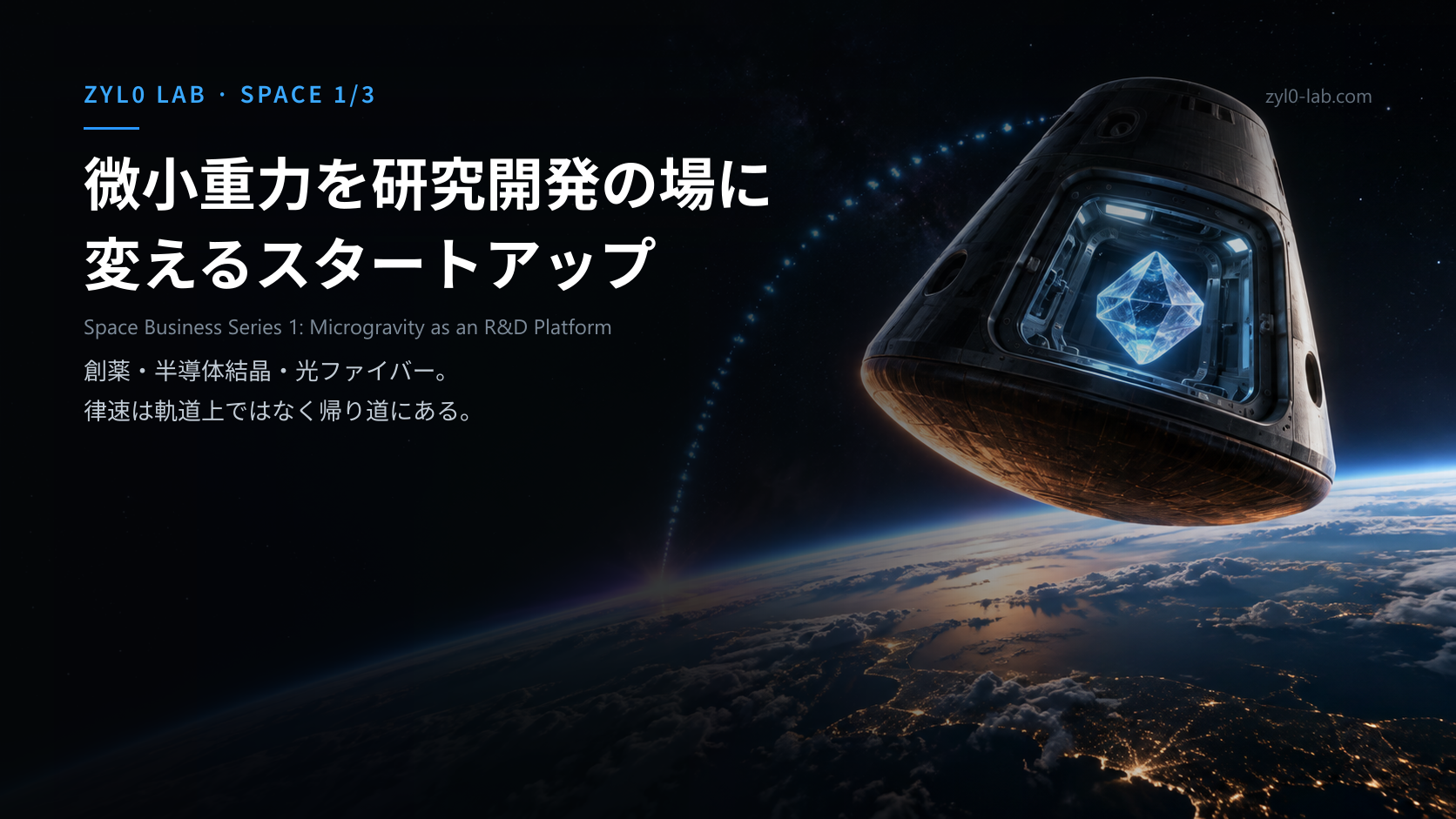
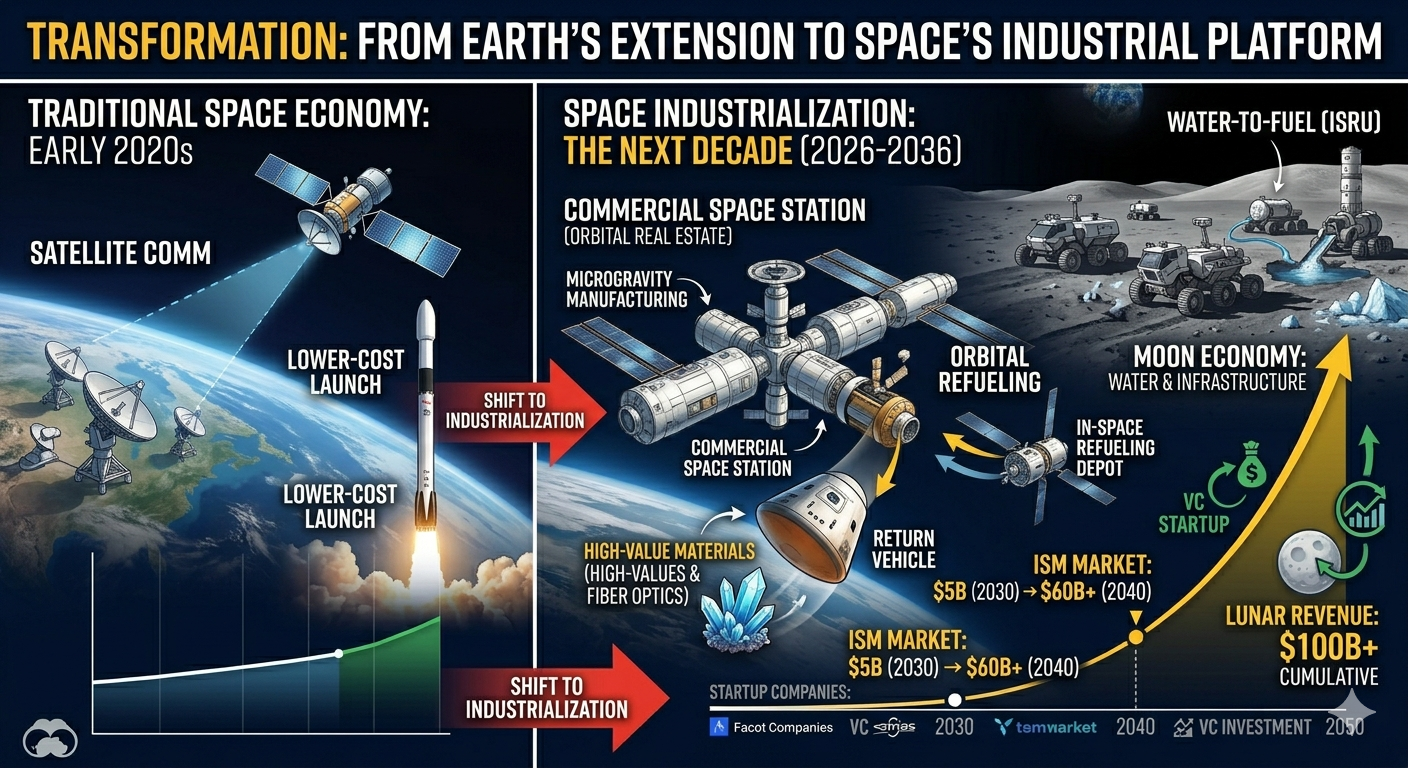
When I wrote eight megatrends in space startup investing in March, I filled the in-space manufacturing section with market forecasts: $62.8 billion to $135.3 billion by 2040. Reading it again six months later, that table proves nothing. So this time I am setting the forecasts aside and starting from a plainer count: how many times has anyone flown, and what actually came back?
Note: this piece is an outside-in read based solely on public information — company releases, product pages, papers, and press coverage.
As of October 11, 2026. Round sizes, valuations and flight records come from company announcements and press reports; anything reported but not confirmed is flagged. Yen amounts are converted at a rough ¥150 to the dollar, and the evidence stages are my own judgment.
Let me state my yardstick first. A process becomes a business only once it repeats.
When I worked on automotive EEPROM process development, one clean cross-section never justified a move to production. What mattered was getting the same result lot after lot. I look at research and manufacturing in orbit the same way. One flight is one lot. A process that flies twice a year is a pilot line that can run two lots a year.
In my advanced-substrate post I used a ladder of evidence. Translated to microgravity, it looks like this.
| Stage | Evidence you can see | What you still cannot say |
|---|
| 1. ISS experiment | A crystal or fiber was made once | Whether it repeats on the company's own kit |
| 2. Own-vehicle demo | The company's satellite or capsule worked in orbit | Whether the product comes home intact |
| 3. Return | Product recovered and measured on the ground | Whether it repeats under the same conditions |
| 4. Repeat flights | The same process flown several times | Whether anyone but a government pays |
| 5. Recurring customers | Commercial reorders, adoption in a product | What the margins will be |
This series reads the next ten years of space business in three parts.
| Part | Theme | Core question |
|---|
| ① (this post) | R&D and manufacturing in microgravity | What came back, and who is paying? |
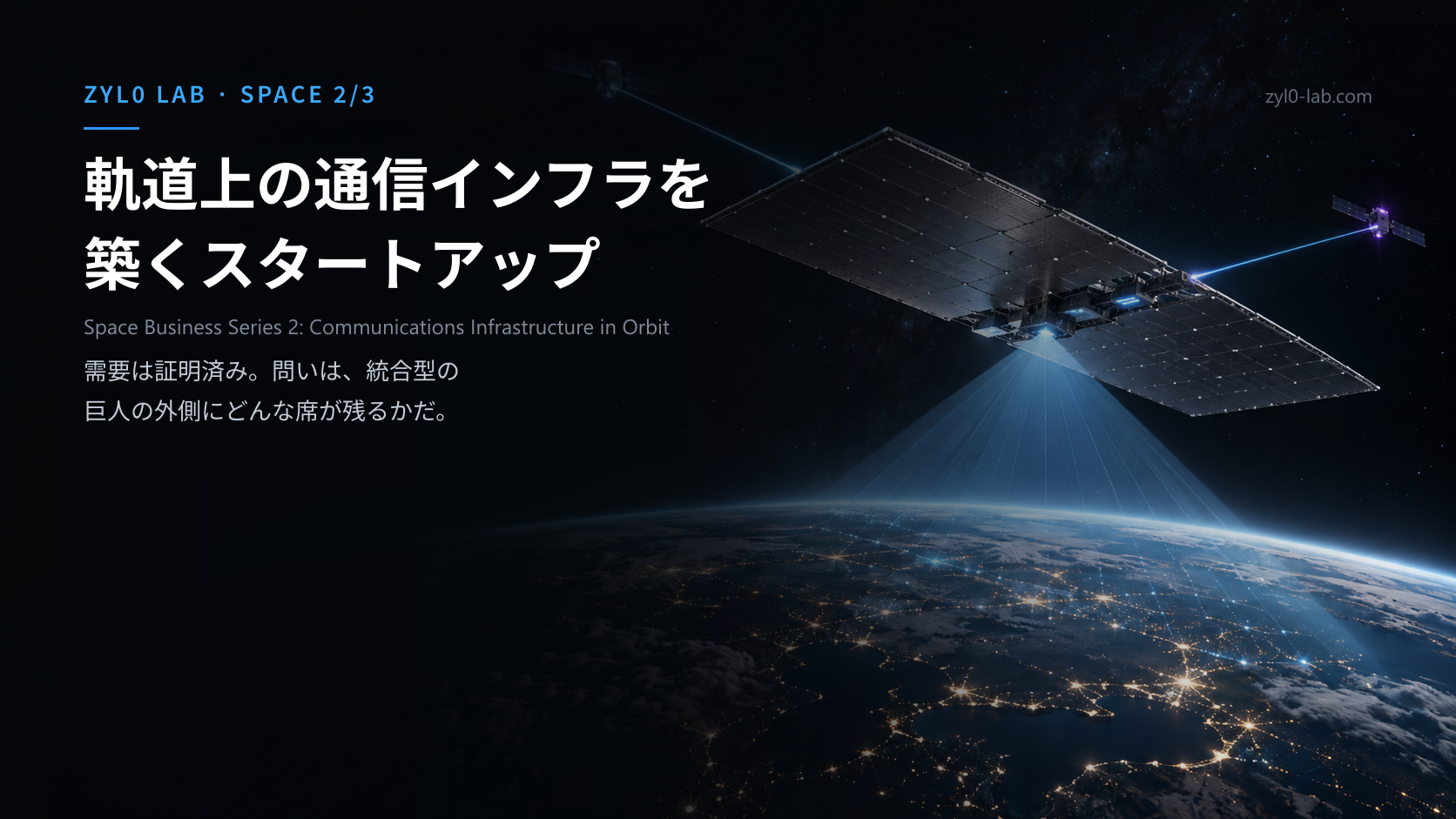
| ② | Communications infrastructure | Who lays the links in orbit, and who uses them? |
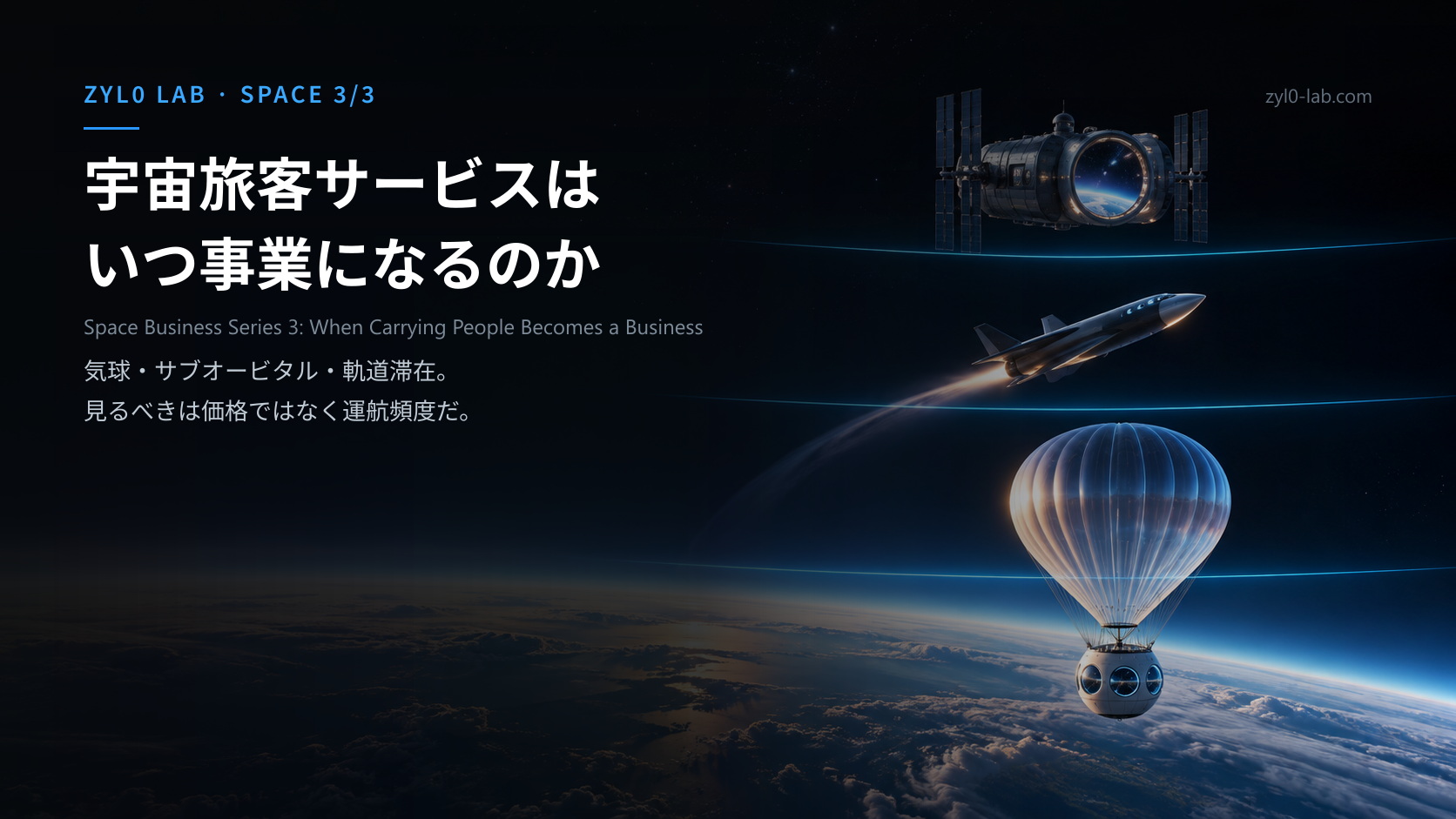
| ③ | Passenger services | When does carrying people start to pay? |
The money backdrop matters too. By Seraphim Space's count, investment in space reached $7.5 billion in the second quarter of 2026 and a record $23 billion over the twelve months to June. Seraphim notes that nine of the quarter's ten largest financings went to capital-intensive companies. Space Capital, meanwhile, counts $31.6 billion across 129 companies for the same quarter, because it includes the application layer built on satellite data. That fourfold gap is a difference of definition, not of sentiment.
Carta's Q1 2026 report found that more than 60% of the $30.4 billion raised on its platform went to AI companies, and that the median Series A valuation for non-AI companies was $55 million. Space hardware startups sit on the side of the table that shares the remaining 40% with every other industry. Keep that in mind when reading the round sizes below.
What surprised me on a second look is that the clearest demonstrated benefit was not an orbital factory at all. It was a result that went back into a process on the ground.
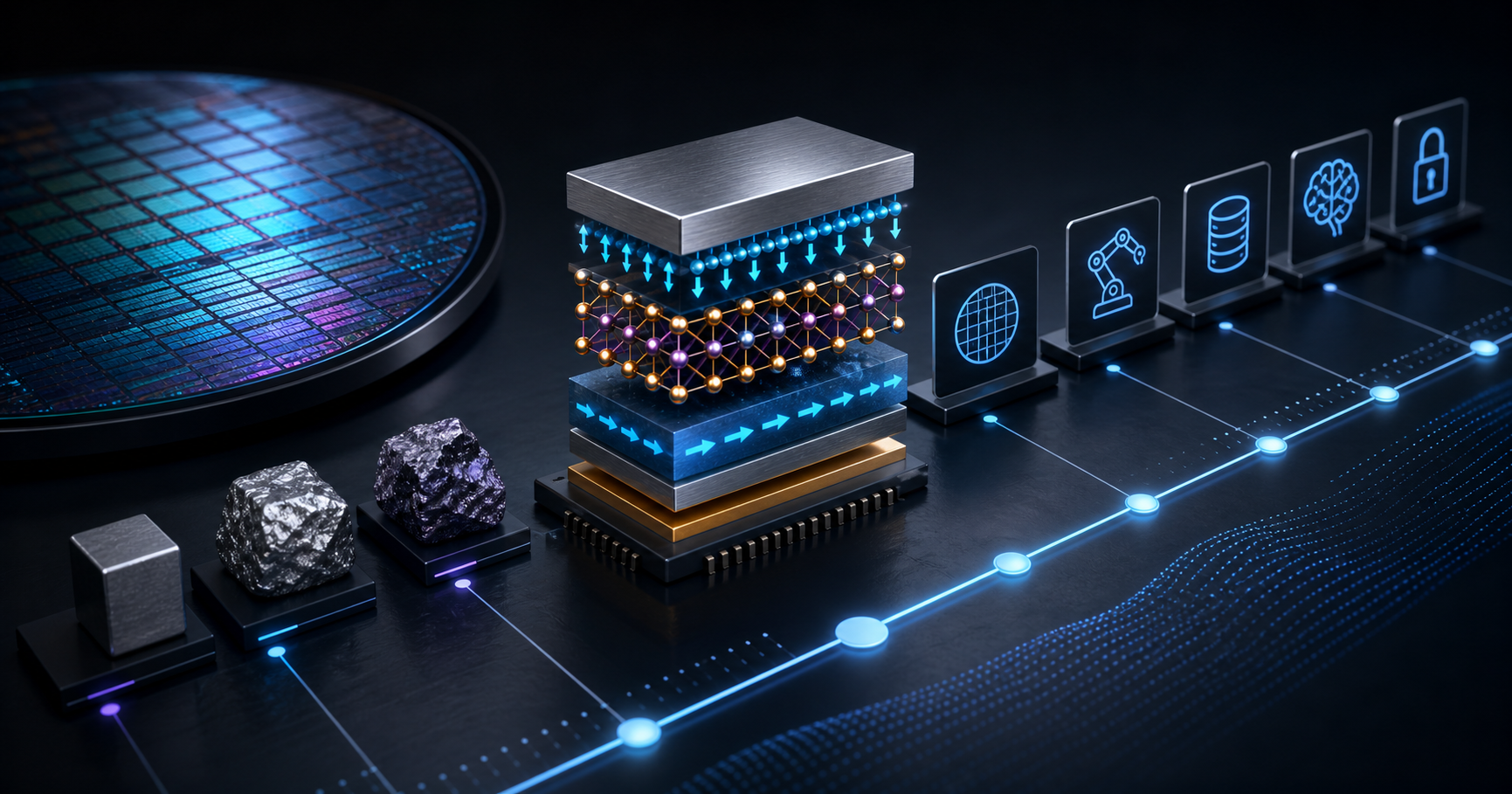
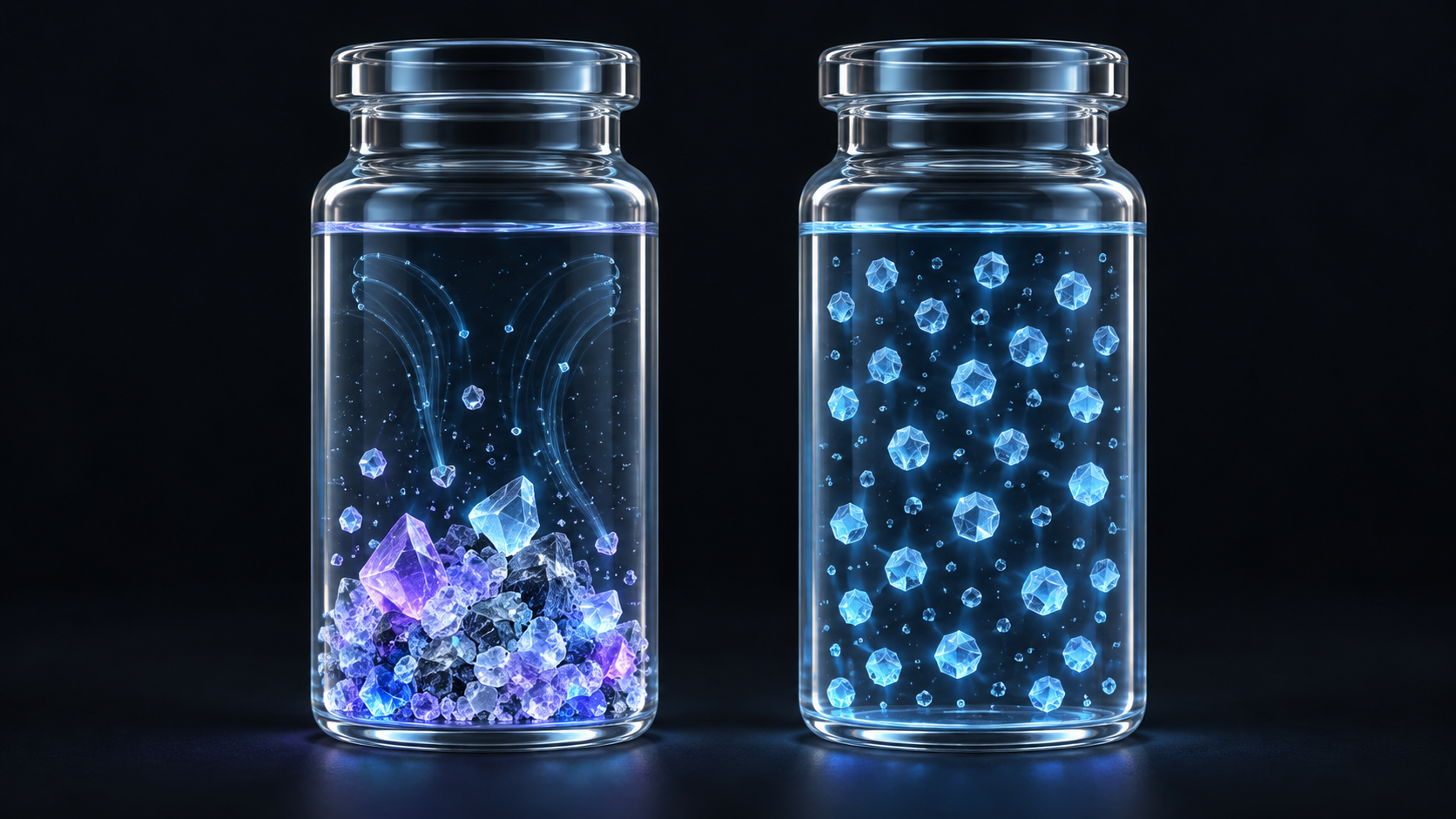
Take gravity nearly to zero and three things happen. Heavy particles stop sinking. Temperature differences stop driving convection. And a liquid can be held without touching a container wall. Crystals grow slowly and evenly; glass can be drawn thin before it crystallizes.
Merck researchers tried crystallizing the cancer drug pembrolizumab (Keytruda) on the ISS. According to the paper they published in 2019, the ground control split into two particle-size peaks at 13 and 102 micrometers, while the orbital samples produced a crystalline suspension of uniform size. The important part is what came next: the finding was used to rethink crystallization on Earth. Nobody mass-produced a drug in orbit.
Here is the best public evidence for each application, next to the homework that remains.
| Application | What microgravity changes | Public evidence | What is still missing |
|---|
| Drug crystallization | Uniform particle size, new crystal forms | Merck's paper; ritonavir crystals on Varda's first flight; Redwire's PIL-BOX | Approval of a product with an orbital process step |
| Semiconductor seed crystals | Potentially fewer defects | Space Forge reports 100+ plasma runs on its own satellite | Third-party measurement of returned material |
| Optical fiber (ZBLAN) | Drawing fiber without crystallization | Flawless Photonics made 11.9 km on the ISS in about a month (NASA) | Published loss data that beats ground-made fiber |
The fiber case is good practice in reading numbers. 11.9 kilometers is a real quantity. But in the same announcement NASA said that whether the fiber meets the goal of ten times the quality of ground-made product would have to wait for analysis after return. Evidence of quantity and evidence of quality belong in separate columns.
Redwire offers the most useful hint about the shape of the business. It set up a drug-development venture, SpaceMD, in August 2025. In an August 2026 announcement it said 54 of its small PIL-BOX crystallizers had flown to the ISS since November 2023 and had crystallized 45 distinct compounds. What it sells is not a drug. It sells or licenses seed crystals grown in orbit to drug makers, who then do the volume manufacturing on the ground.
That stopped me for a moment. If what comes home is a few grams of seed crystal, this is less a factory than a research service that generates intellectual property. It is a different business from the ton-scale logistics that the phrase "space factory" suggests.
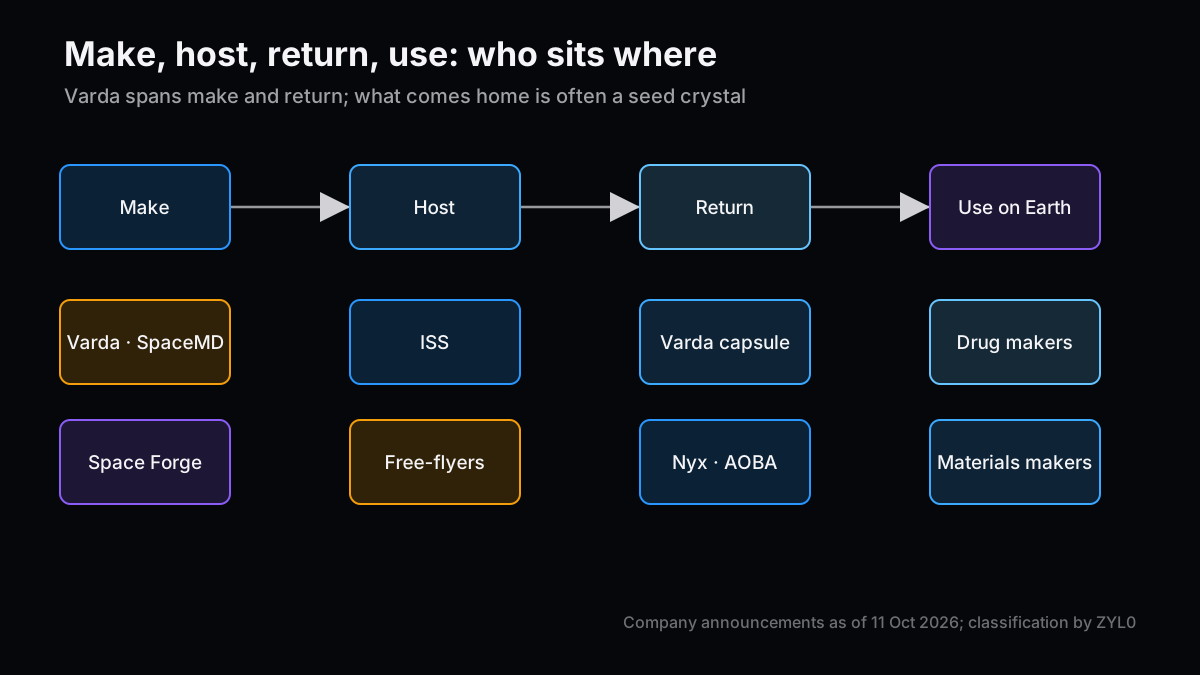
Once I lined the companies up, the money turned out to sit with those that bring things back, more than with those that make things.
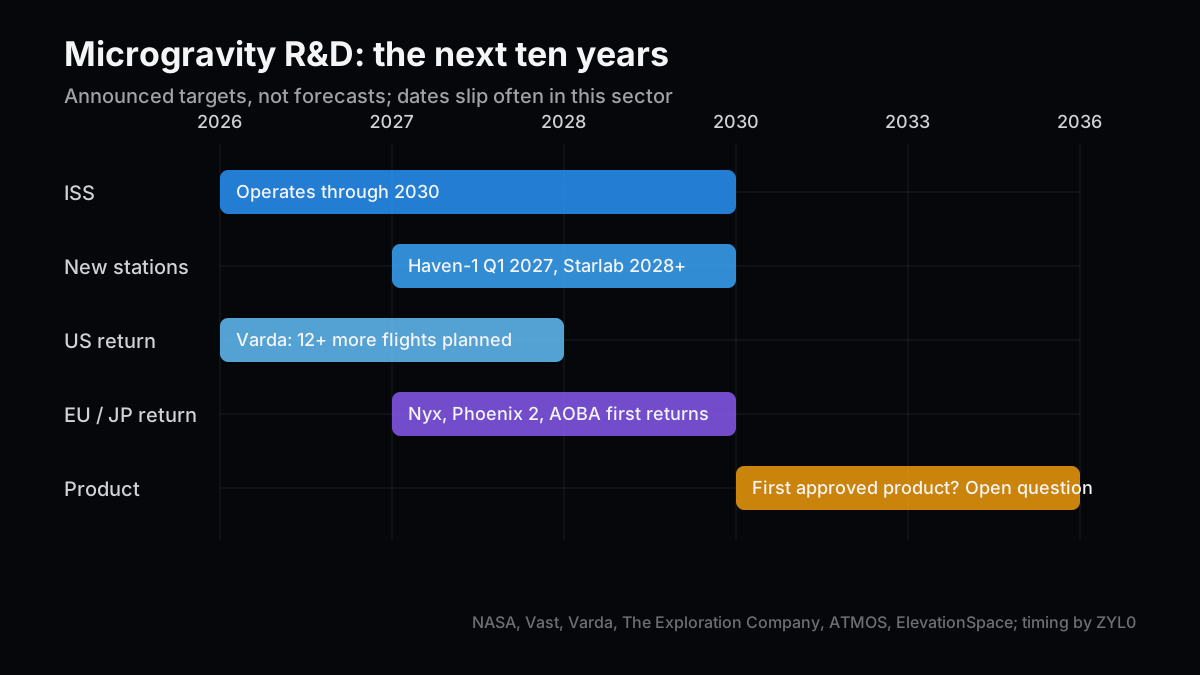
Varda, in the US, builds its processing hardware, satellite bus and re-entry capsule under one roof. It has completed six successful re-entries since its first flight in 2023. That first mission, W-1, launched in June 2023 but stayed in orbit for about eight months waiting for permission to land, and came home in February 2024. It is a clean example of a license, not a technology, setting the pace.
The most recent flight, W-6, landed at the Koonibba Test Range in South Australia on May 19, 2026. Southern Launch, which runs the range, says it was the fourth Varda capsule to land there in just over twelve months. Look at the cargo, though. W-6 carried thermal-protection experiments for NASA and other US government partners, funded through Prometheus, an Air Force Research Laboratory program.
In other words, the customer reliably paying cash today is not a drug company. It is a government that wants to test hypersonic re-entry conditions. I do not read that as a weakness. Using government demand to build flight count, and using that flight count to mature the pharmaceutical process, is a sensible order of operations.
On September 30 the company announced a $251 million Series D led by Lux Capital and Natural Capital, with Founders Fund, Khosla Ventures, General Catalyst and others participating. That brings total funding to $598 million, at a reported valuation of $1.6 billion. It plans more than a dozen further launches and re-entries through 2028.
Space Forge, based in Wales, raised a $30 million Series A led by the NATO Innovation Fund in May 2025, at a reported valuation above $200 million. It launched ForgeStar-1 that June, and says the satellite's growth chamber has generated plasma more than 100 times in orbit.
ForgeStar-1 was never designed to come home, however. Return depends on Pridwen, a folding heat shield. In June 2026 the company secured £10 million toward it from an ESA technology program, funded through the UK Space Agency. On my ladder this is stage 2: the material has not yet sat on anyone's measurement tool.
As someone who came up through semiconductors, this is what I keep coming back to. You can only talk about crystal quality after measuring defect density in returned material, across several lots. The number of times the plasma lit is evidence that the equipment works. It is not evidence about the material.
Japan's ElevationSpace, a Tohoku University spin-out, raised ¥6.4 billion in a Series B in June 2026, taking its total to ¥10.1 billion, or roughly $67 million. It is developing ELS-R, an uncrewed small satellite that runs experiments and sends them back in a recovery capsule, and ELS-RS, a cargo-return service for crewed outposts. Its first vehicle, AOBA, has passed critical design review and the flight model is being assembled; launch is reported for the second half of 2026 or later. It has also announced collaborations with Axiom Space and Redwire. Its flight evidence is still ahead of it.
The Exploration Company, based in Germany and France, announced a €387 million ($450 million) Series C on September 9. Bessemer Venture Partners, Atomico and the EQT-managed Scaleup Europe Fund led the round, bringing total funding to about $680 million. The company says it holds more than $2 billion in contracts and commitments. The money funds a demonstration in which its reusable Nyx capsule flies to the ISS and returns. The round is still subject to regulatory approvals. A small demonstrator flown in June 2025 re-established contact after re-entry but was lost before splashdown; the company called it a partial success.
Germany's ATMOS Space Cargo comes home on an inflatable decelerator. Its first vehicle, Phoenix 1, flew in April 2025, but a late trajectory change on the launch side put it down roughly 2,000 kilometers offshore, and it was not recovered. Phoenix 2 has slipped from the second half of 2026 to early 2027. Meanwhile, Portugal's regulator has licensed re-entry and recovery operations off Santa Maria in the Azores. The place to come home to is getting permitted ahead of the vehicle.
| Company | Layer | Latest funding | Flight evidence | Stage (my read) |
|---|
| Varda | Make + return | $251M Series D (Sep 2026); $598M total | Six re-entries | 4 |
| Redwire (SpaceMD) | Make | Listed (RDW) | 54 PIL-BOX units to the ISS (company figure) | 3–4 |
| Space Forge | Make | $30M Series A (May 2025) | One satellite, no return yet | 2 |
| The Exploration Company | Return | $450M Series C (Sep 2026); about $680M total | One demonstrator, not recovered | 2 |
| ElevationSpace | Return | ¥6.4B Series B (Jun 2026); ¥10.1B total | Not yet flown | 1–2 |
| ATMOS Space Cargo | Return | €25.7M Series A | One vehicle, not recovered | 2 |
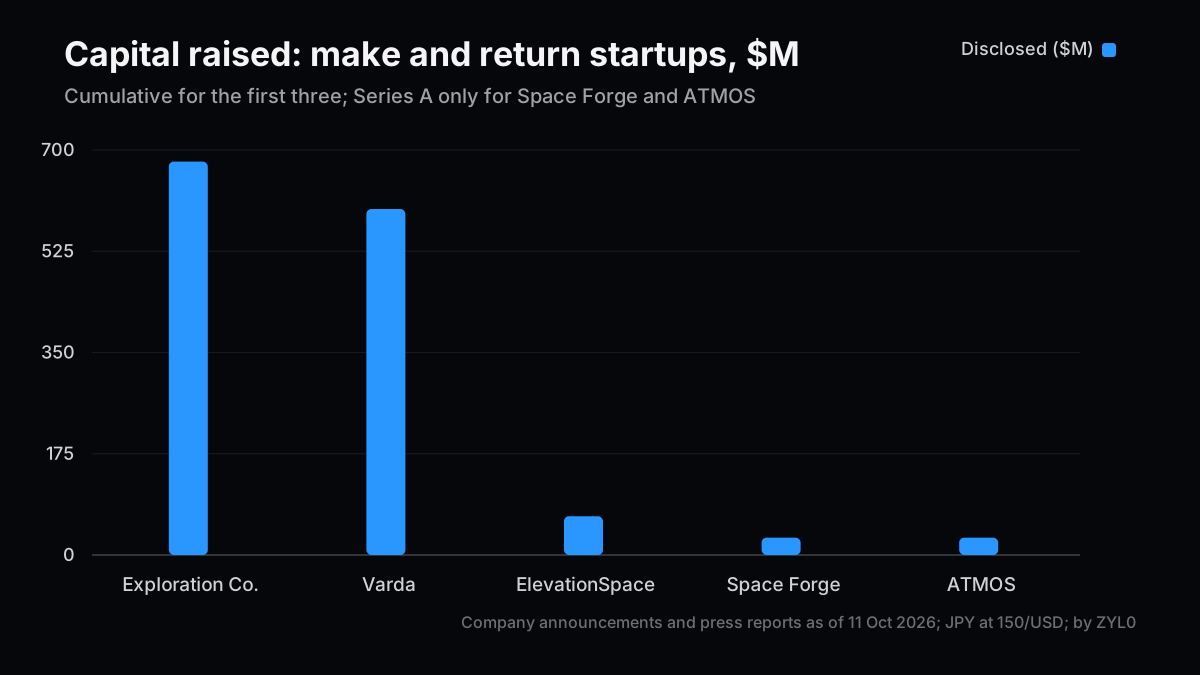
Building that table made something plain. The two companies with the most capital both own a way home, and together they have raised about $1.28 billion (my sum). Space Forge, which concentrates on making, raised roughly one-fortieth of that in its Series A. Investors are pricing the ride home before they price what gets made.
Most experiments still depend on the ISS, which is scheduled to operate through 2030 and then be deorbited. For its commercial successors, NASA published a draft of the second phase of its procurement on July 6, 2026: pick two companies, then narrow to one after 14 to 15 months. Prospective bidders objected to the number of requirements, and as of early October the final solicitation had not been released. The private side is late as well. Vast moved Haven-1 from May 2026 to the first quarter of 2027, and Starlab is not expected to launch before 2028.
I will read the station companies properly in Part 3, as destinations for passengers. Here I want to make only one point: a company that flies on its own and returns on its own is far less exposed to a gap after the ISS.
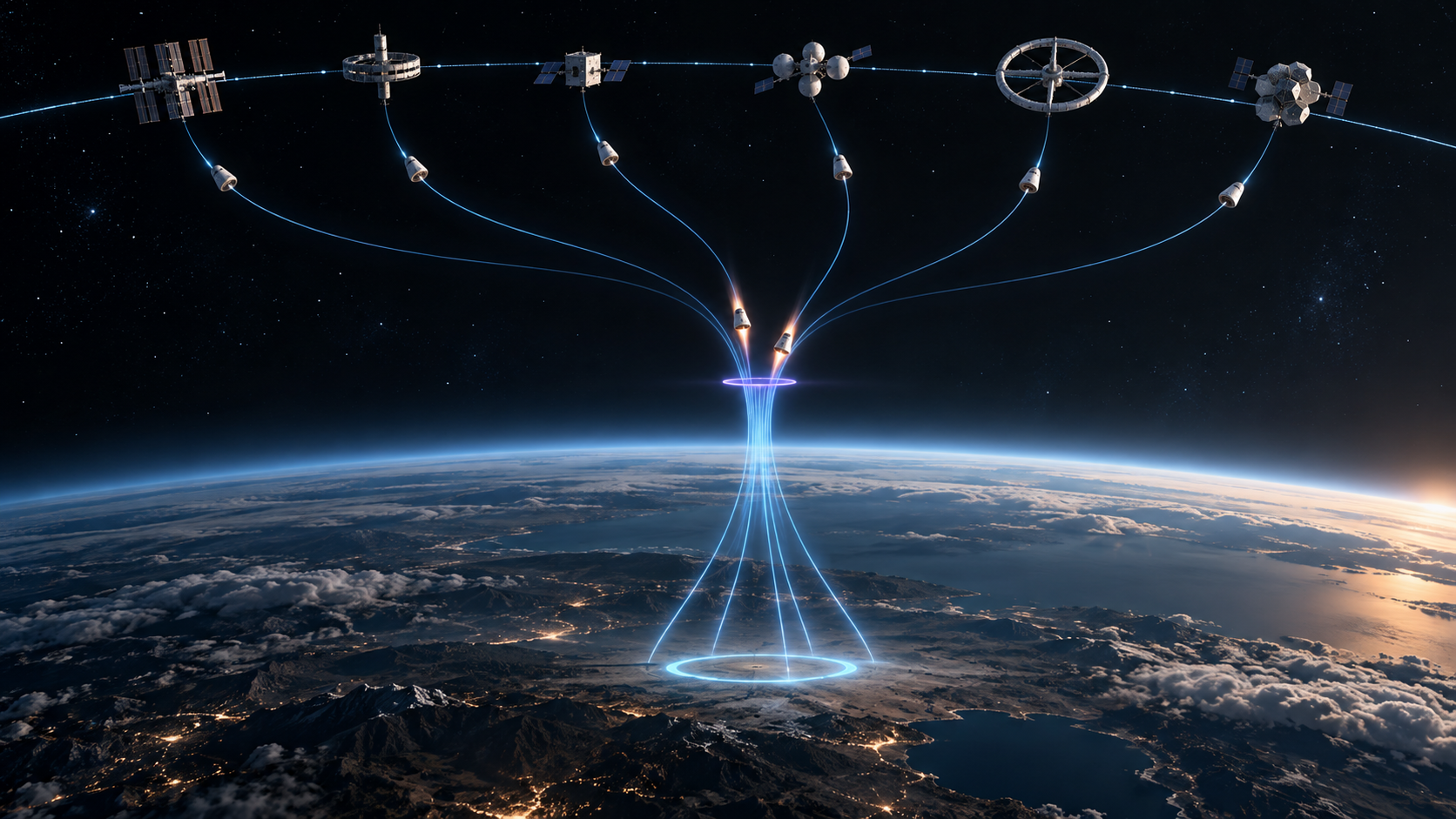
My conclusion first: I am medium-term long the return layer and neutral on revenue from drugs made in orbit.
The reasoning is simple. Whichever maker wins, everyone buys the ride home. And return capsules have a second buyer in hypersonic testing. In Physical AI Series ③ I wrote that the winning robot maker is hard to call, but every winner buys components. The structure here is the same.
"Space-made medicine," by contrast, is running ahead of its evidence. Varda says it expects a drug manufactured in orbit to reach patients, but gives no date. Until an approved product exists, I will not extrapolate that revenue.
Is that really enough? I asked myself. Of the four companies building a way home, only Varda has repeatedly brought product back to the ground on its own vehicle. The other three sit at stages 1 and 2. Saying "long the return layer" when the evidence is complete for exactly one company would be loose. So my long is not a bet on the layer as a whole. It is the kind of position I add to each time another company clears stage 3.
Public-market exposure is thin. Redwire (RDW) owns SpaceMD. Voyager Technologies (VOYG), which leads Starlab, sits on the hosting side. Most of each company's business is elsewhere, so neither is pure exposure to this theme. For now, most of the value will be set in private markets.
| Scenario (2026–2036) | Condition | Evidence to watch | Implication |
|---|
| Base | Microgravity stays a research service; value returns as seed crystals and process know-how | Seed-crystal license counts; government re-entry test orders | Return capsules earn on government demand; making stays a small IP business |
| Main | Around 2030, a drug or material with an orbital process step is approved or adopted | Regulatory filings; commercial reorders; roughly monthly returns | The make layer re-rates; return demand turns commercial |
| Tail (downside) | A gap opens between ISS retirement and its successors, and re-entry licensing clogs | Slippage in NASA's solicitation; time to license re-entry by country | ISS-dependent experiments stall; only self-flying companies remain |
| Tail (upside) | Heavy-lift vehicles cut round-trip transport cost by an order of magnitude | Published price per kilogram returned | Bulk material, not just seed crystals, starts to make sense |
What would change my mind: if a drug maker shows it can reliably reproduce, with ground equipment alone, the crystal form or particle size first found in microgravity. In that case selling seed crystals shrinks to a one-time finder's fee. I would cut my outlook for commercial demand on return capsules and value them on government test demand only.
- Whether Varda discloses the commercial (pharmaceutical) share of payloads on its next flights
- Whether ElevationSpace's AOBA and ATMOS's Phoenix 2 complete a full recovery
- When The Exploration Company's Nyx docks with the ISS and returns
- The final solicitation and selections for the second phase of NASA's commercial station program
- Space Forge's in-orbit Pridwen test, and measurements of returned material
Honestly, having finished this, I am still unsure whether "factory" is the right word for this theme. What is visible today is not a factory. It is a laboratory in orbit and a road home from it. Next time I turn to the layer where the most cash will move over the same decade: communications infrastructure.
Next Issue Ideas
- Idea 1: Backing out the price per kilogram returned — Separate capsule capacity, launch cost and recovery cost from public information, and compare how the economics differ for seed crystals versus bulk material.
- Idea 2: Which country licenses re-entry fastest? — Line up the regimes and lead times in the US, Australia, Portugal and Japan to think about where a return business should be based.
- Idea 3: Hypersonic testing, the hidden buyer — Tally government revenue across the return-capsule companies and read how much of the flight plan through 2028 is filled by government demand.
This article is for informational purposes only and is not investment advice or a recommendation to buy or sell any security. The author may hold securities of companies mentioned. Generative AI was used in parts of the research, writing and translation. Some round sizes and valuations are reported but unconfirmed; totals, conversions and evidence stages are the author's calculations and judgment using the methods described. See the disclaimer for details.