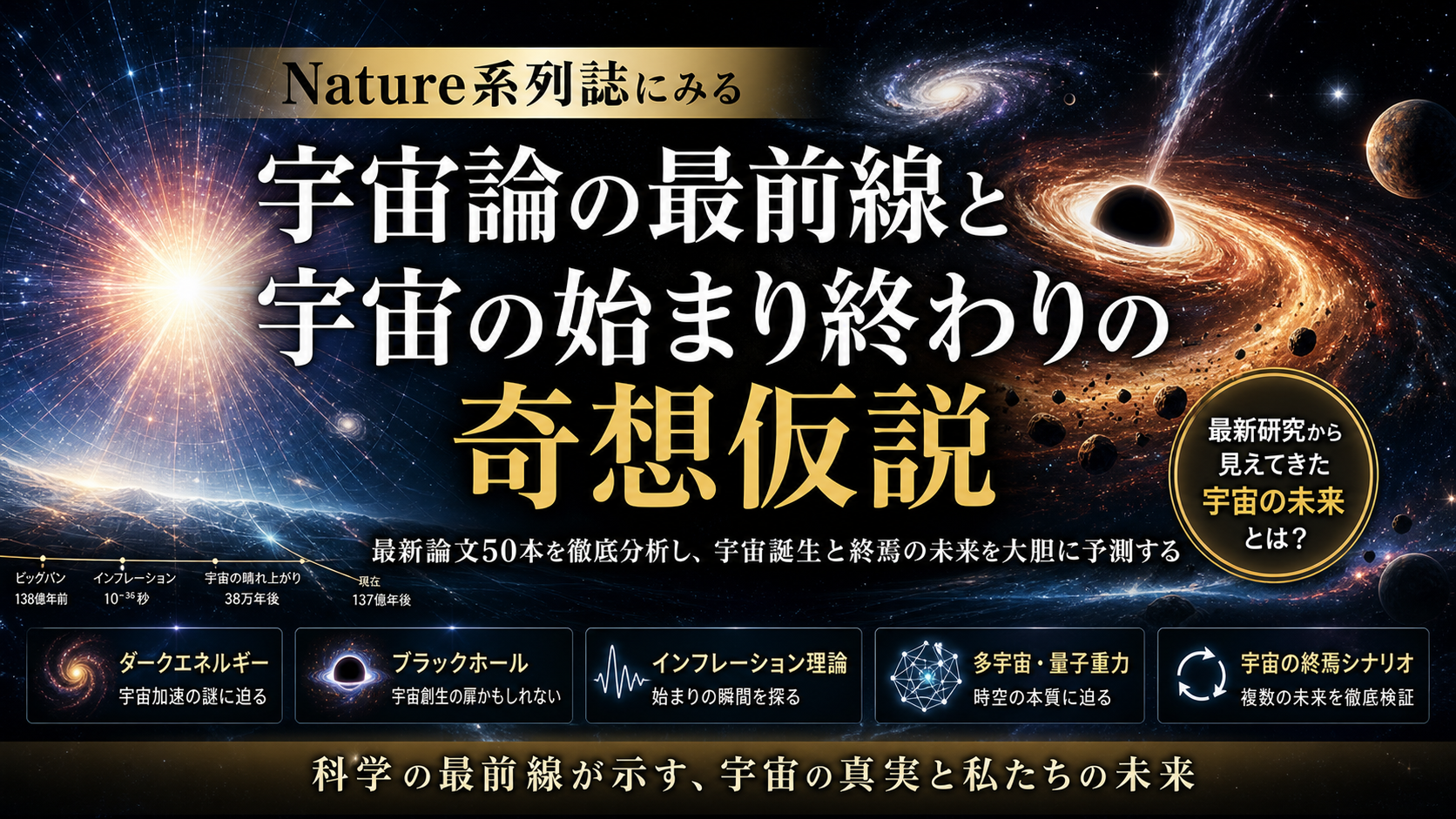
宇宙の終わり、実は分かってないって知ってた?JWSTとDESIが揺さぶる「宇宙の常識」を3つの仮説で解説
私、もともと半導体プロセス開発の出身で、「観測データが理論より先に動く瞬間」を現場で何度も見てきた人間です。今回の宇宙論の話は、まさにその"瞬間"が起きてる気がして、最新論文50本読み込んで素人向けに整理してみました。
「宇宙はビッグバンで始まって、今もずっと膨張してる」——学校でこう習った人、多いよね。
実はこの当たり前、ここ数年でちょっと怪しくなってきてる。
きっかけは2つの新しい観測装置。JWST(ジェイムズ・ウェッブ宇宙望遠鏡) と DESI(ダーク・エネルギー分光器)。前者は「銀河を異常に鮮明に写す巨大カメラ」、後者は「宇宙の3D地図を作る分光装置」みたいなもの。この2つが、これまで完璧に近いと思われていた「宇宙の標準モデル」に小さな、でも無視できないヒビを入れている。
最新の宇宙論論文を50本読み込んで、何が起きてるのかをできる限り素人向けに整理してみた。
宇宙論には ΛCDM(ラムダ・シーディーエム) という標準モデルがある。要するに、宇宙の挙動を 「通常の物質 + 暗黒物質 + 暗黒エネルギー」 の3つで説明する 「宇宙の取扱説明書」。
ここ20年、この説明書はめちゃくちゃよく当たってきた。なのに最近、いくつか「あれ?」が出てる。
代表的なのが 「H0張力(ハッブル定数の食い違い)」。H0っていうのは「宇宙が今どれくらいの速さで膨張してるか」を表す数字。これを2つの方法で測ると——
- 方法A:ビッグバンの残光(CMB=宇宙背景放射)から逆算 → だいたい 67〜68
- 方法B:近くの銀河の超新星から直接測定 → だいたい 73
数字、合ってないよね?
| 測定方法 | 見ているもの | H0のだいたいの値 |
|---|
| 方法A(CMB) | ビッグバンの残光 | 約67〜68 |
| 方法B(超新星) | 近くの銀河の直接測定 | 約73 |
| 差 | — | 約5(誤差では説明しにくい) |
たとえると、同じ部屋の気温を温度計2つで測ったら20度と23度だった、みたいな話。誤差じゃ説明できないレベルで違う。
しかもこの差、観測精度が上がるたびに消えるどころかむしろ濃くなってる。だから「ただの偶然」では片付けにくくなってきた。
これに加えて、JWSTが見せた風景がまた騒ぎを大きくしている。
JWSTは「宇宙誕生からたった3〜4億年後」の銀河まで撮れる。そこに写っていたのは、「明るすぎる」「巨大すぎる」「成熟しすぎている」銀河たち。
人間でいうと 「生まれて3ヶ月の赤ちゃんがプロサッカー選手だった」 ような違和感。
しかも、宇宙が透明になった「再電離」という現象の主役も、これまで考えられていた 巨大ブラックホール(AGN) ではなく、小さくて目立たない矮小銀河の集団 だった可能性が高くなってきた。常識がひっくり返ってる。
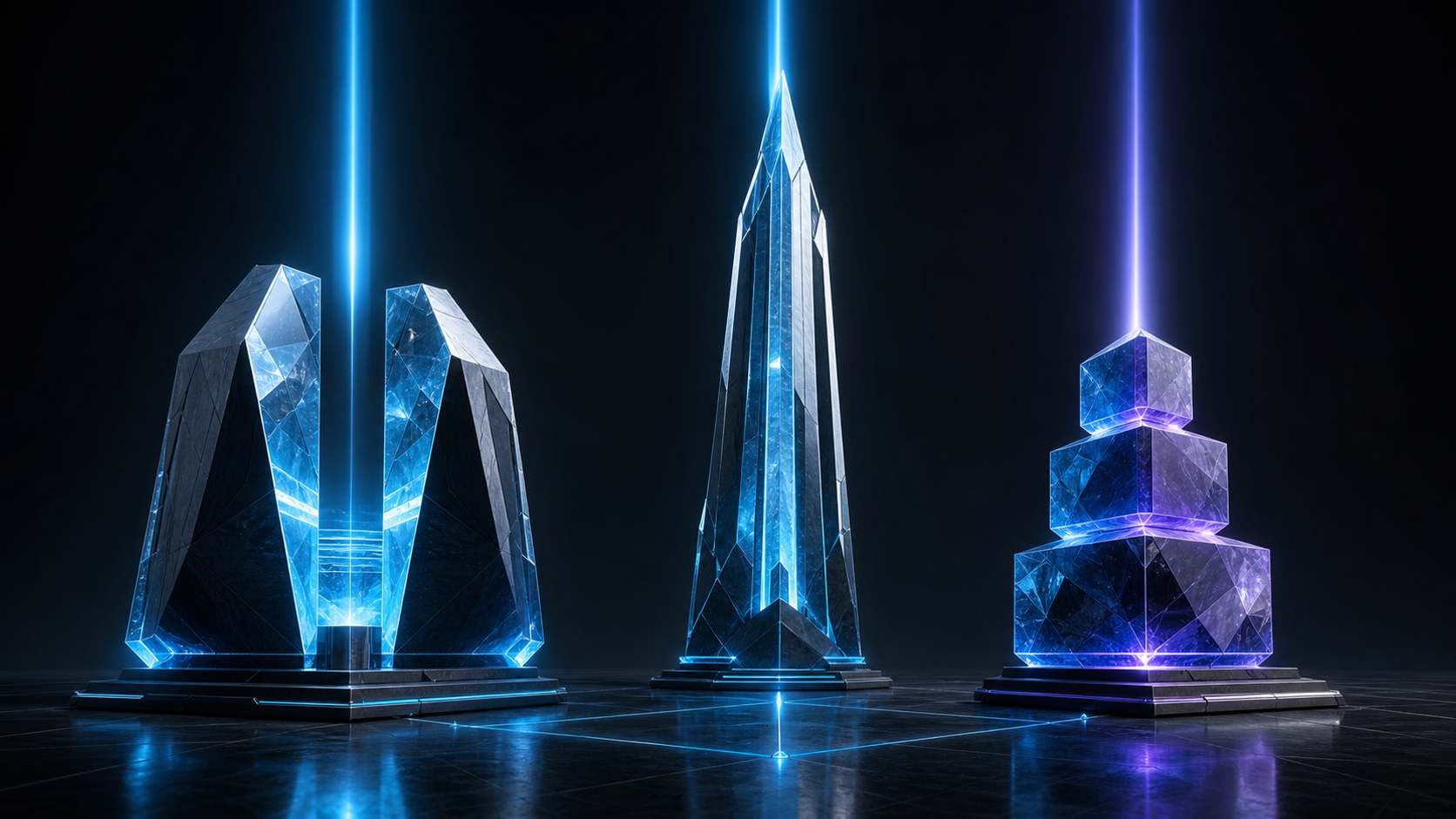
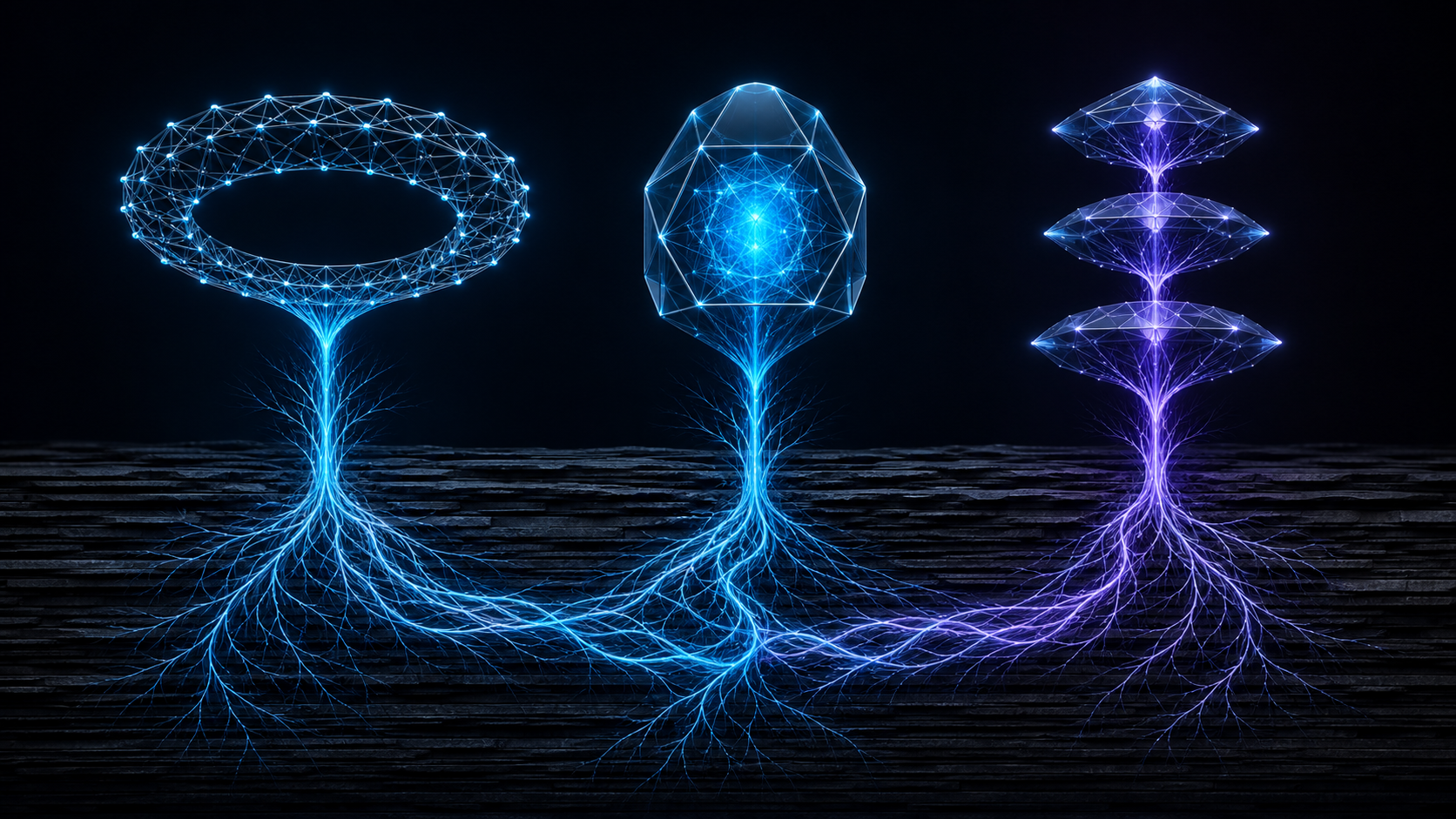
これらをまとめて説明できる仮説が、論文界隈で3つ出てきている。素人向けにかなり噛み砕くと、こんな感じ。
ビッグバンが宇宙の最初じゃなく、前の宇宙の磁場の記憶を引き継いで反跳した——という仮説。
- 面白さポイント:宇宙が「中古品」かもしれない
- 弱点:反跳の仕組み自体は別途説明が必要
- 検証:CMBの偏光データに「ねじれた光のパターン」が見つかれば一気に有力候補に
生まれたての宇宙のごく狭い領域に 極端な揺らぎが集中して、それが初期銀河の早熟化と未来の真空崩壊の種になった——という説。
- 面白さポイント:JWSTで見える「早すぎる銀河」が一気に説明できる
- 弱点:原始ブラックホールを作りすぎる危険があり、観測制約とギリギリ
- 検証:宇宙が出した「特定の周波数だけ強い重力波の山」が見つかるかどうか
暗黒物質と暗黒エネルギーが微妙に交信してる ことで、最近の宇宙でだけ膨張史がズレる——という説。
- 面白さポイント:H0の食い違いと「銀河構造の伸び悩み問題(S8)」を一発で解決する可能性
- 弱点:宇宙の誕生自体には踏み込まない
- 終焉:ビッグリップでも熱的死でもなく、「成長が止まった静かな宇宙」 に向かう
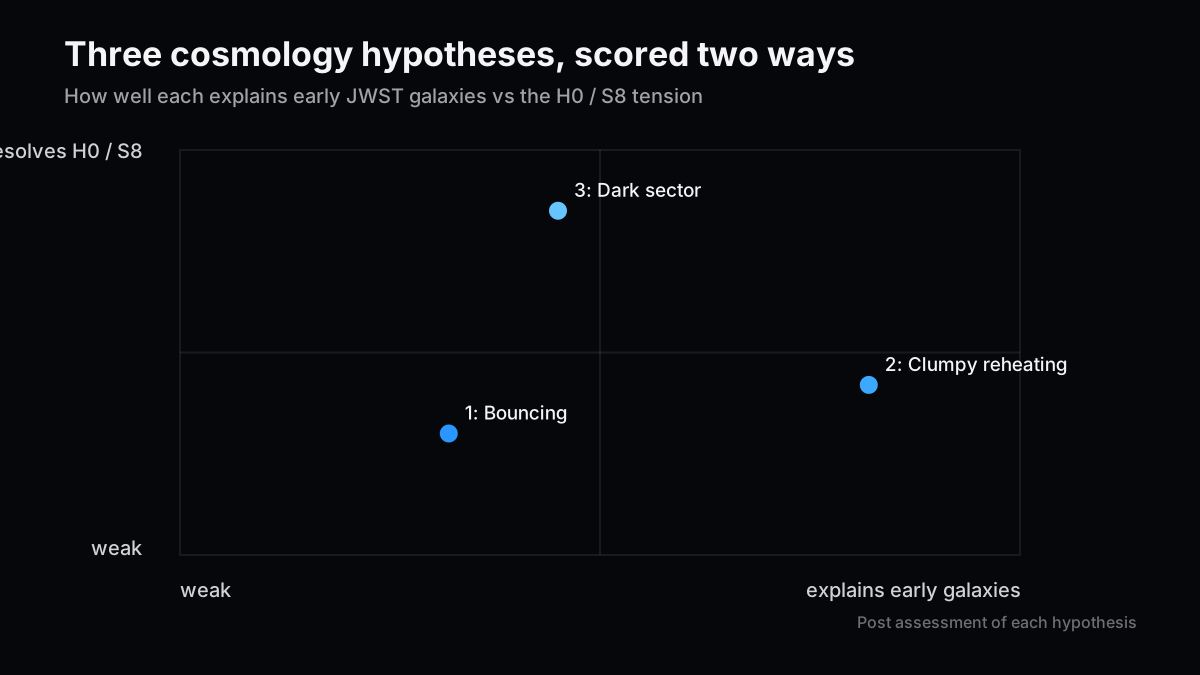
3つを並べると、それぞれ「何が強くて、何が弱いか」が見えてきます。
| 仮説 | いちばんの面白さ | 弱点 | 決定的な検証 |
|---|
| ①磁化メモリー反跳 | 宇宙が"中古品"かも | 反跳の仕組みの説明が必要 | CMB偏光の"ねじれ"パターン |
| ②非可換クランプ熱化 | 早すぎる銀河を説明できる | 原始ブラックホール過多の恐れ | 特定周波数の重力波の山 |
| ③相互作用暗黒セクター | H0とS8を一発で解決 | 宇宙の誕生には踏み込まない | 最新データに最も近い |
特に③は「現在のデータに最も近い」と評価されている。「宇宙の終わりは爆発でも凍結でもなく、ただ静かに音だけが残る」 って、ちょっとロマンあるよね。
ここがいちばん面白いところ。
これらの仮説は 今後5〜10年で決着がつく可能性が高い。ヨーロッパの Euclid、アメリカの Rubin / Roman、CMB専用の CMB-S4 / LiteBIRD、電波の SKA、宇宙重力波の LISA ——次世代観測装置がほぼ同時期に動き出している。
つまり、自分が生きてる間に「宇宙の終わり方」の方向くらいは出る。これ、人類史で初めての世代。
宇宙のニュースを見るたびに「また何か騒いでるな」って思ってた人、これからはちょっと違って見えるはず。「あ、今この3つの仮説のどれが正しいか、世界中で勝負してるんだな」って。
面白かったら X でシェア してくれると嬉しい。コメントで「どの仮説が好き?」を教えてくれたら、もっと深掘り記事を書きます。
- DESI、Euclid、Rubin、Romanの新データで、H0 tensionとS8 tensionが同じ方向に動くかを確認する。
- JWSTの高赤方偏移銀河について、明るさだけでなく星質量推定とダスト補正がどう修正されたかを見る。
- 新理論の面白さではなく、反証可能な観測予測が出ているかを更新基準にする。
次号の記事案
- 案1:ダークマターの正体って結局何?候補理論を素人向けに3つ並べて比較 — WIMP・アクシオン・原始ブラックホールという3つの主要候補を、強み・弱み・「どこまで分かってきたか」で図解。今回触れた「暗黒物質と暗黒エネルギーの会話」をもっと深掘りする続編。
- 案2:JWSTが見せた「ありえない銀河」TOP5 — 本文で軽く触れた「早すぎる銀河」を実際の発見例ベースで5つ厳選。観測画像と「なぜ常識外か」を並べてビジュアル中心に語る。
- 案3:宇宙の終わり方3パターンを可視化:Big Rip vs 熱的死 vs 静かな終焉 — 仮説①〜③それぞれが導く「終わりの形」を時間軸に沿って図解。読者が「結局どれが好き?」を選びたくなる構成。
本文の事実関係と数値前提は、再審査時にも読者が確認できる一次情報・公的資料を優先して見直しています。
本記事は情報提供を目的としたものであり、特定の銘柄、サービス、契約条件の推奨や投資助言ではありません。執筆者は記事内で触れた銘柄やサービスにポジションまたは利害関係を持つ可能性があります。調査、翻訳、校正の一部に生成AIを利用していますが、最終的な内容はZYL0が確認しています。詳細は免責事項をご確認ください。
Wait, We Don't Actually Know How the Universe Ends? JWST and DESI Are Cracking Cosmology — 3 Wild Theories Explained
I came up through semiconductor process development, where I saw, more than once, observation outrun theory in real time. Cosmology in 2026 has that same flavor — so I read 50 of the latest papers and tried to translate it into something a non-physicist can actually follow.
You probably learned in school that the universe started with the Big Bang and has been expanding ever since.
Turns out — that tidy story is starting to crack.
The trigger is two new instruments: JWST (the James Webb Space Telescope) and DESI (the Dark Energy Spectroscopic Instrument). JWST is basically a giant camera that captures galaxies in stunning sharpness. DESI is a machine that builds a 3D map of the universe by spectroscopically scanning millions of galaxies. Together, they've put small but undeniable cracks in what was, until recently, the closest thing physics had to a perfect description of the cosmos.
I read through 50 of the latest cosmology papers and tried to translate what's actually going on, in plain English.
Cosmologists have a standard model called ΛCDM (Lambda Cold Dark Matter). In plain terms, it's the universe's "user manual" — a recipe that explains everything using regular matter + dark matter + dark energy.
For about 20 years, this manual has been freakishly accurate. But lately, a few "wait, what?" moments have shown up.
The most famous one is the H0 tension. H0 is the number that tells us how fast the universe is expanding right now. Measure it two ways and you get:
- Method A: Run the math backward from the leftover glow of the Big Bang (the CMB) → about 67–68
- Method B: Look at supernovae in nearby galaxies directly → about 73
Those numbers don't match.
| Method | What it looks at | Rough H0 value |
|---|
| Method A (CMB) | The leftover glow of Big Bang | ~67-68 |
| Method B (SNe) | Nearby galaxies, measured directly | ~73 |
| Gap | — | ~5 (hard to blame on error) |
It's like measuring the temperature of the same room with two thermometers and getting 68°F and 73°F. Not a measurement error — a real disagreement.
And here's the kicker: the more precise our instruments get, the stronger the disagreement becomes. That makes "it's just statistical noise" harder and harder to defend.
Then JWST showed up and made things louder.
JWST can image galaxies from when the universe was only 300–400 million years old. And what it's seeing? Galaxies that are too bright, too big, too mature for that age.
It's like finding a 3-month-old baby playing professional soccer.
On top of that, the cosmic event called reionization — when the universe became transparent — was probably driven not by giant black holes (AGN), as we used to think, but by hordes of small, faint dwarf galaxies. The textbook is being rewritten.
To make sense of all this, three big theories are now seriously on the table. In plain English:
What if the Big Bang wasn't really the beginning, and our universe bounced from a previous one, inheriting its magnetic field memory?
- Why it's cool: the universe might be a "second-hand" cosmos
- Weakness: the bounce mechanism itself still needs more theory work
- Test: a "twisted" pattern in the CMB polarization would be smoking-gun evidence
In a tiny patch of the very early universe, fluctuations got concentrated and made everything later go faster — explaining both the early prodigy galaxies and a possible far-future vacuum collapse.
- Why it's cool: JWST's "too-fast" galaxies fall right into place
- Weakness: it risks producing too many primordial black holes — close to current limits
- Test: a narrow "bump" of gravitational waves at a specific frequency
What if dark matter and dark energy are quietly exchanging energy, and that's why the recent universe behaves slightly off-script?
- Why it's cool: solves both H0 tension and the "growth-of-structure" puzzle (S8) in one move
- Weakness: doesn't say much about the universe's actual birth
- Ending: not Big Rip, not heat death — the universe just goes quiet, with structure growth frozen and only a faint "dark acoustic" sound left behind
Put side by side, each theory has a clear strength and a clear soft spot.
| Hypothesis | Coolest idea | Weakness | Decisive test |
|---|
| 1: Bouncing | The cosmos may be second-hand | Bounce mechanism needs theory | A twist in CMB polarization |
| 2: Clumpy reheating | Explains too-fast galaxies | Risks too many primordial BHs | A narrow gravitational-wave bump |
| 3: Dark sector | Solves H0 and S8 at once | Says little about the birth | Closest to current data |
Theory 3 is currently the closest fit to the data. And honestly — "the universe ends not with a bang or a freeze, but in silence, with only a faint dark sound" — that's poetic.
Here's the best part.
These theories will likely be decided in the next 5–10 years. Europe's Euclid, the US's Rubin and Roman observatories, the CMB-focused CMB-S4 and LiteBIRD, the radio telescope SKA, and the space gravitational-wave detector LISA — they're all coming online roughly at once.
In other words: we'll likely live to see at least the direction of the answer to "how does the universe end?" That's a first in human history.
So next time you scroll past a "physics is broken" headline, you'll know what's really going on: three theories slugging it out, and the entire planet's instruments racing to break the tie.
If this clicked for you, share it on X and drop a comment with "which theory is your favorite." That's how I decide which deep dive to write next.
- Watch whether DESI, Euclid, Rubin, and Roman move the H0 and S8 tensions in the same direction or split them apart.
- For JWST's high-redshift galaxies, follow revisions to stellar mass estimates and dust corrections, not only brightness headlines.
- Judge new theories by falsifiable observational predictions, not by how elegant or dramatic they sound.
Next Issue Ideas
- Idea 1: "What Even Is Dark Matter? 3 Candidate Theories Compared in Plain English" — A side-by-side breakdown of WIMPs, axions, and primordial black holes — strengths, weaknesses, and how much the field has actually narrowed down. A natural deep dive on the "dark sector whispering" angle from this post.
- Idea 2: "5 'Impossible Galaxies' JWST Has Found" — The 5 most striking real-world examples of "too-fast" galaxies, with images and a one-line "why this breaks the textbook" each. Visual-first follow-up to today's post.
- Idea 3: "How the Universe Could End, Visualized: Big Rip vs Heat Death vs the Quiet Ending" — Each of today's three theories implies a different final state. A timeline-style visual explainer that makes readers pick a favorite.
The factual and numerical assumptions in this article are anchored to primary or public materials that readers can revisit during AdSense review and future updates.
This article is for informational purposes only and does not constitute investment advice or a recommendation of any specific stock, service, or contract structure. The author may hold positions or interests related to companies or services mentioned. Generative AI was used for parts of research, translation, and proofreading, with final review by ZYL0. See the disclaimer for details.