私はCVCで毎四半期Big Techの決算を読み解いて、自社のクラウド・AIツール選定や投資判断に落とし込む役割を持っている人間です。AIキャペックスがいよいよ$6,000億ドルを超えてくる局面で、「広告系」「クラウド系」「エコシステム系」の3つに分けて読まないと意味がない——というのがここ2年で得た現場感覚です。今回のQ1 2026決算は、その3つのROI構造の差が初めて数字として可視化された四半期でした。
最初に、四半期の構図をフラットに置きます。
2026年4月末、米国Big Tech各社が相次いで2026年第1四半期の決算を発表しました。AIへの超大規模な資本支出が「本当に収益に変換されているのか」という問いは、2024年から2025年にかけて市場を悩ませてきました。Meta一社だけで2026年の設備投資計画を1,350億ドルに引き上げ、Amazon・Microsoft・Googleを合わせた4社の合算設備投資は2026年に6,000億ドルを超える見込み。文字通り史上前例のない規模です。
その答えが今四半期の決算で、ある程度明確な形で出た。GoogleはCloud部門が年率換算で約1,500億ドルのGemini API売上を積み上げ、MicrosoftのAIビジネスは年率370億ドルに達し前年比123%増を記録。MetaはAIが広告のコンバージョン率や時間消費を押し上げることで、まさに今この瞬間に収益をマネタイズしている。Amazonも同様にAWSのAIワークロード需要が牽引する形で成長が加速した。「AIは本当に稼げるのか」という問いに対する答えは、今四半期の決算を通じて 「Yes」 に傾きつつある。
ただし、4社の「AI稼ぎ方」は構造的に異なる。バリュエーション、モメンタム、リスクプロファイルは4社それぞれで大きく違う。本稿では、Morningstarのアナリストレポートおよびリアルタイムデータをもとに、4社を多角的に比較し、どこに投資機会があるかを検討する。
以下に2026年Q1決算の主要数値を整理する。
| 指標 | Meta | Amazon | Alphabet (Google) | Microsoft |
|---|
| 売上(前年比) | $560億(+33%) | $1,815億(+15%) | $1,100億(+22%) | $829億(+18%) |
| 営業利益率 | 41%(-90bp) | 13.1%(+130bp) | 34%(+220bp) | 46.3% |
| EPS | 未公開 | $8.47(E/F) | 未公開 | $4.27(予想$4.06超) |
| クラウド/AI KPI | 広告単価+12%、量+19% | AWS+28%、年率$1,500億 | Cloud+63%、$200億 | Azure+40%、AI年率$370億 |
| 設備投資(2026年計画) | $1,350億 | $2,000億 | 大幅増(未公開) | $1,900億 |
| Morningstar評価 | ★★★★ 割安 | ★★★ ほぼフェアバリュー | ★★★★ 割安 | ★★★★★ 大幅割安 |
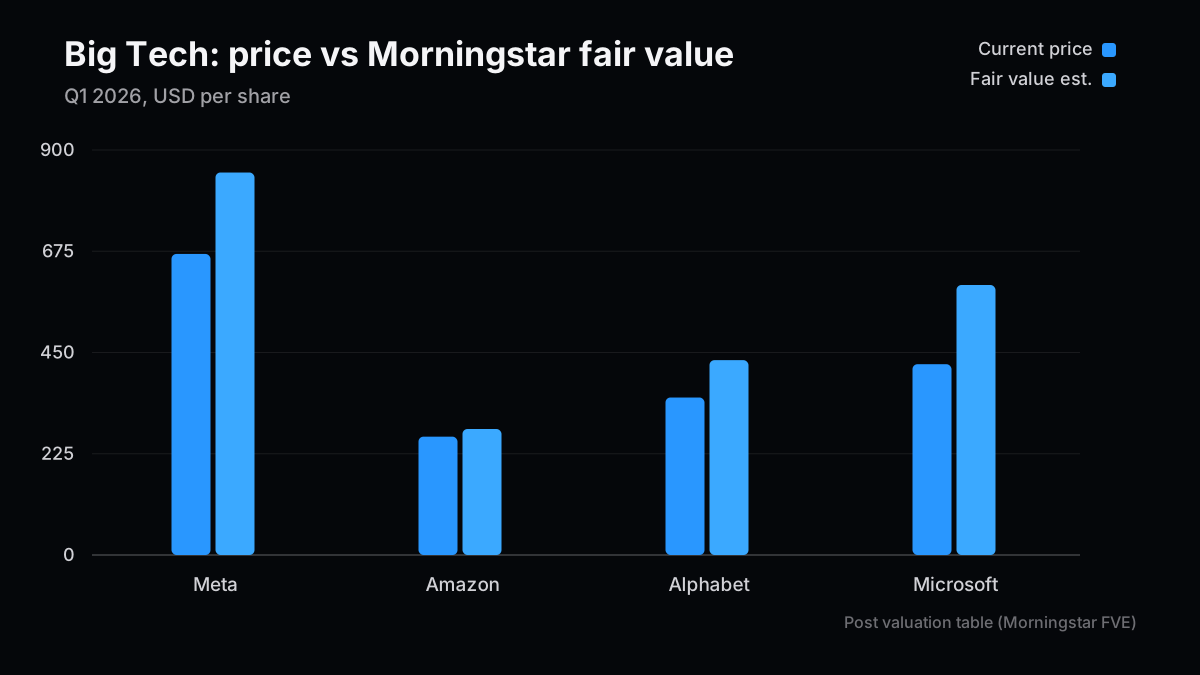
| フェアバリュー推定値 | $850 | $280($260→引上げ) | $433($340→引上げ) | $600 |
| 現在株価 | $669 | $263 | $350 | $424 |
| フェアバリュー乖離 | -21% | -6% | -19% | -29% |
この表だけ見ても、バリュエーション上最も魅力的なのはMicrosoftであり、最もリスク・リターンが均衡しているのはAmazonだということが直感的にわかる。
Metaの今四半期を一言で表すなら 「AI広告エンジンの完成形が姿を現した」 だ。Q1売上は前年比33%増の560億ドル。Instagram Reels上でAIが推薦するコンテンツへの視聴時間が10%増加し、Facebook動画が8%増、Instagramのコンバージョン率が1.6%改善した。これらの数字は、MetaがAI投資から直接的に広告収益を引き出している証拠である。
AI最適化された広告アルゴリズムが、広告単価(前年比+12%)と広告量(+19%)の両方を押し上げるという理想的な構造になっている。Morningstarが強調するのは、38億人以上のデイリーアクティブユーザーというMetaのリーチが「スケールの経済」をAI投資に乗せて機能させているという点だ。データ収集の規模が大きければ大きいほどAIモデルの精度が上がり、広告効果が高まり、広告単価が上昇するという好循環が実現している。
一方で、設備投資ガイダンスの引き上げ(1,250億ドル→1,350億ドル)が株価を時間外で押し下げた。Reality Labs(VR/AR部門)が依然として年間160億ドル超の営業赤字を垂れ流し続けていることも、投資家のコスト懸念を増幅させている。Morningstarは$850のフェアバリューを維持しており、現在株価$669は依然として21%の割安水準にある。株価下落を「AI設備投資への過剰懸念」と見るか、「妥当な警戒」と見るかが判断の分かれ目だ。
Amazonの今四半期最大のサプライズはAWSの成長加速だ。AWS売上の前年比成長率は28%に達し、年率換算1,500億ドルの収益基盤を持つまでになった。AIとトラディショナルなクラウドワークロードの両方が、それぞれ強い需要を示している。全セグメントがMorningstarの予想を超えており、Morningstarは従来の公正価値見積もりを260ドルから280ドルへと引き上げた。
AWSが全社収益の17%しか占めない一方で、全社の営業利益の大部分を稼ぐという構造は変わらない。広告事業も引き続き高成長・高マージンの収益源として機能しており、Eコマースのオペレーション効率改善(ロボティクス、多拠点最適化)が営業利益率の改善(11.8%→13.1%)に直結している。
ただし、Morningstarの評価は現在 「ほぼフェアバリュー(★★★、3スター)」 だ。株価は過去1ヶ月で25%反発しており、好材料の多くが既に織り込まれた水準にある。2026年の設備投資計画2,000億ドルは、中期的なフリーキャッシュフローを大幅に押し下げる。長期保有の観点では依然として魅力的だが、短期のエントリーポイントとしては「待ち」のスタンスが合理的かもしれない。
1年前、市場はAlphabetをAI競争の「敗者」と見ていた。OpenAI台頭後の検索市場縮小懸念が株価を下押しし、Morningstarも慎重なトーンを維持していた。しかし今四半期の決算がその見方を根本から変えた。
Google Cloudの成長率は前年比63%という驚異的な水準に達し、売上は200億ドルを記録した。Morningstarによると、Gemini APIだけで年率約150億ドルの収益を上げており、これは前四半期の90億ドルからわずか1四半期で急加速した。Morningstarはフェアバリュー推定値を340ドルから433ドルへと大幅に引き上げた。この引き上げの背景には、TPU(自社カスタムシリコン)のマネタイズ可能性への信頼感の高まりと、GeminiというLLMの商業展開の加速がある。
検索事業も健在だ。AI OverviewとAI Modeの導入が、AIチャットボットへの流出ではなく、既存ユーザーのエンゲージメントを高める形で機能しており、検索広告売上は前年比19%増を記録した。「AIで検索が食われる」という最大の懸念が、今のところ杞憂に終わっていることを数字が証明している。
全社の営業利益率は前年比220ベーシスポイント改善しており、クラウド・サービス両セグメントともに利益率が拡大した。現在株価$350に対してMorningstarのフェアバリュー$433は19%の割安を示しており、バリュエーションの観点からもMetaと並んで魅力的な水準だ。
4社の中でMicrosoftは別格の存在感を示した。売上は前年比18%増の829億ドルでガイダンス上限を上回り、EPS4.27ドルは市場予想4.06ドルを大幅に超過した。Azure成長率は40%に達し、AIビジネスだけで年率370億ドルという規模に達した(前年比+123%)。
特筆すべきはAzureのキャパシティ制約だ。旺盛な需要に対してサプライが追いついておらず、マネジメントは「少なくとも2026年末まで供給制約が続く」と言明した。これは弱材料のように見えるが、裏を返せば需要は確実に存在しており、設備が稼働し次第そのまま売上に変換されるという好材料でもある。2026年の設備投資計画として1,900億ドルという数字を示したが、これはまさにその旺盛な需要に応えるための投資だ。
Morningstarはフェアバリュー推定値を600ドルに据え置きつつも(成長予想を引き上げ、利益率予測は一部引き下げ)、現在株価424ドルに対して ★★★★★(5スター) という最高評価を維持した。これは「大幅割安」を意味し、4社の中で最も強いバイシグナルだ。OpenAIとのパートナーシップ、Copilotの法人展開(1,500万シート)、Azure・Microsoft 365の企業向け需要の複合的な成長エンジンが、他社にはない安定性を提供している。
Remaining Performance Obligation(RPO)が前年比99%増の6,270億ドルに膨らんでいることも、先行き安心感の根拠だ。この数字は今後12ヶ月以内に25%が売上認識されるため、短期的な売上の可視性が極めて高い。
4社の「AI投資→リターン」の構造は以下の通り整理できる。
| 会社 | AI投資の主な用途 | AI ROIのメカニズム | ROI実現の確実性 |
|---|
| Meta | 広告最適化・コンテンツ推薦 | 広告単価・量の直接向上 | 高(既に数字に表れている) |
| Amazon | AWSインフラ・Trainium | AIクラウドサービス収益 | 高(需要旺盛、容量制約) |
| Alphabet | Google Cloud/Gemini API | クラウド収益+検索広告防衛 | 高(急加速中) |
| Microsoft | Azure AI/Copilot | クラウド収益+ライセンス | 非常に高(5スター評価) |
4社ともAI投資のROIが実現しつつある。ただし、Metaは広告事業への集中度が高くクラウド収益源を持たないため、AIの上振れポテンシャルがコアの広告事業改善に限定される。一方、Microsoft・Amazon・Alphabetは「AIインフラを第三者に提供する」というより汎用的なクラウドビジネスモデルを有しており、AIの普及とともに需要が爆発的に拡大する構造だ。
| Meta | Amazon | Alphabet | Microsoft |
|---|
| 現在株価 | $669 | $263 | $350 | $424 |
| フェアバリュー | $850 | $280 | $433 | $600 |
| 対FVE乖離率 | -21% | -6% | -19% | -29% |
| Morningstar評価 | ★★★★ | ★★★ | ★★★★ | ★★★★★ |
| 経済的堀 | Wide | Wide | Wide | Wide |
| 不確実性評価 | High | Medium | Medium | Medium |
| 資本配分評価 | Standard | Exemplary | Exemplary | Exemplary |
| 時価総額 | $1.70兆 | $2.83兆 | $4.23兆 | $3.15兆 |
| 設備投資計画(2026) | $1,350億 | $2,000億 | 大幅増 | $1,900億 |
| 5年売上CAGR予想 | 20% | 11% | 未公開 | 13% |
| シナリオ | 想定 | Meta | Amazon | Alphabet | Microsoft |
|---|
| 強気 | AI投資の全面回収・独占強化・規制クリア | $1,100-1,200 | $340-360 | $550-600 | $700-750 |
| メイン | 現在のトレンド継続・FVEに向けた収束 | $800-900 | $270-300 | $410-460 | $570-630 |
| テール | 規制当局による制限・ROI悪化・景気後退 | $400-500 | $180-220 | $250-300 | $360-420 |
強気シナリオ の実現確率はMicrosoftとAlphabetで最も高い。MicrosoftはOpenAIパートナーシップと企業向けAIアプリケーションの展開が確実に進んでおり、Alphabetはクラウドと検索の両方でAI優位性を証明した。Metaの強気シナリオはReality Labsの収益化と独禁訴訟の解決が前提となる。
テールリスク で最も注意が必要なのはMetaだ。独禁訴訟(FTC対Meta)の判決次第では事業分割の可能性がゼロではなく、ここが他3社にはない固有のリスクとなっている。
Meta — 2026年Q2決算でAI広告の成長が継続するか。Reality Labsへの設備投資が更に拡大するか。独禁訴訟の進展。
Amazon — AWSの成長率が28%以上を維持できるか。Project Kuiper(衛星インターネット)の進捗。Q2の設備投資による利益率への影響。
Alphabet — Google Cloud成長率が60%超を継続できるか。AI OverviewによるSEO構造変化の影響。Gemini APIの単価・利用量動向。
Microsoft — Azureのキャパシティ制約が予告通り2026年後半に解消に向かうか。Copilotの法人展開シート数の推移。OpenAIとのプロフィットシェアリング(2030年まで継続)の動向。
Microsoft(MSFT):強気ロング。 Morningstar5スター、FVE比29%割安という数字が全てを語っている。企業向けAIの商業化で最も安定した収益構造を持ち、Azureの供給制約解消が下半期の成長加速カタリストとなる公算が高い。
Alphabet(GOOGL):中期ロング。 Google Cloudの爆発的成長がファンダメンタルズを変えた。FVEが$340→$433に引き上げられたにもかかわらず依然として19%割安。AI検索との両立という懸念が、今四半期の数字で払拭されつつある。
Meta(META):短期ニュートラル・中期ロング。 広告AIエンジンの実力は本物だが、設備投資増加と独禁リスクが短期的な株価の上値を抑える。$600以下が積極的なエントリーポイントとして機能するか注視。
Amazon(AMZN):短期ニュートラル。 株価が1ヶ月で25%上昇しFVEとほぼ同水準。中長期のAWS成長シナリオは不変だが、今の株価では織り込みが進みすぎている。押し目待ちが合理的。
結論として、2026年Q1決算は 「AIの黒字化元年」 を示す転換点となった。4社ともAI投資が本格的にリターンを生み始めているが、ROIの確実性とバリュエーションの組み合わせで見ると、現時点で最も魅力的なのはMicrosoft、次いでAlphabetだ。MetaとAmazonは固有の論点(独禁・織り込み)を慎重に見極めたい局面である。
- 案1:数字で追う続編 — 本記事の前提を最新データで更新し、何が強まり、何が崩れたかを再点検する。
- 案2:実務テンプレート編 — 読者が自分の投資判断、制作単価、または開発運用に転用できるチェックリストへ落とし込む。
- 案3:反対シナリオの検証 — 今回の見立てが外れる条件を先に定義し、次に見るべき指標と時間軸を整理する。
本文の事実関係と数値前提は、再審査時にも読者が確認できる一次情報・公的資料を優先して見直しています。
本記事は情報提供を目的としたものであり、特定の銘柄、サービス、契約条件の推奨や投資助言ではありません。執筆者は記事内で触れた銘柄やサービスにポジションまたは利害関係を持つ可能性があります。調査、翻訳、校正の一部に生成AIを利用していますが、最終的な内容はZYL0が確認しています。詳細は免責事項をご確認ください。
I read Big Tech earnings every quarter from a CVC seat — both for company cloud-and-AI-tool decisions and for our investment portfolio. With AI capex now north of $600B annually, the only useful frame, in my experience, is to separate "ad-AI," "cloud-AI," and "ecosystem-AI" and grade each company against the right ROI structure. Q1 2026 is the first quarter where those three different ROI structures showed up clearly in the numbers — that's the lens this piece is built around.
Let me put the quarter's structure down flat first.
In late April 2026, the US Big Tech cohort delivered Q1 2026 earnings in rapid succession. The question that weighed on the market through 2024 and 2025 — "is the massive AI capex actually converting into revenue?" — finally got a meaningful answer. Meta alone raised its 2026 capex plan to $135B; combined with Amazon, Microsoft, and Alphabet, the four-company total is expected to exceed $600B in 2026. Quite literally, a scale of investment without precedent.
This quarter, the answer came back in concrete form. Google Cloud is now generating Gemini API revenue at roughly a $150B annual run-rate. Microsoft's AI business reached a $37B annual run-rate, up 123% YoY. Meta is monetizing AI in real time through higher ad conversion and longer time-on-platform. Amazon's growth re-accelerated, driven by AWS AI workloads. The answer to "can AI actually make money?" is, this quarter, clearly tilting toward yes.
But the four companies make money from AI in structurally different ways. Valuation, momentum, and risk profiles diverge meaningfully. Drawing on Morningstar analyst reports and live market data, this piece compares the four across multiple dimensions and asks where the real investment opportunity sits today.
| Metric | Meta | Amazon | Alphabet (Google) | Microsoft |
|---|
| Revenue (YoY) | $56.0B (+33%) | $181.5B (+15%) | $110.0B (+22%) | $82.9B (+18%) |
| Operating margin | 41% (-90bp) | 13.1% (+130bp) | 34% (+220bp) | 46.3% |
| EPS | n/d | $8.47 (E/F) | n/d | $4.27 (vs $4.06 cons.) |
| Cloud / AI KPI | Ad price +12%, vol +19% | AWS +28%, $150B run-rate | Cloud +63%, $20B | Azure +40%, AI $37B run-rate |
| 2026 capex plan | $135B | $200B | Sharp increase (n/d) | $190B |
| Morningstar rating | ★★★★ Undervalued | ★★★ Near fair value | ★★★★ Undervalued | ★★★★★ Materially undervalued |
| Fair value estimate | $850 | $280 (raised from $260) | $433 (raised from $340) | $600 |
| Current price | $669 | $263 | $350 | $424 |
| Discount to FV | -21% | -6% | -19% | -29% |
Even at this level, the table makes two things intuitive: Microsoft is the most attractive on valuation, and Amazon offers the most balanced risk/reward today.
If I had to summarize Meta's quarter in one line: the ad-AI engine has finally come of age. Q1 revenue grew 33% YoY to $56B. Time spent on AI-recommended Reels content rose 10%, Facebook video time +8%, and Instagram conversion rate +1.6%. These are direct fingerprints of AI capex flowing into ad revenue.
The structure is ideal: AI-optimized ad algorithms are pushing both ad price (+12% YoY) and ad volume (+19%) at the same time. Morningstar's emphasis is well-placed — Meta's reach of 3.8B+ daily active users lets the scale economics of AI investment actually work. The bigger the data corpus, the better the model, the better the ad performance, the higher the ad price. A self-reinforcing flywheel.
The pushback came from capex. Guidance was raised from $125B to $135B, and the stock sold off after-hours. Reality Labs (VR/AR) continues to bleed roughly $16B+ in annual operating losses, amplifying investor concern over discipline. Morningstar held its $850 fair value, leaving the current $669 share price 21% undervalued. The fork is whether to read the post-print drawdown as excessive worry about AI capex or as a fair pricing of execution risk.
Amazon's biggest surprise this quarter was the re-acceleration of AWS. AWS revenue growth hit 28% YoY, on a $150B annual run-rate. Both AI and traditional cloud workloads are showing strong demand. Every segment beat Morningstar's estimates, and Morningstar raised its fair value from $260 to $280.
AWS is only 17% of total revenue but produces the bulk of consolidated operating profit — that structural fact is unchanged. Advertising remains a high-growth, high-margin engine, and operational efficiency gains in e-commerce (robotics, multi-node optimization) flow straight to the operating margin (11.8% → 13.1%).
That said, Morningstar's call is currently "near fair value" (★★★, 3 stars). The stock has rebounded 25% over the past month, and most of the good news appears priced in. The 2026 capex plan of $200B will weigh on free cash flow for several years. For long-duration holders, AWS is still a great franchise; as a near-term entry, waiting for a pullback is the more rational stance.
A year ago, the market saw Alphabet as the AI-race loser. Concern that OpenAI would erode search depressed the stock, and Morningstar held a cautious tone. This quarter changed that view at the foundation level.
Google Cloud grew 63% YoY, with revenue of $20B. Per Morningstar, Gemini API alone is at roughly a $15B annual run-rate, up sharply from $9B just one quarter earlier. Morningstar's fair value was raised from $340 to $433. The drivers behind the upgrade are growing confidence in TPU monetization (Google's custom silicon) and the accelerating commercial deployment of Gemini.
Search itself is also intact. The rollout of AI Overview and AI Mode has, so far, deepened existing-user engagement rather than leaking traffic to chatbots — search ad revenue grew 19% YoY. The biggest fear (that AI would eat search) is, for now, contradicted by the numbers.
Consolidated operating margin expanded by 220bp YoY, with margin gains in both Cloud and Services. The current $350 share price against Morningstar's $433 FV implies 19% upside — putting Alphabet alongside Meta as the most attractive valuation pair.
Among the four, Microsoft was in a class of its own. Revenue grew 18% YoY to $82.9B, beating the high end of guidance, and EPS of $4.27 cleared consensus of $4.06 by a wide margin. Azure grew 40%, with AI alone at a $37B annual run-rate (+123% YoY).
The detail that stood out was Azure's capacity constraint. Demand is outrunning supply, and management explicitly said "supply will remain tight at least through end-2026." On the surface that reads negative, but the flip side is that demand is not in question — every new GW of capacity converts straight to revenue. The $190B 2026 capex plan is exactly the build-out that demand requires.
Morningstar held the $600 fair value (raising the growth outlook while trimming margin assumptions in places) and reaffirmed the ★★★★★ (5 stars) rating against the current $424 share price. That is "materially undervalued" — the strongest buy signal among the four. The combination of the OpenAI partnership, Copilot enterprise deployment (15M seats), and the bundled Azure / Microsoft 365 enterprise demand provides a diversification of growth engines that no peer matches.
Remaining Performance Obligations (RPO) ballooned 99% YoY to $627B. Roughly 25% of that is recognized as revenue within 12 months, giving Microsoft unusually high near-term revenue visibility.
The four companies' "AI capex → AI return" structures map out as follows.
| Company | Primary AI use | ROI mechanism | ROI certainty |
|---|
| Meta | Ad optimization & content reco | Direct lift in ad price & volume | High (already in the numbers) |
| Amazon | AWS infra & Trainium | AI cloud service revenue | High (demand-led, capacity-limited) |
| Alphabet | Google Cloud / Gemini API | Cloud revenue + search-ad defense | High (re-accelerating) |
| Microsoft | Azure AI / Copilot | Cloud revenue + license attach | Very high (Morningstar 5 stars) |
All four are converting AI capex into return. But Meta is concentrated in advertising and lacks a third-party cloud revenue stream, so AI upside is bounded by the core ad business. Microsoft, Amazon, and Alphabet operate the more general-purpose "AI infra-as-a-service" model, where adoption tailwinds compound directly into revenue.
| Meta | Amazon | Alphabet | Microsoft |
|---|
| Current price | $669 | $263 | $350 | $424 |
| Fair value | $850 | $280 | $433 | $600 |
| Discount to FV | -21% | -6% | -19% | -29% |
| Morningstar rating | ★★★★ | ★★★ | ★★★★ | ★★★★★ |
| Economic moat | Wide | Wide | Wide | Wide |
| Uncertainty rating | High | Medium | Medium | Medium |
| Capital allocation | Standard | Exemplary | Exemplary | Exemplary |
| Market cap | $1.70T | $2.83T | $4.23T | $3.15T |
| 2026 capex | $135B | $200B | Sharply up | $190B |
| 5-year revenue CAGR (est.) | 20% | 11% | n/d | 13% |
| Scenario | Assumptions | Meta | Amazon | Alphabet | Microsoft |
|---|
| Bull | Full AI ROI, monopoly entrenchment, regulatory clearance | $1,100-1,200 | $340-360 | $550-600 | $700-750 |
| Base | Current trends continue; convergence toward FV | $800-900 | $270-300 | $410-460 | $570-630 |
| Tail | Antitrust action, AI ROI disappoints, recession | $400-500 | $180-220 | $250-300 | $360-420 |
The bull case probability is highest for Microsoft and Alphabet. Microsoft's OpenAI partnership and enterprise AI rollout are advancing on schedule. Alphabet has now demonstrated AI strength in both Cloud and Search. Meta's bull case is contingent on Reality Labs eventually monetizing and the antitrust suit resolving favorably.
The biggest tail risk sits at Meta. Depending on the FTC v. Meta ruling, structural breakup is not zero-probability — a name-specific risk that the other three do not share.
Meta — Whether Q2 2026 sustains the ad-AI growth trajectory. Whether Reality Labs capex expands further. Antitrust case progress.
Amazon — Whether AWS holds 28%+ growth. Project Kuiper (satellite internet) execution. The margin impact of the Q2 capex ramp.
Alphabet — Whether Google Cloud sustains 60%+ growth. SEO structural shifts driven by AI Overview. Gemini API price/volume dynamics.
Microsoft — Whether Azure capacity constraints ease in H2 2026 as guided. Copilot enterprise seat trajectory. The OpenAI profit-sharing arrangement (in place through 2030).
Microsoft (MSFT) — Bullish long. Morningstar 5 stars and a 29% discount to FV say the rest. The most stable enterprise-AI revenue mix, with capacity-constraint relief in H2 acting as a likely growth catalyst.
Alphabet (GOOGL) — Medium-term long. Google Cloud's explosive growth has changed the fundamentals. Despite the FV upgrade from $340 to $433, the stock still trades at a 19% discount. The "AI cannibalizes search" fear is being neutralized by this quarter's data.
Meta (META) — Short-term neutral, medium-term long. The ad-AI engine is real, but rising capex and antitrust overhang will cap the near-term upside. Watching whether sub-$600 acts as a more aggressive entry.
Amazon (AMZN) — Short-term neutral. The stock has run 25% in the past month and trades near FV. The long-run AWS thesis is unchanged, but at current levels much of the good news is in the price. Wait for a pullback.
The bigger picture: Q1 2026 marked the inflection into "year one of AI monetization." All four are turning AI capex into real returns. But weighing ROI certainty against valuation, the most attractive name today is Microsoft, followed by Alphabet. Meta and Amazon each carry name-specific considerations (antitrust, mean reversion of recent gains) that warrant patience.
- Idea 1: A data-updated follow-up — Revisit the thesis with fresh numbers and separate what strengthened from what broke.
- Idea 2: A practical template edition — Turn the article into a checklist readers can reuse for investing, pricing, or technical operations.
- Idea 3: The bear-case test — Define the conditions that would invalidate this view and map the indicators to watch next.
- Claude vs Gemini vs ChatGPT: A VC's Guide to the Latest Models — Claude Opus 4.7, Gemini 3.1 Pro, and GPT-5.4 Pro side-by-side in real VC workflow (April 2026).
- What Did NVIDIA × Groq ($20B) Change? Inference Consolidation, the Antitrust Tug-of-War, and Reading the Next Targets Through MangoBoost — The NVIDIA-Groq $20B deal analyzed across regulation and supply chain — contrarian screen for next acquisition targets…
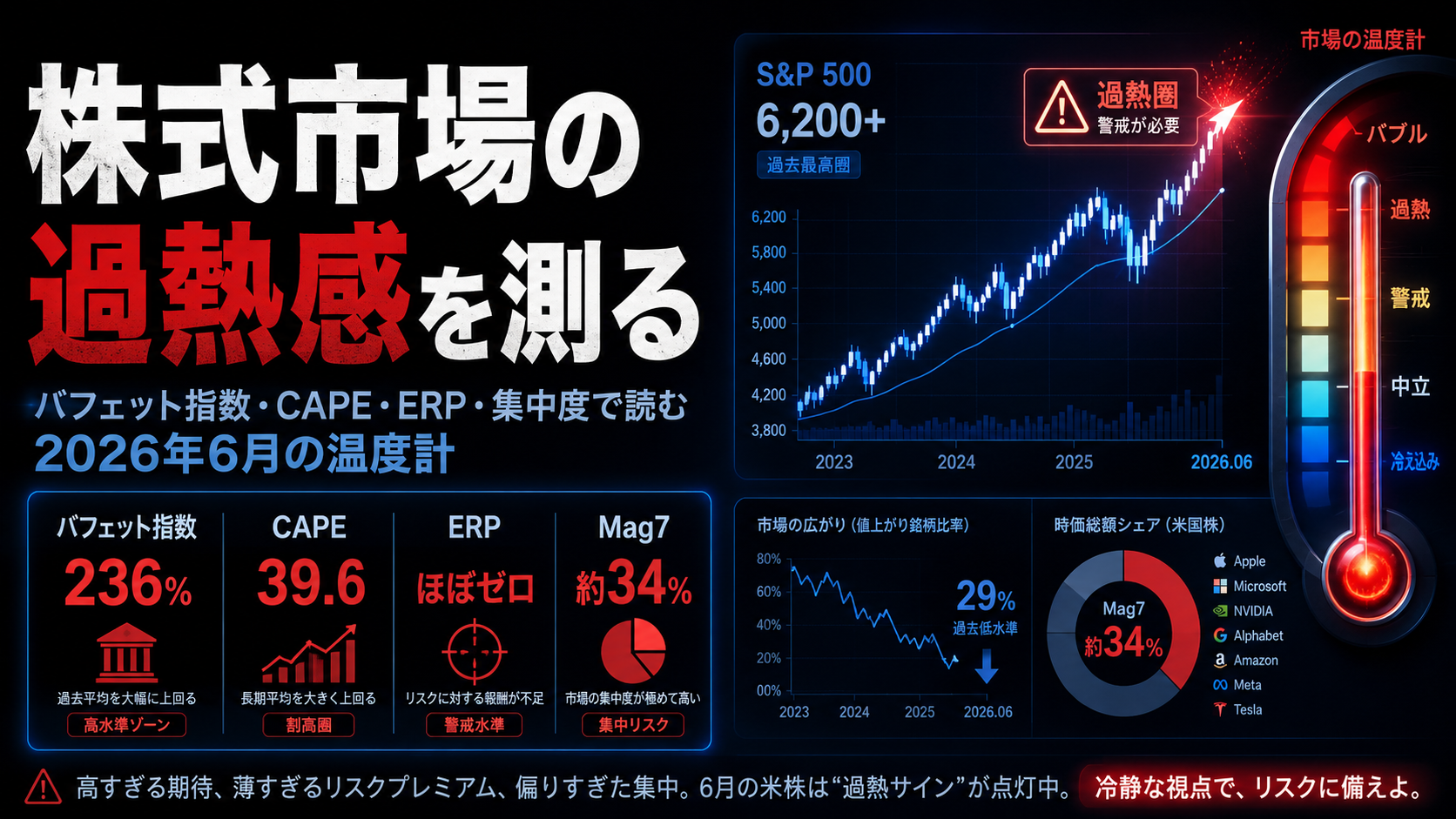
- Measuring Stock-Market Froth: Reading June 2026 Through the Buffett Indicator, CAPE, ERP, and Concentration — US equity froth in June 2026 measured across four indicators: Buffett Indicator 236%, CAPE 39.6, ERP near zero, and Ma…
The factual and numerical assumptions in this article are anchored to primary or public materials that readers can revisit during AdSense review and future updates.
This article is for informational purposes only and does not constitute investment advice or a recommendation of any specific stock, service, or contract structure. The author may hold positions or interests related to companies or services mentioned. Generative AI was used for parts of research, translation, and proofreading, with final review by ZYL0. See the disclaimer for details.