AI運用パッケージの提案書テンプレを全部公開する|7ページ・価格表・リスク管理文言つき
前回・前々回で価格と運用設計の話を書いたら、いちばん多かった質問が「で、提案書は実際どう書くんですか」でした。価格の考え方はわかった、運用の中身もわかった、でも目の前のクライアントに出す1枚がない。これは正直、私も最初そうでした。
なので今回は、前回のクリエイター価格設定と中小企業向けAI運用パッケージで散らばっていた中身を、コピーして埋めるだけの7ページ提案書テンプレに全部まとめます。見出し、価格表、修正回数の上限、スコープ追加の文言まで、そのまま貼れる形で出します。
長い提案書は読まれません。これは私が法人案件で何度も痛感したことです。30ページのきれいな資料を作っても、社長が見るのは表紙と価格ページだけ。だったら最初から、読まれる7ページに絞った方がいい。
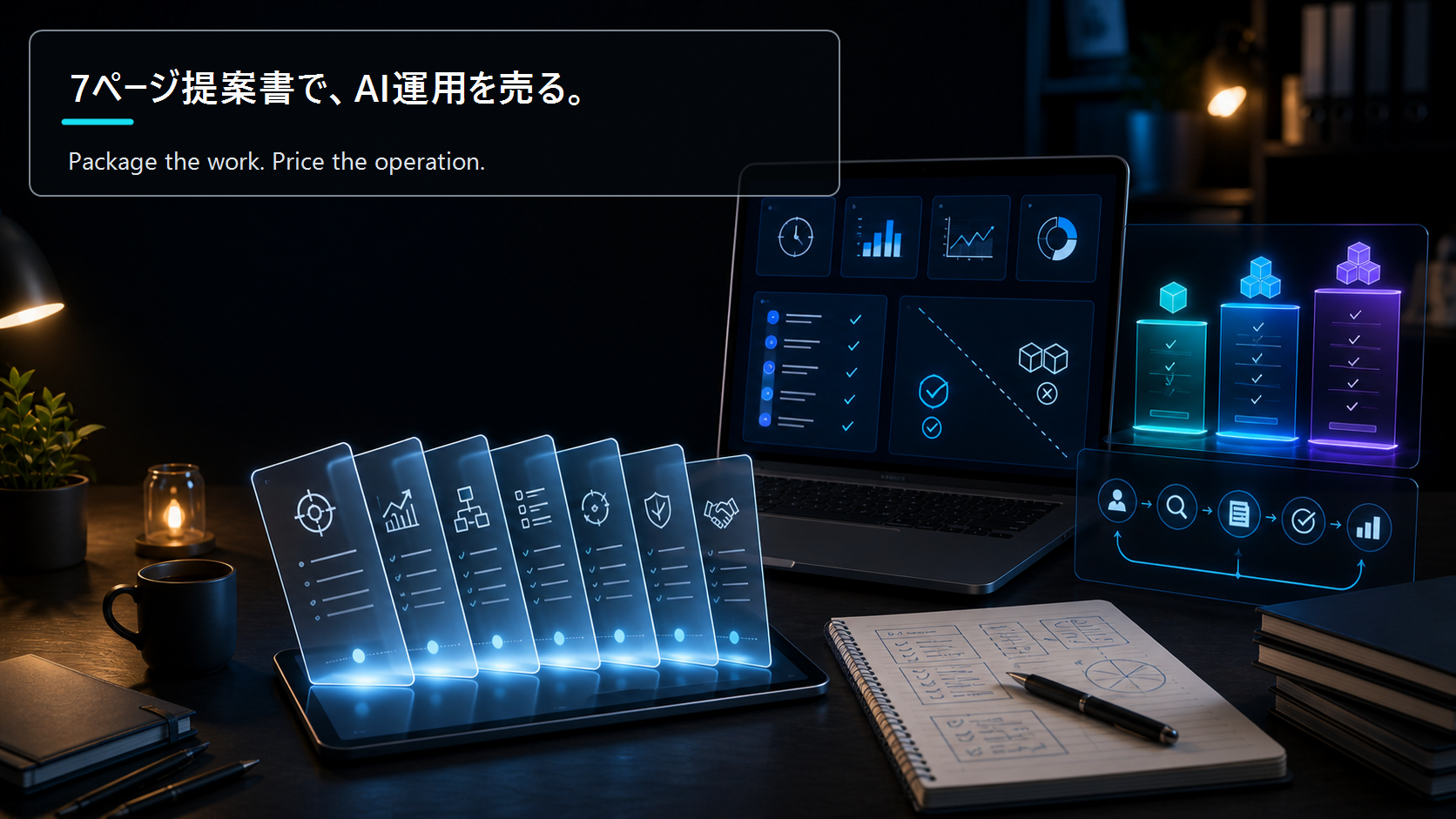
7という数字に意味があるわけではありません。ただ、私が見てきた中で「これ以下だと不安、これ以上だと読まれない」のちょうど真ん中が、だいたい7ページでした。各ページ=1セクションと考えてください。
まず全体の地図です。この表をそのまま提案書の目次にしても構いません。
| ページ | セクション | 何を書くか | ゴール |
|---|
| 1 | 表紙・課題サマリ | 相手の今の困りごとを3行で | 「これは自社の話だ」と思わせる |
| 2 | ゴールとKPI | 月◯時間を月◯時間に、追う数字 | 判断軸を「AI」から「時間」に移す |
| 3 | スコープと成果物 | やること・やらないことの線引き | 期待値を先に固定する |
| 4 | 月次運用フロー | ヒアリング→初稿→レビュー→公開→改善 | 「毎月回る」を絵で見せる |
| 5 | 価格表(階層別) | 3階層の月額と想定スコープ | 単価ではなく運用代として提示 |
| 6 | リスク管理・スコープ追加条項 | 承認、機密、修正上限、追加見積もり | 後から揉める種を先に潰す |
| 7 | 開始ステップ | 初月の進め方と次のアクション | 「で、何から?」に答える |
ポイントは、技術の話がどこにも入っていないことです。Claude も MCP も Skill も、提案書の本文には書きません。相手が買うのは「面倒が消える感覚」であって、ツール名ではないからです。
ここはテンプレの中でいちばん書き換える部分です。私が使っている1ページ目の型を出します。
ページ1(表紙・課題サマリ)の本文は、この3行で十分です。
- 現状:◯◯の発信業務が、担当者◯名の手作業に依存している
- 影響:月◯時間が消え、更新が止まると問い合わせも止まる
- 提案:その業務を、毎月回るAI運用に置き換える
ページ2(ゴールとKPI)は、数字を1つに絞るのがコツです。あれもこれもKPIにすると、責任範囲がぼやけます。私なら主KPIを「削減時間」、副KPIを「継続更新本数」にします。
| 指標 | 現状(Before) | 目標(After) | 測り方 |
|---|
| 月間作業時間 | 40時間 | 7時間 | 業務分解シートで毎月計測 |
| 月間発信本数 | 不定(止まる月あり) | ブログ2本+SNS12本 | 公開ログ |
| 公開前の差し戻し率 | 高い | 低減 | レビューチェックリスト |
ここで「コンバージョン◯%向上」みたいなアウトカム保証を書かないこと。前回も書きましたが、成果保証は一度ハマると抜けられません。運用支援は、時間とリズムを売る契約です。
正直に言うと、案件が揉めるかどうかの8割は、このページ3で決まります。「やらないこと」を先に書いてあるかどうか。
ページ3(スコープと成果物)は、2列で書きます。
- 含むもの:ブログ2本、SNS12本、月次レビュー1回、公開前チェック
- 含まないもの:撮影、広告運用、デザイン全面刷新、無制限の追加依頼
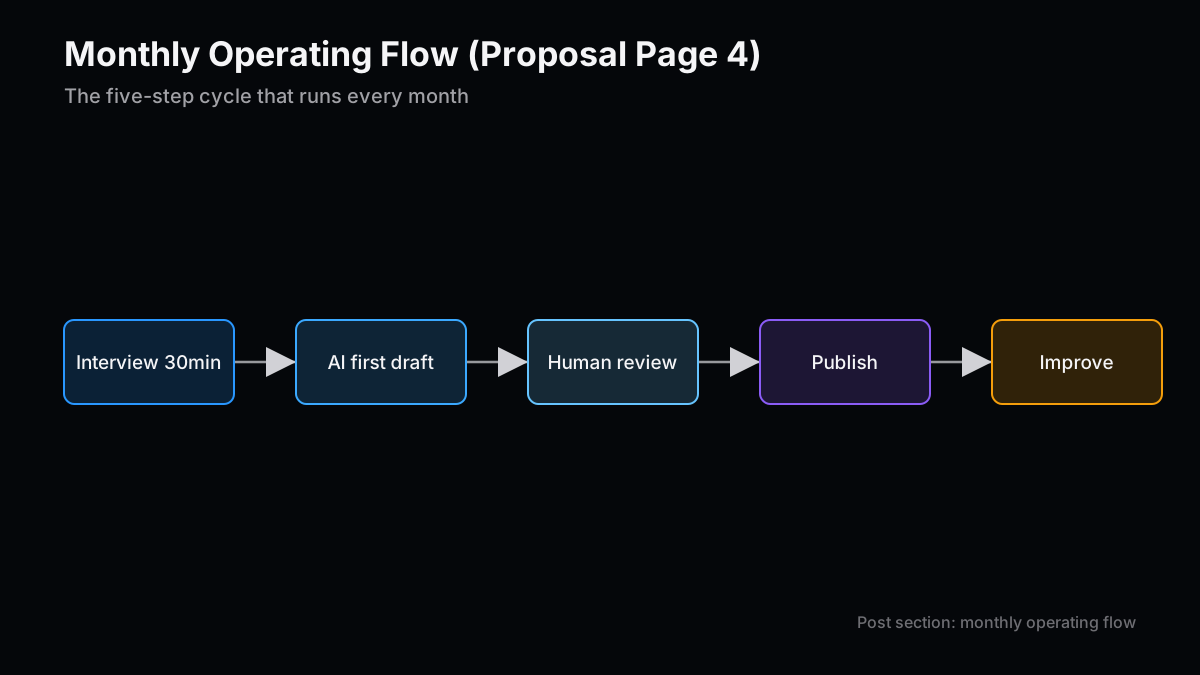
ページ4(月次運用フロー)は、文章より図のイメージを言葉で固定します。私が毎月回しているのは、この5ステップです。
- ヒアリング(30分・月1回、または素材共有)
- AI初稿(こちら側で生成、相手は見ない)
- 人間レビュー(私がチェックリストで通す)
- 公開(相手の最終承認を経て)
- 改善(月次レビュー1枚を送る)
この5ステップを提案書に書く意味は、相手に「毎月これが回る」という安心を渡すことです。単発納品との一番の差は、ここにあります。
聞かれることが多いので、前回と整合する形で具体的な数字を出します。為替や難易度で上下しますが、私が見ている範囲ではこのあたりです。これは推奨価格ではなく、あくまで提案書の埋め方の例として読んでください。
| 階層 | 月額レンジ | 想定スコープ | 想定クライアント |
|---|
| ソロ運用(自分1人) | 15〜40万円/月 | ブログ2本、SNS8〜12本、月次レビュー | 個人事業主、地方の中小企業 |
| 小規模スタジオ(2〜4人) | 60〜150万円/月 | ブログ4本、SNS30本、ショート動画4本、月次MTG | 都市部の中堅企業 |
| エージェンシー代替(5人〜) | 250〜600万円/月 | 全チャネル運用、ブランド設計、撮影、広告連動 | 上場企業の事業部 |
提案書では、3階層を全部見せるのが効きます。真ん中を提案しても、上下があることで「これは設計された価格だ」と伝わる。1つだけ出すと、ただの言い値に見えます。
注意点を1つ。階層を飛び越えて値付けしないこと。ソロなのにスタジオ価格を出すと、相手はスタジオ体制を期待します。AIで作業は速くなっても、レビュー責任と障害対応の人手は減りません。ここを甘く見た案件は、ほぼ炎上します。
ここがこのテンプレの本体です。前回・前々回で「契約で必ず決める」と書いた項目を、提案書に貼れる文章にしました。コピーして相手の名前と本数を入れてください。
スコープ・修正回数:
本契約の成果物は、ブログ2本/月、SNS投稿12本/月、月次レビュー1回/月を基本とします。各成果物の修正は2回までを含み、3回目以降の修正、および基本本数を超える追加依頼は、別途お見積もりといたします。
スコープ追加(スコープクリープ対策):
運用開始後に新規チャネル、撮影、広告運用、デザイン全面刷新などスコープ外の依頼が発生した場合は、月次レビューにて協議の上、追加見積もりまたは翌月以降のスコープ改定として扱います。本契約の月額には含まれません。
責任分担・リスク管理:
公開前の最終承認はクライアントが行うものとします。事実確認・最終的な内容責任はクライアントに帰属し、当方は運用支援および初稿・レビューを担います。機密情報をAIツールに入力する範囲は事前に合意した範囲に限定します。本契約は運用支援であり、特定の事業成果を保証するものではありません。
この3つを入れておくだけで、後から来る「これも入ってますよね?」の9割は、月次レビューの場で淡々と処理できます。AIで作業が速くなった分、相手の追加要求も速くなる。スコープクリープは、AI時代にむしろ悪化しました。だからこそ、提案書の段階で線を引いておく。
最後のページは、相手の「で、何から始めるの?」に1行で答えます。私が使う型はこれです。
- 初月:業務棚卸し+テンプレ作成+1回目の納品(実証期間)
- 契約:月額◯万円、最低3ヶ月、毎月レビュー
- 次のアクション:◯月◯日までにキックオフMTG30分
実証期間を最初に置くのは、相手が試せる短さを作るためです。安売りはしない。でも、いきなり年間契約を迫らない。このバランスが、いちばん契約に届きます。
ここまでをまとめると、AI運用パッケージの提案書は、立派な資料である必要はありません。読まれる7ページと、後から揉めない文言があれば足りる。私が法人案件で学んだのは、勝負は技術の説明ではなく、スコープとリスクの線引きで決まるということでした。
具体的な一歩として、今日この記事の7ページ表をコピーして、目の前の1社の名前と本数を入れてみてください。埋まらない欄が出たら、それがその案件で詰めきれていない論点です。
- 顧客が「成功」の定義を1文で言えない場合は、価格表より先に評価指標を決める。
- 初月の成果物を増やしすぎず、2か月目以降に継続価値が見える運用報告を入れる。
- 修正回数、対応時間、AI利用範囲、権利関係を提案書内で明文化してから着手する。
次号の記事案
- 案1:社長ヒアリング30分を、記事・SNS・FAQに同時変換する実践フロー — この提案書のページ4「月次運用フロー」の中身を、1回の会話から3チャネル分の素材を作る手順として、私のZYL0運用の実例つきで分解する。
- 案2:AI運用案件のキックオフ30分でやること全部 — 提案書が通った後の最初のMTGで、棚卸し・KPI合意・承認フロー確認をどう30分に収めるかを、チェックリスト形式で出す。
- 案3:月次レビュー1枚の書き方テンプレ|解約率を下げる7項目 — ページ6・7とつながる、毎月送る1枚のレビューを、そのまま使える項目と例文つきで公開する。
本文の事実関係と数値前提は、再審査時にも読者が確認できる一次情報・公的資料を優先して見直しています。
本記事は情報提供を目的としたものであり、特定の銘柄、サービス、契約条件の推奨や投資助言ではありません。執筆者は記事内で触れた銘柄やサービスにポジションまたは利害関係を持つ可能性があります。調査、翻訳、校正の一部に生成AIを利用していますが、最終的な内容はZYL0が確認しています。詳細は免責事項をご確認ください。
The AI Operations Proposal Template, Fully Filled In — 7 Pages, Price Table, and Scope-Creep Language You Can Paste
After the last two posts on pricing and operating design, the most common question was not about price at all. It was, "Okay, but how do I actually write the proposal?" People understood the pricing logic, understood the operation — and still had no single document to put in front of a client. Honestly, that was me too, at first.
So this post pulls everything scattered across the previous post on creator pricing and the mid-size company AI operations package into one thing: a seven-page proposal template you can copy and fill in. Headings, a tiered price table, a revision cap, and scope-creep language — all in paste-ready form.
Long proposals do not get read. I learned this the hard way on client work. You build a polished 30-page deck, and the founder reads exactly two pages: the cover and the price. So why not start with a proposal that is actually read?
There is nothing magical about seven. It just happened to be the middle ground I kept landing on — fewer than that and buyers feel uneasy, more than that and nobody finishes it. Think of each page as one section.
Here is the map. You can drop this table straight in as your proposal's table of contents.
| Page | Section | What goes here | Goal |
|---|
| 1 | Cover and problem summary | Their current pain in three lines | Make them think "this is about us" |
| 2 | Goals and KPIs | From X hours to Y hours; the number you track | Move the decision from "AI" to "time" |
| 3 | Scope and deliverables | What's in, what's out | Lock expectations early |
| 4 | Monthly operating flow | Interview → draft → review → publish → improve | Show that it "runs every month" |
| 5 | Price table (tiered) | Three tiers with monthly fee and scope | Sell operations, not unit price |
| 6 | Risk control and scope-change clauses | Approval, confidentiality, revision cap, add-ons | Defuse future disputes up front |
| 7 | Getting started | Month-one plan and next action | Answer "so, where do we begin?" |
Notice that nothing here is technical. No Claude, no MCP, no Skills in the body of the proposal. What the buyer is purchasing is the feeling that the messy work is finally handled — not a list of tool names.
This is the part of the template you rewrite the most. Here is the shape I use for page one.
The page-one body (cover and problem summary) needs just three lines:
- Now: your X publishing work depends on N people doing it by hand.
- Impact: X hours disappear each month, and when updates stall, inquiries stall too.
- Proposal: replace that work with an AI operation that runs every month.
For page two (goals and KPIs), the trick is to pick one number. Make everything a KPI and your scope of responsibility blurs. I make hours saved the primary KPI and consistent output count the secondary one.
| Metric | Before | After | How it's measured |
|---|
| Monthly work hours | 40 hours | 7 hours | Workflow breakdown sheet, monthly |
| Monthly output | Irregular (some months zero) | 2 blog posts + 12 social posts | Publishing log |
| Pre-publish rework rate | High | Reduced | Review checklist |
Do not write an outcome guarantee like "+X% conversions" here. As I said last time, the moment you commit to an outcome, you cannot get out of it. Operations support sells time and rhythm.
Honestly, eighty percent of whether a project goes sideways is decided on page three — by whether you wrote down what you will not do.
Page three (scope and deliverables) is two columns:
- Included: 2 blog posts, 12 social posts, one monthly review, pre-publish checks.
- Not included: filming, paid media, full design overhauls, unlimited add-on requests.
Page four (monthly operating flow) fixes the rhythm in words rather than a diagram. Here are the five steps I actually run every month.
- Interview (30 minutes, once a month, or shared materials)
- AI first draft (generated on my side; the client never sees it raw)
- Human review (I run it through a checklist)
- Publish (after the client's final approval)
- Improve (I send a one-page monthly review)
The point of putting these five steps in the proposal is to hand the buyer the feeling that this keeps running. That is the single biggest difference from one-off delivery.
I get asked for numbers, so here they are, consistent with the previous post. They move with FX and complexity, but this is roughly where they land for me. Read these as an example of how to fill in the proposal — not as recommended prices.
| Tier | Monthly range | Scope assumption | Typical client |
|---|
| Solo operation (you alone) | $1.5K – $4K / month | 2 blog posts, 8–12 social posts, monthly review | Sole proprietors, regional small businesses |
| Small studio (2–4 people) | $6K – $15K / month | 4 blog posts, 30 social posts, 4 short videos, monthly meeting | Urban mid-market |
| Agency replacement (5+ people) | $25K – $60K / month | Full channel ops, brand design, production, paid integration | Enterprise business units |
In the proposal, showing all three tiers works better than one. Even if you only propose the middle one, the spread above and below tells the buyer "this is a designed price." Show one number alone and it reads like a number you made up.
One caution: do not skip tiers when you quote. Quote studio prices as a solo operator and the buyer expects studio-grade staffing. AI speeds up the work, but review responsibility and incident response still need humans. Projects that ignore that line almost always blow up.
This page is the heart of the template. The "always define this in the contract" items from the last two posts, turned into sentences you can drop into a proposal. Copy them and fill in the client's name and counts.
Scope and revisions:
The deliverables under this agreement are, by default, 2 blog posts per month, 12 social posts per month, and one monthly review. Each deliverable includes up to two rounds of revision. A third revision round, and any request beyond the baseline counts, will be quoted separately.
Scope additions (scope-creep control):
If a request outside scope arises after the engagement begins — new channels, filming, paid media, a full design overhaul — it will be discussed at the monthly review and handled as a separate estimate or as a scope revision from the following month onward. It is not included in the monthly fee.
Responsibility and risk:
Final pre-publish approval is the client's. Fact-checking and final responsibility for content rest with the client; our role is operations support, first drafts, and review. The scope of confidential information entered into AI tools is limited to what is agreed in advance. This engagement is operations support and does not guarantee any specific business outcome.
With just these three in place, ninety percent of the "this was included too, right?" requests that show up later can be handled calmly at the monthly review. The faster AI makes the work, the faster the client's add-on asks come. Scope creep got worse in the AI era, not better. Which is exactly why you draw the line at the proposal stage.
The last page answers the buyer's "so, where do we begin?" in one line each. The shape I use:
- Month one: workflow audit + template creation + first delivery (a proof period).
- Contract: $X/month, three-month minimum, monthly review.
- Next action: a 30-minute kickoff meeting by date.
I put the proof period first to give the buyer something short enough to try. Do not underprice — but do not push a one-year contract out of the gate either. That balance is what actually gets you to signature.
To pull it together: an AI operations proposal does not need to be an impressive deck. Seven pages that get read, plus language that prevents disputes later, is enough. What I learned doing client work is that the game is won not on the technical explanation, but on where you draw the lines around scope and risk.
Concrete first step: copy the seven-page table from this post today and fill in the name and counts of one real client. The cells you cannot fill in are the points you have not nailed down for that project yet.
- If the client cannot define success in one sentence, agree on evaluation metrics before showing the price table.
- Do not overload month one with deliverables; make the ongoing value visible through reporting from month two onward.
- Spell out revision limits, response time, AI usage, and rights before work starts.
Next Issue Ideas
- Idea 1: From a 30-minute founder interview to articles, social posts, and FAQ in one pass — Unpacking page four's monthly operating flow into a step-by-step process that turns one conversation into material for three channels, shown with real examples from my ZYL0 setup.
- Idea 2: Everything to do in the 30-minute AI-ops kickoff — After the proposal is signed, how to fit the audit, KPI agreement, and approval-flow confirmation into the first 30-minute meeting, as a checklist.
- Idea 3: A one-page monthly review template — Tied to pages six and seven, the seven-item review you send every month to lower churn, with paste-ready items and example wording.
The factual and numerical assumptions in this article are anchored to primary or public materials that readers can revisit during AdSense review and future updates.
This article is for informational purposes only and does not constitute investment advice or a recommendation of any specific stock, service, or contract structure. The author may hold positions or interests related to companies or services mentioned. Generative AI was used for parts of research, translation, and proofreading, with final review by ZYL0. See the disclaimer for details.