CPO量産のリアル|歩留まりと熱設計から見たAIデータセンター光化の勝者
前回、AIインフラ投資の本命はGPUそのものだけでなく、電源・冷却・光・サイトの周辺リングにあると書きました。今回はその中でも、いちばん誤解されやすいCPO(Co-Packaged Optics)を掘ります。CPOは「銅配線が限界だから光にする」という単純な話ではありません。投資家が見るべき本丸は、歩留まりと熱設計です。
私は半導体プロセス出身なので、CPOの話を聞くと、帯域より先に「それを何個、どの歩留まりで、どの温度範囲で動かせるのか」が気になります。AIクラスターは性能より先に、壊れないこと、交換できること、冷やせることが商用化の条件になるからです。
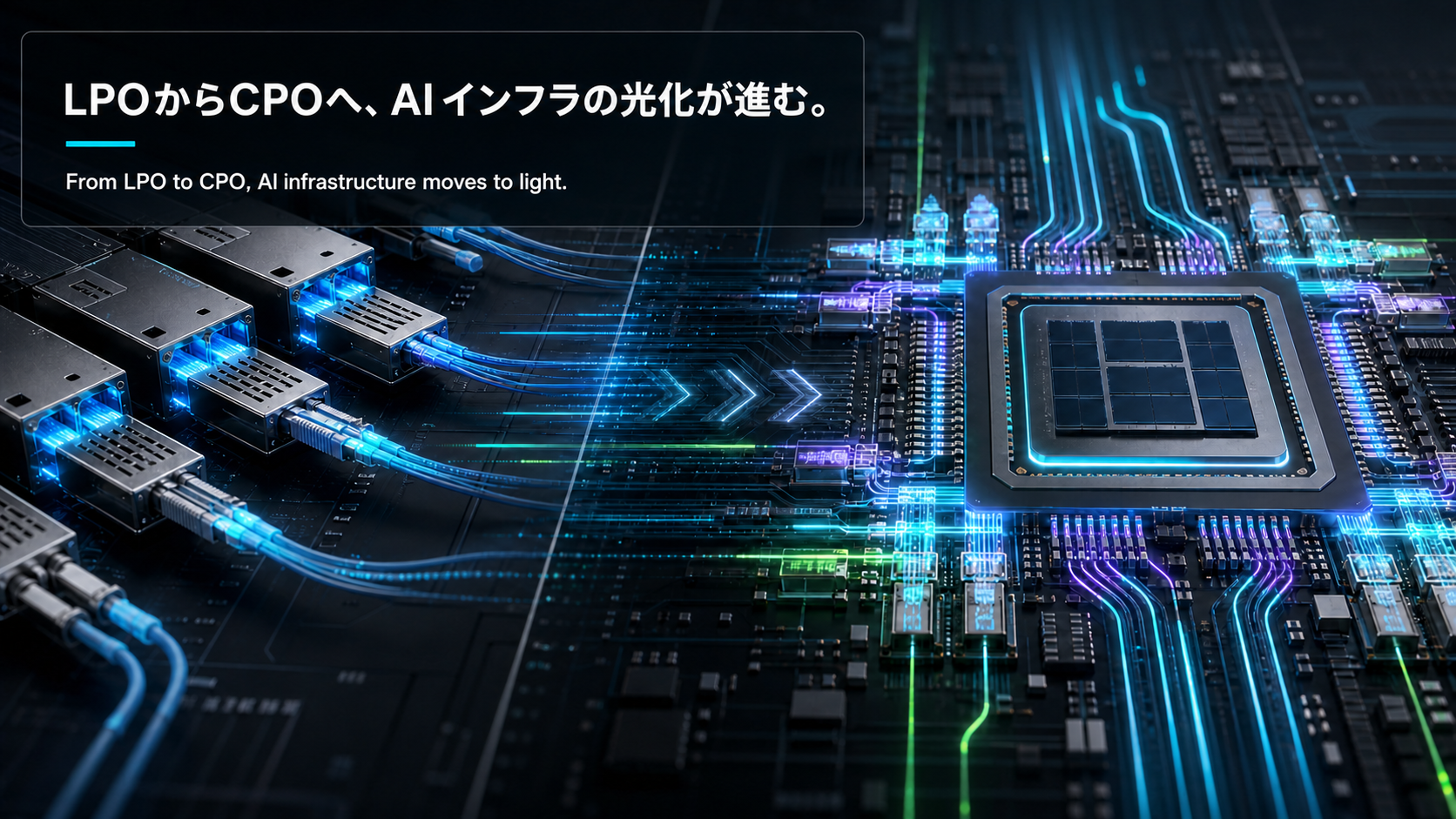
AIデータセンターのネットワークは、800Gから1.6Tへ移り、さらに3.2T/6.4Tの議論に入っています。GPU間通信は銅だけでは距離、消費電力、発熱の制約がきつい。だから光化は避けにくい。ただし、CPOが一気に全部を置き換えるわけではありません。
| 技術 | 2026年時点の位置 | 強み | 弱み |
|---|
| Pluggable Optics | 主流 | 交換しやすい、運用実績がある | 電力・密度に限界 |
| LPO | 立ち上がり中 | 低消費電力、既存運用に近い | シグナル品質と距離に制約 |
| CPC | 中間解 | 銅をもう少し延命できる | 長期の帯域拡張は限定的 |
| CPO | 量産前夜 | 電力・密度・帯域で本命 | 歩留まり、熱、保守性が難しい |
私の見立てでは、2026〜2027年はLPO/CPCが先に伸び、CPOはハイエンドのスイッチ/AIクラスターから限定的に始まります。「CPOが来るか」ではなく「CPOが来るまでの橋を誰が取るか」が短期の投資ポイントです。
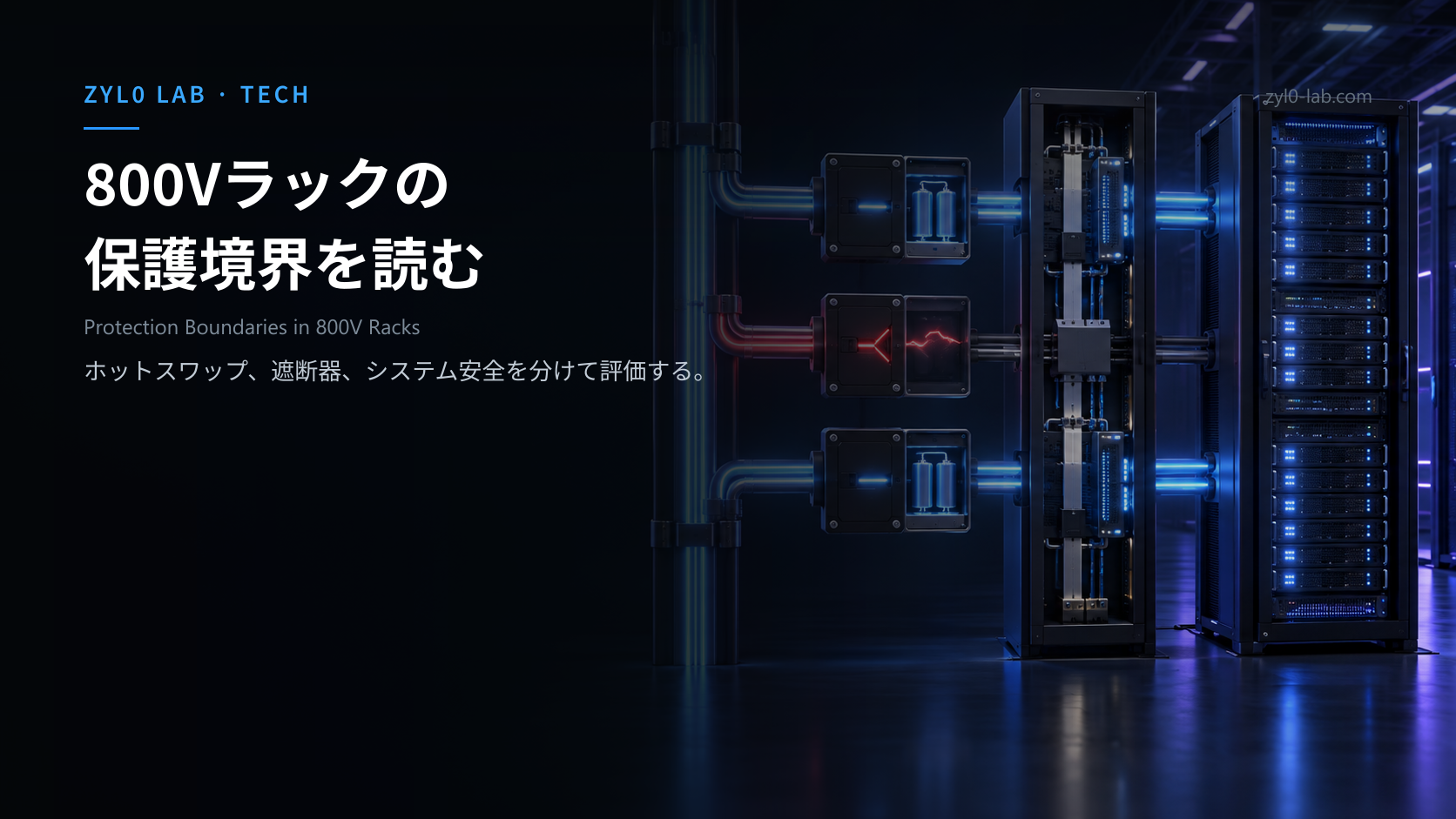
CPOの難しさは、半導体チップと光部品を近づけるほど、個別部品の不良がシステム全体に波及することです。プラガブルなら不良モジュールを交換できる。CPOでは、パッケージ内の光エンジン、レーザー、ファイバー接続、熱設計が一体になります。
| 不良ポイント | 何が起きるか | 投資家が見るべき企業 |
|---|
| 光結合ずれ | 挿入損失が増え、消費電力が上がる | 精密実装、検査、アライメント |
| レーザー劣化 | 長期信頼性が落ちる | 光源、外部レーザー、モニタリング |
| 熱ドリフト | 波長ずれ、リンクエラー | 熱設計、冷却、制御ソフト |
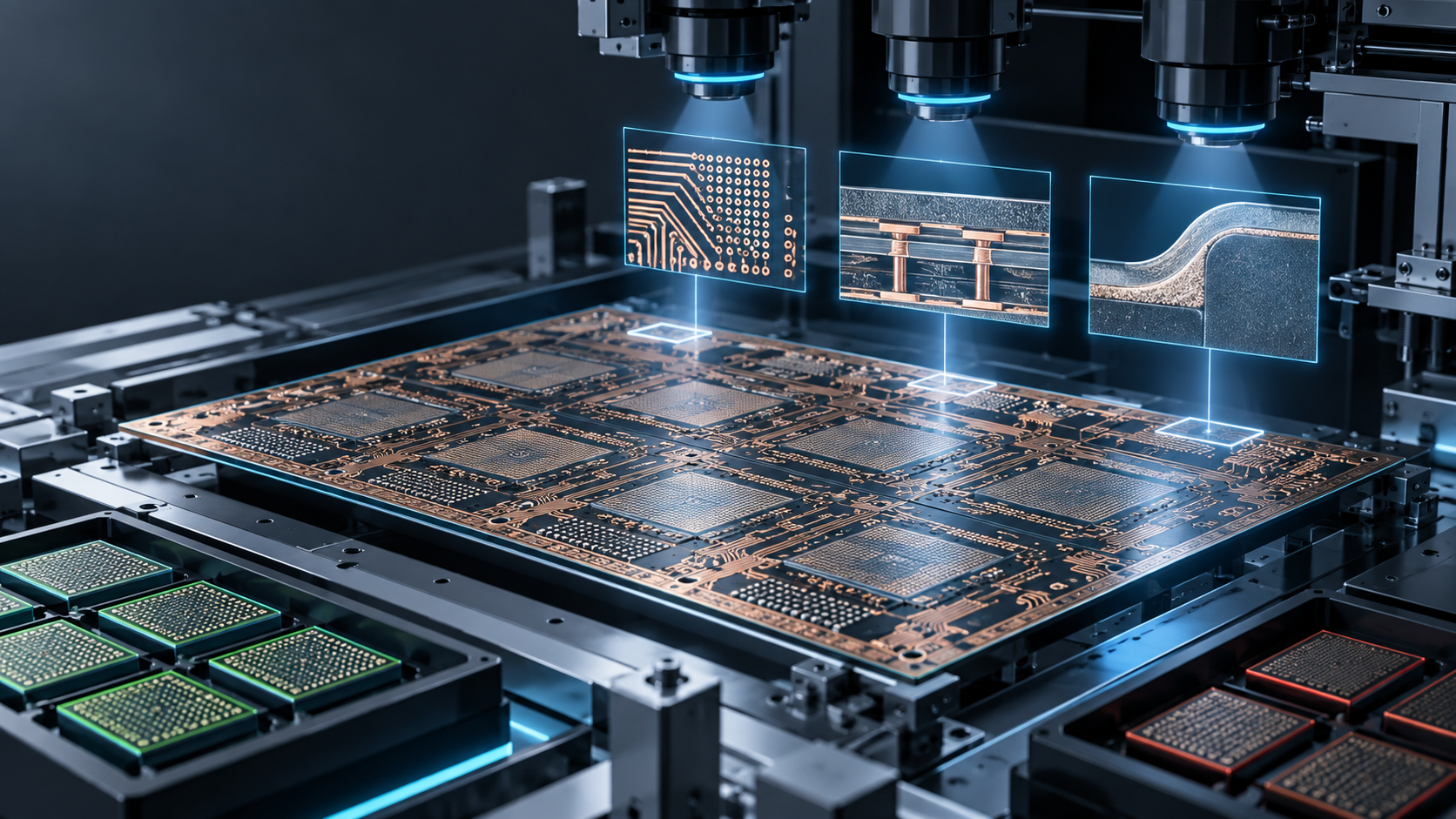
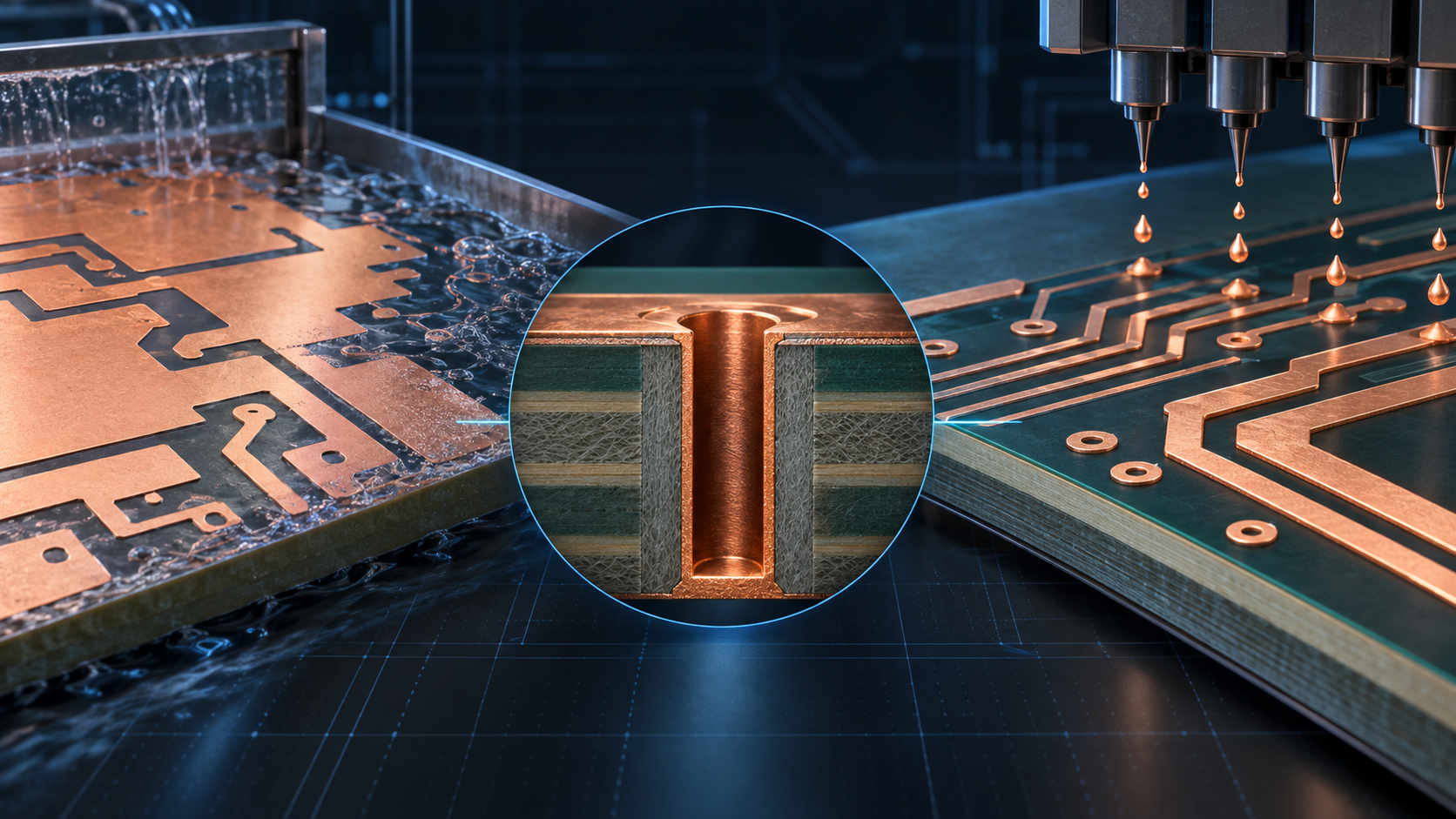
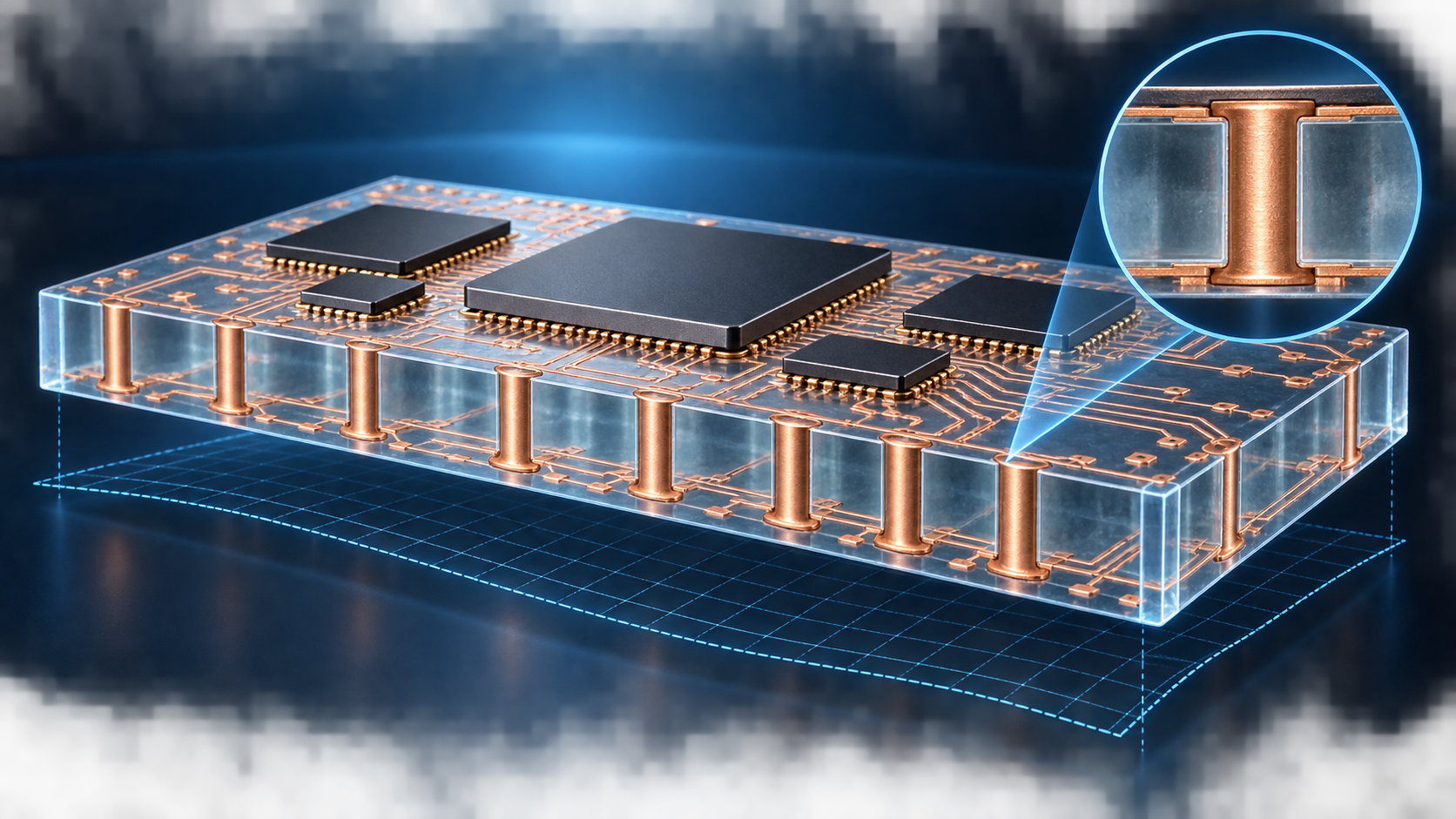
| パッケージ反り | 接続不良、歩留まり低下 | 基板、先端パッケージ、材料 |
| テスト不足 | 出荷後不良が増える | 光検査、バーンイン、ATE |
ここで強いのは、単に光部品を持っている会社ではありません。量産検査と実装を含めて、歩留まり改善ループを回せる会社です。CPOは光通信銘柄に見えますが、投資テーマとしては先端パッケージング、熱、検査の複合テーマです。
EEPROMの量産でも、歩留まり不良の原因は「装置が悪い」と言われがちでした。でも実際には、プロセスの微妙なばらつきや、別工程との相互作用が効いていることが多かった。CPOも同じで、単一部品のスペックより、全体を閉じた歩留まりエンジニアリングが勝負になるはずです。
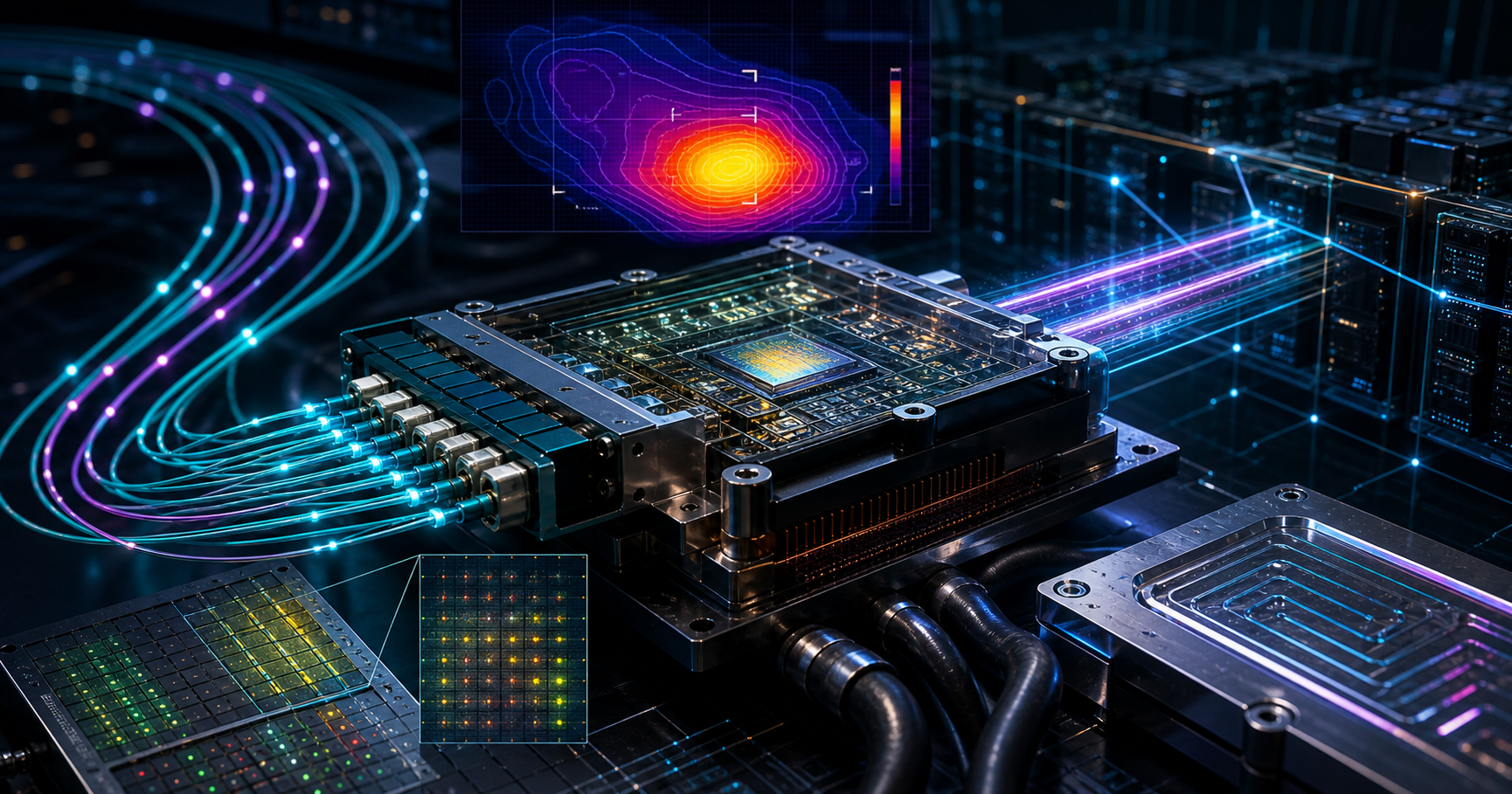
CPOは電気配線を短くして消費電力を減らせる一方で、発熱するASICのすぐ近くに光エンジンを置きます。これが難しい。光部品は温度変化に敏感で、波長、損失、信頼性がずれます。
| 熱課題 | 影響 | 受益しやすい領域 |
|---|
| ASIC近傍の熱密度 | 光エンジンの安定性が落ちる | TIM、冷却部材、パッケージ材料 |
| ラック内温度ムラ | リンク品質がばらつく | センサー、監視ソフト、液冷 |
| レーザー熱管理 | 長期信頼性に影響 | 外部レーザー、制御IC |
| メンテナンス時の熱サイクル | 接続信頼性が落ちる | コネクタ、基板、検査 |
ここで私が面白いと思うのは、CPOが液冷銘柄ともつながることです。AIラックが100kWを超える世界では、ネットワーク機器だけ空冷で済ませるのは難しくなる。CPOの熱課題は、スイッチASIC、光エンジン、冷却プレート、ラック設計をまとめて見ないと解けません。
つまり、CPOの勝者は「光が速い会社」だけではない。熱を読める会社、パッケージを作れる会社、検査を回せる会社です。
投資家としては、CPOを1つのカテゴリで見るより、4層に分けた方が整理しやすいです。
| 層 | 上場・大手候補 | 見るポイント |
|---|
| 光部品 | Coherent、Lumentum、Innolight、AOI | 1.6T対応、レーザー、モジュール供給能力 |
| スイッチ/ASIC | Broadcom、Marvell、NVIDIA、Cisco | スイッチASICと光の統合設計 |
| パッケージ/製造 | TSMC、ASE、Amkor、Ibiden | CPO実装、基板、歩留まり改善 |
| 検査/熱/周辺 | KLA、Teradyne、Vertiv、Parker | 光検査、ATE、液冷、コネクタ |
私なら短期は光部品と検査、少し遅れてパッケージ、最後にCPO統合済みのスイッチASICを厚く見ます。理由は、量産初期ほど「できる会社」より「不良を潰せる会社」に価値が出るからです。
スタートアップを見るなら、光エンジン単体よりも、以下の方が面白いかもしれません。
- CPO用のインライン光検査
- 光エンジンの熱ドリフト予測ソフト
- 外部レーザー供給と冗長化
- ファイバー接続の自動アライメント
- 液冷と光パッケージの協調設計
このあたりは、GPU銘柄のように派手ではありません。でもCPOが量産に入るほど、地味なボトルネックが値段を持ちます。
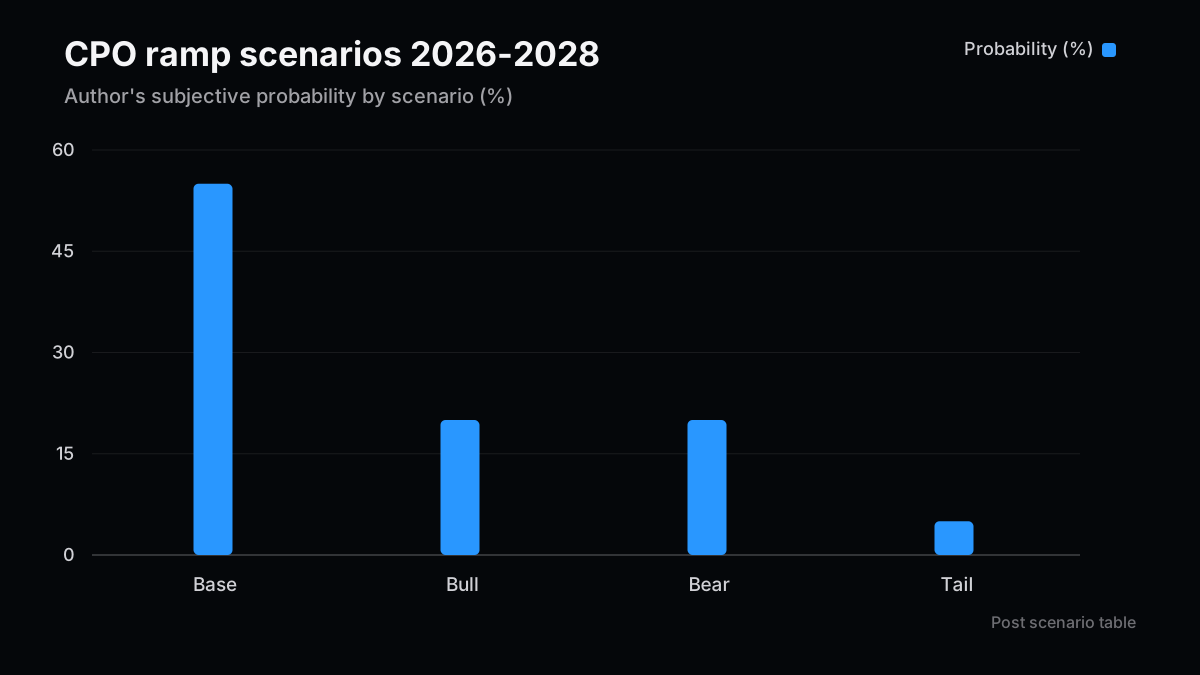
最後に、投資シナリオを置きます。
| シナリオ | 確率(私の主観) | 内容 | 受益 |
|---|
| ベース | 55% | LPO/CPCが先行、CPOは2027年後半から限定量産 | 光部品、検査、熱周辺 |
| 強気 | 20% | ハイパースケーラーがCPOを前倒し採用 | スイッチASIC、先端パッケージ、液冷 |
| 弱気 | 20% | 歩留まり/保守性でCPOが遅れ、プラガブル延命 | LPO、既存モジュール、交換可能設計 |
| テール | 5% | 熱問題で一部設計がやり直し | 検査、シミュレーション、冷却 |
私の結論は、2026年のCPO投資は、CPOそのものに全振りするより、LPO/CPCの橋渡しとCPO量産の歩留まり・熱課題を取る方がよいというものです。AIデータセンターの光化は止まりにくい。ただし、勝つのは一番速い光ではなく、一番量産できる光です。
次に見るべきニュースは「1.6T対応」だけではありません。量産歩留まり、熱ドリフト、交換性、冷却設計、検査装置。この5つが揃い始めた企業から、CPOは投資テーマとして本格化します。
- LPO vs CPO|2026〜2028年の光インターコネクト移行マップ:短期で伸びる橋渡し技術と、中期で本命になるCPOを分ける。
- AIデータセンター液冷の部品表|CDU、コネクタ、冷媒、センサー:CPOともつながる冷却周辺の投資地図。
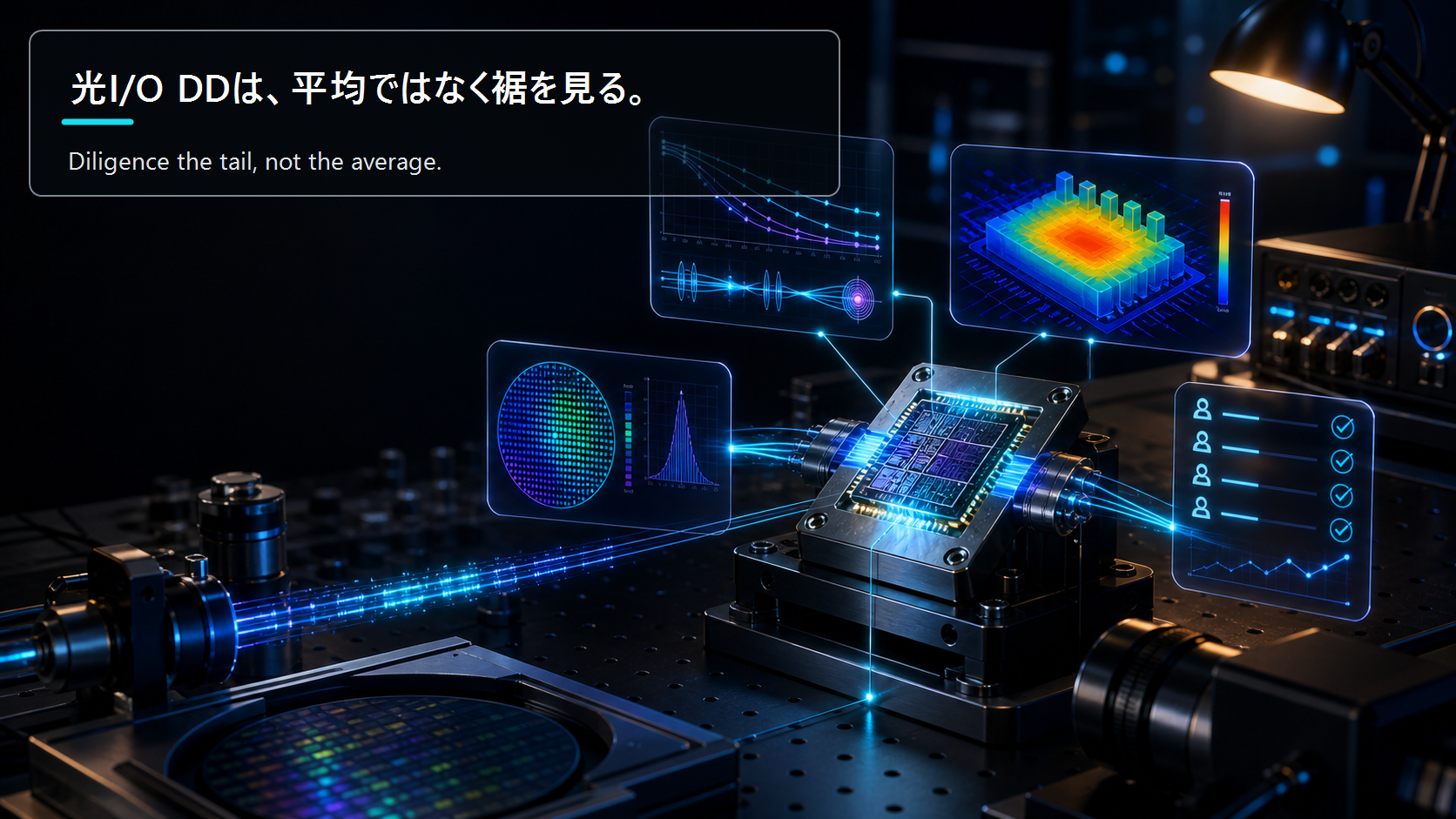
- 光I/OスタートアップDDの見方:挿入損失、熱、量産、顧客評価をどうチェックするか。
- 案1:数字で追う続編 — 本記事の前提を最新データで更新し、何が強まり、何が崩れたかを再点検する。
- 案2:実務テンプレート編 — 読者が自分の投資判断、制作単価、または開発運用に転用できるチェックリストへ落とし込む。
- 案3:反対シナリオの検証 — 今回の見立てが外れる条件を先に定義し、次に見るべき指標と時間軸を整理する。
本文の事実関係と数値前提は、再審査時にも読者が確認できる一次情報・公的資料を優先して見直しています。
本記事は情報提供を目的としたものであり、特定の銘柄、サービス、契約条件の推奨や投資助言ではありません。執筆者は記事内で触れた銘柄やサービスにポジションまたは利害関係を持つ可能性があります。調査、翻訳、校正の一部に生成AIを利用していますが、最終的な内容はZYL0が確認しています。詳細は免責事項をご確認ください。
The Real CPO Ramp: Winners in AI Data Center Optics Through Yield and Thermal Design
In the previous article, I argued that the investable AI infrastructure map is not only GPUs, but also power, cooling, optics, and sites. This piece zooms into the most misunderstood part of that ring: co-packaged optics, or CPO. CPO is not simply "copper reaches a limit, so we move to light." The real investment question is yield and thermal design.
Because I came from semiconductor process engineering, I hear CPO and immediately ask: how many units can you build, at what yield, and across what temperature range? AI clusters commercialize only when they are reliable, serviceable, and coolable.
AI data center networks are moving from 800G to 1.6T, with 3.2T and 6.4T already in the conversation. GPU-to-GPU communication is hitting copper's distance, power, and heat constraints. Optical migration is hard to avoid. But CPO will not replace everything at once.
| Technology | 2026 position | Strength | Weakness |
|---|
| Pluggable optics | Mainstream | Serviceable and proven | Power and density limits |
| LPO | Ramping | Lower power, close to current operations | Signal quality and distance constraints |
| CPC | Bridge technology | Extends copper for a while | Limited long-term bandwidth headroom |
| CPO | Pre-volume / early ramp | Best density, power, and bandwidth path | Yield, thermals, and serviceability |
My read is that LPO/CPC grows first in 2026-2027, while CPO starts in high-end switches and AI clusters. The short-term trade is not "will CPO arrive?" It is "who owns the bridge before CPO scales?"
CPO gets difficult because the closer optical components move to the semiconductor package, the more one weak component can compromise the system. In pluggables, you swap a bad module. In CPO, optical engines, lasers, fiber attach, and thermal design become part of one package.
| Failure point | What happens | Companies to watch |
|---|
| Optical coupling shift | Insertion loss rises and power increases | Precision assembly, inspection, alignment |
| Laser degradation | Long-term reliability falls | Light sources, external lasers, monitoring |
| Thermal drift | Wavelength drift and link errors | Thermal design, cooling, control software |
| Package warpage | Connection issues and yield loss | Substrates, advanced packaging, materials |
| Inadequate test | More field failures | Optical inspection, burn-in, ATE |
The winners are not just companies with optical components. They are companies that can run the yield-improvement loop across manufacturing and inspection. CPO looks like an optical communications theme, but as an investment theme it is also advanced packaging, thermal design, and test.
In EEPROM production, yield problems were often blamed on equipment. In practice, subtle process variation or interactions with another step were frequently the real cause. CPO is similar: the individual spec sheet matters, but closed-loop yield engineering matters more.
CPO reduces electrical reach and can cut power, but it places optical engines very close to hot ASICs. That is the hard part. Optical components are temperature-sensitive; wavelength, loss, and reliability all move with heat.
| Thermal issue | Impact | Likely beneficiaries |
|---|
| Heat density near the ASIC | Optical engine stability suffers | TIMs, cooling materials, package materials |
| Rack temperature variation | Link quality varies | Sensors, monitoring software, liquid cooling |
| Laser thermal control | Long-term reliability risk | External lasers, control ICs |
| Thermal cycling during service | Connection reliability falls | Connectors, substrates, inspection |
The interesting piece is that CPO links directly to liquid cooling. In 100kW-plus AI racks, it becomes difficult to leave network equipment outside the cooling conversation. CPO thermals require switch ASICs, optical engines, cold plates, and rack design to be considered together.
So the winners are not only "fast optics" companies. They are companies that understand heat, packaging, and inspection.
For investors, CPO is easier to read in four layers.
| Layer | Public / major candidates | What to watch |
|---|
| Optical components | Coherent, Lumentum, Innolight, AOI | 1.6T readiness, lasers, module supply |
| Switch / ASIC | Broadcom, Marvell, NVIDIA, Cisco | Integration of switch ASICs and optics |
| Packaging / manufacturing | TSMC, ASE, Amkor, Ibiden | CPO assembly, substrates, yield improvement |
| Test / thermal / periphery | KLA, Teradyne, Vertiv, Parker | Optical inspection, ATE, liquid cooling, connectors |
I would overweight optical components and inspection near term, packaging after that, and integrated CPO switch ASICs once the ramp becomes clearer. In early volume production, value often accrues to the companies that can remove defects, not only to those with the best demo.
For startups, the most interesting areas may not be standalone optical engines. I would look at:
- Inline optical inspection for CPO.
- Thermal-drift prediction for optical engines.
- External laser supply and redundancy.
- Automated fiber alignment.
- Co-design between liquid cooling and optical packaging.
These are less glamorous than GPU stocks. But as CPO moves toward volume, the boring bottlenecks become valuable.
Here is my scenario frame.
| Scenario | Subjective probability | Story | Beneficiaries |
|---|
| Base | 55% | LPO/CPC lead; CPO enters limited volume from late 2027 | Optical components, inspection, thermal periphery |
| Bull | 20% | Hyperscalers pull CPO adoption forward | Switch ASICs, advanced packaging, liquid cooling |
| Bear | 20% | Yield and serviceability delay CPO; pluggables live longer | LPO, existing modules, serviceable designs |
| Tail | 5% | Thermal issues force partial redesign | Inspection, simulation, cooling |
My conclusion: in 2026, I would not go all-in on CPO itself. I would own the LPO/CPC bridge and the yield/thermal bottlenecks that CPO must clear. Optical migration in AI data centers is hard to stop. But the winning optical technology is not only the fastest. It is the one that can be manufactured.
The next headlines to watch are not only "1.6T ready." Watch production yield, thermal drift, serviceability, cooling design, and inspection tools. When those five signals line up, CPO becomes a full investment theme.
There is a second-order point worth stating plainly for anyone building a position now. Because the hardest problems in CPO are yield engineering and thermal control rather than raw bandwidth, the earliest durable profits tend to accrue to the companies that close the loop between packaging, inspection, and cooling — not to whoever demonstrates the fastest link in a lab. That is why I keep coming back to the bridge technologies. LPO and co-packaged copper are not merely a stopgap; they are where volume, operational experience, and margin actually sit in 2026 and 2027, and they fund the very supply chains that later make CPO manufacturable. An investor who overweights the bridge early, then rotates into CPO integration as yield and serviceability data mature, captures most of the upside while sidestepping the phase where beautiful demos quietly fail to reach volume. The optical transition is close to inevitable. The order in which its winners get paid is not, and that order is the part worth underwriting.
- LPO vs CPO: the 2026-2028 optical interconnect migration map — separating near-term bridge technologies from the medium-term CPO bet.
- The liquid-cooling bill of materials for AI data centers — CDUs, connectors, coolants, and sensors.
- How to diligence optical I/O startups — insertion loss, thermals, manufacturing, and customer validation.
- The Investment Map of AI Infrastructure's "Silicon Periphery": Power, Cooling, Optics, and Site Plays Hiding in Plain Sight — Watching only NVIDIA and AMD misses the point.
- LPO vs CPO: The 2026–2028 Optical Interconnect Migration Map for AI Infrastructure — AI data center optics will arrive as a two-stage rocket — LPO first, CPO next.
- How to Diligence Optical I/O Startups: Measuring Insertion Loss, Thermals, Manufacturability, and Customer Validation — A CVC diligence checklist for optical I/O startups: pressing insertion loss, thermals, manufacturing yield, and custom…
The factual and numerical assumptions in this article are anchored to primary or public materials that readers can revisit during AdSense review and future updates.
This article is for informational purposes only and does not constitute investment advice or a recommendation of any specific stock, service, or contract structure. The author may hold positions or interests related to companies or services mentioned. Generative AI was used for parts of research, translation, and proofreading, with final review by ZYL0. See the disclaimer for details.