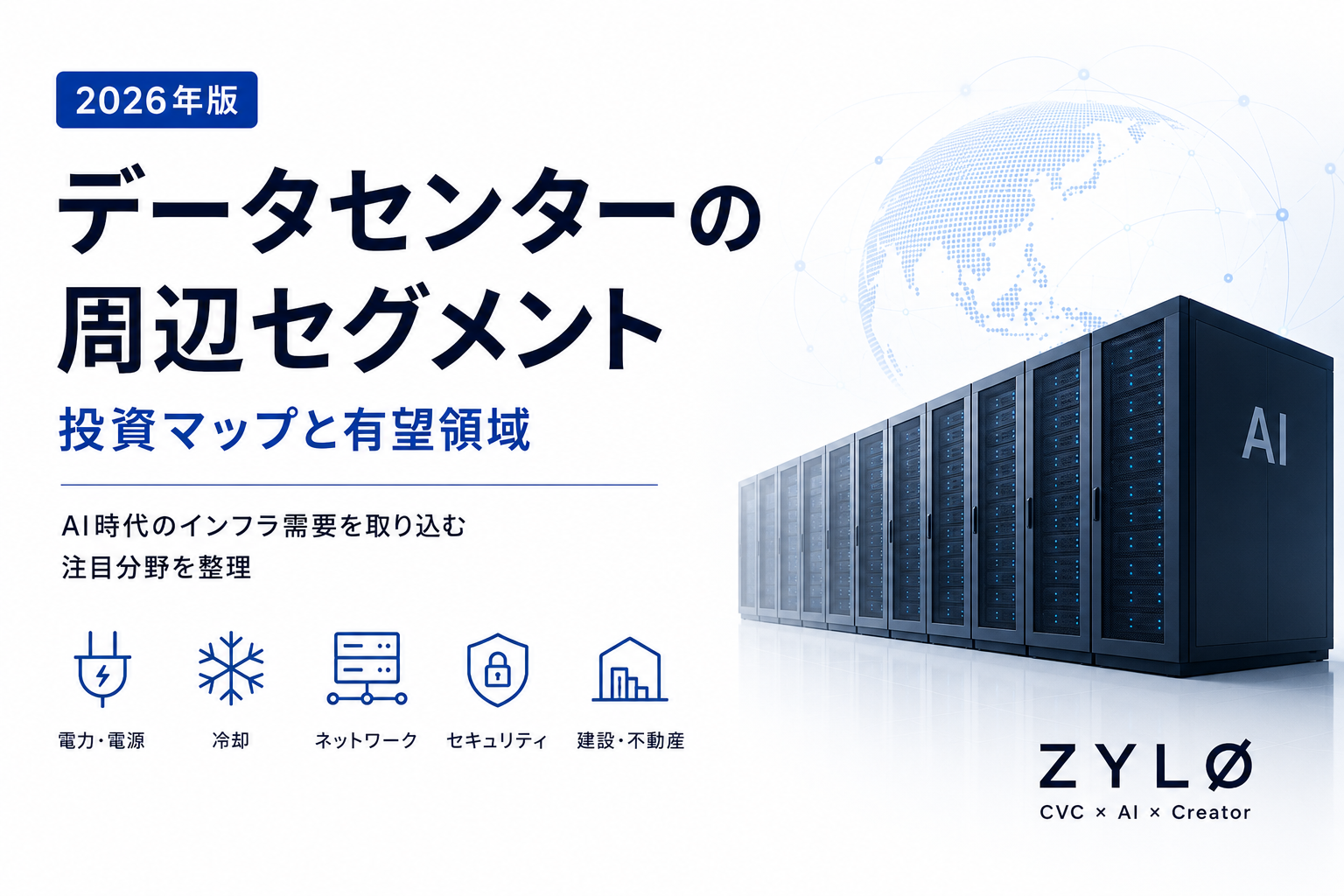
AIインフラ「シリコン周辺」の投資地図|電源・冷却・光・サイトに眠るCVCの本命
2026年に入ってから、私のディール案件の半分以上が「データセンターの周辺」になりました。NVIDIA・AMD・TSMCのような中心軸ではなく、その周辺リングにあたる電源IC・冷却・光インターコネクト・サイト用地のスタートアップです。半導体プロセス出身でCVCをやっている私から見ると、ここは今いちばん投資家の目線がズレている領域に見えます。
私は元々EEPROMの車載プロセス開発をやっていて、TCADで「装置のせい」とされていた歩留まり不良の真因をプロセス側で潰した経験があります。「みんなが見ているところ」ではなく「みんなが見落としているところ」に答えがあるという感覚は、当時の現場で叩き込まれました。今のAIインフラ投資も完全に同じ構造で、加速器の話ばかりが先行する一方、電力・冷却・光・サイトといった「周辺」がボトルネックとして急浮上しています。
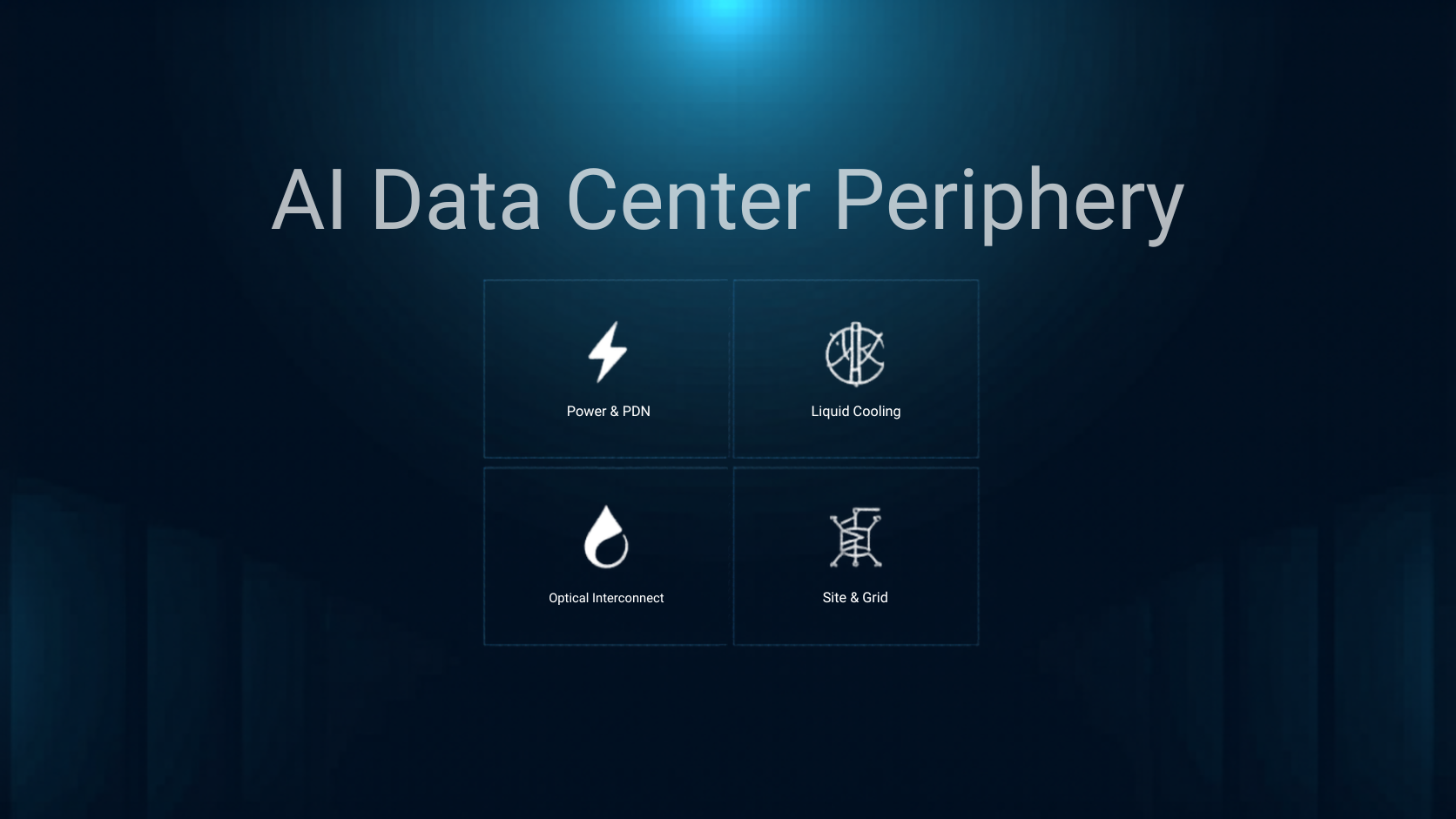
この記事では、CVCの机の上で何度も繰り返し見えてきた「周辺セグメントの投資地図」を、4ブロックに分けて整理します。
最初に率直なところを書きます。2026年Q1のハイパースケーラー4社(Microsoft / Google / Amazon / Meta)のCapEx合計は前年比+45%水準まで膨らみ、年換算で3,500億ドル前後まで来ました。ただ私が現場で見ている肌感覚は、「お金は出るがモノが出ない」状態です。
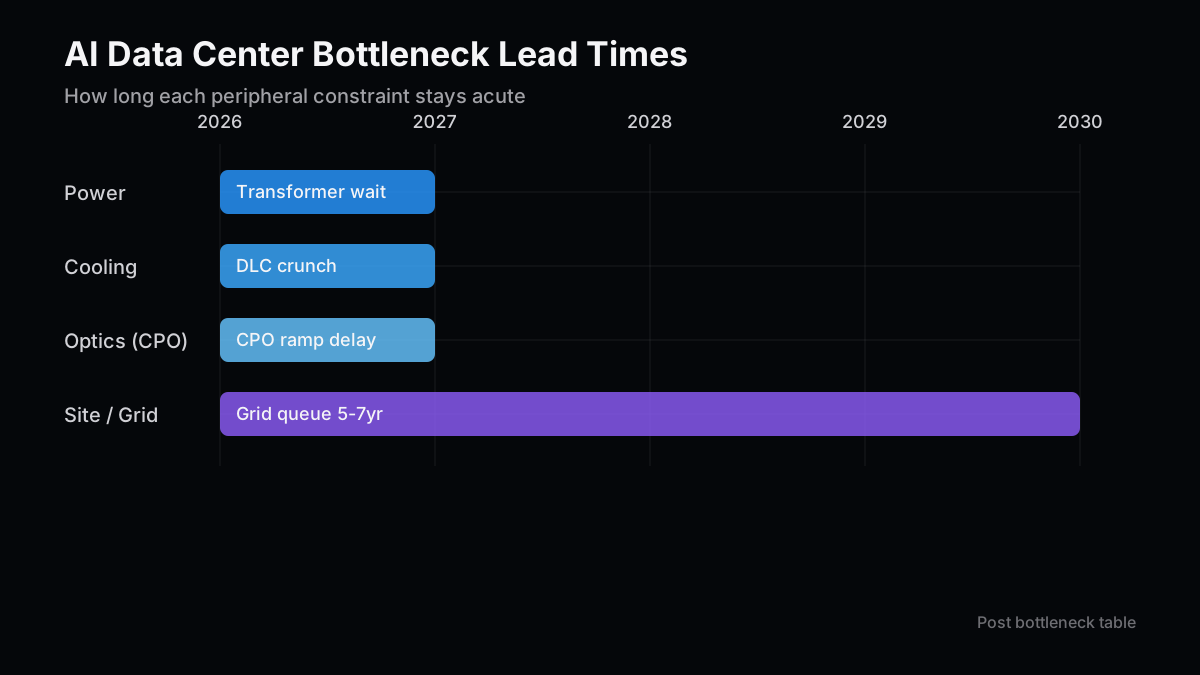
何が詰まっているか。加速器そのものはむしろ供給が見えてきたところに対し、周辺のほうが先に詰まっています。
| ボトルネック | 直近の症状 | リードタイム |
|---|
| 電源(変圧器・スイッチギア) | 大型変圧器が18〜36か月待ち | 〜2027年中ごろまで深刻 |
| 高密度冷却(DLC/Immersion) | 100kW/ラック超で水回り工事が間に合わない | 〜2027年通年 |
| 光インターコネクト | CPO(Co-Packaged Optics)量産立ち上げ遅延 | 〜2027年Q2 |
| サイト用地・系統連系 | 北米一部地域で系統接続が5〜7年待ち | 〜2030年 |
私には、これが「シリコン勝者は決まったが、シリコンに辿りつくまでの道路が片側1車線」という状況に見えます。投資としては「加速器企業の株を買う」だけでは取りきれない上振れがここに転がっている、というのが現時点でのスタンスです。
ここからCVCのDD現場で実際に分類している4セグメントに踏み込みます。各セグメントの構造・代表プレイヤー・私が見ているリスクを並べます。
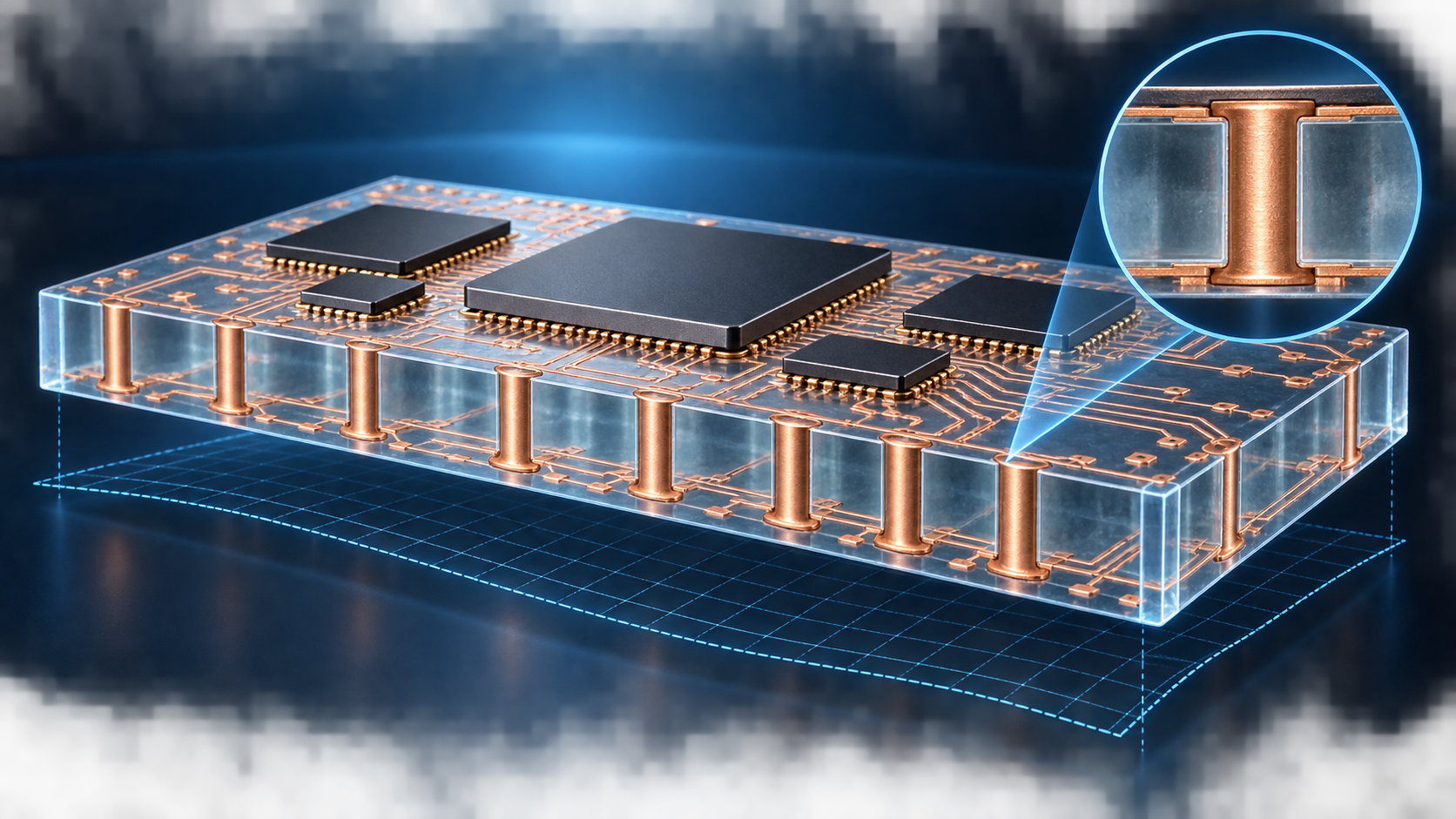
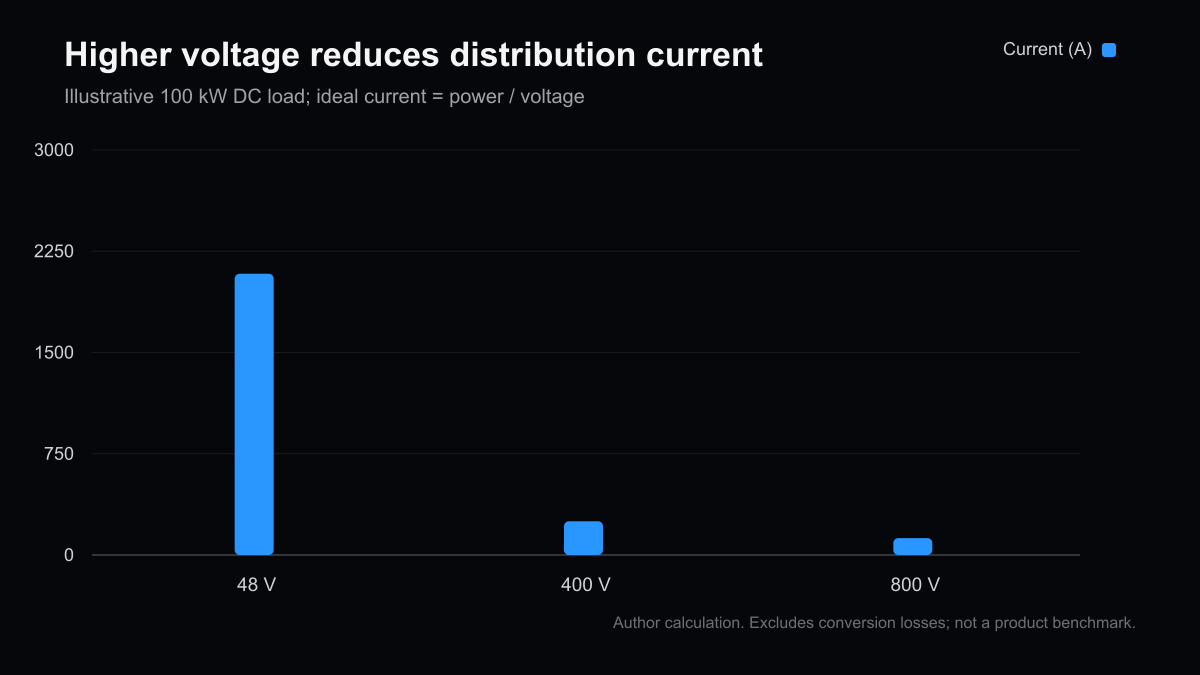
GPU 1基あたりの消費電力は、H100の700Wから、Blackwell世代では1,200W級、次世代のRubin系では1,800〜2,000Wが見えています。これがラックレベルでは120kW〜200kWまで上がる。低電圧大電流側(48V→1Vの降圧)でも、サイト電力側(中圧→低圧)でも、設計余裕がほぼゼロになっています。
| 領域 | キープレイヤー(公開銘柄) | スタートアップで見ている領域 |
|---|
| 低電圧降圧IC・DrMOS | Monolithic Power(MPWR)、Texas Instruments(TXN)、Infineon(IFX) | GaN-on-Si 48V直接降圧、Vertical Power Delivery(VPD) |
| サイト電源・UPS | Eaton(ETN)、Schneider Electric(SU)、Vertiv(VRT) | 固体UPS、フライホイール、Li-ion常用UPS |
| 大型変圧器・スイッチギア | Hitachi Energy、GE Vernova(GEV)、ABB(ABBN) | モジュール式変電所、AI需要特化型のmodular substation |
| オンサイト発電 | GE Vernova、Caterpillar(CAT)、Bloom Energy(BE) | SMR向け補機、固体酸化物燃料電池、ガスタービンのモジュール化 |
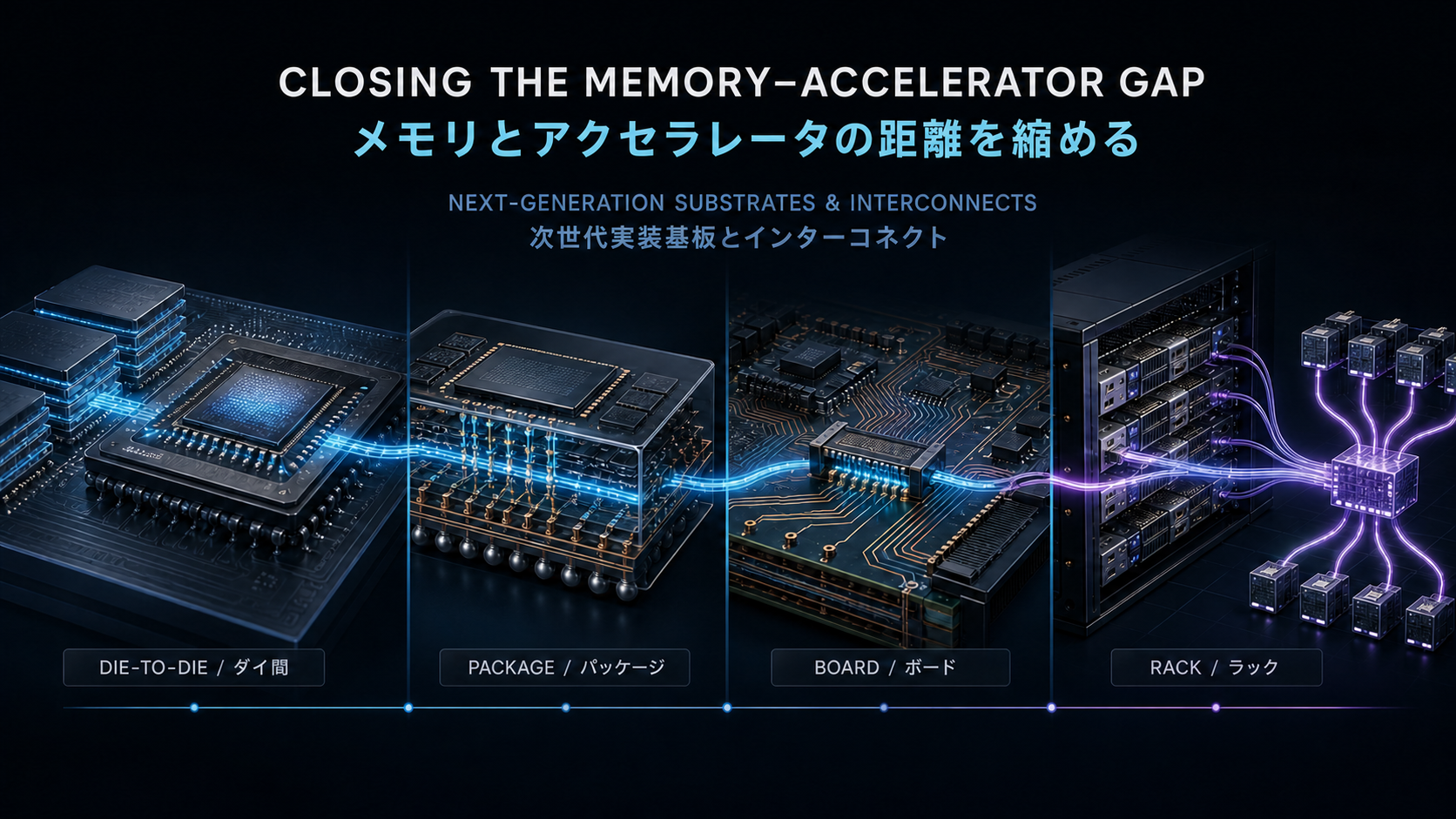
CVCの観点では、「48Vからチップ直下まで距離を縮める」スタートアップを一番厚く見ています。理由は単純で、配電損失をここで2〜3%取り戻すと、ラック単位で平気で10kW以上の冷却負荷が軽くなるからです。半導体プロセスを経験しているとTCAD上で配線抵抗の効きを散々見てきているので、「電気の配り方」が物理的な律速になっていることの納得感が強い領域です。
100kW/ラックを超えてくると、空冷では物理的に成立しません。私が見ている案件の体感では、2025年後半以降の新規DC案件の約8割がDirect Liquid Cooling(DLC)前提、1〜2割がImmersion(液浸)を併用検討、という分布です。
| 冷却方式 | 立ち位置 | プレイヤー |
|---|
| Direct Liquid Cooling(DLC) | 主流。ラック内のコールドプレートで直接GPUを冷やす | Vertiv(VRT)、CoolIT、Boyd、Asetek |
| Two-Phase(相変化) | ハイエンド・データセンターで採用拡大 | Chilldyne、Iceotope、ZutaCore |
| Immersion(液浸) | コンテナ・モジュラー型で先行 | Submer、GRC、LiquidStack |
| CDU・配管・継手 | 「見えない部分」が一番品薄 | Parker Hannifin(PH)、Stäubli、Watts Water(WTS) |
ここで私が一番注目しているのは配管側のサプライヤーです。冷却剤を漏らさず、低圧損で、メンテナンス時に活線で切り離せる継手(クイックディスコネクト)が壊滅的に足りていません。冷却ヘッドの会社ではなく、その手前の継手・CDU(Cooling Distribution Unit)の会社のほうが投資妙味がある、という整理に落ち着きつつあります。
ここはまだ議論が割れます。「液浸で一発逆転」という意見も根強い。ただ私は、既存のラック設計を捨てるコストが効きすぎて、Immersionは特定アプリ(HPC・AI訓練の専用棟)に限定されると見ています。
スケールアウト側ではEthernet/InfiniBandの800G→1.6Tへの移行が、スケールアップ側ではNVLink系の光化が同時進行しています。銅配線では距離が稼げないという物理が、ついにラック内まで降りてきました。
| 階層 | 現状 | 投資ポイント |
|---|
| ラック内(〜数m) | 銅Twinaxが主流。但しBlackwell以降は限界 | Active Electrical Cable、薄膜LiNbO3変調器、Optical I/O |
| ラック間(〜100m) | 800G光モジュール | Coherent(COHR)、Marvell(MRVL)、Lumentum(LITE)、Innolight |
| クラスタ内(〜数km) | 1.6T、近距離コヒーレント | Coherent、Marvell、Cisco(CSCO)、AOI |
| データセンター間 | ロングホール・コヒーレント | Ciena(CIEN)、Infinera→Nokia、ZR/ZR+ |
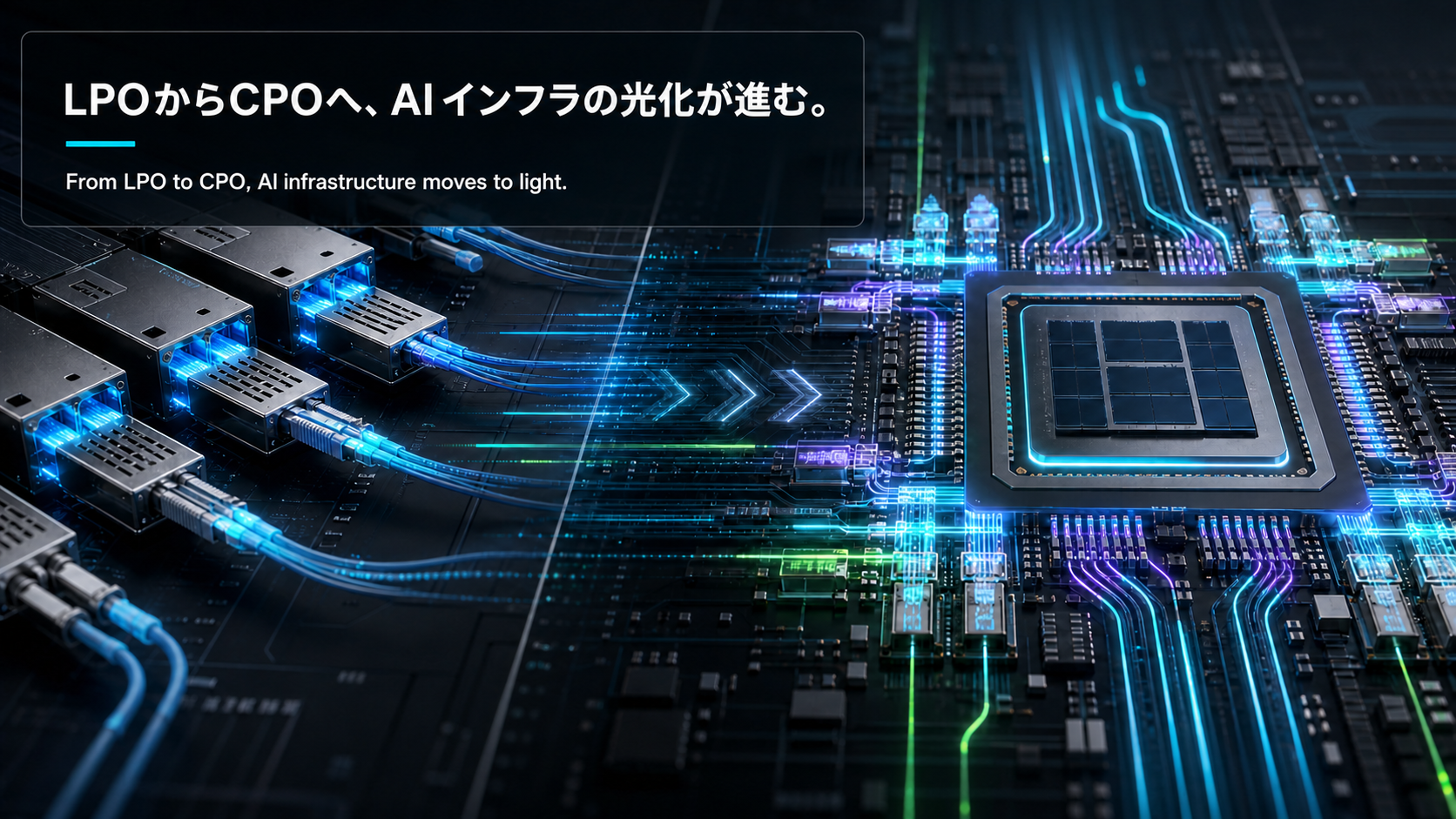
CPOは正直に言って、2025年末時点の私の見立てより半年〜1年遅れていると感じます。歩留まりと熱設計の両立がまだ厳しく、ハイパースケーラー側も「2027年量産が現実線」と修正してきている印象。ここは中間ステップとして、Linear Pluggable Optics (LPO)とCo-Packaged Copper (CPC)が予想以上に伸びる気がしています。
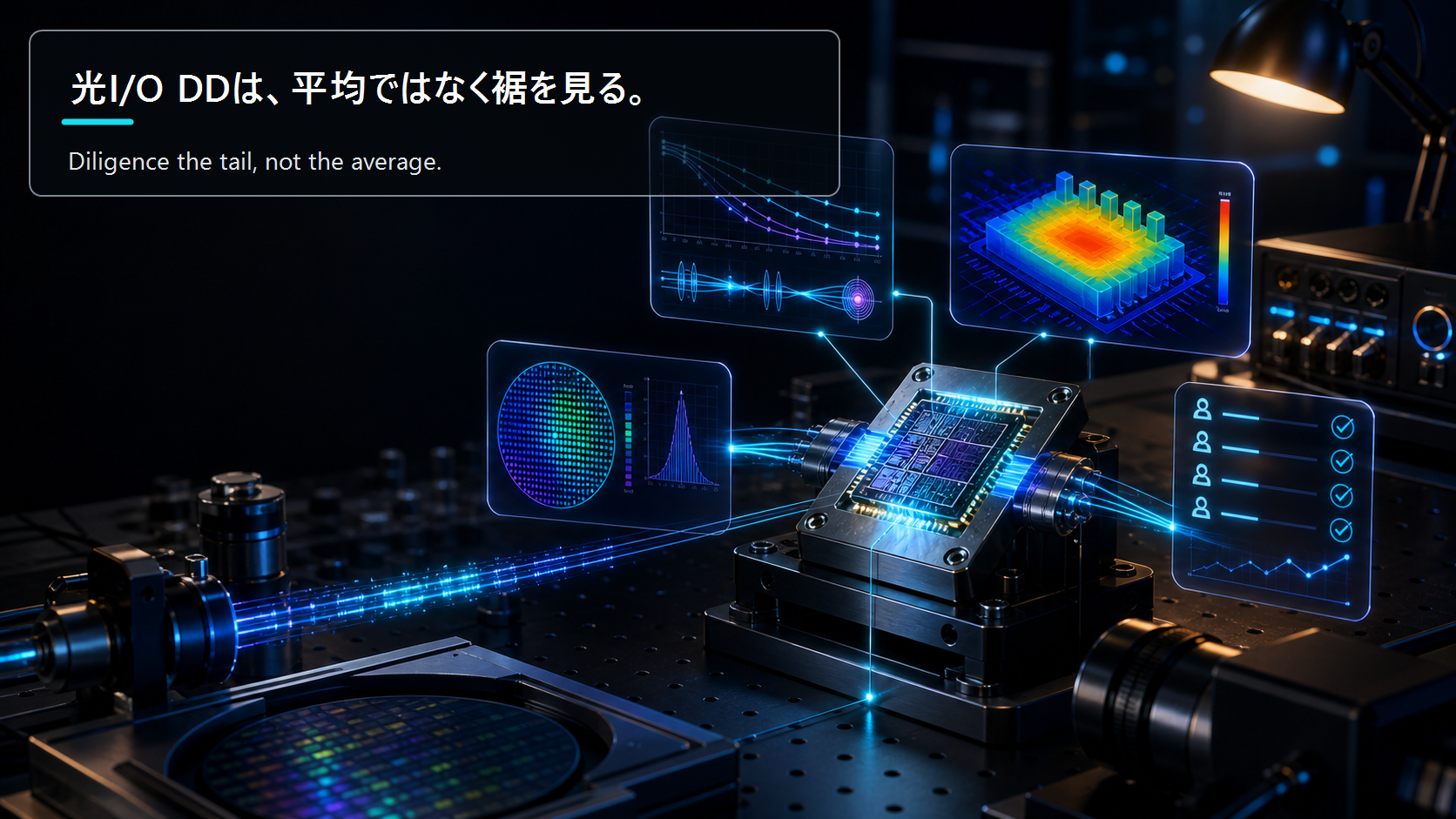
私はTCADで光素子のシミュレーションも触ってきたので、光側の歩留まり改善がいかに非線形に効くか感覚があります。短期はLPO/CPC、中期でCPOへ寄せる、というポジショニングが現時点では最も合理的に見えます。
最後が、いちばんCVCで論点が割れる領域。「電源も冷却もチップも、結局土地がないと建たない」という当たり前のボトルネックです。
| 制約 | 影響 | スタートアップの切り口 |
|---|
| 系統連系待ち(北米PJM圏ほか) | 新規DCの稼働が3〜7年遅れる | "Bring Your Own Power"型のDC、SMR・ガスタービン併設、Behind-the-meter |
| 用水・冷却水確保 | 1GW級DCで日量2〜5万トンの水使用 | 空冷一体型、海水・地下水活用、Closed-loopシステム |
| 変電・送配電部材 | 大型変圧器2〜3年待ち | Modular Substation、Static Var Compensator |
| 用地・自治体折衝 | 環境影響評価で半年〜1年 | 既存工場跡地転換、休止火力跡地への入居 |
私の今の見方では、「土地と電気をパッケージで持っているプレイヤー」が、最も時価総額の伸びしろがあります。地味ですが、Equinix(EQIX)、Digital Realty(DLR)といったREIT系に加え、Talen Energy(TLN)、Constellation(CEG)、Vistra(VST)といった発電・系統側のプレイヤーの再評価が進む段階に来た、というのが正直なところです。
ここまでで「周辺リング」の地図を広げました。ここからは投資判断に使えるよう、「誰が・どのレイヤーで儲かるか」を整理します。
私は実務上、AIインフラ案件を4レイヤーに切ってDDしています。各レイヤーごとに、上場企業ベースで「アンカー」を置き、その派生でスタートアップを評価します。
| レイヤー | 代表アンカー(公開銘柄) | 私の現在のスタンス |
|---|
| L1: 加速器・コアシリコン | NVIDIA(NVDA)、AMD、Broadcom(AVGO)、Marvell(MRVL) | コアは持つが追加投入は慎重 |
| L2: 周辺シリコン(PDN・光) | Monolithic Power(MPWR)、Coherent(COHR)、Lumentum(LITE)、Credo(CRDO) | オーバーウェイト |
| L3: 物理レイヤー(電源・冷却・配管) | Vertiv(VRT)、Eaton(ETN)、Schneider、Parker(PH) | オーバーウェイト (特にVRT、PH) |
| L4: サイト・電力供給 | Equinix、Digital Realty、Talen、Constellation、Vistra | マーケットウェイト→オーバーウェイトへ徐々にシフト |
私の現時点での見方は明確です:L1は十分織り込まれた、L2〜L3は2〜3年単位でまだ伸びる、L4は短期は織り込み余地大、中期は規制次第。
机の上で実際に積み上がっているDDテーマを、惜しまず並べます。
- GaN/SiCを活用した高効率48V→1Vダイレクト降圧モジュール
- ラック内ファブリック(Optical I/O / LPO / CPC)スタートアップ
- CDU・クイックディスコネクト・冷却剤管理SaaS
- モジュラー型変電設備・Behind-the-meter発電パッケージ
- AIワークロード予測型のDC電力スケジューラー
- DC向けSMR補機・ガスタービン制御ソフト
- 使用済みEVバッテリーのDC常用UPS転用 (私が前職で投資テーマ化した領域)
- DC冷却向け新冷媒・誘電体液 (PFAS規制対応)
特に7番は、私自身が前職のCVCで北米EVリユース定置型蓄電スタートアップへの出資を実行した領域です。当時はピーク需要シフト用途で評価しましたが、AIデータセンターの常用UPS用途に転用できる目線が出てきて、思っていた以上に大きいマーケットに化けつつあります。投資テーマを自分で策定して投資委員会を通した経験があると、こういう「もとの投資仮説の外側に伸びる線」が見えるのが面白い。
最後にシナリオを敷きます。短期1年・中期2〜3年・長期3〜5年で、それぞれどう動くか。
| シナリオ | 確率(私の主観) | L2(周辺Si) | L3(物理) | L4(サイト・電力) |
|---|
| ベース:CapEx巡航+電力ボトルネック解消が2027年後半 | 55% | 中→強 | 強 | 強 |
| 強気:SMR本格立ち上げ+光化前倒し | 20% | 強 | 強 | 中(電力余剰化で利幅縮小) |
| ベア:ハイパースケーラーがCapExを2026後半に絞り込み | 20% | 弱 | 弱 | 中(既得サイト相対優位) |
| テールリスク:CPO量産遅延+関税で輸入機材高騰 | 5% | 強(ローカル供給銘柄) | 強 | 中 |
私の投資判断は、L2〜L3を中核に据え、L4はTalen/Constellationなど発電側へ寄せる二段構え。L1は減らさずに保持。スタートアップ側ではセグメント1・2・3に集中し、CVCとして月1〜2社の継続的なディール仕込みを2026年通年で続ける、というスケジュール感です。
CVCを6年やってきた人間として、最後にひとつだけ。投資委員会で「もうAIインフラはピーク」という声が出始める時こそ、周辺リングの中ではいちばん値段が動く、というのが現場感覚です。中心の銘柄が落ち着き始めると、機関投資家の資金が周辺に流れる時間帯に入る。今はちょうどその入り口に立っているように見えます。
- CPO(Co-Packaged Optics)量産のリアル|歩留まりと熱設計から見たプレイヤー評価:CPOがいつ・どのプレイヤーから量産化されるかを、半導体プロセス出身の目線で深掘り。
- AIデータセンターと電力グリッド|SMR・ガスタービン・系統連系の現実線:北米PJM圏の系統連系待ちと、SMR/ガスタービン併設DCの経済性を整理。
- AI向けEVバッテリー二次利用|常用UPSとピークシェービングの収益モデル:私が前職で投資実行した北米EVリユース蓄電の現在地と、DC向け展開可能性を実例ベースで。
- 案1:数字で追う続編 — 本記事の前提を最新データで更新し、何が強まり、何が崩れたかを再点検する。
- 案2:実務テンプレート編 — 読者が自分の投資判断、制作単価、または開発運用に転用できるチェックリストへ落とし込む。
- 案3:反対シナリオの検証 — 今回の見立てが外れる条件を先に定義し、次に見るべき指標と時間軸を整理する。
本文の事実関係と数値前提は、再審査時にも読者が確認できる一次情報・公的資料を優先して見直しています。
本記事は情報提供を目的としたものであり、特定の銘柄、サービス、契約条件の推奨や投資助言ではありません。執筆者は記事内で触れた銘柄やサービスにポジションまたは利害関係を持つ可能性があります。調査、翻訳、校正の一部に生成AIを利用していますが、最終的な内容はZYL0が確認しています。詳細は免責事項をご確認ください。
The Investment Map of AI Infrastructure's "Silicon Periphery": Power, Cooling, Optics, and Site Plays Hiding in Plain Sight
Since the start of 2026, more than half of the deals on my desk have shifted from "the silicon" to "what sits around the silicon." Less NVIDIA, AMD, and TSMC — more startups in power ICs, liquid cooling, optical interconnects, and site/grid plays. From my seat as a CVC investor with a semiconductor process background, this peripheral ring is where the investor consensus is most mispriced right now.
I started my career as an EEPROM process development engineer for automotive parts, and one episode shaped how I read these markets: a yield issue blamed on the equipment turned out to be a process-side defect that only TCAD simulation could surface. The answer is rarely where everyone is looking — it's usually in the layer next door. AI infrastructure investing is following the same pattern: people are still glued to accelerators while power, cooling, optics, and site availability are silently turning into hard bottlenecks.
This piece organizes the peripheral investment map I keep redrawing on my desk, in four blocks.
Let me be blunt. Q1 2026 combined CapEx from the four hyperscalers (Microsoft, Google, Amazon, Meta) is running roughly +45% YoY, pacing at around $350B annualized. But the field-level reality I'm seeing is "money is flowing, deliveries aren't." Accelerator supply is finally visible — yet the peripheries are choking first.
| Bottleneck | Current Symptom | Lead Time |
|---|
| Power (transformers, switchgear) | Large transformers on 18–36 month wait | Acute through mid-2027 |
| High-density cooling (DLC/immersion) | 100kW/rack+ overwhelms existing water plumbing | Acute through 2027 |
| Optical interconnects | CPO ramp slipping | Through Q2 2027 |
| Site land and grid interconnect | 5–7 year interconnect queues in parts of North America | Through 2030 |
To me this looks like "the silicon winners are picked, but the road to the silicon is single-lane." Owning accelerator equities alone won't capture the upside hiding in the periphery — that's the position I'm running at the moment.
Here is the four-segment taxonomy I actually use during DD. For each, I lay out the structure, key players, and the risks I'm tracking.
Per-GPU power has marched from H100's 700W to ~1,200W for Blackwell-class and 1,800–2,000W for the upcoming Rubin family. At the rack level, this pushes us from 30–60kW to 120–200kW per rack. Both the low-voltage/high-current side (48V down to ~1V) and the site-power side (medium voltage down to low voltage) have run out of design headroom.
| Sub-area | Listed leaders | Startup angles I'm tracking |
|---|
| Low-voltage step-down ICs / DrMOS | Monolithic Power (MPWR), Texas Instruments (TXN), Infineon (IFX) | GaN-on-Si direct 48V step-down, Vertical Power Delivery (VPD) |
| Site power / UPS | Eaton (ETN), Schneider, Vertiv (VRT) | Solid-state UPS, flywheel, Li-ion continuous UPS |
| Large transformers / switchgear | Hitachi Energy, GE Vernova (GEV), ABB (ABBN) | Modular substations purpose-built for AI demand |
| On-site generation | GE Vernova, Caterpillar (CAT), Bloom Energy (BE) | SMR balance-of-plant, SOFCs, modular gas turbines |
My CVC bias is heaviest on startups shortening the distance between 48V and the chip itself. The math is simple: shaving 2–3% off distribution losses removes 10kW+ of cooling load per rack. Anyone who has watched interconnect resistance dominate a TCAD plot knows that how you deliver power often becomes the physical rate-limiter before transistors do.
Above 100kW per rack, air cooling simply doesn't close. My field read is that roughly 80% of new DC projects from late 2025 onward are DLC-first, and another 10–20% are evaluating immersion in parallel.
| Approach | Position | Players |
|---|
| Direct Liquid Cooling (DLC) | Mainstream; cold plates direct on the GPU | Vertiv (VRT), CoolIT, Boyd, Asetek |
| Two-phase | Expanding in high-end DC | Chilldyne, Iceotope, ZutaCore |
| Immersion | Container/modular leading edge | Submer, GRC, LiquidStack |
| CDUs / piping / fittings | The hidden choke point | Parker Hannifin (PH), Stäubli, Watts Water (WTS) |
The piece I am most focused on is the plumbing layer. Quick-disconnects that don't leak, take low pressure drops, and can be removed under live operation are catastrophically undersupplied. The companies in front of the cold plate — CDUs and connectors — look more interesting to me than the cold plate vendors themselves right now.
The debate isn't settled. Some still expect immersion to take the high ground. My read is that the sunk cost of retrofitting existing rack designs is too punishing, so immersion stays scoped to dedicated AI-training halls rather than mainstream colocation.
On the scale-out side, 800G is migrating to 1.6T Ethernet/InfiniBand. On the scale-up side, NVLink-class fabrics are going optical. Copper is finally running out of reach inside the rack, not just between them.
| Tier | Status | Investment angle |
|---|
| Intra-rack (~few m) | Copper Twinax; hitting limits beyond Blackwell | Active Electrical Cable, thin-film LiNbO3 modulators, Optical I/O |
| Inter-rack (~100m) | 800G optical modules | Coherent (COHR), Marvell (MRVL), Lumentum (LITE), Innolight |
| Intra-cluster (~few km) | 1.6T, short-reach coherent | Coherent, Marvell, Cisco (CSCO), AOI |
| Inter-DC | Long-haul coherent | Ciena (CIEN), Infinera→Nokia, ZR/ZR+ |
Being honest, CPO is running 6–12 months behind where I expected it at the end of 2025. Yield and thermal co-design remain hard, and hyperscalers are quietly revising "volume in 2027" rather than 2026. Two intermediate technologies look set to grow more than I had penciled: Linear Pluggable Optics (LPO) and Co-Packaged Copper (CPC).
I've run optical-device simulations myself, so I have a strong intuition for how non-linear yield improvements compound in this stack. The position that makes the most sense to me at this point: lean into LPO/CPC near term, rotate toward CPO over the medium term.
The most contentious segment around the CVC table. The unglamorous reality: without land, power, and water, nothing else gets built.
| Constraint | Effect | Startup angle |
|---|
| Grid interconnect queues (PJM and others) | 3–7 year delay for new DC capacity | "Bring Your Own Power" DC, SMR/turbine co-siting, behind-the-meter |
| Water availability | 20,000–50,000 tons/day at a 1GW DC | Hybrid air cooling, seawater/groundwater systems, closed loops |
| Substation/transmission gear | 2–3 year wait for large transformers | Modular substations, SVCs |
| Permitting and community relations | 6–12 months for EIA | Conversion of former industrial sites and retired thermal plants |
My current read is that players who package land AND power together carry the most multiple upside. Beyond Equinix (EQIX) and Digital Realty (DLR) on the REIT side, generation/grid-adjacent names — Talen Energy (TLN), Constellation (CEG), Vistra (VST) — are entering a re-rating window. Not exciting names, but the math has changed.
So far I've drawn the map. Now I'll lay out the question of "who makes money at which layer," in the form I actually use for DD.
I split AI infrastructure into four layers for diligence. Each gets a listed anchor, and startups are evaluated as derivatives of that anchor.
| Layer | Listed anchors | My current stance |
|---|
| L1: Accelerators / core silicon | NVIDIA (NVDA), AMD, Broadcom (AVGO), Marvell (MRVL) | Hold core, cautious on adds |
| L2: Peripheral silicon (PDN, optics) | Monolithic Power (MPWR), Coherent (COHR), Lumentum (LITE), Credo (CRDO) | Overweight |
| L3: Physical layer (power, cooling, plumbing) | Vertiv (VRT), Eaton (ETN), Schneider, Parker (PH) | Overweight, especially VRT and PH |
| L4: Site / power supply | Equinix, Digital Realty, Talen, Constellation, Vistra | Drifting from market-weight toward overweight |
My positioning is direct: L1 is largely priced in; L2 and L3 still have a 2–3 year runway; L4's short-term upside is well discounted, the medium term depends on regulation.
Here are the DD themes actually accumulating on my desk — no hedging:
- GaN/SiC-based direct 48V→1V step-down modules
- Intra-rack fabric startups (Optical I/O / LPO / CPC)
- CDU, quick-disconnect, and coolant-management SaaS
- Modular substations and behind-the-meter generation packages
- AI-workload-aware DC power schedulers
- SMR balance-of-plant and gas-turbine control software for DC
- Second-life EV batteries as continuous UPS for DCs (a theme I personally executed at my prior CVC)
- New coolants and dielectric fluids for DC cooling (PFAS-regulation compliant)
Theme 7 in particular: I led an investment into a North American EV-reuse stationary storage startup at my previous CVC, originally framed around peak-shaving. The pivot toward continuous UPS for AI data centers is now turning that thesis into a meaningfully larger market than I had penciled in at the time. When you've defined a thesis end-to-end and shepherded it through an investment committee, you start to see these "adjacent expansion lines" more easily.
A final scenario lattice. Short term (1 year), medium term (2–3 years), long term (3–5 years).
| Scenario | Subjective probability | L2 (peripheral Si) | L3 (physical) | L4 (site/power) |
|---|
| Base: CapEx steady; power bottlenecks ease H2 2027 | 55% | Mid → Strong | Strong | Strong |
| Bull: SMRs ramp and optics pull forward | 20% | Strong | Strong | Mid (capacity glut compresses margin) |
| Bear: Hyperscaler CapEx pared in H2 2026 | 20% | Weak | Weak | Mid (incumbent sites relatively favored) |
| Tail: CPO ramp slips + tariffs raise equipment costs | 5% | Strong (local supply) | Strong | Mid |
The trade I'm running: L2–L3 as core, with L4 tilted toward Talen/Constellation on the generation side, while leaving L1 unchanged. On the startup side, themes 1, 2, and 3 are where my deal flow is concentrated, with a target of 1–2 new deals per month through 2026.
After six years in CVC, one closing thought. The peripheral ring tends to move most precisely when "AI infrastructure has peaked" starts circulating in the investment committee. Once the center names settle, institutional capital quietly migrates outward. I'd argue we're right at that handoff.
- The Real CPO Ramp: Evaluating Players Through a Yield-and-Thermal Lens — when and through whom co-packaged optics actually reaches volume, from a process-engineer's seat.
- AI Data Centers Meet the Grid: SMRs, Gas Turbines, and the Interconnect Reality in PJM — the economics of co-sited generation versus waiting in queue.
- Second-Life EV Batteries for AI: Continuous UPS Meets Peak Shaving — a case study from a North American investment I led, applied to DC use cases.
- The Real CPO Ramp: Winners in AI Data Center Optics Through Yield and Thermal Design — Optical conversion of AI datacenters is inevitable, but CPO mass production isn't just a bandwidth race.
- LPO vs CPO: The 2026–2028 Optical Interconnect Migration Map for AI Infrastructure — AI data center optics will arrive as a two-stage rocket — LPO first, CPO next.
- How to Diligence Optical I/O Startups: Measuring Insertion Loss, Thermals, Manufacturability, and Customer Validation — A CVC diligence checklist for optical I/O startups: pressing insertion loss, thermals, manufacturing yield, and custom…
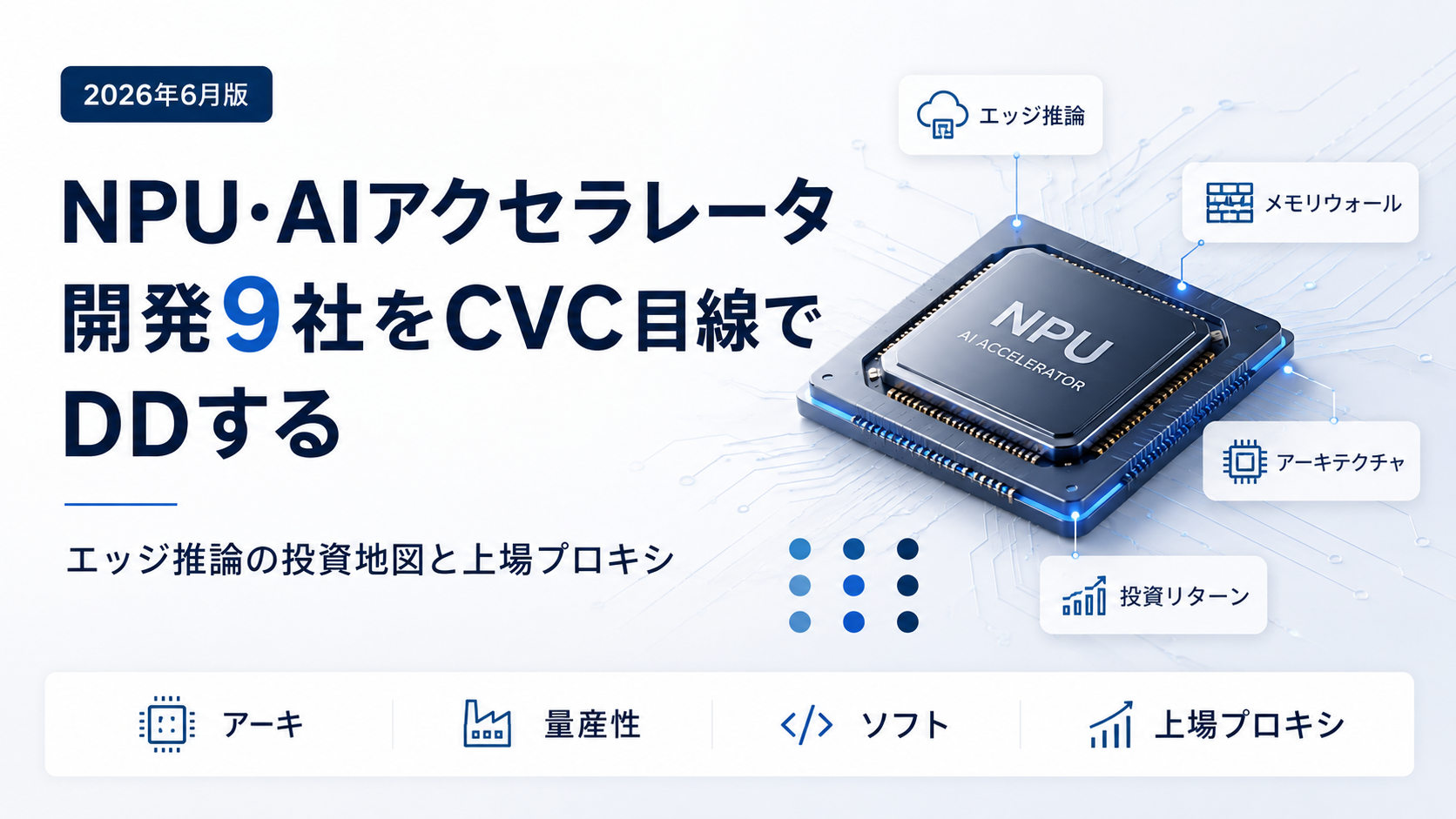
- Diligencing the 9 NPU / AI-Accelerator Developers as a CVC: An Edge-Inference Investment Map and Its Public Proxies — CVC diligence on nine NPU developers — the NVIDIA-Groq consolidation, memory-wall architecture splits, public proxies,…
- Power, Not Compute: Mapping the AI Electricity Bottleneck Across Power Semiconductors and the Grid — Extends this segment breakdown down into the power and grid-infrastructure layer.
The factual and numerical assumptions in this article are anchored to primary or public materials that readers can revisit during AdSense review and future updates.
This article is for informational purposes only and does not constitute investment advice or a recommendation of any specific stock, service, or contract structure. The author may hold positions or interests related to companies or services mentioned. Generative AI was used for parts of research, translation, and proofreading, with final review by ZYL0. See the disclaimer for details.