中小企業向けAI運用パッケージの作り方|30万円/月で売る前に設計した5つの中身
前回、OpenAIやAnthropicのForward Deployed Engineer的な動きは、ひとりクリエイターの仕事も飲み込む可能性があると書きました。では個人は何をするべきか。私の答えはかなり具体的です。AI企業のFDEが来ない中小企業に、自分がミニFDEとして入る。
ただし、ここで売るのは「ChatGPTの使い方講座」ではありません。売るべきなのは、毎月ちゃんと回るAI運用です。私がZYL0のブログ運用で作っているSkills、記事企画、レビュー、公開前チェックの流れを、法人向けに小さくパッケージ化するイメージです。
中小企業の社長や担当者に「AIエージェントを導入しましょう」と言っても、正直あまり刺さりません。刺さるのはもっと地味な言葉です。
- 毎月のブログ更新が止まらない
- 採用記事を社内ヒアリングから作れる
- 営業資料の初稿が1日で出る
- SNS投稿が担当者の気合いに依存しない
- 社長の頭の中を、記事・資料・FAQに変換できる
私が最初に作るなら、提案書の見出しは「AI導入支援」ではなく、「月40時間の発信業務を月3時間まで圧縮する運用パッケージ」にします。ここまで言い切ると、相手はAIではなく自分の時間で判断できる。
この言い換えはかなり大事です。クリエイター側はついツール名を語りたくなる。Claude、ChatGPT、Canva、Notion、MCP。でも買う側は、ツールではなく「面倒が消える感覚」を買います。
30万円/月の最小パッケージなら、最初から全部盛りにしない方がいいです。私ならこの5つに絞ります。
| 中身 | 目的 | 納品物 |
|---|
| 業務分解 | どの作業をAI化するか決める | 業務フロー図、削減時間見積もり |
| ナレッジ整理 | 社長・担当者の頭の中を素材化する | FAQ、言い回し集、商品説明メモ |
| 生成フロー設計 | 毎回同じ品質で作る | Skill/プロンプト、チェックリスト |
| 月次コンテンツ運用 | 実際に回す | ブログ2本、SNS 12本、営業資料1本など |
| 改善MTG | 翌月に直す | 30分の月次レビュー、改善ログ |
ポイントは、ツール納品で終わらせないことです。プロンプトを渡して「はい使ってください」だと、たぶん翌月には使われません。中小企業に必要なのは、完璧なAIツールではなく、雑でも毎月動く運用です。
私が自分のブログでやっていることも同じです。記事テーマを決める、過去記事の次号案を見る、Skillを呼ぶ、Markdownにする、画像を作る、デザインを確認する。この一連の流れがあるから、記事が積み上がる。単発のプロンプトでは、継続は生まれません。
クリエイターが法人案件でつまずくのは、価格の説明です。ブログ1本いくら、SNS投稿1本いくら、と考えると、すぐ単価競争になります。
私なら30万円/月をこう分解します。
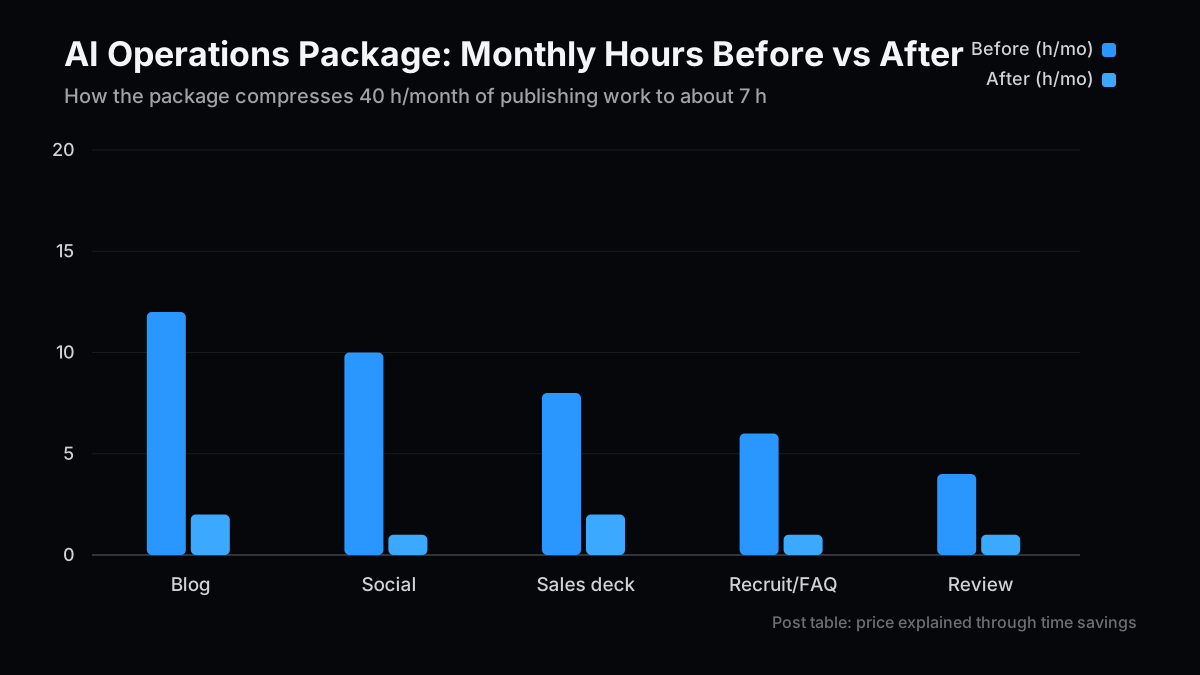
| 項目 | Before | After | 価値の説明 |
|---|
| ブログ企画・初稿 | 12時間/月 | 2時間/月 | 社長ヒアリングから初稿化 |
| SNS投稿 | 10時間/月 | 1時間/月 | ブログから切り出し自動化 |
| 営業資料 | 8時間/月 | 2時間/月 | 商品説明と事例を再利用 |
| 採用/FAQ | 6時間/月 | 1時間/月 | 社内質問をナレッジ化 |
| 確認作業 | 4時間/月 | 1時間/月 | チェックリストで事故を減らす |
合計すると、40時間が7時間くらいになる。時給換算ではなく、担当者の詰まりが消えることを売る。ここまで整理すると、30万円は「記事代」ではなく「運用代」になります。
もちろん、最初から強気に売れるとは限りません。私なら初回3ヶ月は実証期間として、30万円/月、最低3ヶ月、成果物と削減時間を毎月レビューする契約にします。安売りしすぎない。でも、相手が試せる短さにする。このバランスが現実的です。
長い提案書は読まれません。特に中小企業向けなら、7ページで十分です。
- 現状の課題:更新が止まる、担当者依存、社長の言葉が資産化されない
- 目標:月40時間を月7時間にする
- 対象業務:ブログ、SNS、営業資料、採用FAQ
- 運用フロー:ヒアリング→AI初稿→人間レビュー→公開→改善
- 初月の進め方:棚卸し、テンプレ作成、1回目の納品
- 価格:30万円/月、3ヶ月契約
- リスク管理:事実確認、機密情報、公開前承認、著作権チェック
ここで大事なのは、AIの未来を語りすぎないことです。相手が知りたいのは「で、来月から何が楽になるの?」です。私も最初の頃は、ついAIの構造やモデル比較を話しすぎました。でも法人案件では、技術説明より運用設計の方が刺さります。
AI運用案件は、ふわっと始めると事故ります。最低限、以下は契約または発注書に入れたいです。
- 公開前の最終承認者
- 事実確認の責任分担
- 機密情報をAIツールに入れる範囲
- 著作権・二次利用の扱い
- 月あたりの成果物上限
- 修正回数
- 成果保証ではなく運用支援であること
特に「成果物上限」は大事です。30万円/月で無限に記事や資料を作ると、すぐ破綻します。私なら、ブログ2本、SNS 12本、営業資料1本、月次MTG1回を基本にして、追加は別見積もりにします。
ここを曖昧にすると、クリエイター側が疲弊します。AIで作業が速くなるほど、「じゃあもっと作って」と言われやすい。だからこそ、最初から運用範囲を小さく切るべきです。
最後に、自分が今日から作るならこの順番でやります。
- 自分の発信ワークフローを1枚に書く
- その中から企業に売れる部分だけ残す
- 1社向けに「月40時間→月7時間」の仮説を作る
- 3ヶ月契約の提案書を7ページで作る
- 初回は実績作りとして、成果物より改善ログを丁寧に残す
ひとりクリエイターがAI時代に生き残る道は、単に発信を増やすことだけではないと思います。自分の運用を商品化すること。しかも、大企業ではなく、中小企業の現場に刺さるサイズで出すこと。ここに、まだかなり大きな余白があります。
まずは、自分が毎月やっている面倒な作業を10個書き出してみてください。その中で「他社も同じことで詰まっていそう」なものが、あなたのAI運用パッケージの種です。
- 月次で削減できる社内工数を、担当者の時給換算で金額に直す。
- 提案範囲を記事、SNS、問い合わせ対応、FAQ更新などに分け、成果物数ではなく運用負荷の減少で説明する。
- 2か月連続でレビュー会議が開けない顧客は、継続契約より小さな単発検証に戻す。
次号の記事案
- 案1:AI運用パッケージの提案書テンプレを公開する — 7ページ構成をそのまま使える形で、見出し・価格表・リスク管理文言まで具体化する。
- 案2:AI時代のクリエイター単価表|記事、SNS、動画、運用支援をどう値付けするか — 単発納品と月額運用の価格設計を比較する。
- 案3:中小企業の社長ヒアリングから記事を作る方法 — 30分の会話をブログ、SNS、FAQに変換する実践フロー。
本文の事実関係と数値前提は、再審査時にも読者が確認できる一次情報・公的資料を優先して見直しています。
本記事は情報提供を目的としたものであり、特定の銘柄、サービス、契約条件の推奨や投資助言ではありません。執筆者は記事内で触れた銘柄やサービスにポジションまたは利害関係を持つ可能性があります。調査、翻訳、校正の一部に生成AIを利用していますが、最終的な内容はZYL0が確認しています。詳細は免責事項をご確認ください。
How to Build a Mid-Size Company AI Operations Package Before Selling It for $3K a Month
In the previous article, I wrote that OpenAI- and Anthropic-style forward-deployed engineering could eat into the work solo creators do for clients. So what should an individual creator do? My answer is very concrete: become the mini-FDE for the mid-size companies the AI giants will not reach.
But the product is not a "how to use ChatGPT" workshop. The product is an AI operation that runs every month. Think of packaging the same flow I use for ZYL0 — topic planning, Skills, review, Markdown, publishing checks — into something a company can actually keep using.
If you tell a small business owner, "Let's deploy AI agents," the reaction is often lukewarm. What lands is much more ordinary:
- The company blog stops going stale.
- Recruiting articles can be drafted from internal interviews.
- Sales decks can get a first draft in a day.
- Social posts no longer depend on one tired employee.
- The founder's thoughts become articles, decks, and FAQ pages.
If I were naming the offer, I would not call it "AI implementation support." I would call it "an operations package that compresses 40 hours of monthly publishing work into 7 hours." Now the buyer can evaluate time, not hype.
That reframing matters. Creators naturally want to talk about tools: Claude, ChatGPT, Canva, Notion, MCP. Buyers purchase the feeling that the messy work is finally under control.
For a $3K/month minimum package, do not sell everything at once. I would keep it to five pieces.
| Piece | Purpose | Deliverable |
|---|
| Workflow breakdown | Decide what should be AI-assisted | Workflow map and estimated time savings |
| Knowledge capture | Turn internal context into reusable material | FAQ, voice guide, product notes |
| Generation flow | Produce repeatable quality | Skills/prompts and review checklists |
| Monthly content operation | Actually run the work | Two blog posts, 12 social posts, one sales deck, etc. |
| Improvement meeting | Make the next month better | 30-minute monthly review and change log |
The key is: do not end at tool delivery. If you hand over a prompt and say "good luck," it will probably be abandoned by next month. Mid-size companies do not need a perfect AI tool. They need a slightly messy but reliable operation.
My own blog works the same way. I pick topics, inspect previous Next Issue Ideas, call the right Skill, write Markdown, generate images, and check the design. That chain is why articles accumulate. A one-off prompt does not create cadence.
Creators often struggle with pricing corporate work. If you price by blog post or social post, you fall into commodity pricing immediately.
I would explain $3K/month like this:
| Work | Before | After | Value |
|---|
| Blog planning and draft | 12 hours/month | 2 hours/month | Drafts from founder interviews |
| Social posts | 10 hours/month | 1 hour/month | Repurposing from long-form content |
| Sales deck | 8 hours/month | 2 hours/month | Reusing product notes and examples |
| Recruiting / FAQ | 6 hours/month | 1 hour/month | Turning internal questions into knowledge |
| Review | 4 hours/month | 1 hour/month | Fewer mistakes through checklists |
That turns 40 hours into roughly 7. You are not selling "articles." You are selling a monthly operating system that removes a recurring bottleneck.
I would still keep the first contract testable: $3K/month, three-month minimum, monthly review of outputs and time saved. Do not underprice. But make it short enough that the buyer can try it without feeling trapped.
Long proposals do not get read. For mid-size companies, seven pages is enough.
- Current pain: updates stop, knowledge sits in one person's head, output depends on one employee.
- Target: compress 40 hours/month into 7.
- Scope: blog, social, sales deck, recruiting FAQ.
- Operating flow: interview -> AI draft -> human review -> publish -> improve.
- Month-one plan: audit, templates, first delivery.
- Price: $3K/month, three-month contract.
- Risk controls: fact-checking, confidential information, approval, copyright review.
The trap is overexplaining the future of AI. Buyers want to know what becomes easier next month. I made that mistake early too. I wanted to talk about models and architecture. In client work, operating design usually lands harder than technical explanation.
AI operations work can get messy fast. At minimum, define these items in the contract or order form:
- Final approver before publishing
- Responsibility for fact-checking
- What confidential information may enter AI tools
- Copyright and reuse rights
- Monthly output limits
- Number of revision rounds
- The work is operations support, not a guaranteed business outcome
The output limit is especially important. At $3K/month, you cannot create unlimited articles and decks. I would set a baseline: two blog posts, 12 social posts, one sales deck, and one monthly meeting. Anything beyond that is a separate estimate.
If this is vague, the creator burns out. The faster AI makes the work, the more likely the client says, "Great, can we have more?" That is exactly why the scope needs to be small from day one.
If I were starting today, I would do this:
- Draw my own publishing workflow on one page.
- Remove anything that is too personal to sell.
- Build a "40 hours to 7 hours" hypothesis for one target company.
- Write the seven-page proposal.
- For the first client, track improvement logs more carefully than the outputs themselves.
For solo creators, surviving the AI era is not only about posting more. It is about turning your own operating system into a product. Not for giant enterprises, but for companies small enough to need help and large enough to pay for it. That middle layer still has a lot of space.
Start by writing down ten annoying tasks you do every month. The one that other companies probably struggle with too is the seed of your AI operations package.
- Convert internal hours saved into a monetary value using the client's realistic staff cost.
- Explain scope by reduced operating load, not only by the number of articles, posts, FAQs, or support replies produced.
- If a client skips review meetings for two straight months, move back to a smaller validation project before promising a retainer.
Next Issue Ideas
- Idea 1: A reusable proposal template for AI operations packages — the seven-page structure, pricing table, and risk-control language.
- Idea 2: Creator pricing in the AI era — how to price writing, social posts, video, and monthly operations support.
- Idea 3: Turning a founder interview into articles, social posts, and FAQ — a practical 30-minute workflow.
- The AI Operations Proposal Template, Fully Filled In — 7 Pages, Price Table, and Scope-Creep Language You Can Paste — A fully filled-in seven-page AI operations proposal template covering tiered pricing, revision caps, and scope-creep c…
- The Shortest Path to Connecting Internal Knowledge over MCP: Wiring DD Memos, Portfolio Data, and Old Proposals into Claude Code in 30 Minutes — A 30-minute build log: a minimal MCP server that lets Claude Code search CVC DD memos, portfolio data, and past propos…
- Running AI Agents as an Organization: A 12-Subagent, Neon-Backed Postgres Task Board Architecture for a One-Person Company — The era of letting one AI do everything is over.
The factual and numerical assumptions in this article are anchored to primary or public materials that readers can revisit during AdSense review and future updates.
This article is for informational purposes only and does not constitute investment advice or a recommendation of any specific stock, service, or contract structure. The author may hold positions or interests related to companies or services mentioned. Generative AI was used for parts of research, translation, and proofreading, with final review by ZYL0. See the disclaimer for details.