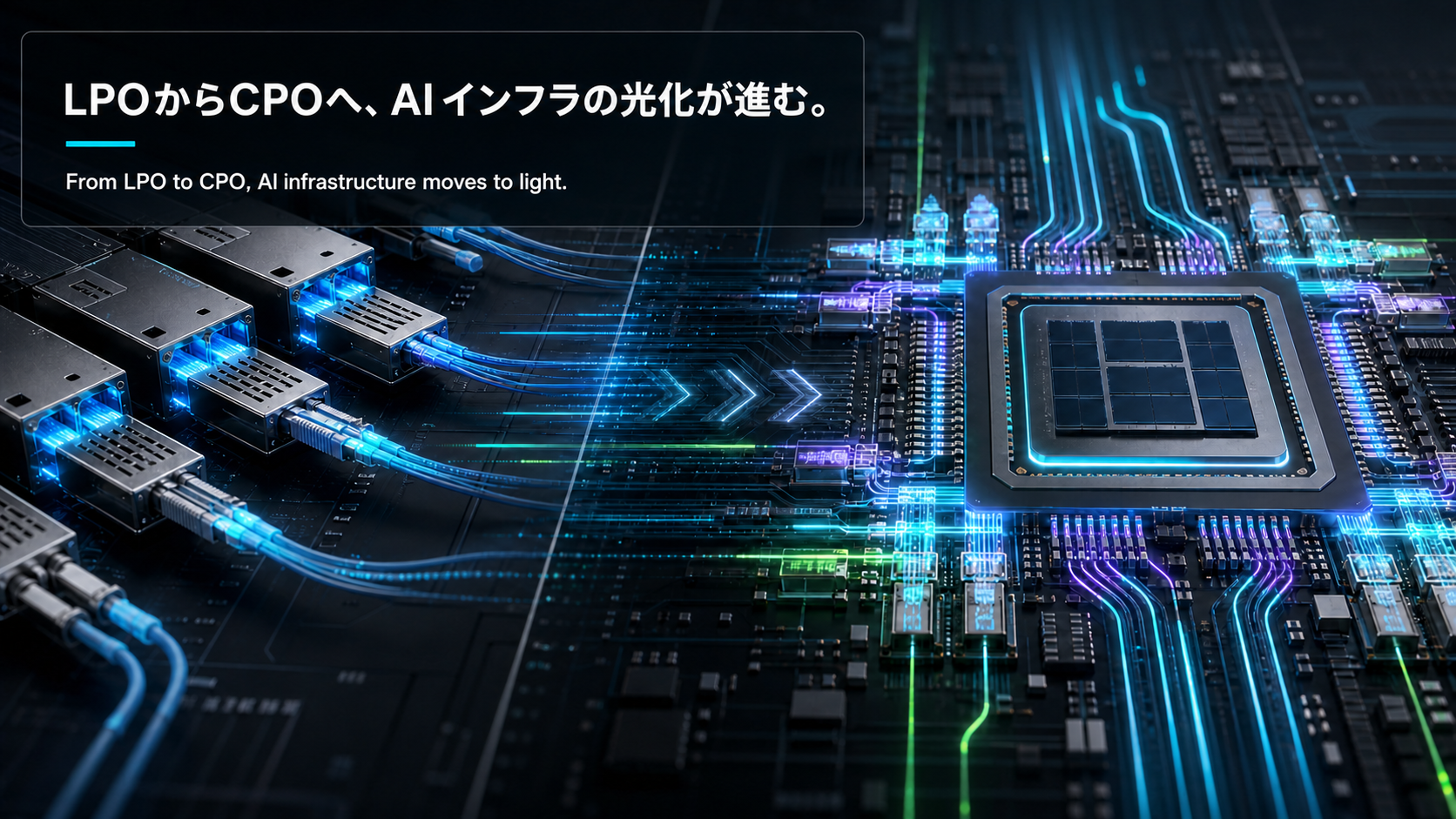
LPO vs CPO|2026〜2028年の光インターコネクト移行マップ
前回(CPO量産のリアル)で「CPOは2027年後半から本格化する」と書きました。すると複数の読者から「では2026〜2027年の橋を誰が取るのか」「LPOに張ってよいのか」という質問をもらいました。今回はその続編として、LPO(Linear-drive Pluggable Optics)を近い橋、CPO(Co-Packaged Optics)を本命として並べ、移行マップとプレイヤー地図を整理します。
私は半導体プロセス出身なので、最初の関心は「いつ・どの順番で・どこの歩留まりが先に立ち上がるか」です。LPOとCPOは競合に見えて、実は時間軸が違う技術です。短期で勝つ者と中期で勝つ者を取り違えると、橋が崩れた瞬間にポジションが残されます。本稿はあくまで2026年5月時点の見立てとして読んでください。半年後には数字が動きます。
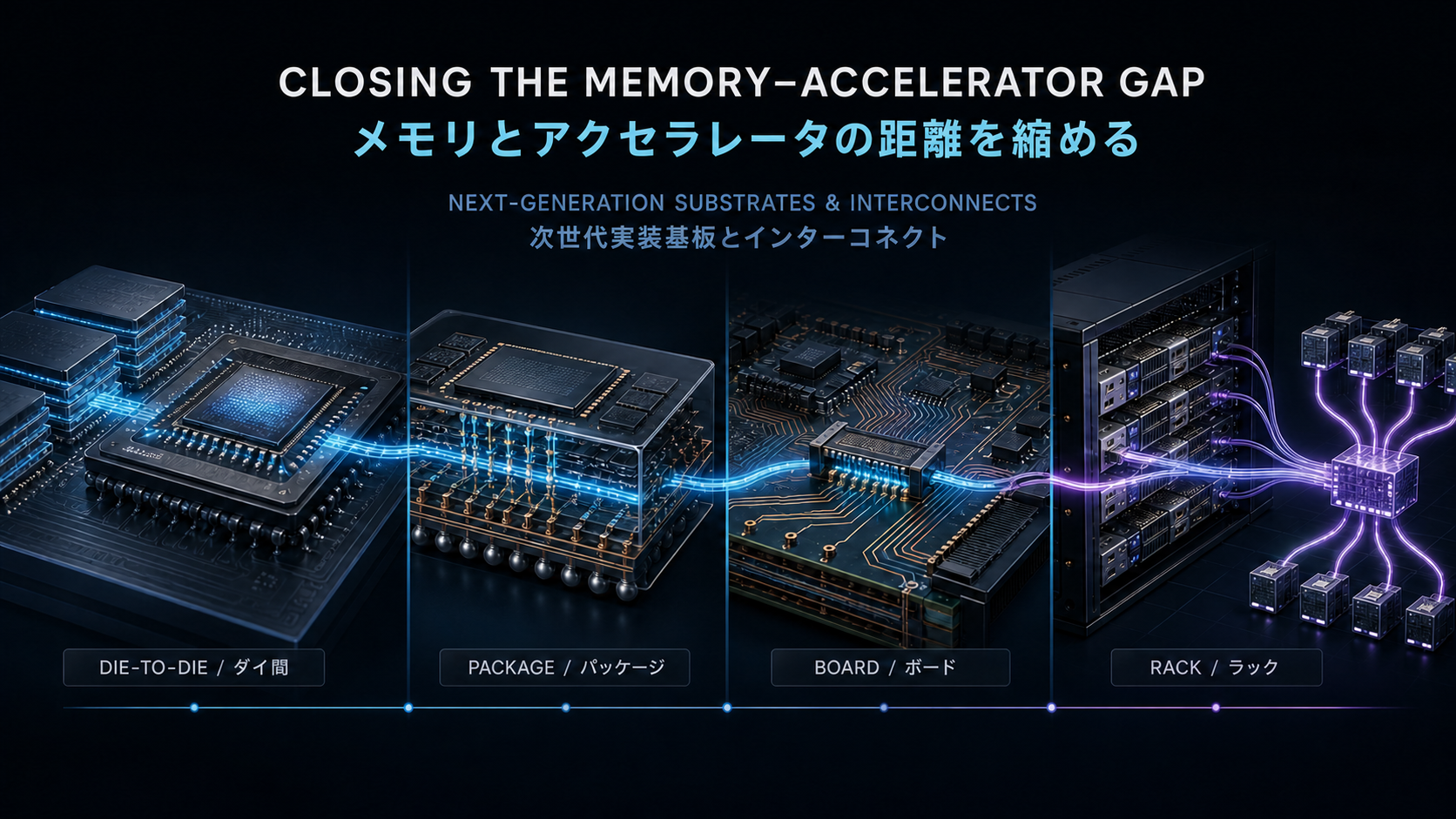
LPOとCPOは「銅から光へ」という同じ方向を向いていますが、解いている問題は別物です。まずは整理します。LPOはプラガブル光モジュールからDSP(デジタル信号処理)を引き抜いて消費電力を下げる近接最適化、CPOは光エンジンをスイッチASICのパッケージ内に取り込み、銅配線そのものを最短化するアーキテクチャ変更です。
| 軸 | LPO | CPO |
|---|
| 何を変える | プラガブル筐体からDSPを除去 | パッケージ内に光を内蔵 |
| 消費電力(800G/ポート目安) | 8〜10W前後(DSP搭載比で約30〜40%減) | 5〜7W前後(さらに30〜40%減) |
| 遅延 | DSP分が消える(数十ns) | 電気I/Oが極小化(更に短縮) |
| 距離 | ラック内・列内(〜500m想定) | ラック内中心 |
| 既存運用との連続性 | プラガブル互換、交換可能 | フィールド交換が難しい |
| 量産歩留まりの難しさ | 中(既存サプライチェーンで対応可能) | 高(先端パッケージ・実装が壁) |
| 保守性 | 高(モジュール交換) | 低(パッケージ単位の交換) |
ここで私が引っかかるのは、LPOは「消費電力を3〜4割減らせる代わりに、シグナル品質をリンク側で吸収する技術」だという点です。つまり、リンクパートナー(スイッチASICとサーバーNIC)の両側に十分な等化能力が要ります。これは「LPOが安く速く立ち上がる」一方で、スイッチASIC世代ごとに使える/使えないが分かれることを意味します。後述しますが、ここがLPO投資のいちばん残酷な賞味期限です。
CPOの方は、消費電力と密度では確かに上位互換ですが、歩留まりと熱の壁が高い。前回書いたとおり、光結合ずれ、レーザー劣化、熱ドリフト、基板反り、テスト不足という5つの不良ポイントを、パッケージ内で同時に潰す必要があります。これは2026年中に解ける問題ではないと、私には見えます。
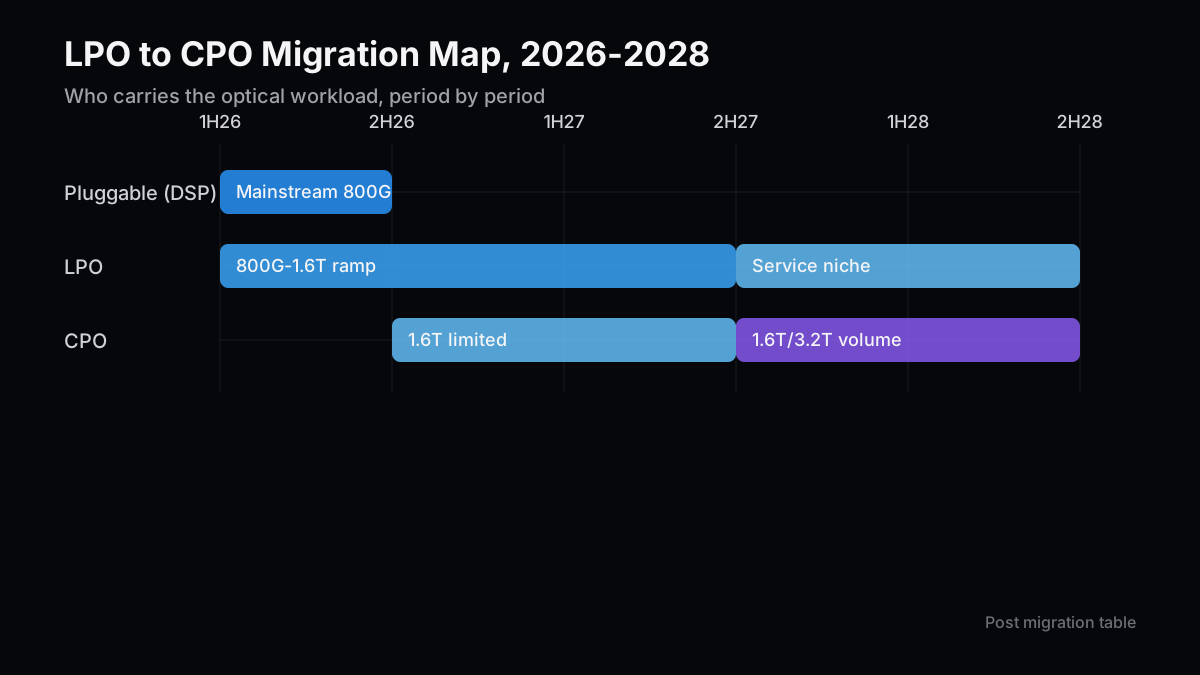
移行マップを描くと、LPOとCPOは並走しながら主役を交代します。論点は「いつ交代するか」と「どの距離・どの帯域から先にCPOが入るか」です。私の現時点の見立ては下表のとおりです。
| 期間 | 主流 | 立ち上がり中 | 限定採用 | コメント |
|---|
| 2026年前半 | プラガブル800G(DSP搭載) | LPO 800G | CPO 1.6T(試作) | LPO量産が本格化する直前 |
| 2026年後半 | LPO 800G併用 | LPO 1.6T、CPC | CPO 1.6T(先行HSP限定) | スイッチASIC更新タイミングに合致 |
| 2027年前半 | LPO 1.6T | CPO 1.6T初期量産 | LPO 3.2T検討 | LPOピーク手前 |
| 2027年後半 | LPO 1.6T + CPO 1.6T | CPO 3.2T試作 | — | CPOクロスオーバー開始 |
| 2028年前半 | CPO 1.6T/3.2T本格化 | CPO 3.2T量産入り | LPO 3.2T(生き残り) | LPOは限定領域に後退 |
| 2028年後半 | CPO 3.2T主流化 | CPO 6.4T議論 | LPO 3.2T(保守用) | LPOは「橋」を終え交換需要中心へ |
ポイントは3つ。第一に、LPOは2027年前半にピークを打ちやすいこと。スイッチASICの世代が回ると等化前提が変わり、3.2T世代以降ではLPOの距離と信頼性のトレードオフがきつくなります。第二に、CPOは1.6T世代から入ること。3.2Tから一気に入るというシナリオは、歩留まり立ち上げ期間を考えると現実的ではないと感じます。第三に、2027年後半が「橋から本道へ」の節目になること。ここを境にLPO投資の主役は新規導入から保守・交換へ移ります。
ひとつ補足すると、LPOが「すぐ消える」わけではありません。長距離(DR4/FR4相当)や、ラック間配線、サーバーNIC側など、CPOが届きにくい場所には2028年以降も残ります。ただし、AIスイッチASIC直結のショートリーチでは、CPOが取りに来ます。投資としては、LPOで「永続セグメント」と「橋セグメント」を区別することが要です。
LPO/CPOの投資地図は、5つのセグメントに割って見ると整理しやすいと思います。順番に整理します。
LPOの本体です。Innolight、Eoptolink、Coherent、Lumentum、AOI、Hisense Broadbandが上場・大手の候補。中国系プレイヤーがコストで先行し、米系が品質・認証で追走する構図です。1.6Tの量産歩留まりがどこで先に立ち上がるかが2026年下期の最重要観察点。
| プレイヤー | ポジション | 注目度 | 2026年の論点 |
|---|
| Innolight | 中国LPO最大手、出荷量首位 | 高 | 北米ハイパースケーラー認証拡大 |
| Eoptolink | 中国第二勢力、コスト競争力 | 中 | 米中規制リスクの影響度 |
| Coherent | 米系総合、レーザー垂直統合 | 高 | LPOマージンとCPO移行設計 |
| Lumentum | 米系、レーザー強い | 中 | 1.6T LPO製品化スピード |
| AOI | 米系、AWS依存度高い | 中 | 単一顧客集中の解消 |
LPOの「賞味期限」を伸ばす技術です。LPOからDSPを抜くと、リンクの等化負担がASIC/NIC側に寄ります。ここで効くのがリタイマー(信号整形)とリドライバー(信号増幅)のIPです。Astera Labs、Credo、Marvell、Broadcomがプレイヤー。LPOが伸びるほど、補完IPの単価と数量が伸びる構造です。
私が一番面白いと思うのは、リタイマーIPはLPOからCPOへの移行期にも需要が残る点です。CPO初期はリンク品質のばらつきが残るため、外部リタイマーで吸収する設計が出てきます。つまり、LPO/CPO双方の受益銘柄として中立に置けるセグメントです。
光エンジン、外部レーザー、ファイバーアタッチをまとめて作るレイヤーです。Coherent、Lumentum、Marvell(Inphi買収後の光エンジン部隊)、Browave、PHIXあたりが候補。ここはCPO本体ではなく、CPOを組み立てる「実装屋」と捉えるのが正しいと思います。CPOが立ち上がるとき、最初にボトルネックになるのはサブアセンブリの歩留まりです。
シリコンフォトニクス(PIC)の製造インフラ。GlobalFoundries(GF Fotonix)、TSMC(COUPE)、Tower Semi、Intel Foundry、AIM Photonics(米国非営利)が主要プレイヤー。CPOの量産期に向けて、12インチPICラインの供給能力が制約条件になります。短期では地味ですが、2027年以降に再評価される可能性があります。
| ファウンドリ | プロセス | 強み | 弱み |
|---|
| GF Fotonix | 45nm SOI PIC | ヘテロ統合の歩留まり | キャパシティ拡張速度 |
| TSMC COUPE | 先端ノード隣接 | スイッチASICとの近接設計 | PIC専業ではない |
| Tower Semi | RF/MEMS実績 | 多品種少量に強い | 大量生産には限界 |
| Intel Foundry | InP/Si統合 | レーザー垂直統合 | 経営体制の不確実性 |
CPOの周辺で見落とされやすい領域。Senko、US Conec、Sumitomo Electric、Furukawa、Fujikuraがプレイヤー。CPOでは1パッケージあたり数百〜千本のファイバーを引き出すため、シャッフルとコネクタの品質が歩留まりとMTBF(平均故障間隔)を左右します。地味ですが、CPO量産で最後まで残るボトルネックになりやすいと私は見ています。
技術論を投資論に落とすと、勝負どころは結局「歩留まりと熱」です。LPOとCPOで何が違うのか、表で整理します。
| 観点 | LPO | CPO |
|---|
| 主要不良モード | リンク等化失敗、信号品質ばらつき | 光結合ずれ、熱ドリフト、パッケージ反り |
| 歩留まり改善ループ | モジュール単位(外で吸収可能) | パッケージ単位(外で吸収不可) |
| 検査の難易度 | 中(既存ATEで対応可能) | 高(光検査・熱検査の組み合わせ) |
| 熱設計の制約 | プラガブル筐体内(既存設計流用) | ASIC近傍(新設計必須) |
| サプライチェーンの成熟度 | 高 | 低 |
| 単価の下がりやすさ | 速い(中国系競争) | 遅い(パッケージ依存) |
LPOは既存のサプライチェーンとほぼ同じ枠組みで量産できるので、立ち上がりは速いです。ただし、価格下落も速い。CPOは立ち上がりが遅い代わりに、価格下落も遅い。「LPOは出荷量で稼ぎ、CPOは付加価値で稼ぐ」という性格の違いが、投資判断にそのまま跳ねます。
EEPROMの量産経験から言うと、こうした「立ち上がりは速いが価格下落も速い」製品は、先頭の2四半期で稼ぎ切る設計をしている企業が勝ちます。後発でコストだけ追う企業は、立ち上がりの恩恵を取り損ねる。LPOの選別は、この観点だけでもかなり絞れます。
シナリオを置きます。前回のCPO単体の表より、今回はLPOとCPOの主役交代タイミングに焦点を絞っています。
| シナリオ | 確率(主観) | LPOピーク | CPO本格化 | 受益 |
|---|
| ベース | 50% | 2027年Q1〜Q2 | 2027年Q4〜2028年Q1 | LPO transceiver前半、CPOサブアセンブリ後半 |
| 強気(CPO前倒し) | 20% | 2026年Q4 | 2027年Q2 | CPOサブアセンブリ、PICファウンドリ |
| 弱気(CPO遅延) | 20% | 2027年Q3〜Q4 | 2028年Q3以降 | LPO、リタイマーIP、保守セグメント |
| テール(LPO品質問題) | 10% | 2026年Q4で頭打ち | 2027年Q3 | プラガブル延命、CPO一気立ち上げ |
ベースケースでは、2026年下期から2027年前半までがLPO投資の旨味、2027年後半以降はCPO投資にローテーションするのが筋に見えます。強気ケースではローテーションが半年〜1年早まり、弱気ケースではLPOの賞味期限が伸びます。テールリスク(LPO品質問題)が起きた場合は、皮肉なことにCPOが「飛び道具」として一気に評価される可能性があります。
私が現時点でいちばんミスプライスだと感じているのは、リタイマー・リドライバーIPセグメントです。市場はこれを「LPOの補完」としてしか見ていませんが、実際にはCPO初期の品質吸収にも使われます。LPO/CPO双方で受益する中立ポジションを、市場はまだ織り込んでいないように見えます。次点はファイバーシャッフル・コネクタ。CPO量産期に「最後のボトルネック」として注目される確率が高いと、私には見えます。
DSPレスLPOトランシーバー本体は、出荷量は伸びても価格下落が速いため、マージンの絶対値より「先頭2四半期で稼ぎ切れるか」を見るべきです。中国系プレイヤーのコスト競争に巻き込まれる米系企業は、見かけの売上が伸びても利益率は落ちます。ここは個社選別が要です。
最後に、LPO段階で投資する際の確認項目を置きます。CPOが来た時に「橋が崩れて取り残される」リスクを減らすためのチェックです。
- 顧客集中度:上位3社で売上の何%か。70%超なら集中リスク。
- 製品ラインのCPO移行計画:CPOサブアセンブリ・PIC・コネクタへのアクセスがあるか。LPO単独企業は2028年以降の生存戦略が苦しい。
- マージン構造:1.6T LPOの粗利が30%を切る兆候があれば、価格競争入りのサイン。
- スイッチASICとの認証関係:Broadcom Tomahawk、NVIDIA Spectrum、Marvell Teralynx等の認証取得状況。LPOはASIC側との相性が命。
- 中国エクスポージャー:米中規制で出荷停止リスクがある場合、ディスカウントが必要。
- 保守・交換ビジネスへの転換能力:LPOピークアウト後、保守セグメントで売上を維持できるか。
- CPO関連R&D比率:研究開発費の何%をCPO/PICに振っているか。10%未満なら危険信号。
このうち、私がいちばん重視するのは「CPO移行計画」です。LPOだけで儲ける構造の企業は、2027〜2028年に決定的に取り残されます。逆に、LPOとCPOの両方に足を置く垂直統合型のサプライヤーは、橋から本道への移行期に大きな受益が来ます。
最後に。AIインフラの光化は止まらない、というのは前回と変わらない見立てです。ただし、勝つのは「いちばん速い光」ではなく、「いちばん長く量産できる光」です。2026年5月時点での私の結論は、LPOで短期キャッシュを取り、リタイマー/コネクタで中立に置き、CPOサブアセンブリとPICファウンドリで中期ポジションを作る——この三層構造です。半年後に答え合わせをします。
次号の記事案
- 案1:AIデータセンター液冷の部品表|CDU、コネクタ、冷媒、センサーの投資地図 — CPOと並走して立ち上がる液冷BOMを、コンポーネント別に分解する。前回・今回で残した「冷却周辺」の続編。
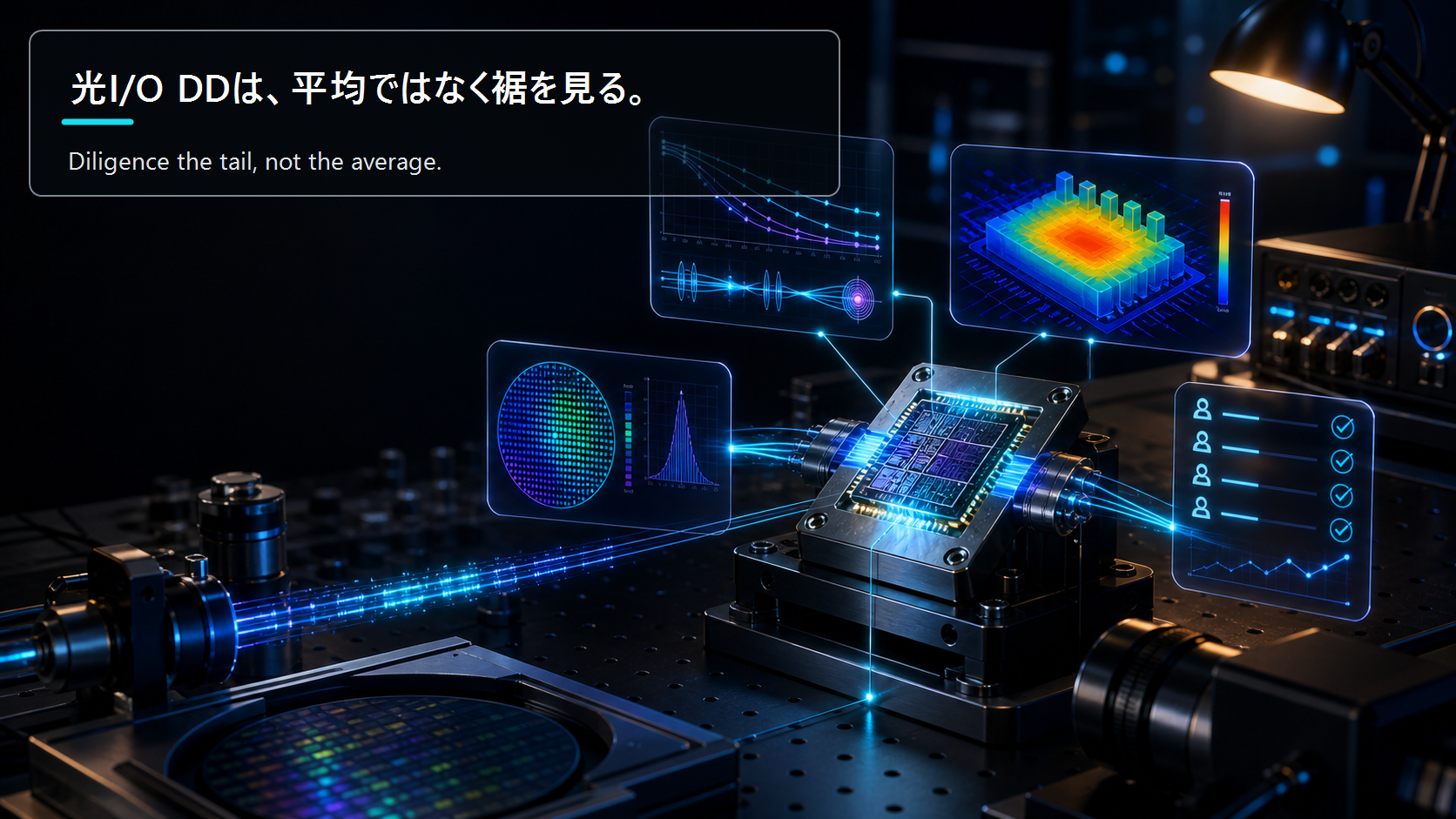
- 案2:光I/OスタートアップDDの見方|挿入損失・熱・量産・顧客評価をどう測るか — CPOサブアセンブリとPICファウンドリのスタートアップを実務的にどうDDするか。私のCVC経験からチェック項目を整理する。
- 案3:シリコンフォトニクスIPライセンスの経済性|PICファウンドリとIPベンダーのバリューチェーン分析 — Ayar Labs、Lightmatter、Celestial AIなど非上場プレイヤーの位置づけと、IPライセンスモデルの収益性を上場PICファウンドリと比較する。
本文の事実関係と数値前提は、再審査時にも読者が確認できる一次情報・公的資料を優先して見直しています。
本記事は情報提供を目的としたものであり、特定の銘柄、サービス、契約条件の推奨や投資助言ではありません。執筆者は記事内で触れた銘柄やサービスにポジションまたは利害関係を持つ可能性があります。調査、翻訳、校正の一部に生成AIを利用していますが、最終的な内容はZYL0が確認しています。詳細は免責事項をご確認ください。
LPO vs CPO: The 2026–2028 Optical Interconnect Migration Map for AI Infrastructure
In the previous post (The Real CPO Ramp), I argued that CPO enters meaningful volume only from late 2027. Several readers came back with the same question: who owns the bridge between now and then, and is LPO safe to back? This piece is the sequel. I treat LPO (Linear-drive Pluggable Optics) as the near-term bridge and CPO (Co-Packaged Optics) as the medium-term winner, then lay out the migration map and the investable segments.
Coming from semiconductor process engineering, my first instinct is to ask when, in what order, and at what yield each technology stands up. LPO and CPO look like competitors but actually operate on different time axes. Mix up the short-term winner with the medium-term winner, and you get stranded the moment the bridge collapses. Read this as a snapshot of where I stand in May 2026. Six months from now the numbers will move.
LPO and CPO point in the same direction — copper to light — but solve different problems. LPO is a near-term optimization that strips the DSP out of pluggable optical modules to cut power. CPO is an architectural shift that places the optical engine inside the switch ASIC package, minimizing electrical reach entirely.
| Dimension | LPO | CPO |
|---|
| What changes | DSP removed from pluggable module | Optics integrated into package |
| Power (per 800G port, rough) | ~8–10W (30–40% less than DSP-based) | ~5–7W (another 30–40% cut) |
| Latency | Saves the DSP budget (tens of ns) | Electrical I/O minimized further |
| Reach | In-rack to in-row (~500m) | Largely in-rack |
| Operational continuity | Pluggable-compatible, swappable | Field swap is hard |
| Manufacturing yield difficulty | Medium (fits current supply chain) | High (advanced packaging is the wall) |
| Serviceability | High (module-level swap) | Low (package-level swap) |
What sticks with me is that LPO trades 30–40% power for shifting signal-quality burden onto the link partners. Both the switch ASIC and the server NIC need enough equalization to absorb the missing DSP. That means LPO ramps fast and cheap — but each ASIC generation creates a hard "works/doesn't work" boundary for LPO. As I discuss below, this is the cruelest expiration date in the LPO trade.
The other subtlety is that the term "LPO" is already fragmenting in the field. Some vendors ship full LPO with no DSP and no clock-data recovery. Others ship "half LPO," which keeps a thin retimer in the module. From a power-budget perspective these are very different products, but the marketing language collapses them together. When evaluating LPO names, the first question to ask is which flavor they are shipping at volume — pure LPO buyers and half-LPO buyers do not always intersect.
CPO genuinely sits above LPO on power and density. But the yield and thermal walls are steep. As I wrote previously, the five failure points — coupling shift, laser degradation, thermal drift, substrate warpage, inadequate test — all have to be solved together, inside the package. I do not see that happening within 2026. The first wave of CPO that ships at meaningful volume will, in my view, be a 1.6T product with external lasers and roughly 60–70% engine-level yield — high enough to be commercially interesting, but not high enough to displace pluggables outside lead-customer deployments.
When you draw the migration map, LPO and CPO run in parallel and swap roles. The questions are when the handover happens and which reach and bandwidth combinations CPO enters first. My current view is below.
| Period | Mainstream | Ramping | Limited adoption | Comment |
|---|
| 1H 2026 | Pluggable 800G (DSP) | LPO 800G | CPO 1.6T (samples) | Just before LPO volume kicks in |
| 2H 2026 | LPO 800G in parallel | LPO 1.6T, CPC | CPO 1.6T (lead hyperscalers only) | Aligned with switch ASIC refresh |
| 1H 2027 | LPO 1.6T | CPO 1.6T early volume | LPO 3.2T evaluation | Approaching LPO peak |
| 2H 2027 | LPO 1.6T + CPO 1.6T | CPO 3.2T samples | — | Crossover begins |
| 1H 2028 | CPO 1.6T/3.2T ramping | CPO 3.2T volume | LPO 3.2T (surviving niche) | LPO recedes to limited reach |
| 2H 2028 | CPO 3.2T mainstream | CPO 6.4T in discussion | LPO 3.2T (service) | LPO ends as a bridge, lives as service revenue |
Three points stand out. First, LPO probably peaks in 1H 2027. As switch ASIC generations turn, the equalization assumptions shift, and the reach/reliability tradeoffs of LPO get tougher from 3.2T onward. Second, CPO most likely enters at the 1.6T generation. The "CPO skips 1.6T and enters at 3.2T" scenario is unrealistic given how long yield ramps take — process learning curves for a fundamentally new package format do not compress by skipping a node. Third, 2H 2027 is the inflection — beyond that point, the LPO trade rotates from new deployment to service and replacement, which is a very different revenue profile and tends to be re-rated lower by the market.
To be clear, LPO does not vanish. It survives in longer reach (DR4/FR4-class), inter-rack links, and on the server NIC side where CPO cannot easily reach. There is also a real chance LPO sticks around in second-tier cloud and enterprise deployments that lag hyperscalers by 18–24 months on architecture refresh. But on short-reach AI switch interconnect, CPO will take the workload. As an investor, the key is to distinguish the "permanent LPO segment" from the "bridge LPO segment." Companies whose revenue mix tilts toward the bridge segment need to be valued on a much shorter duration than those serving the permanent segment.
The LPO/CPO investment landscape is easier to read across five segments.
The core of the LPO trade. Public/major candidates include Innolight, Eoptolink, Coherent, Lumentum, AOI, and Hisense Broadband. Chinese names lead on cost; US names chase on quality and certification. The single most important signal in 2H 2026 is which player stands up 1.6T LPO at volume yield first.
| Player | Position | Attention | 2026 watch item |
|---|
| Innolight | China LPO leader, top shipments | High | Expansion of NA hyperscaler certification |
| Eoptolink | China #2, cost-driven | Medium | Sensitivity to US-China export controls |
| Coherent | US integrated, vertical in lasers | High | LPO margin and CPO transition design |
| Lumentum | US, strong in lasers | Medium | Speed of 1.6T LPO productization |
| AOI | US, heavy AWS dependency | Medium | Customer-concentration unwind |
Technology that extends LPO's shelf life. Removing DSP from LPO pushes equalization burden onto the ASIC and NIC sides. Retimers (signal shaping) and redrivers (signal amplification) absorb that burden. Astera Labs, Credo, Marvell, and Broadcom are the players. Volume and ASP for these IPs grow as LPO grows.
What I find most interesting is that retimer IP demand persists through the LPO-to-CPO transition. CPO's early generations still have link-quality variability, and external retimers will be designed in to absorb it. That makes this segment a neutral beneficiary of both LPO and CPO.
The layer that builds optical engines, external lasers, and fiber attach as a bundle. Candidates include Coherent, Lumentum, Marvell (the post-Inphi optical engine group), Browave, and PHIX. The right mental model here is "the assembly shop for CPO," not CPO itself. The first bottleneck when CPO ramps will be sub-assembly yield, not the optical engine. From a CVC due-diligence angle, I would look for two specific capabilities: hermetic packaging at micron-scale alignment tolerances, and burn-in equipment that handles both optical and electrical stress in parallel. Vendors with either capability today are scarce; vendors with both at volume capacity are rarer still.
Silicon photonics manufacturing infrastructure. GlobalFoundries (GF Fotonix), TSMC (COUPE), Tower Semiconductor, Intel Foundry, and AIM Photonics (US non-profit) are the main players. As CPO scales, 12-inch PIC line capacity becomes the binding constraint. Boring in the short term, likely re-rated from 2027 onward.
| Foundry | Process | Strength | Weakness |
|---|
| GF Fotonix | 45nm SOI PIC | Yield on hetero integration | Capacity expansion speed |
| TSMC COUPE | Adjacent to advanced nodes | Co-design with switch ASICs | Not PIC-pure-play |
| Tower Semi | RF/MEMS heritage | Strong on low-volume / mixed product | Limited at high volume |
| Intel Foundry | InP/Si integration | Vertical in lasers | Corporate uncertainty |
The most overlooked area in the CPO periphery. Senko, US Conec, Sumitomo Electric, Furukawa, and Fujikura are the players. CPO pulls several hundred to a thousand fibers per package, so shuffle and connector quality directly drive yield and MTBF. Unglamorous, but in my view this is the bottleneck that lasts the longest into CPO volume. A single connector misalignment can fail a multi-thousand-dollar package; a 99% per-connector yield translates to surprisingly weak system yield once you multiply across hundreds of connections. The Japanese fiber majors have an underrated structural advantage here because they have spent decades shipping fibers into telecom networks where reliability requirements are even stricter than data center norms.
To translate the technical comparison into an investment lens, the contest is always yield and thermals. Here is what differs.
| Aspect | LPO | CPO |
|---|
| Main failure modes | Equalization failures, signal-quality variance | Coupling shift, thermal drift, substrate warpage |
| Yield-improvement loop | Module-level (absorbable outside the package) | Package-level (cannot be absorbed outside) |
| Test difficulty | Medium (existing ATE works) | High (optical + thermal test combination) |
| Thermal design constraints | Inside the pluggable cage (reuse) | Adjacent to the ASIC (new design required) |
| Supply-chain maturity | High | Low |
| ASP decay rate | Fast (Chinese price competition) | Slow (package-bound) |
LPO ramps fast because it fits the existing supply chain envelope. But ASP also drops fast. CPO ramps slowly, and ASP holds longer. "LPO earns through volume; CPO earns through value." That character difference flows directly into how to position.
From my EEPROM volume-production days, a product profile of "fast ramp, fast price erosion" rewards the players who design to capture the first two quarters of margin. Late-followers chasing on cost alone miss the ramp benefit entirely. Just applying that filter narrows the LPO universe meaningfully. The investment lesson is that headcount, capex, and inventory all have to be sized for the front of the curve, not the steady state — and most companies, including some otherwise excellent operators, structurally fail at this kind of pre-loaded ramp execution.
Here is my scenario frame. Unlike the table in the previous CPO-only post, this one is focused on the timing of the handover between LPO and CPO.
| Scenario | Subjective probability | LPO peak | CPO mainstream | Beneficiaries |
|---|
| Base | 50% | Q1–Q2 2027 | Q4 2027 – Q1 2028 | LPO transceivers first, CPO sub-assembly later |
| Bull (CPO pulled in) | 20% | Q4 2026 | Q2 2027 | CPO sub-assembly, PIC foundries |
| Bear (CPO delayed) | 20% | Q3–Q4 2027 | Q3 2028+ | LPO, retimer IP, service segment |
| Tail (LPO quality issues) | 10% | Cap in Q4 2026 | Q3 2027 | Pluggable life-extension, CPO leapfrog |
In the base case, 2H 2026 through 1H 2027 is the LPO trade window, and from 2H 2027 onward the rotation flips to CPO. The bull case shifts that rotation six to twelve months earlier. The bear case extends LPO's shelf life. The tail scenario — LPO quality issues — would, ironically, push CPO into being seen as the "rescue technology," accelerating its re-rating.
The segment I currently see as most mispriced is retimer / redriver IP. The market reads it as "LPO complement," but it is also the absorber for CPO's early link-quality variance. The neutral exposure to both LPO and CPO does not seem priced in. The runner-up is fiber-shuffle and connectors — likely to be discovered as the "last bottleneck" during CPO ramp, in my view.
DSP-less LPO transceivers themselves see growing volume but rapid ASP decay. I would watch "can they capture the first two quarters of margin?" more than the absolute margin level. US players forced into Chinese cost competition will see top-line growth but margin compression. Name-by-name selection matters here.
To close, a checklist for investing during the LPO window. The goal is to reduce the risk of being stranded when the bridge collapses.
- Customer concentration: What percent of revenue comes from the top three customers? Above 70% is a concentration risk.
- Product roadmap into CPO: Does the company have access to CPO sub-assembly, PIC, or connectors? Pure-play LPO companies face a tough survival story beyond 2028.
- Margin structure: If 1.6T LPO gross margin drops below 30%, that is the signal that price competition has started.
- Switch ASIC certification footprint: Certification status with Broadcom Tomahawk, NVIDIA Spectrum, Marvell Teralynx, etc. LPO lives or dies by ASIC-side compatibility.
- China exposure: If US-China export controls could halt shipments, a discount is required.
- Capability to pivot to service/replacement: After LPO peaks, can the company sustain revenue through the service segment?
- CPO-related R&D ratio: What percentage of R&D is allocated to CPO/PIC? Below 10% is a red flag.
The line I weigh most heavily is "CPO transition plan." Companies built only to earn from LPO will be decisively left behind in 2027–2028. Conversely, vertically integrated suppliers with footholds in both LPO and CPO will catch the largest tailwind across the handover.
To close. AI infrastructure optics will keep migrating — that view does not change from the last post. But the winning optical technology is not "the fastest light"; it is "the light you can keep manufacturing the longest." My May 2026 conclusion is a three-layer structure: take short-term cash with LPO transceivers, hold neutral exposure through retimer IP and connectors, build medium-term positions in CPO sub-assembly and PIC foundries. I will mark this to market in six months.
One last note for portfolio construction. The temptation when looking at LPO and CPO is to pick a single winner and concentrate. I would resist that. The honest read of the migration map is that timing risk dominates — even if you pick the right technology, mis-timing the rotation by two quarters can wipe out the trade. A diversified barbell across the LPO front and the CPO back, sized so that either rotation outcome leaves you with capital intact, is in my view the right structure for the bridge years. The single-name conviction comes back in 2H 2027, when the crossover is visible and the bottlenecks are priced.
Next Issue Ideas
- Idea 1: The Liquid-cooling Bill of Materials for AI Data Centers — CDUs, Connectors, Coolants, Sensors — Decompose the cooling BOM that ramps alongside CPO, component by component. This is the continuation of the "cooling periphery" thread left unfinished by the previous and current posts.
- Idea 2: How to Diligence Optical I/O Startups — Insertion Loss, Thermals, Volume, Customer Validation — A practical DD framework for CPO sub-assembly and PIC foundry startups, drawing on my CVC experience to lay out the checklist.
- Idea 3: The Economics of Silicon Photonics IP Licensing — A Value-chain Analysis of PIC Foundries vs. IP Vendors — Position private players such as Ayar Labs, Lightmatter, and Celestial AI, and compare the profitability of IP-license models against publicly traded PIC foundries.
- The Investment Map of AI Infrastructure's "Silicon Periphery": Power, Cooling, Optics, and Site Plays Hiding in Plain Sight — Watching only NVIDIA and AMD misses the point.
- The Real CPO Ramp: Winners in AI Data Center Optics Through Yield and Thermal Design — Optical conversion of AI datacenters is inevitable, but CPO mass production isn't just a bandwidth race.
- How to Diligence Optical I/O Startups: Measuring Insertion Loss, Thermals, Manufacturability, and Customer Validation — A CVC diligence checklist for optical I/O startups: pressing insertion loss, thermals, manufacturing yield, and custom…
The factual and numerical assumptions in this article are anchored to primary or public materials that readers can revisit during AdSense review and future updates.
This article is for informational purposes only and does not constitute investment advice or a recommendation of any specific stock, service, or contract structure. The author may hold positions or interests related to companies or services mentioned. Generative AI was used for parts of research, translation, and proofreading, with final review by ZYL0. See the disclaimer for details.