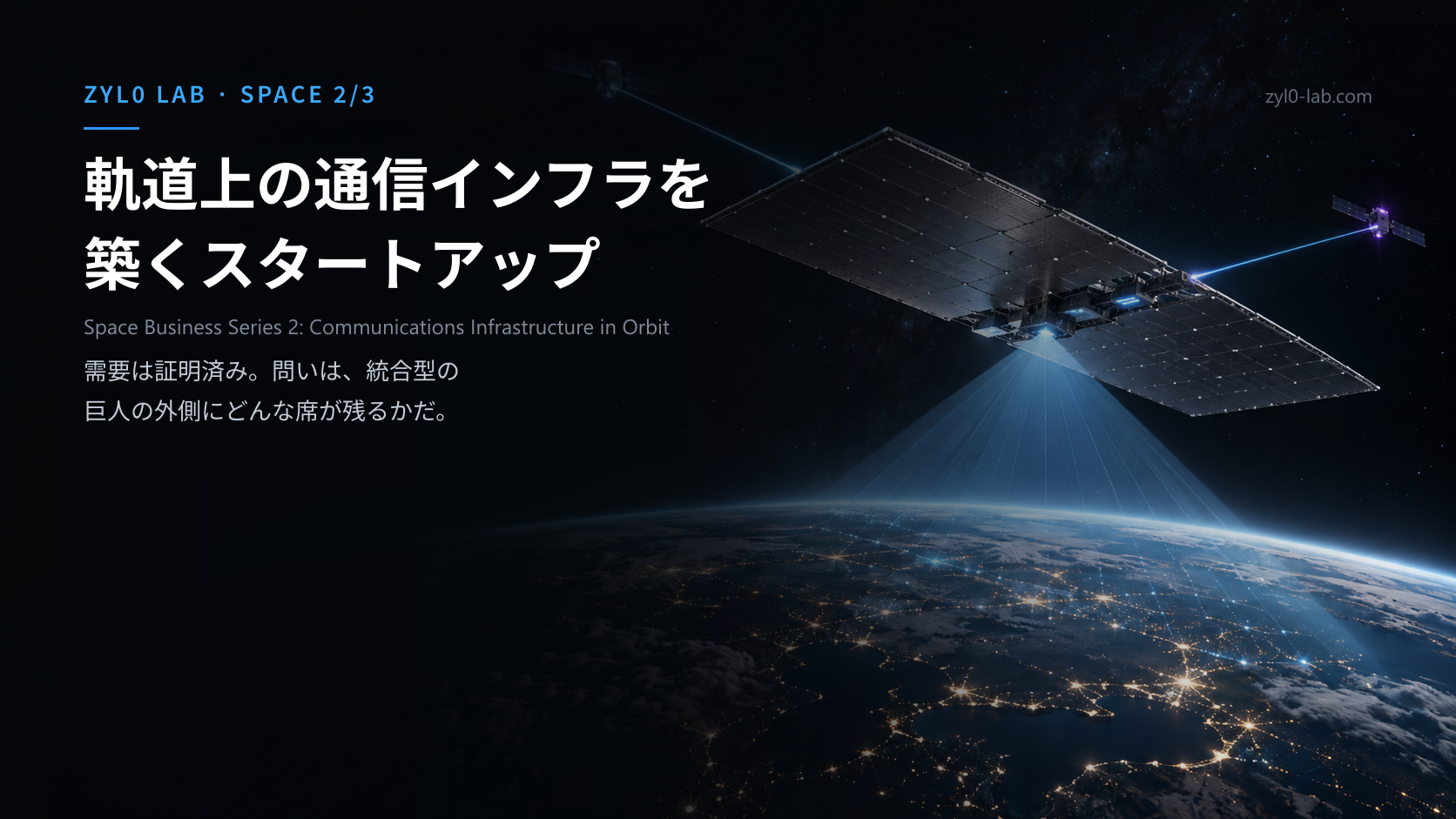
宇宙ビジネス連載②:軌道上の通信インフラを築くスタートアップ
連載①で読んだ微小重力の研究開発は、需要そのものがまだ証明の途中だった。通信は逆である。需要はとうに証明され、現金も回っている。だから今回の問いは「市場はあるか」ではない。垂直統合した巨人の外側に、スタートアップの席がどれだけ残っているか、だ。
※本稿は各社の公開情報(発表資料・製品ページ・論文・報道)をもとにした、外部からの個人的な見立てです。
確認時点:2026年10月11日。 調達額・評価額・業績・衛星数は各社の発表と報道に基づく。報道ベースで未確定のものはその旨を記した。合計や比率、段階分けは筆者の計算と判断である。
数字を並べる前に、私の見立てを書いておく。この層で消費者向けの回線を新しく始める席は、もうほとんど残っていない。
SpaceXは2026年6月12日にNasdaqへ上場し、750億ドルを調達した。過去最大のIPOである。目論見書と第2四半期の報告によれば、Starlinkの契約数は3月末の1,030万から6月末に1,200万へ増えた。2025年の通信事業の売上は114億ドルで、前年から83%伸びている。一方、契約者1人あたりの月間収入は2023年の99ドルから2025年末に81ドルへ、18%下がった。
契約は増え、単価は下がる。Starlinkは「高くても売れる」段階を過ぎ、量で稼ぐ段階に入っている。
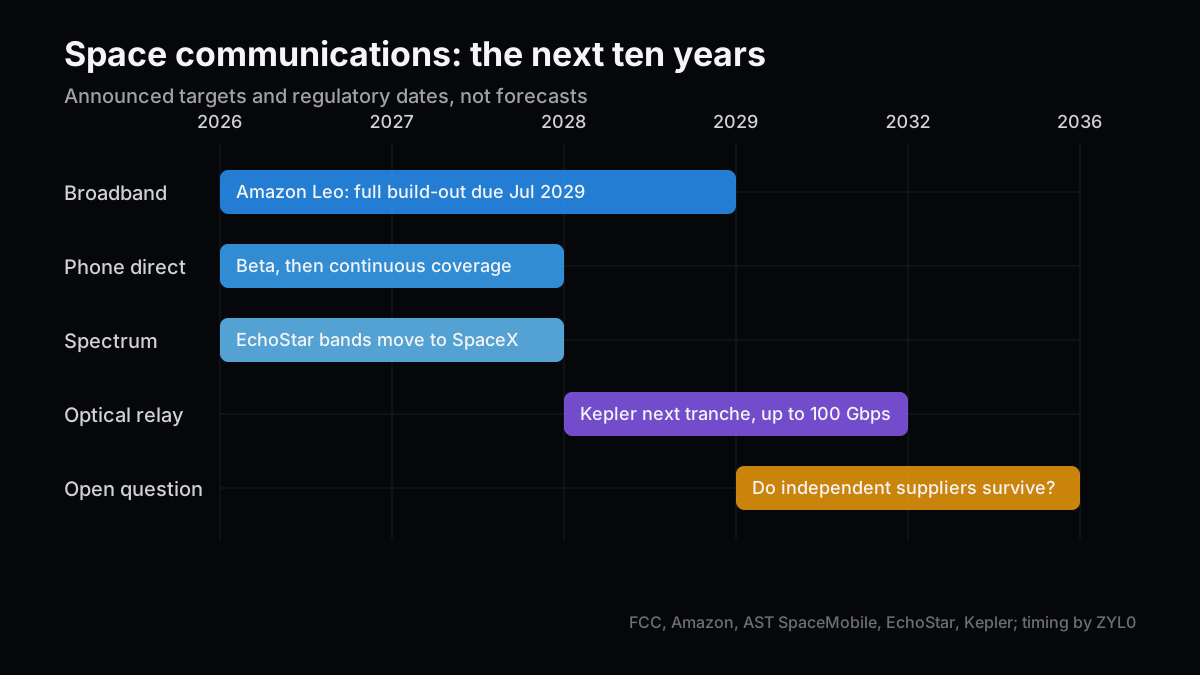
追う側のAmazon Leo(旧Project Kuiper)は、7月2日の打ち上げで軌道上の衛星が396機になった。ただし、米連邦通信委員会(FCC)が課した「2026年7月30日までに計画の半数を配備する」という期限には届かず、6月5日に限定的な猶予を得ている。全機の配備期限は2029年7月30日だ。同社は年内に商用サービスを始めるとしている。
| 項目 | Starlink(SpaceX) | Amazon Leo |
|---|
| 契約・サービス | 1,200万契約(2026年6月末) | 企業向けの先行提供、年内に商用化 |
| 軌道上の衛星 | 自社ロケットで継続的に追加 | 396機(2026年7月2日) |
| 2025年の売上 | 通信事業で114億ドル(前年比83%増) | 非開示 |
| 資金 | IPOで750億ドル(2026年6月) | Amazon本体の投資 |
| 規制上の節目 | EchoStarの周波数の移転をFCCが承認 | 半数配備の期限に届かず猶予 |
連載①で使った証拠の階段を、通信に置き換える。
| 段階 | 見える証拠 | まだ言えないこと |
|---|
| 1. 実証 | 通話や接続が一度成功した | 衛星を量産して運用できるか |
| 2. 軌道上の衛星 | 複数の実用衛星が軌道にある | 使える周波数と許可があるか |
| 3. 周波数と許可 | 商用の免許、通信事業者との契約 | 途切れずにつながるか |
| 4. 連続カバレッジ | 対象地域で常時つながる | 利用者が継続して払うか |
| 5. 継続収入 | 契約数、1契約あたり収入の開示 | 利益率と再投資の余力 |
Starlinkの固定向け回線は段階5にいる。ほとんどのスタートアップは段階2〜3だ。この差を前提に、どこが詰まっているかを見ていく。
課題を書き出して気づいたのは、律速の多くが衛星そのものではなく、衛星の外側にあることだった。
私には苦い記憶がある。河川の洪水検知システムをAWSで組んで運用したとき、いちばん困ったのはセンサーでもクラウドでもなく、携帯の電波が届かない設置場所だった。川は、基地局の少ない場所を流れている。その経験から、私は宇宙通信を一つの基準で見るようになった。利用者の端末に何も足さずに済むか、である。専用の端末やアンテナが要る仕組みは、現場ではまず広がらない。
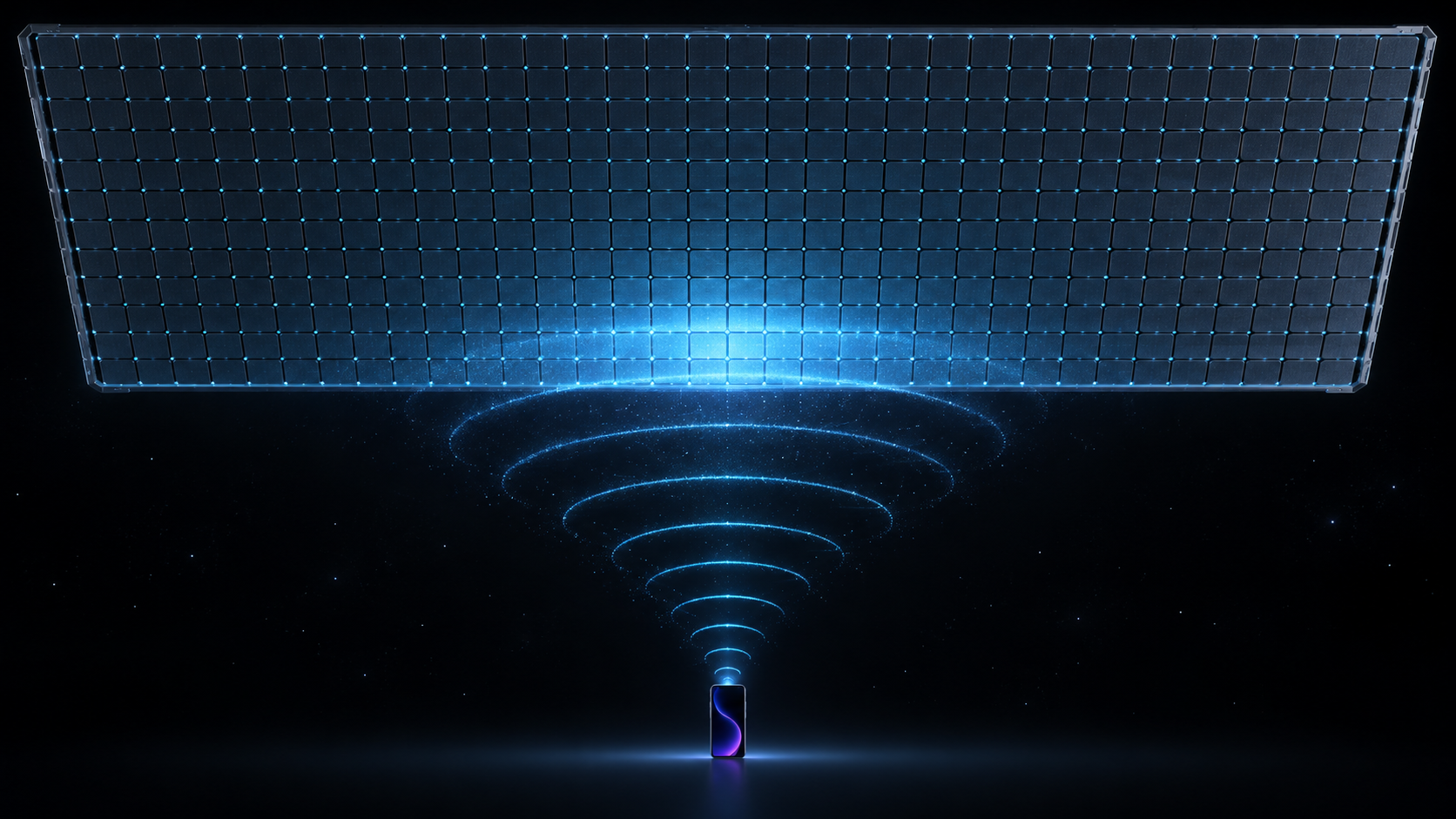
端末を変えないと決めると、負担はすべて衛星側に移る。スマートフォンのアンテナは小さく、送信出力も変えられない。弱い電波を数百km上空で拾うには、衛星のアンテナを大きくするしかない。AST SpaceMobileの現行世代の衛星は、最大で約223平方メートルのアンテナを広げる。テニスコートほぼ1面分だ。
2026年に実際に起きた出来事と合わせて、詰まりを並べる。数えたら6つあった。
| 課題 | 中身 | 2026年に起きたこと | 挑む企業 |
|---|
| 周波数 | 端末が使える帯域は限られ、増やせない | EchoStarの帯域がSpaceXへ(約170億ドルと26億ドル)。FCCが5月12日に移転を承認 | Elveo、AST SpaceMobile |
| 打ち上げ | 衛星ができても軌道に届かなければ始まらない | ASTのBlueBird 7が4月に予定より低い軌道へ投入され、失われた | (全社共通) |
| 衛星の量産 | 一品生産では数がそろわない | K2 Spaceが5億ドル、Apexが2億ドルを調達 | K2 Space、Apex、CesiumAstro |
| 地上局 | 皿型アンテナは1基で1機しか追えない | Northwoodが平面型の地上局を月8基のペースで生産 | Northwood Space |
| 軌道上の中継 | 地上局の上空にいる間しかデータを下ろせない | Keplerが8月に光データ中継の商用サービスを発表 | Kepler、ワープスペース |
| 端末 | 専用端末は普及しない | Hubble NetworkがBluetoothのまま衛星へつなぐ事業で2億ドルを調達 | Hubble Network、Elveo |
周波数の行は、もう少し説明が要る。EchoStarは保有する帯域を2回に分けてSpaceXへ売った。対価は合計で約196億ドル(私の計算)。衛星でもロケットでもなく、電波の権利にこれだけの値段が付いた。スマートフォンと直接つなぐ事業では、周波数が最も希少な資産だということだ。
企業を層ごとに並べると、席の取り方は4通りあった。
AST SpaceMobileは上場企業(ASTS)で、もうスタートアップとは呼びにくい。だが、この層の基準点なので最初に置く。同社は自前の周波数を持たず、通信事業者の帯域を借りて、その契約者の端末へ直接つなぐ。2026年第2四半期の売上は約3,150万ドル、純損失は約2億3,090万ドルだった。通期の売上予想は1億5,000万〜2億ドルで据え置いている。
私はここで一度計算の手を止めた。四半期の純損失が、通期の売上予想の上限を上回っている。それでも投資家が付いてくるのは、軌道上の機数が増えているからだ。6月と8月の打ち上げで50日のうちに6機を加え、軌道上の衛星は13機になった。同社は年内に、米国本土で3,000のセルを使うベータ版のサービスを始めるとしている。日本では楽天モバイルが、2026年第4四半期の開始を目指している。KDDIはStarlinkを使った直接通信をすでに提供中だ。
Elveoは、Lynk GlobalとOmnispaceが合併して8月17日に発足した。2025年10月の発表では2025年末から2026年初めの完了を見込んでいたので、数か月遅れたことになる。衛星運用大手のSESが戦略株主に入る。Omnispaceが持つSバンド60MHzの周波数と、Lynkの衛星を組み合わせる構想だ。同社は60か国・50社超の通信事業者と契約があると説明している。合併の理由は、ここでも周波数である。
カナダのKepler Communicationsは、衛星同士をレーザーで結び、観測衛星などのデータを軌道上で中継する。2026年1月に光中継衛星10機を打ち上げ、8月24日に商用サービスの提供を発表した。これまでに打ち上げた衛星は計33機になる。米宇宙開発庁(SDA)の光通信規格と互換で、2028年からの次の増強では最大100Gbpsの端末を載せる計画だ。
AalyriaはAlphabetから独立した会社で、衛星・航空機・地上局をまたぐネットワークを制御するソフトウェアを作る。Rivada Space Networksが、計画中の衛星網の制御に採用すると発表している。衛星を持たずに席を取る例として面白い。
日本のワープスペースは筑波発で、光通信の導入支援と中継網の構築を掲げる。2026年2月には、月と地球の間の光通信中継システムの概念検討をJAXAから受託した。商用の中継サービスという点ではKeplerが先行しており、同社の証拠はこれからだ。
K2 Spaceは、大型で高出力の衛星を量産品として作る。7月30日に5億ドルのSeries Dを発表し、評価額は68億ドルになった。Kleiner PerkinsとICONIQが主導し、CapitalG、Lightspeed、Altimeterなどが参加した。衛星1機の価格は約1,500万ドルと報じられている。
Apexは、注文を受ける前に標準の衛星バスを作り置く。6月にGlade Brook Capital Partnersの主導で2億ドルを調達し、評価額は23億ドルとされる。CesiumAstroは通信用のフェーズドアレイ機器を作る会社で、2月に4億7,000万ドルの資金を発表した。内訳は、Trousdale Ventures主導の株式2億7,000万ドルと、米国輸出入銀行およびJ.P. Morganによる2億ドルである。
Northwood Spaceは、複数の衛星を同時に追える平面型の地上局「Portal」を作る。1月27日に1億ドルのSeries Bを発表した。Washington Harbour Partnersが主導し、Andreessen Horowitz(a16z)が共同で主導した。同時に、米宇宙軍から衛星管制網の近代化で4,980万ドルの契約を得ている。
Astranisは、低軌道ではなく静止軌道に小型の専用衛星を置く。5月に計4億5,000万ドルの資金を発表した。3億ドルのSeries EはSnowpoint VenturesとFranklin Templetonが共同で主導し、残りは最大1億5,500万ドルの融資枠だ。累計は12億ドルを超える。Hubble Networkは、市販のBluetoothチップからの電波を衛星で受ける。9月23日に2億ドルのSeries Cを発表し、評価額は16億ドルになった。軌道上にあるのは、実証用の超小型衛星6機である。
| 企業 | 層 | 2026年の資金・業績 | 運用の証拠 | 段階(筆者) |
|---|
| AST SpaceMobile | スマホ直接通信 | 第2四半期売上3,150万ドル、通期予想1.5億〜2億ドル | 軌道上13機、年内にベータ版 | 3 |
| Elveo | スマホ直接通信 | 8月に合併完了、調達額は非開示 | 50社超の通信事業者と契約(同社説明) | 3 |
| Kepler | 光中継 | 非開示 | 累計33機、8月に商用サービス | 4 |
| K2 Space | 衛星の量産 | 5億ドルSeries D、評価額68億ドル(7月) | 本稿では確認できず | 2 |
| Apex | 衛星の量産 | 2億ドル、評価額23億ドル(6月) | 標準バスを作り置きで供給 | 3 |
| CesiumAstro | 通信機器 | 4.7億ドル(株式2.7億+融資2億、2月) | 政府・民間向けに機器を供給 | 3 |
| Northwood Space | 地上局 | 1億ドルSeries B、宇宙軍から4,980万ドルの契約(1月) | Portalを月8基のペースで生産 | 3 |
| Astranis | 小型静止衛星 | 4.5億ドル(株式3億+融資枠、5月)、累計12億ドル超 | 商用と米軍向けに衛星を製造 | 4 |
| Hubble Network | 端末直接(IoT) | 2億ドルSeries C、評価額16億ドル(9月) | 実証用の超小型衛星6機 | 2 |
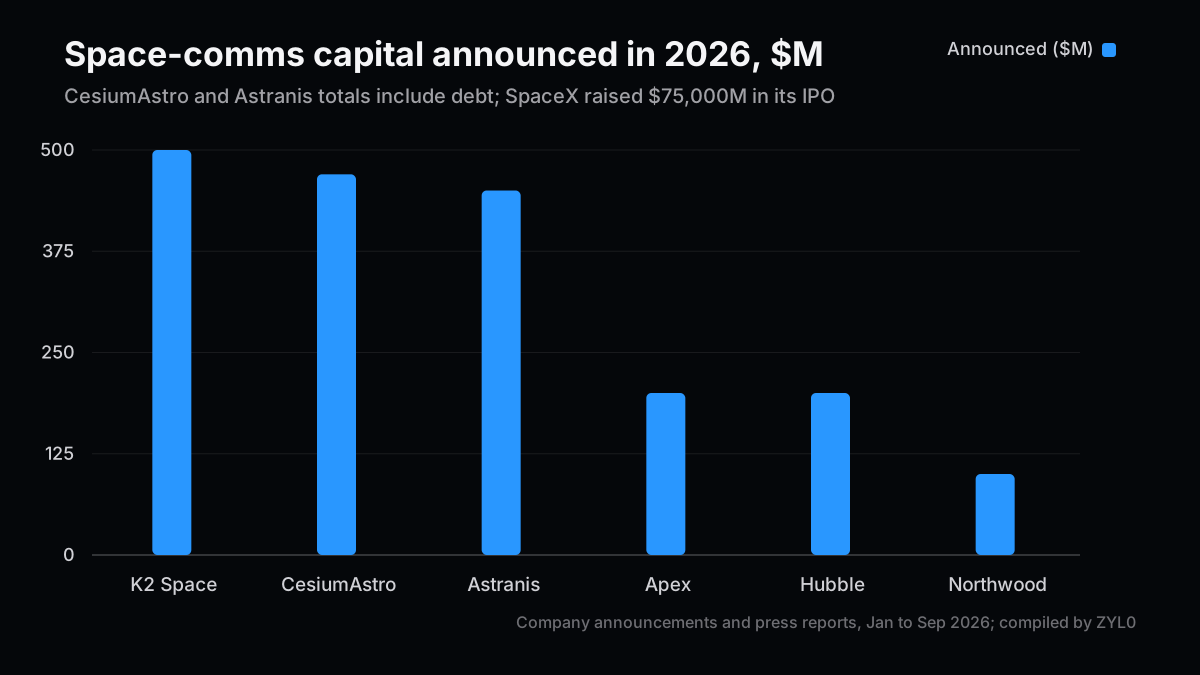
足し算をしてみる。図の6社が2026年に発表した株式での調達は、合計で約15億7,000万ドルになる(融資を除く。私の計算)。SpaceXがIPOで集めた750億ドルの、約2%だ。
この差を見て、私は「スタートアップは負けている」とは読まなかった。むしろ逆で、6社のうち消費者に回線を売る会社は1社もない。売り先は通信事業者、政府、そして他の衛星会社である。巨人と同じ土俵に上がらないという選択が、資金の集まり方に表れている。
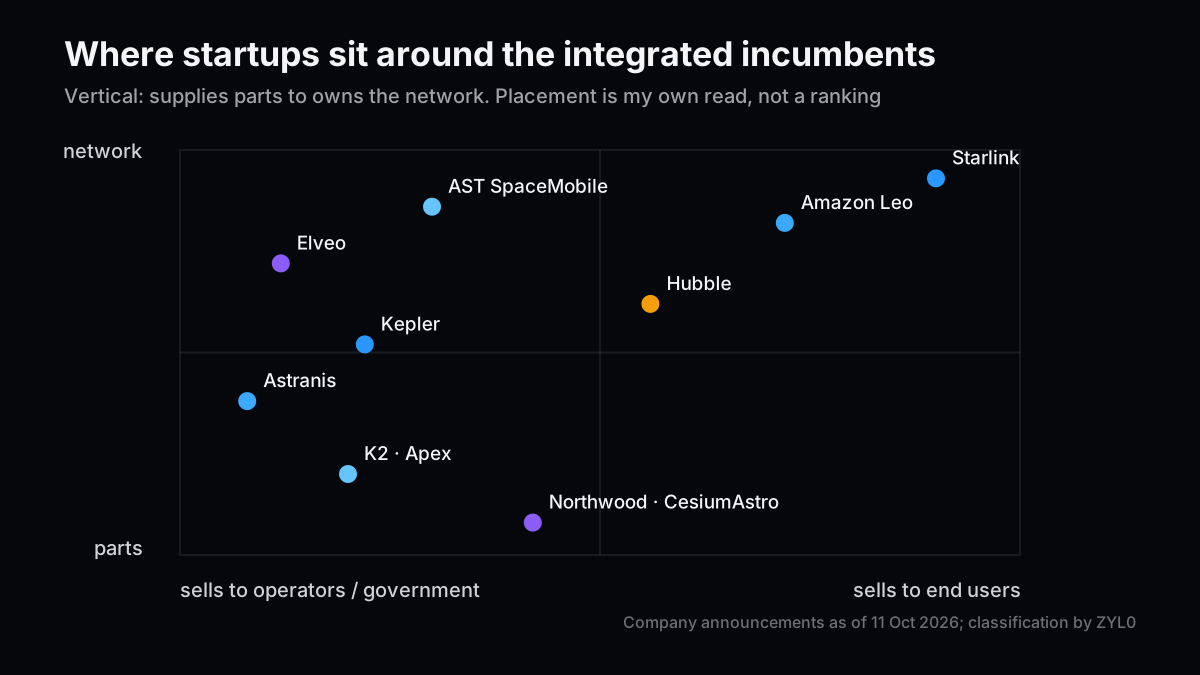
もう一つ気づいたことがある。顧客の欄に、政府が何度も出てくる。Northwoodは宇宙軍、Astranisは米軍向けの衛星、Keplerは宇宙開発庁の規格。連載①で、帰還カプセルの確実な顧客が製薬会社ではなく政府だったのと同じ構図だ。
結論を書く。衛星バス・機器・地上局・中継の層は中期ロング、スマートフォン直接通信の独立系は段階4の証拠が出るまでニュートラルで見る。
前者をロングにする理由は、売り先が一つの衛星網に縛られないからだ。どの衛星網が勝っても、バスと地上局と中継回線は要る。Cartaは2026年第1四半期のレポートで、ハードウェアを「静かな勝者」と呼んだ。この層の調達額を見ると、その表現に違和感はない。ただし値段はもう安くない。K2 Spaceの評価額68億ドルは、軌道上の実績より先に付いている。短期はニュートラルにとどめる。
スマートフォン直接通信は、技術より事業の形が読みにくい。ASTは通信事業者の周波数を借りる。Starlinkは周波数を自分で買った。前者は通信事業者と収入を分け合い、後者は通信事業者と競合しうる。実際、SpaceXは自前の携帯サービスを検討していると報じられた。通信事業者がどちらを選ぶかは、まだ割れている。
3月の8つのメガトレンドの記事で、私は衛星IoTを伸びる層に挙げた。半年後、Hubble Networkに16億ドルの評価額が付いた。方向は合っていたが、実証衛星6機の会社にこの値段が付くとは思っていなかった。ここは正直、値段が証拠を追い越していると見ている。
上場株では、SpaceX(SPCX)、AST SpaceMobile(ASTS)、周波数の対価としてSpaceX株を持つEchoStar(SATS)、Amazon(AMZN)が直接の対象になる。日本では、KDDI(9433)と楽天グループ(4755)が、それぞれ別の陣営のサービスを自社の契約者に届ける側にいる。
| シナリオ(2026〜2036年) | 条件 | 確認する証拠 | 投資への含意 |
|---|
| ベース | 統合型の2社が消費者向けを押さえ、独立系は事業者・政府向けの部品と回線で稼ぐ | Starlinkの単価、Amazon Leoの商用開始、各社の政府売上比率 | 部品層は底堅いが、顧客が少数に集中する |
| メイン | スマホ直接通信が携帯の標準機能になり、事業者経由の独立系が連続カバレッジに届く | ASTの機数とベータ版の結果、楽天モバイルの開始時期 | 周波数と大型アンテナを持つ会社に価値が集まる |
| テール(下振れ) | 打ち上げ失敗や周波数の再編で独立系の資金が尽き、買収される | 打ち上げ失敗の頻度、周波数の売却、評価額を下げた調達 | 独立系は部品を残して統合され、評価額が縮む |
| テール(上振れ) | 各国が自前の衛星網を発注し、バス・地上局・小型静止衛星の受注が積み上がる | 政府による衛星網の発注額、輸出信用の利用 | 量産できる会社が国の数だけ顧客を持つ |
この見立てが崩れる条件も書いておく。統合型の2社が、衛星バスや地上局、中継回線を外部へ大規模に売り始めた場合だ。そのとき「巨人と競合しない部品層」という前提が消える。私は部品層のロングを外し、周波数を持つ会社だけを残す。
- AST SpaceMobileのベータ版が年内に始まるか、そのとき軌道上に何機あるか
- Amazon Leoが年内に商用サービスを始めるか
- 楽天モバイルの衛星サービスが2026年第4四半期に始まるか
- K2 Spaceの大型衛星が軌道上でどんな実績を示すか
- Keplerの2028年の増強に向けて、中継サービスの顧客が開示されるか
書き終えて思うのは、この層がいちばん「宇宙らしくない」ということだ。論点は周波数、量産、顧客集中で、地上の通信産業や半導体産業とほとんど変わらない。だからこそ、今後10年で最も読みやすい層でもある。次回は逆に、最も読みにくい層、人を運ぶ事業を読む。
次号の記事案
- 案1:周波数1MHzの値段を並べる — EchoStarの売却、Omnispaceの合併、各国の割当を同じ単位に直し、スマートフォン直接通信の参入コストを比べる。
- 案2:衛星バスの量産は本当に安くなるか — K2 Space、Apex、既存メーカーの公表価格と納期を並べ、量産効果がどこまで出ているかを読む。
- 案3:政府売上への依存度を測る — 本稿の企業群について、公開されている政府契約を合計し、民間需要だけで評価額を説明できるかを検証する。
本記事は情報提供を目的としたものであり、特定銘柄の売買や投資助言ではありません。筆者は記事内で触れた企業の有価証券を保有している可能性があります。調査・執筆・翻訳の一部に生成AIを利用しています。調達額・評価額には報道ベースの未確定情報を含み、合計・比率・段階分けは本文に記した方法による筆者の計算と判断です。詳細は免責事項をご確認ください。
Space Business Series ②: The Startups Building Communications Infrastructure in Orbit
In Part 1, demand for microgravity research was itself still being proven. Communications is the opposite. Demand was proven long ago and the cash is already flowing. So the question this time is not whether there is a market. It is how many seats are left for startups outside the vertically integrated giants.
Note: this piece is an outside-in read based solely on public information — company releases, product pages, papers, and press coverage.
As of October 11, 2026. Round sizes, valuations, financial results and satellite counts come from company announcements and press reports; anything reported but not confirmed is flagged. Totals, ratios and evidence stages are my own calculations and judgment.
Before the numbers, my read: there are almost no seats left for a newcomer selling connectivity directly to consumers.
SpaceX listed on Nasdaq on June 12, 2026 and raised $75 billion, the largest IPO on record. According to its prospectus and second-quarter report, Starlink grew from 10.3 million subscribers at the end of March to 12 million at the end of June. Connectivity revenue for 2025 was $11.4 billion, up 83% from the year before. Meanwhile, monthly revenue per subscriber fell 18%, from $99 in 2023 to $81 at the end of 2025.
Subscribers up, price per subscriber down. Starlink has left the phase where it sells at a premium and entered the phase where it earns on volume.
The chaser, Amazon Leo (formerly Project Kuiper), reached 396 satellites in orbit with its July 2 launch. It did not meet the Federal Communications Commission's requirement to deploy half its planned constellation by July 30, 2026, and received a limited waiver on June 5. The deadline for the full constellation is July 30, 2029. Amazon says it will begin commercial service this year.
| Item | Starlink (SpaceX) | Amazon Leo |
|---|
| Subscribers, service | 12 million subscribers (end of Jun 2026) | Enterprise preview; commercial this year |
| Satellites in orbit | Added continuously on its own rockets | 396 (Jul 2, 2026) |
| 2025 revenue | $11.4B in connectivity, up 83% | Not disclosed |
| Funding | $75B IPO (Jun 2026) | Funded by Amazon |
| Regulatory milestone | FCC approved transfer of EchoStar spectrum | Missed half-deployment date; waiver |
Here is the ladder of evidence from Part 1, translated to communications.
| Stage | Evidence you can see | What you still cannot say |
|---|
| 1. Demonstration | A call or connection worked once | Whether satellites can be built at volume |
| 2. Satellites in orbit | Several operational satellites are flying | Whether spectrum and licenses are in hand |
| 3. Spectrum and license | Commercial authorization, operator contracts | Whether the link stays up without gaps |
| 4. Continuous coverage | Always-on service in the target region | Whether users keep paying |
| 5. Recurring revenue | Disclosed subscribers and revenue per user | Margins and capacity to reinvest |
Starlink's fixed broadband sits at stage 5. Most startups are at stages 2 to 3. With that gap in mind, here is where things are actually stuck.
Writing out the bottlenecks, I noticed that most of what limits the pace is not the satellite itself. It is everything around it.
I have a sore memory here. When I built and ran a river flood-detection system on AWS, the hardest part was not the sensors or the cloud. It was installation sites with no mobile signal. Rivers run through places with few base stations. Since then I have judged space communications by one test: does the user have to add anything to the device? Systems that need a dedicated terminal or antenna rarely spread in the field.
Decide not to change the device, and the whole burden moves to the satellite. A phone's antenna is small and its transmit power is fixed. To pick up a faint signal several hundred kilometers up, the only option is a bigger antenna in space. AST SpaceMobile's current-generation satellites unfold an array of up to about 223 square meters, close to the size of a tennis court.
Here are the choke points, next to what actually happened in 2026. There turned out to be six.
| Bottleneck | What it is | What happened in 2026 | Companies working on it |
|---|
| Spectrum | Bands a phone can use are limited and cannot be added | EchoStar's bands went to SpaceX (about $17B and $2.6B); FCC approved transfer on May 12 | Elveo, AST SpaceMobile |
| Launch | A finished satellite is worth nothing until it reaches orbit | AST's BlueBird 7 was placed in a lower-than-planned orbit in April and lost | (everyone) |
| Satellite production | One-off builds never reach the numbers needed | K2 Space raised $500M; Apex raised $200M | K2 Space, Apex, CesiumAstro |
| Ground stations | A dish tracks one satellite at a time | Northwood is producing flat-panel ground stations at eight a month | Northwood Space |
| In-orbit relay | Data comes down only while over a ground station | Kepler announced commercial optical data relay service in August | Kepler, Warpspace |
| Devices | Dedicated terminals do not spread | Hubble Network raised $200M to connect unmodified Bluetooth chips to satellites | Hubble Network, Elveo |
The spectrum row needs a little more explanation. EchoStar sold its bands to SpaceX in two transactions worth about $19.6 billion in total (my sum). Not satellites, not rockets: rights to radio waves fetched that price. In direct-to-phone service, spectrum is the scarcest asset there is.
Lined up by layer, the companies have found four different ways to take a seat.
AST SpaceMobile is a listed company (ASTS) and hard to call a startup any more, but it is the reference point for this layer, so I put it first. It owns no spectrum. It borrows bands from mobile operators and connects directly to their subscribers' phones. Second-quarter 2026 revenue was about $31.5 million and the net loss about $230.9 million. It reaffirmed full-year revenue guidance of $150 million to $200 million.
I stopped calculating for a moment here. One quarter's net loss is larger than the top of the full-year revenue range. Investors stay with it because the count in orbit is rising: launches in June and August added six satellites within 50 days, bringing the total to 13. The company says it will start a beta service this year using 3,000 cells across the continental United States. In Japan, Rakuten Mobile is targeting the fourth quarter of 2026. KDDI already offers direct-to-phone service using Starlink.
Elveo was formed on August 17 by the merger of Lynk Global and Omnispace. The October 2025 announcement had targeted completion in late 2025 or early 2026, so it slipped by several months. Satellite operator SES is a strategic shareholder. The plan combines Omnispace's 60 MHz of S-band spectrum with Lynk's satellites, and the company says it has agreements with more than 50 mobile operators in 60 countries. Once again, the reason for the deal is spectrum.
Canada's Kepler Communications links satellites by laser and relays data from Earth-observation and other spacecraft while still in orbit. It launched ten optical relay satellites in January 2026 and announced commercial service on August 24. It has now launched 33 satellites in all. The network is compatible with the US Space Development Agency's optical standard, and the next expansion, from 2028, is planned to carry terminals of up to 100 Gbps.
Aalyria, spun out of Alphabet, builds software that orchestrates networks across satellites, aircraft and ground stations. Rivada Space Networks has said it will use it to run its planned constellation. It is an interesting case of taking a seat without owning a satellite.
Japan's Warpspace, from Tsukuba, offers support for adopting optical communications and aims to build a relay network. In February 2026 it won a JAXA study contract on the concept of an optical relay system between the Moon and Earth. On commercial relay service Kepler is ahead, and Warpspace's evidence is still to come.
K2 Space builds large, high-power satellites as a production item. On July 30 it announced a $500 million Series D at a $6.8 billion valuation, led by Kleiner Perkins and ICONIQ, with CapitalG, Lightspeed, Altimeter and others participating. Each satellite is reported to cost about $15 million.
Apex builds standard satellite buses ahead of orders. It raised $200 million in June, led by Glade Brook Capital Partners, at a reported $2.3 billion valuation. CesiumAstro makes phased-array communications hardware and announced $470 million in February: $270 million of equity led by Trousdale Ventures, and $200 million from the US Export-Import Bank and J.P. Morgan.
Northwood Space builds Portal, a flat-panel ground station that can track several satellites at once. It announced a $100 million Series B on January 27, led by Washington Harbour Partners and co-led by Andreessen Horowitz (a16z), alongside a $49.8 million US Space Force contract to modernize the Satellite Control Network.
Astranis puts small dedicated satellites in geostationary orbit instead of low Earth orbit. In May it announced $450 million in new capital: a $300 million Series E co-led by Snowpoint Ventures and Franklin Templeton, plus a credit facility of up to $155 million, taking its total past $1.2 billion. Hubble Network receives signals from off-the-shelf Bluetooth chips by satellite. It announced a $200 million Series C on September 23 at a $1.6 billion valuation. What it has in orbit is six demonstration cubesats.
| Company | Layer | 2026 funding and results | Operating evidence | Stage (my read) |
|---|
| AST SpaceMobile | Direct to phone | Q2 revenue $31.5M; full-year guidance $150M–$200M | 13 in orbit; beta this year | 3 |
| Elveo | Direct to phone | Merger closed in August; funding not disclosed | 50+ operator agreements (company claim) | 3 |
| Kepler | Optical relay | Not disclosed | 33 launched; commercial service in August | 4 |
| K2 Space | Satellite production | $500M Series D at $6.8B (July) | Not confirmed for this post | 2 |
| Apex | Satellite production | $200M at $2.3B (June) | Supplies standard buses built to stock | 3 |
| CesiumAstro | Comms hardware | $470M ($270M equity + $200M debt, February) | Supplies government and commercial users | 3 |
| Northwood Space | Ground stations | $100M Series B; $49.8M Space Force contract (January) | Producing eight Portals a month | 3 |
| Astranis | Small GEO satellites | $450M ($300M equity + credit, May); over $1.2B total | Builds for commercial and US military use | 4 |
| Hubble Network | Direct to device (IoT) | $200M Series C at $1.6B (September) | Six demonstration cubesats | 2 |
Let me do the addition. The six companies in the chart announced about $1.57 billion of equity in 2026 (excluding debt; my sum). That is roughly 2% of the $75 billion SpaceX raised in its IPO.
I did not read that gap as startups losing. If anything it is the reverse: not one of the six sells connectivity to consumers. Their customers are mobile operators, governments and other satellite companies. The decision not to step into the same ring as the giants shows up in how the money has gathered.
One more thing I noticed: government keeps appearing in the customer column. Northwood has the Space Force, Astranis builds satellites for the US military, Kepler follows the Space Development Agency standard. It is the same pattern as in Part 1, where the reliable customer for return capsules turned out to be a government, not a drug maker.
My conclusion: medium-term long the layer of satellite buses, hardware, ground stations and relay; neutral on independent direct-to-phone players until stage 4 evidence appears.
The case for the first group is that its customers are not tied to one constellation. Whichever network wins, it needs buses, ground stations and relay links. Carta's Q1 2026 report called hardware "the quiet winner," and looking at the rounds in this layer, the phrase fits. The prices are no longer cheap, though. K2 Space's $6.8 billion valuation has arrived ahead of its record in orbit. In the short term I stay neutral.
Direct-to-phone is harder to read as a business than as a technology. AST borrows spectrum from mobile operators. Starlink bought its own. The first shares revenue with operators; the second can end up competing with them. SpaceX has in fact been reported to be considering its own mobile service. Which side operators choose is still split.
In my March post on eight megatrends I named satellite IoT as a growth layer. Six months later Hubble Network carries a $1.6 billion valuation. The direction was right, but I did not expect a company with six demonstration satellites to be priced there. Frankly, I think the price has overtaken the evidence.
In public markets, the direct names are SpaceX (SPCX), AST SpaceMobile (ASTS), EchoStar (SATS), which holds SpaceX stock received for its spectrum, and Amazon (AMZN). In Japan, KDDI (9433) and Rakuten Group (4755) each sit on the side that delivers a different camp's service to its own subscribers.
| Scenario (2026–2036) | Condition | Evidence to watch | Implication |
|---|
| Base | Two integrated players hold the consumer market; independents earn on parts and links for operators and governments | Starlink's revenue per user; Amazon Leo's launch; government revenue share | The supplier layer is solid but customers are concentrated |
| Main | Direct-to-phone becomes a standard phone feature; operator-aligned independents reach continuous coverage | AST's satellite count and beta results; Rakuten Mobile's launch timing | Value accrues to those with spectrum and very large antennas |
| Tail (downside) | Launch failures or spectrum reshuffles drain independents, which are then acquired | Launch failure rate; spectrum sales; down rounds | Independents are absorbed for parts and valuations shrink |
| Tail (upside) | Countries order their own constellations; orders pile up for buses, ground stations and small GEO satellites | Government constellation orders; use of export credit | Volume producers gain one customer per country |
What would change my mind: if the two integrated players start selling satellite buses, ground stations or relay capacity to outsiders at scale. That would remove the premise of a supplier layer that does not compete with the giants. I would drop the long on suppliers and keep only the companies that own spectrum.
- Whether AST SpaceMobile's beta starts this year, and how many satellites are in orbit when it does
- Whether Amazon Leo begins commercial service this year
- Whether Rakuten Mobile's satellite service starts in the fourth quarter of 2026
- What record K2 Space's large satellites establish in orbit
- Whether Kepler discloses relay customers ahead of its 2028 expansion
Having written this, what strikes me is that this is the least "space-like" layer of the three. The issues are spectrum, volume production and customer concentration, which is nearly the same list as in terrestrial telecoms or semiconductors. That is exactly why it is also the most readable layer for the next decade. Next time I turn to the opposite case, the hardest one to read: carrying people.
Next Issue Ideas
- Idea 1: Pricing one megahertz of spectrum — Put EchoStar's sale, the Omnispace merger and national allocations on the same unit to compare the cost of entering direct-to-phone service.
- Idea 2: Does volume production really make satellite buses cheaper? — Line up published prices and lead times from K2 Space, Apex and established manufacturers to see how much of a scale effect has appeared.
- Idea 3: Measuring dependence on government revenue — Add up the disclosed government contracts for the companies in this post and test whether commercial demand alone can explain their valuations.
This article is for informational purposes only and is not investment advice or a recommendation to buy or sell any security. The author may hold securities of companies mentioned. Generative AI was used in parts of the research, writing and translation. Some round sizes and valuations are reported but unconfirmed; totals, ratios and evidence stages are the author's calculations and judgment using the methods described. See the disclaimer for details.