オープンモデル対クローズドモデル:Kimi K3ショックが暴いた企業価値の脆さと投資家の羅針盤
先週末、YouTubeで「1on1 Tech」というシリコンバレー投資家向け番組を見ていて、手が止まった。タイトルに『OpenAIとAnthropicの上場が危うい』とある。第39回と第40回でKimi K3をベンチマークと創業者の系譜の両面から書いたばかりの私には、聞き捨てならないタイトルだった。
番組が扱っていた数字は、私の想像より生々しかった。Kimi K3が7月16日に公開されてから数日で、アナリスト推定によるOpenAIとAnthropicの合算評価額が3140億ドル失われ、世界の半導体株は数日で約3.3兆ドルの時価総額を失い、フィラデルフィア半導体指数(SOX)は6月末の高値から20%超下落して弱気相場入りした。恥ずかしながら、この二社にも半導体指数にも私は一株も直接投資できていない——両社とも未上場だからだが、それでもこの一件は「オープンモデルとクローズドモデル、投資家はどちらに賭けるべきか」という、逃げられない問いを私に突きつけてきた。
本稿ではまず技術的な力関係を測り直し、次に価格崩壊とビジネスモデルの分岐を追い、資本市場の反応を数字で確認したうえで、最後に投資家として今どこを見るべきかを整理する。
バージョン注記: 評価額・指数値・株価反応は2026年8月10日時点で確認できる報道・分析ベースです。未上場企業の評価額はアナリストによる市場含意の推計、または直近ラウンドの私募価格であり、いずれも流動性のある取引価格ではありません。数値の出典は文末の参考資料からご確認ください。
| テーマ | 学べること |
|---|
| 技術力の実際 | Kimi K3はAA Intelligence Indexで57、Fable 5・GPT-5.6の60・59に肉薄——ただし訓練パイプラインは非公開のまま |
| 価格の崩壊 | GPT-4級推論価格の代表値は2023年の$30/Mから2026年に$0.5/M前後へ下落 |
| 資本市場の反応 | Kimi K3公開後、OpenAI・Anthropicの分析推定評価額が計3140億ドル減、世界半導体時価総額は3.3兆ドル圧縮 |
| 投資家の一手 | オフィスアプリ/OS層への垂直統合、半導体は押し目候補、オープン投資はインフラ・チューニング企業に妙味 |
結論を先に言うと、この差はもう「世代」の差ではなく「何を公開するか」の差になっている。
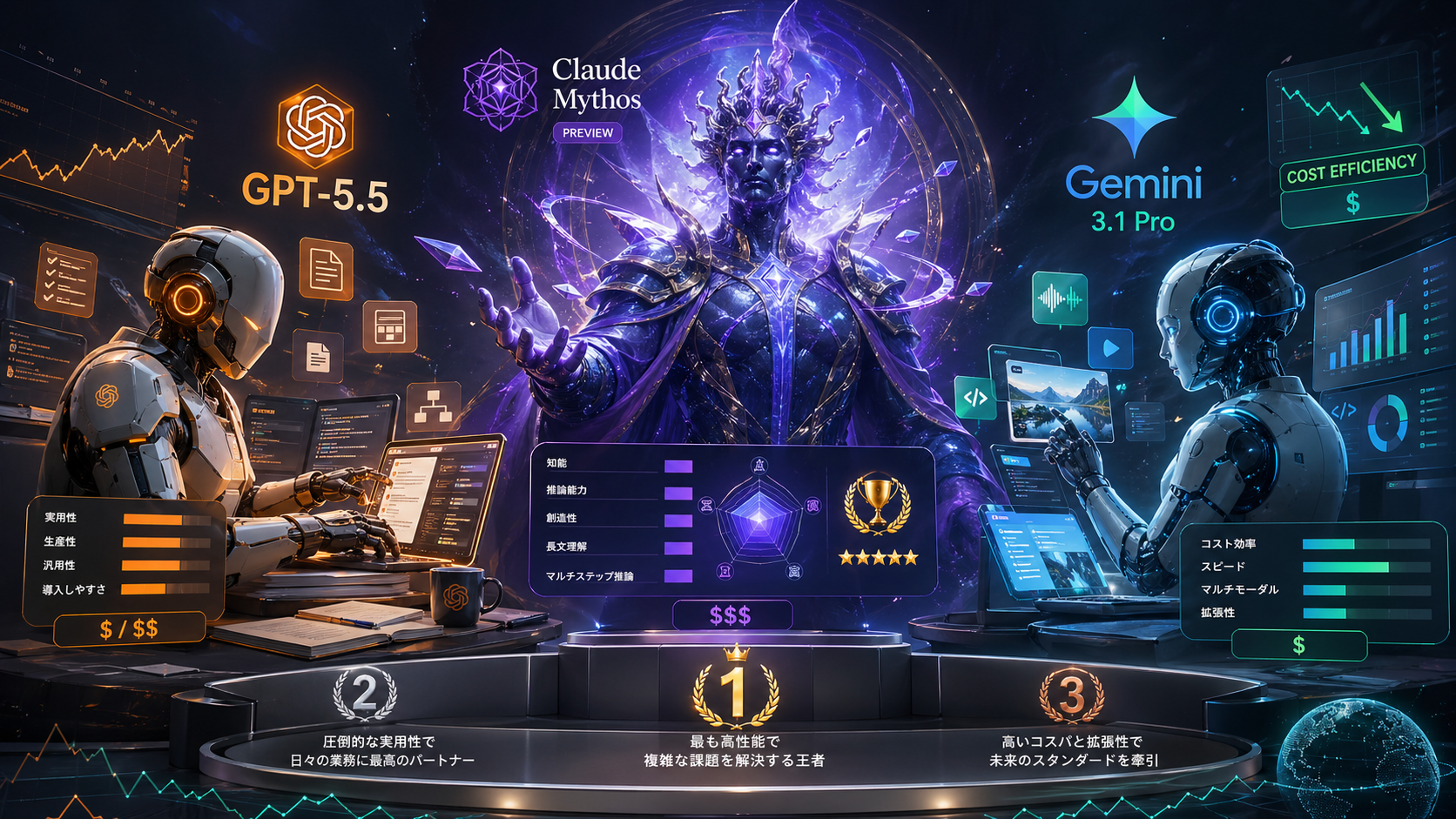
第39回で書いた通り、2026年7月23日時点のArtificial Analysis Intelligence Index(v4.1)では、Claude Fable 5が60、GPT-5.6 Solが59、Kimi K3が57で肩を並べていた。189モデル中4位に、オープンウェイトモデルが初めて到達した瞬間だ。AI系メディアAI Buzzは、2026年2月〜4月に登場した複数のオープンウェイトモデルが軒並み50点台に乗ったと報じている——1年前は「30点台前半」が精一杯だった領域だ。この上がり方は、私には単なる漸進的改善には見えない。
| モデル | 開発元 | AA Intelligence Index | 重みの公開 | 訓練パイプライン(RL環境・タスク生成) |
|---|
| Claude Fable 5 | Anthropic | 60 | 非公開 | 非公開 |
| GPT-5.6 Sol | OpenAI | 59 | 非公開 | 非公開 |
| Kimi K3 | Moonshot AI | 57(189モデル中4位) | 公開(段階的) | 非公開 |
この表の最後の列が、今回いちばん書いておきたいことだ。Kimi K3を巡る報道を追っていて、AI系メディアTrans-Nの分析に引っかかった。公開されているのはあくまで重み(パラメータ)であって、次世代モデルを作るためのパイプライン——強化学習環境やタスク生成システムそのもの——は、オープンウェイトの看板を掲げるMoonshotでさえ非公開のままだ、という指摘だ。つまりKimi K3を無料でダウンロードして自社データでファインチューニングすることはできても、「Kimi K4を自分で作る」能力までは手に入らない。本当にそうだろうか、と一度は疑ったが、調べるほどこの見方は筋が通っていた。オープンとクローズドの境界線は、モデルの重みではなく、モデルを生み続ける工場の設計図にある——そう考えると、この騒動の見え方はだいぶ変わる。
だからこそ、モデルを「オープンかクローズドか」の二値ではなく、重みの公開度と差別化の深さという二軸で位置づけ直したい。
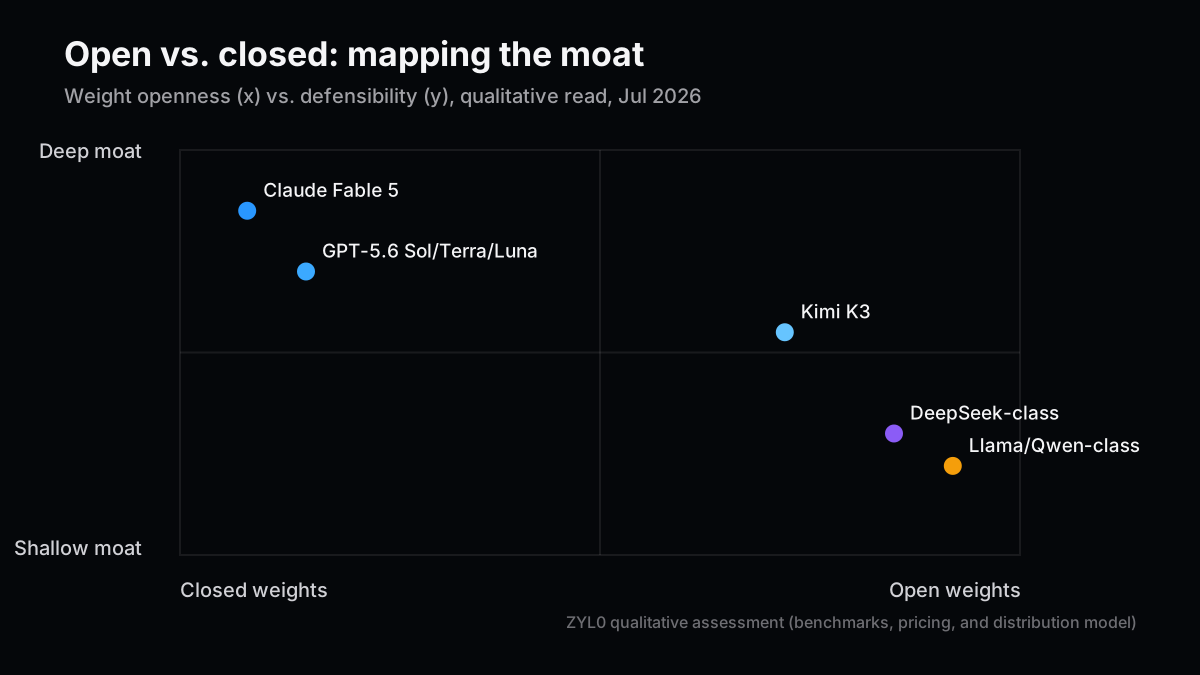
Claude Fable 5とGPT-5.6は、重みを非公開にしたうえで、安全分類器や価格階層といった製品設計そのものをモートにしている——これは第40回で書いたAnthropicの創業経緯(スケーリング則と安全性への警戒)が、そのまま製品仕様に落ちている例だ。一方でKimi K3は、重みは公開しながらも訓練パイプラインという核は死守しており、私の見立てでは図の右上寄り——完全なコモディティではない位置にいる。対照的に、LlamaやQwen級、DeepSeek級の汎用オープンウェイトは差別化要素が薄く、右下のコモディティ領域に沈みやすい。「オープンウェイトは全部コモディティ」という一括りの議論は、この時点で半分ほど間違っていると思う。
値段だけを見ていると、両陣営が同じ方向に逃げていることを見逃す。
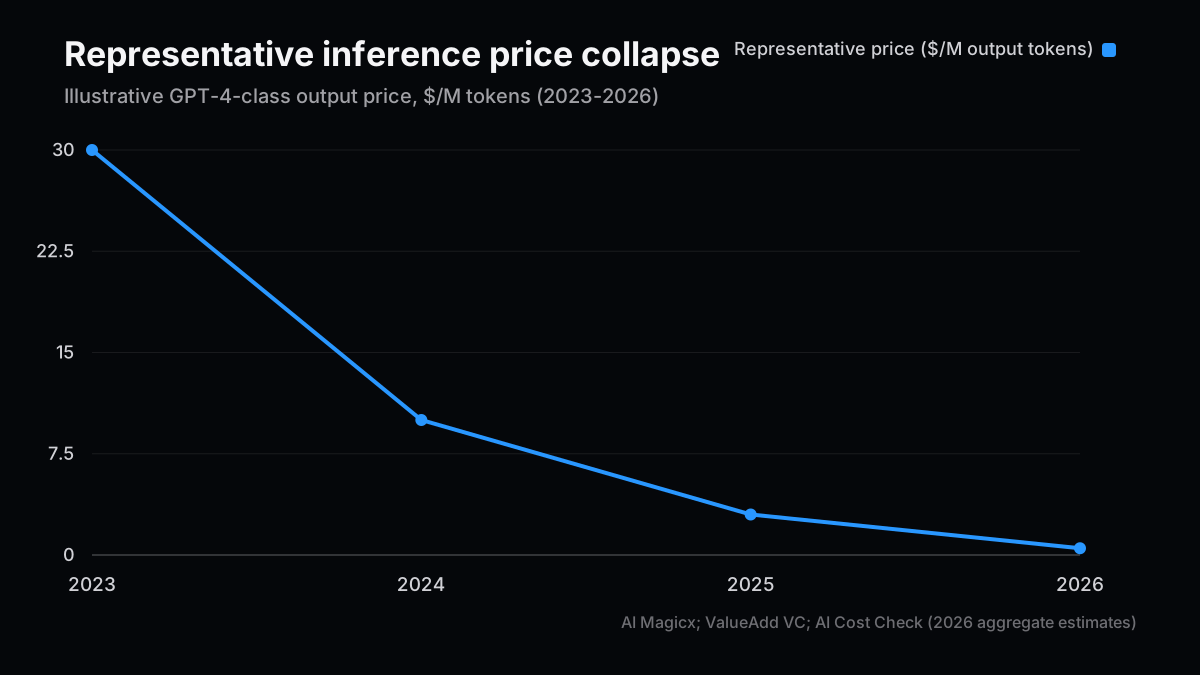
推論価格の下落は、この記事を書いている今も止まっていない。複数の集計記事(AI Magicx、ValueAdd VC、AI Cost Check)を横断すると、GPT-4級の品質を持つ出力の代表的な価格は、2023年の1トークン百万あたり30ドル前後から、2026年には0.5ドル前後まで下がっている。年率に均すと、動画のタイトルにあった「年90%減」はやや誇張にしても、方向としては大きく外れていない。DeepInfraの調査では、GPT-5.2相当のワークロードが月2,275ドルかかるところ、DeepSeek V3.2相当なら月168ドルで済むという試算もあり、オープンウェイト側の下落はさらに急だ。
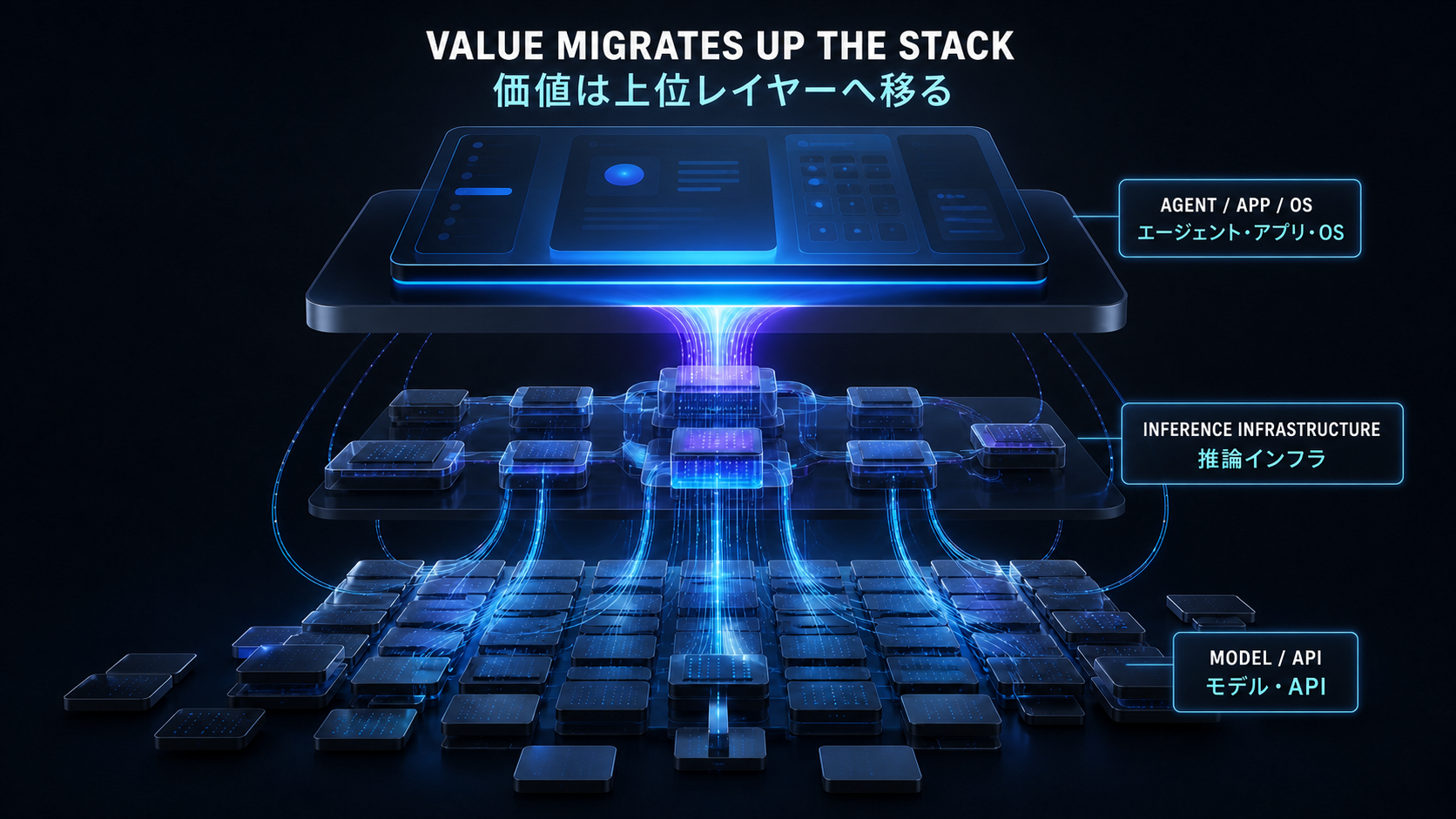
ここで面白いのは、OpenAIとAnthropicがこの値下げ圧力に対して、値段で正面から戦うのではなく、収益源そのものを「API呼び出し課金」から上のレイヤーへ移そうとしていることだ。
| 企業 | 製品 | 展開時期 | 狙い |
|---|
| OpenAI | ChatGPT Work | 2026年7月10日ロールアウト | Codex・Atlasを束ねた業務用スーパーアプリ、タスクのスケジュール実行 |
| OpenAI | ChatGPT for Excel/Google Sheets | 2026年5月5日GA(GPT-5.5) | 表計算ソフトへのネイティブ組み込み |
| Anthropic | Claude Cowork | 2026年1月プレビュー→企業展開拡大 | PC操作・ファイル操作までこなすエージェント、PwCと3万人規模で展開 |
| Microsoft | 自社製MAIモデルへの切替 | 2026年報道 | Office内のExcel/OutlookプロンプトをOpenAI/Anthropicから自社モデルへ一部置換、コスト削減 |
私がいちばん驚いたのは表の最後の行だ。OpenAIとAnthropicが「APIはコモディティ化するから、アプリとOSの層で稼ぐ」という同じ結論にたどり着いた、まさにそのタイミングで、最大の配信パートナーであるMicrosoftが「そのアプリ層すら自社のMAIモデルに置き換えてコストを削る」と言い出している。オフィスアプリとOSへの垂直統合は、Kimi K3から身を守る盾であると同時に、いちばん近い味方からも身を守らなければならない盾だった——これは私には皮肉に見えた。
数字を並べてみると、市場の反応は「合理的な再評価」と「パニック」の中間あたりにあると私は感じる。ここは議論が割れるところだと思う。
IG Groupのアナリストは、Kimi K3公開後の数日でOpenAIとAnthropicの市場含意評価額が合計3140億ドル失われたと推計した。内訳はOpenAIが▲820億ドル(▲5.62%)、Anthropicが▲2320億ドル(▲7.31%)。同時に、世界の半導体株はTechTimesの報道で約3.3兆ドルの時価総額を失い、フィラデルフィア半導体指数(SOX)は6月末の高値から20%超下げて弱気相場の定義に入った。台湾株は6%超、日本株も4%前後の下落だったと報じられている。
| 項目 | Kimi K3公開前 | 公開後 | 変化 |
|---|
| OpenAI(IG分析、市場含意評価額) | $1,320B | $1,238B | ▲$82B(▲5.62%) |
| Anthropic(同上) | $1,789B | $1,557B | ▲$232B(▲7.31%) |
| フィラデルフィア半導体指数(SOX) | 6月末高値 | 7月18日 | ▲20%超(弱気相場入り) |
| 世界半導体時価総額(TechTimes報道) | 発表前 | 数日間で | 約▲3.3兆ドル |
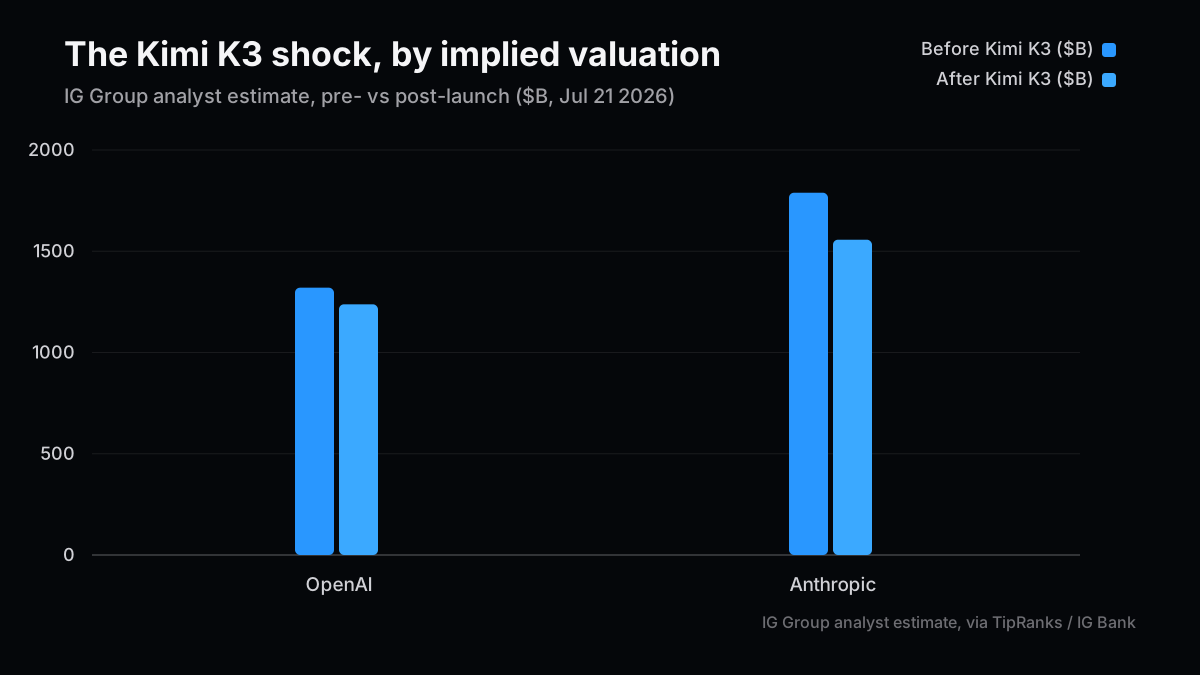
ここで一つ、正直に告白しておきたい引っかかりがある。第40回で私は、Anthropicの直近ラウンド評価額を$965B(2026年5月Series H)、OpenAIを$852B(2026年3月)と書いた。ところが今回のIG分析が使うKimi K3公開直前の評価額は、Anthropicが$1,789B、OpenAIが$1,320B——2、3ヶ月前の私募価格より4割前後も高い。矛盾ではない。IGの数字は私募ラウンドの実勢価格ではなく、公開株のAI関連銘柄の評価倍率から逆算した「市場が織り込んでいるとしたら」という含意評価額であり、算出方法がそもそも違う。ただ、この差の大きさそのものが、非上場AIラボの評価額がどれだけ前提次第で振れるかを物語っていると思う。
資本の動きは、モデルそのものへの賭けだけでは終わらない。Nvidiaは2026年7月、オープンウェイトを掲げるReflection AIに8億ドルを主導出資し、同社の評価額は250億ドル圏まで来た——Reflection AIの株主にはSequoia CapitalやLightspeedも名を連ねる。欧州では半導体装置大手ASMLが筆頭株主として支えるMistral AIが、2026年6月時点で約30億ユーロを評価額200億ユーロ前後で調達する交渉に入ったと報じられた。Carta(Peter Walker氏率いるインサイトチーム)の2026年第1四半期データでは、VC投資額の60%超がAI企業に向かっており、これは過去最高の集中度だという。
| 企業 | ラウンド/評価額 | 主要投資家 | 意味 |
|---|
| Reflection AI | $800M(2026年7月、Nvidia主導)、評価額$25B圏 | Nvidia、Sequoia Capital、Lightspeed | クローズド最大手のNvidiaが、オープンウェイト陣営に直接資本を投じた |
| Mistral AI | 約€3B調達交渉、評価額約€20B(2026年6月時点) | ASML(筆頭株主)、Samsungが検討 | 半導体設備大手が欧州オープンウェイト勢の資本を主導 |
| Carta Q1 2026 | VC投資額の60%超がAI企業向け | Peter Walker(Head of Insights) | オープン・クローズドを問わず、AI全体への資金集中度が過去最高 |
半導体の資金がオープンウェイトの側にも流れているという事実は、私には「オープンモデルがGPU需要を減らす」という単純な悲観論への反証に見える。Nvidiaが賭けているのは特定の1モデルの勝敗ではなく、モデルを作り動かす主体の数そのものだ。
ここまでの数字を踏まえて、私が実際にポジションをどう組み立てているかを書く。
短期(3〜6ヶ月)は、半導体を「押し目」として見ている。2025年初のDeepSeekショックの前例では、市場は数週間で「価格下落は需要破壊ではなく総TAM拡大のシグナルだ」という解釈に戻った。今回のSOX-20%超も、行き過ぎの範囲に収まりつつあると私は見ている。ただし今回の下落規模(3.3兆ドル)はDeepSeekショック時より大きく、戻りの確認にはもう少し時間が要ると思う。
中期(6〜18ヶ月)は、クローズド2ラボの評価軸そのものを変えるべきだと考えている。API単価の下落は止まらない前提に立ち、ChatGPT WorkやClaude Coworkが企業の業務フローにどれだけ食い込み、継続率やシート課金にどれだけ転換できているかで評価する。逆にオープン投資の妙味は、モデルそのものよりも、セルフホストやチューニング、推論最適化を提供するインフラ企業(第41回で書いたMangoBoostのような会社)に見出している。
この二層構造の判断は、私が以前、自社の電源管理ICとエナジーハーベスタで新規事業を立ち上げていたときの経験と重なる。あのとき私たちは、汎用の電源ICを外部から安く調達して量産ラインをすぐ立ち上げるか、自社のアナログ設計資産を投じて専用ICを内製するかという分岐に直面した。結論は「両方」だった。量産の初期ロットは外部調達で市場投入を急ぎ、差別化が効く高付加価値ラインだけ内製に切り替えた。AIラボの選択も同じ構造に見える。オフィスアプリやOSという「高付加価値ライン」は自社で作り込み、コモディティ化が避けられないAPI層は価格で防衛するか、いっそオープン化して周辺のインフラ・チューニング需要を取りにいく。オープンかクローズドかという二択ではなく、レイヤーごとに使い分ける経営判断としてこの騒動を見るべきだと、あの経験は私に教えてくれた。
銘柄・テーマ別に短くまとめる。Nvidiaは「どちらの陣営が勝つか」ではなく「AIを作り動かす主体の数」に賭ける構図が続く限りニュートラル〜ポジティブ。半導体全般は短期の押し目、中期はデータセンター投資の総量で判断する。OpenAIとAnthropicは上場観測が続く限りウォッチ対象だが、評価額の算出方法(私募ラウンド価格か市場含意評価額か)を必ず区別して読む。Moonshot AIは香港上場の観測が出ており、ARR成長と評価額の倍率(第40回で書いた通り、$200M超のARRに対し評価額$20B超で約100倍)が上場時にどう検算されるかが焦点になる。
最後に、この記事の見立てがどこで崩れるかを含めて整理する。
| シナリオ | 想定 | オープン陣営への含意 | クローズド陣営への含意 | 半導体への含意 |
|---|
| ベースケース(本命) | オープンは価格と一部ベンチで肉薄するが、訓練パイプラインの非公開により最先端は僅差でクローズドが維持 | インフラ・チューニング企業に投資機会 | API単価下落をエージェント・エンタープライズ収益で相殺、上場計画は継続 | 実質ニュートラル〜プラス(総需要拡大が価格下落を上回る) |
| 強気オープンシナリオ | 強化学習環境やタスク生成パイプラインまでオープン化が波及、半年でフロンティアに完全キャッチアップ | 上振れ、セルフホスト・MLOps企業が主役に | API収益が想定以上に減速、上場価格見直しの圧力 | 短期は下押し、中期はデータセンター需要の増加で相殺 |
| テールリスク | データレジデンシー規制・輸出規制が中国オープンウェイトの採用を制限、同時に米クローズドラボの資金調達コストが上昇 | 規制対象国で採用鈍化、非対象国でむしろ加速し市場が分断 | 資金調達環境の悪化でIPOが延期、バーンレートとの競争が厳しくなる | 半導体循環相場のボラティリティが増幅し、銘柄選別が難しくなる |
この記事の見立てが崩れる条件を一つだけ明記しておく。オープンウェイト陣営が重みだけでなく強化学習環境とタスク生成パイプラインまでオープン化し、それをセルフホストする企業が大手クラウド並みのSLAを提供し始めたら、クローズドラボの「安全ゲート+エンタープライズ実装」という差別化は根拠を失う。半年以内にその兆候が一つでも出れば、この記事の中期見立ては撤回する。
ウォッチポイントは三つ。Moonshot AIの香港上場観測の具体化、OpenAI・Anthropicの上場申請(S-1相当)の開示内容、そしてMicrosoftがOffice内のモデル切替をどこまで拡大するか——これは表面上は自社コスト削減の話だが、私にはOpenAI・Anthropicの「アプリ層で稼ぐ」戦略そのものへの牽制球に見える。
書き終えてみて、私はこの問いの立て方自体が半分間違っていたと思っている。「オープンか、クローズドか」ではなく、「どのレイヤーに賭けるか」が実際の分岐点だった。モデルの重みは、公開されようがされまいが、この先も値下がりし続ける。価値が残るのは、その重みを動かして具体的な業務を代替するアプリとOSの層、そしてそれを支えるインフラの層だ。Kimi K3が突きつけたのは「中国が勝つか米国が勝つか」ではなく、「レイヤーを取り違えた企業から順に評価額を削られる」という、もっと地味で長く効く教訓だったと思う。
次号の記事案
- 案1:Claude CoworkとChatGPT Workの実測比較|同一業務フローで代替率とコストを測る — 同じ経費精算・レポート作成フローを両方のエージェントに処理させ、成功率・所要時間・月額コストを実測し、投資判断に使えるデータへ落とし込む。
- 案2:Moonshot AI香港IPO観測を検算する|ARR $200M超と評価額$20B超は上場時に正当化されるか — 上場観測が具体化した段階で、開示された財務データから評価倍率の妥当性を検証する。
- 案3:半導体セクター、Kimi K3ショック後の押し目は本物か|ファンドフローとポジション調整で確認する — SOX構成銘柄の資金フローデータを使い、「総需要拡大」シナリオの裏付けを探す。
本文の数値・事実関係は、読者が確認できる以下の一次情報・報道に基づいています(2026年8月10日時点)。
本記事は情報提供を目的としたものであり、特定の銘柄・企業・サービスの推奨や投資助言ではありません。評価額・指数値はアナリストによる分析推定または私募市場の報道値であり、市場価格を保証するものではありません。筆者は記事内で言及した銘柄を保有している場合があります。調査、翻訳、校正の一部に生成AIを利用していますが、最終的な内容はZYL0が確認しています。詳細は免責事項をご確認ください。
Open vs. Closed AI Models: What the Kimi K3 Shock Reveals About Value, Moats, and the Investor Playbook
Last weekend I was watching 1on1 Tech, a YouTube show aimed at Silicon Valley investors, when a headline stopped me cold: OpenAI and Anthropic's IPO prospects were suddenly "in jeopardy." Having just spent No. 39 and No. 40 picking apart Kimi K3's benchmarks and its makers' research lineage, I couldn't scroll past that.
The numbers behind the headline were grimmer than I expected. In the days after Kimi K3's July 16 release, analyst estimates put the combined hit to OpenAI and Anthropic's implied valuations at $314 billion. Global semiconductor stocks lost roughly $3.3 trillion in market value within days, and the Philadelphia Semiconductor Index (SOX) fell more than 20% from its late-June high, crossing into bear-market territory. I hold no direct position in either lab or in the SOX — both labs are private, which makes that easy — but the episode forced a more practical question on me: as an investor, which side of this fight am I actually supposed to bet on?
This post works through the technical balance of power first, then the pricing collapse and the diverging business models, then what capital markets actually did with the numbers, and closes with where I think investors should be looking now.
Version note: Valuations, index scores, and market reactions are as reported and analyzed as of August 10, 2026. Private-company valuations here are either analyst-estimated, market-implied figures or reported private-round prices — neither is a liquid trading price. Sources are listed in the References section.
| Topic | What you'll learn |
|---|
| The real technical gap | Kimi K3 scores 57 on the AA Intelligence Index, within reach of Fable 5 (60) and GPT-5.6 (59) — but the training pipeline behind it stays closed |
| The pricing collapse | Representative GPT-4-class inference pricing fell from roughly $30/M to $0.50/M between 2023 and 2026 |
| How capital reacted | Kimi K3 erased a combined $314B from OpenAI and Anthropic's implied valuations, and $3.3T from global semiconductor market caps |
| The investor move | Vertical integration into office apps and OS-layer agents, semis as a dip to buy, and open-model upside concentrated in infrastructure and tuning companies |
My conclusion up front: this is no longer a gap of "generation." It's a gap in what gets published.
As I wrote in No. 39, the Artificial Analysis Intelligence Index (v4.1) as of July 23, 2026 had Claude Fable 5 at 60, GPT-5.6 Sol at 59, and Kimi K3 at 57 — all within three points of each other. That was the first time an open-weight model reached #4 out of 189 on the aggregate index. AI Buzz reports that several open-weight models released between February and April 2026 crossed into the 50s; a year earlier, the same category topped out in the low 30s. That is not incremental progress in my reading.
| Model | Lab | AA Intelligence Index | Weights | Training pipeline (RL environments, task generation) |
|---|
| Claude Fable 5 | Anthropic | 60 | Closed | Closed |
| GPT-5.6 Sol | OpenAI | 59 | Closed | Closed |
| Kimi K3 | Moonshot AI | 57 (#4 of 189) | Open (staged) | Closed |
The last column of that table is the thing I most want to flag. Digging through coverage of Kimi K3, an analysis from the outlet Trans-N caught my attention: what actually gets released is the weights — the parameters — while the pipeline that produces the next model, the reinforcement-learning environments and task-generation systems, stays closed even at a lab that flies the open-weight banner. You can download Kimi K3 for free and fine-tune it on your own data, but you cannot buy the capability to build Kimi K4 yourself. I doubted that framing at first — is that really true? — but the more I checked, the more it held up. The real boundary between open and closed is not the model's weights; it's the blueprint for the factory that keeps producing new models. Once you see it that way, the whole episode reads differently.
Which is why I want to reposition the models on two axes instead of a binary open/closed label: how open the weights are, and how deep the resulting moat runs.
Claude Fable 5 and GPT-5.6 keep their weights closed and turn the product design itself — safety classifiers, price tiers — into the moat. That is exactly the founding logic I described in No. 40: Anthropic's scaling-law-driven caution about capability translating directly into a shipped API behavior. Kimi K3, by contrast, opens the weights while guarding the training pipeline as its core asset, which in my reading places it toward the upper-right of the chart — not a full commodity. Broad open-weight releases in the Llama or Qwen class, and DeepSeek-class models, carry less differentiation and tend to sink toward the lower-right, commodity corner. Treating "open-weight" as one undifferentiated bucket is, at this point, roughly half wrong.
Looking only at price tags, you miss that both camps are running in the same direction.
The inference-price decline has not stopped as I write this. Cross-referencing several aggregator pieces (AI Magicx, ValueAdd VC, AI Cost Check), the representative price for GPT-4-class output quality has fallen from roughly $30 per million tokens in 2023 to around $0.50 in 2026. Annualized, the "90% a year" figure in the source video's title is somewhat generous, but not wildly off-direction. DeepInfra's own numbers show the same production workload costing about $2,275 a month on GPT-5.2-class infrastructure versus $168 a month on DeepSeek V3.2-class infrastructure — the open-weight side is falling even faster.
What's interesting here is that OpenAI and Anthropic are not fighting this price pressure head-on. Instead, both are trying to move the revenue itself up and out of per-call API billing.
| Company | Product | Rollout | Aim |
|---|
| OpenAI | ChatGPT Work | Rolled out July 10, 2026 | A productivity super-app bundling Codex and Atlas, with scheduled task execution |
| OpenAI | ChatGPT for Excel/Google Sheets | GA May 5, 2026 (GPT-5.5) | Native embedding inside spreadsheet software |
| Anthropic | Claude Cowork | Preview Jan 2026 → expanding enterprise rollout | A system-level agent that operates the desktop and files, deployed with PwC across roughly 30,000 staff |
| Microsoft | Switching to in-house MAI models | Reported through 2026 | Replacing some OpenAI/Anthropic-served prompts in Excel/Outlook with Microsoft's own models to cut cost |
What surprised me most is the last row. At the exact moment OpenAI and Anthropic both concluded that "the API commoditizes, so we earn at the app and OS layer instead," their single largest distribution partner, Microsoft, announced it would replace even that app layer with its own MAI models to cut costs. Vertical integration into office apps and the OS is a shield against Kimi K3 — and, at the same time, a shield they need against their closest ally. That struck me as more than a little ironic.
Lining the numbers up, the market's reaction sits somewhere between "rational repricing" and "panic." I think reasonable people disagree on which.
An IG Group analyst estimated that in the days following Kimi K3's release, OpenAI and Anthropic's combined market-implied valuation fell by $314 billion — OpenAI down $82B (-5.62%) and Anthropic down $232B (-7.31%). At the same time, TechTimes reported global semiconductor stocks lost roughly $3.3 trillion in market value, and the Philadelphia Semiconductor Index (SOX) fell more than 20% from its late-June high, crossing into bear-market territory. Taiwanese equities reportedly fell more than 6%, and Japanese equities around 4%.
| Item | Before Kimi K3 | After | Change |
|---|
| OpenAI (IG analyst, market-implied) | $1,320B | $1,238B | -$82B (-5.62%) |
| Anthropic (same) | $1,789B | $1,557B | -$232B (-7.31%) |
| Philadelphia Semiconductor Index (SOX) | Late-June high | July 18 | -20%+ (bear market) |
| Global semiconductor market cap (TechTimes) | Pre-release | Within days | ~-$3.3T |
Here's an honest wrinkle I want to flag. In No. 40, I cited Anthropic's latest private round at $965B (Series H, May 2026) and OpenAI's at $852B (March 2026). Yet the IG analysis's pre-Kimi-K3 baseline puts Anthropic at $1,789B and OpenAI at $1,320B — roughly 40% above the private-round marks from just two or three months earlier. That's not a contradiction: IG's figures are not private-round transaction prices, but a market-implied valuation backed out from public AI-adjacent stocks' multiples — a different methodology entirely. Still, the size of that gap says something on its own about how much a private AI lab's "valuation" can swing depending on the assumptions behind it.
The capital story isn't only about betting on individual models. In July 2026, Nvidia led an $800 million investment into open-weight-focused Reflection AI, pushing its valuation to roughly $25 billion; Reflection AI's cap table also includes Sequoia Capital and Lightspeed. In Europe, Mistral AI — backed as top shareholder by chip-equipment giant ASML — reportedly entered talks in June 2026 to raise about €3 billion at a roughly €20 billion valuation. And Carta's Q1 2026 data (from the insights team led by Peter Walker) shows more than 60% of VC dollars flowing into AI companies — the highest concentration on record.
| Company | Round / valuation | Key investors | What it signals |
|---|
| Reflection AI | $800M (Jul 2026, Nvidia-led), ~$25B valuation | Nvidia, Sequoia Capital, Lightspeed | The largest closed-model infrastructure player putting capital directly behind the open-weight camp |
| Mistral AI | ~€3B in talks, ~€20B valuation (as of Jun 2026) | ASML (top shareholder), Samsung reportedly in talks | A chip-equipment giant leading capital into Europe's open-weight champion |
| Carta Q1 2026 | 60%+ of VC dollars into AI companies | Peter Walker (Head of Insights) | Record concentration of capital into AI overall, regardless of open or closed |
The fact that semiconductor-adjacent capital is flowing toward the open-weight camp too reads, to me, as a rebuttal of the simple pessimist case that open models shrink GPU demand. Nvidia isn't betting on which single model wins; it's betting on the number of entities building and running models at all.
With those numbers in hand, here's how I'm actually sizing positions.
Short term (3-6 months), I'm treating semiconductors as a dip to buy. In the early-2025 DeepSeek shock, the market took a few weeks to settle back into reading "price declines expand the total addressable market, they don't destroy demand." I think the current SOX drawdown of 20%+ is largely in overshoot territory too. That said, this shock is bigger in absolute terms ($3.3T) than DeepSeek's was, so confirming the bounce will likely take a bit longer.
Medium term (6-18 months), I think the evaluation frame for the two closed labs needs to change entirely. Assume API unit prices keep falling, and instead score them on how deeply ChatGPT Work and Claude Cowork embed into enterprise workflows — retention, and conversion to seat-based billing. On the open side, I find more edge in infrastructure companies that sell self-hosting, tuning, and inference optimization — the kind of company I profiled in No. 41, like MangoBoost — rather than in the models themselves.
This two-layer judgment echoes an earlier experience of mine, building a new business around our company's power-management ICs and energy harvesters. We faced a genuine fork: buy a generic power IC cheaply from an outside vendor to get a production line running fast, or commit our own analog design assets to build a proprietary chip. We chose both. The initial production lots shipped on externally sourced parts to move fast, while we switched to in-house design only on the high-value lines where differentiation actually mattered. I see the same structure in how the AI labs are choosing. Office apps and the OS layer are the "high-value line" worth building in-house; the API layer, where commoditization is unavoidable, gets defended on price — or opened up entirely to capture the surrounding infrastructure and tuning demand instead. That experience taught me to read this whole episode as a layer-by-layer management decision, not an open-versus-closed binary.
A quick read by name and theme. Nvidia stays neutral-to-positive as long as the game remains about the number of entities building and running AI rather than which single camp wins. Semiconductors broadly are a short-term dip, judged medium-term on aggregate data-center capex. OpenAI and Anthropic stay on the watchlist as long as IPO speculation continues, but always read their valuations with the methodology labeled — private-round price versus market-implied estimate. Moonshot AI has a reported Hong Kong listing on the horizon, and the thing to watch is whether its ARR growth and valuation multiple (as noted in No. 40, roughly 100x on ARR above $200M against a $20B+ valuation) survive the scrutiny of an actual listing process.
To close, here's where this read could break — laid out on purpose.
| Scenario | Assumption | Implication for open | Implication for closed | Implication for semis |
|---|
| Base case (my lead scenario) | Open closes the gap on price and select benchmarks, but keeps trailing the frontier narrowly because the training pipeline stays closed | Opportunity concentrates in infrastructure and tuning companies | API price erosion offset by agent/enterprise revenue; IPO plans proceed | Roughly neutral to positive — expanding total demand outweighs falling prices |
| Bull-open scenario | Openness spreads to RL environments and task-generation pipelines; open catches the frontier fully within six months | Upside; self-hosting and MLOps companies take center stage | API revenue decelerates faster than expected; pressure on IPO pricing | Short-term drag, offset medium-term by rising data-center demand |
| Tail risk | Data-residency and export rules restrict adoption of Chinese open weights, while US closed labs face a higher cost of capital | Adoption slows in regulated markets, accelerates elsewhere — the market fragments | Deteriorating funding conditions delay IPOs; the race against burn rate tightens | Semiconductor cyclicality volatility amplifies, making stock selection harder |
I'll name one condition, explicitly, that would break this read: if the open-weight camp opens not just the weights but the RL environments and task-generation pipeline too, and companies self-hosting that stack start offering SLAs comparable to the major clouds, the closed labs' "safety gate plus enterprise integration" differentiation loses its footing. If even one such sign appears within six months, I'll retract this piece's medium-term call.
Three things to watch: how concrete Moonshot AI's reported Hong Kong listing gets; what OpenAI and Anthropic actually disclose in IPO filings (S-1-equivalent documents); and how far Microsoft extends its in-house model substitution inside Office. That last one reads on the surface like a simple cost-cutting story, but to me it looks like a check thrown directly at OpenAI and Anthropic's own "earn at the app layer" strategy.
Having written all this out, I think I had the question half wrong from the start. The real fork isn't "open or closed" — it's which layer you're actually betting on. Model weights, published or not, are going to keep getting cheaper. The value that survives sits in the app and OS layer that turns those weights into a concrete replacement for real work, and in the infrastructure layer underneath it. What Kimi K3 actually forced into the open wasn't "does China win or does the US win" — it was the quieter, longer-lasting lesson that valuations get cut first from whichever company bet on the wrong layer.
Next Issue Ideas
- Idea 1: A Real-World Comparison of Claude Cowork and ChatGPT Work — Measuring Substitution Rate and Cost on the Same Workflow — Run identical expense-reporting and report-drafting workflows through both agents and turn success rate, time-to-completion, and monthly cost into data usable for an investment call.
- Idea 2: Auditing Moonshot AI's Hong Kong IPO Speculation — Does $200M+ ARR Justify a $20B+ Valuation at Listing? — Once the listing speculation firms up, check the disclosed financials against the implied multiple.
- Idea 3: Is the Post-Kimi-K3 Semiconductor Dip Real? Checking Fund Flows and Positioning — Use fund-flow data on SOX constituents to test whether the "expanding total demand" scenario actually holds up.
The figures and facts in this post are anchored to the following sources readers can verify (as of August 10, 2026).
This article is for informational purposes only and does not constitute investment advice or a recommendation of any specific stock, company, or service. Valuations and index figures are analyst estimates or reported private-market prices and do not guarantee any market price. The author may hold positions in securities mentioned in this article. Generative AI was used for parts of research, translation, and proofreading, with final review by ZYL0. See the disclaimer for details.