外圧としての利上げ:ベッセント発言と円高転換が日本株に迫る選択
前編ではウォーシュFRB議長のジャクソンホール講演を起点に金利とドル円の風景を書き、前々回では強い雇用統計が割引率を通じて米国株を下げる経路を検証した。どちらも主語は米国側だった。ところが同じ週の終盤、金利の話が太平洋を渡って日本側から返ってきた。ベッセント米財務長官が日本の金融政策に向けて放った一言が、ドル円を1週間足らずで3円以上動かし、日銀の9月会合を「利上げがほぼ確実」の領域まで押し込んだのを見て、これは前編とセットで書くべき話だと感じた。しかも中身を調べるほど、今回の利上げ圧力は日本の内需の強さから来ているのではなく、外からの圧力がほとんど全てだということが見えてきた。前編が米国側の金利ショックだったとすれば、本稿はその鏡像に当たる日本側の話である。
最初にこの発言を読んだときの感想は、正直「ここまで直接的に言うのか」だった。
米ノースカロライナ州で開かれたG20関連会合の場で、ベッセント財務長官は日本の金融・財政政策に立て続けに言及した。まず8月30日(日)、日銀の植田和男総裁と会談し、利上げの必要性を直接伝えたとNHKが米財務省高官の話として報じている。続けて「アベノミクスは大成功だった」と評価しつつ、「(その効果を)そのまま活かして、リフレは止めるべきだ」と述べ、日本は「座ってアベノミクスの成功を享受すればいい」とも語った。高市早苗首相が掲げる積極財政路線への牽制と読めるだけに、これはかなり際どい発言だと思う。
発言を時系列で並べると、圧力のかけ方に一貫した設計が見えてくる。
| 発言日 | 発言内容 | 含意 |
|---|
| 8月30日(日) | 植田総裁と会談、利上げの必要性を直接伝達 | 日銀への直接的な政治圧力 |
| 8月31日〜9月1日 | 「アベノミクスは大成功だった、リフレは止めて座って恩恵を享受すべきだ」 | 高市首相の積極財政路線への牽制 |
| 9月1日 | 日本は金融政策で「正しいことをすべきだ」、「大規模な景気刺激という古い発想」を終わらせるべき | 財政・金融の両面での転換要求 |
| 9月2日 | 円の直近の値動きは「無秩序ではない」 | 追加介入への反対ではなく、円高容認のシグナル |
金融政策と財政政策の両方に同時に釘を刺す、という構成は珍しい。しかも「円の大幅な過小評価に対処するための、日本の断固たる市場・金融面の措置を強く支持する」とまで言っている。介入は支持する、リフレは止めろ、利上げはしろ——3つの要求が同じ方向を向いている。これを外圧と呼ばずに何と呼ぶのか、というのが率直な感想だ。
ここは、記事のタイトルにも関わる一番間違えやすいポイントなので、最初に釘を刺しておきたい。
一部の報道や個人投稿では、この局面を「円安が進んだ」と誤読している例を見かけた。実際には逆で、ドル円は下がっている——つまり円高が進んでいる。前編執筆時点(8月28日)でドル円はおよそ159.4円だった。そこからベッセント発言と日銀高田委員のタカ派発言が重なり、9月3日には156.71円まで円が買われた。1週間で3円近い動きは、為替としては十分に大きい。
値動きを時系列で追うと、介入から今回の急伸までの流れがはっきりする。
| 時点 | ドル円 | 背景 |
|---|
| 7月30日(介入前) | 163.99円 | 40年ぶりの円安水準 |
| 7月31日(協調介入直後) | 157.40円 | 28年ぶりの日米協調介入 |
| 8月28日(前編執筆時点) | 159.4円前後 | 介入後の反発、水準を切り上げ直す |
| 9月3日(ベッセント発言後) | 156.71円 | 日銀高田委員のタカ派発言も重なる |
| 9月4日(米雇用統計後) | 156.23円 | 予想の3倍という米雇用統計の押し戻しも限定的 |
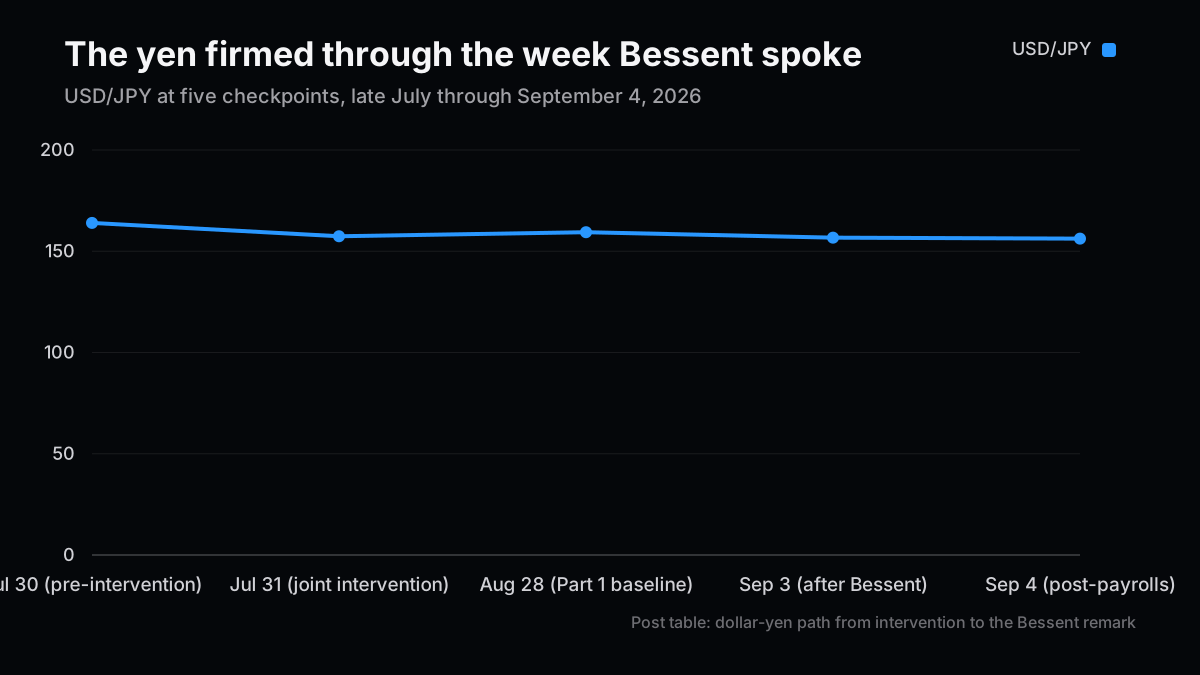
私が特に興味深いと思ったのは9月4日の動きだ。前々回の記事で検証した通り、その日の米雇用統計は予想の約3倍という強さで着地し、ドルは全面高になった。それでもドル円は156.23円と、156円台からほぼ動かなかった。ドルが強い日にドル円が上がらないということは、円側の材料(日銀の利上げ観測)がドル側の材料(米雇用統計)を押し返しているということだ。米国の話と日本の話、どちらの重力が強いかを測る、ちょっとしたリトマス試験紙になっていると思う。
背景も押さえておきたい。日本は7月31日から8月26日にかけて、総額15.4兆円(約960億ドル)という過去最大規模の為替介入を実施している。ドル円が163円台まで売られた背景には、日米金利差に加えて、高市政権の財政拡張路線への懸念があったと報じられている。トランプ大統領は協調介入を「友好の証」と評したが、実務的には米国の貿易赤字縮小や、日本が約束した5,500億ドル規模の対米投資を下支えする側面もあったようだ。介入と外交と金融政策が、この局面ではかなり密接に絡み合っている。
会合の日が近づくほど、利上げの有無そのものより「どれだけの幅で動くか」が焦点になってきている、というのが私の実感だ。
日銀の政策金利は現在1.00%。7月31日の会合で据え置きが決まったが、票決は8対1で、高田委員が1.25%への引き上げを単独提案していた(前編既出)。次回会合は9月17〜18日。植田総裁は「基調的な物価上昇率が2%に近づいている」としたうえで、「毎回の会合で利上げを議論する」と明言している。市場からの利上げ織り込みへの問いには明確な反論をしなかった——これは黙認に近いと私は読んでいる。
利上げ確率をめぐる報道は、今回もソースによってかなりばらつきがある。前々回の記事でも同じ現象を指摘したが、今回も似た構図だ。
| ソース | 時点 | 利上げ確率 |
|---|
| 検証済み一次情報(9月4日朝) | 9月4日 | 約98% |
| 市場報道A | 9月2日 | 約92% |
| 市場報道B | 9月初旬 | 約84% |
| 年末までの利上げ幅の織り込み | 9月3日 | 約49bp(7月末の22bpから拡大) |
数字の水準そのものより、49bpという年末までの織り込み幅のほうが私には示唆的だ。1回の利上げ(25bp)を超える幅が織り込まれているということは、市場は9月会合そのものよりも、9月と12月の「2回セット」を意識し始めているということになる。高田委員はその後も一段とタカ派色を強めており、市場では9月会合で通常の25bpではなく50bpの「ジャンボ利上げ」が出るのではないか、という観測すら出ている。
余談だが、植田総裁が講演で見せた「市場の織り込みにあえてコメントしない」という態度は、前編で書いたウォーシュ議長の「決定にではなく規律にコミットする」という姿勢と、驚くほど似ている。両者とも、フォワードガイダンスで手の内を明かすことを意図的に避けている。これが偶然の一致なのか、2026年の中央銀行に共通する作法なのかは、正直まだ判断がつかない。
ここが本稿でいちばん書きたかった部分だ。
9月4日に総務省が公表した7月の家計調査を見て、私は一瞬目を疑った。2人以上世帯の消費支出は実質で前年同月比3.6%減。8か月連続のマイナスで、下げ幅は2024年1月(6.3%減)以来の大きさだった。市場予想は1.6%減だったから、これも相当な下振れである。名目でも1.5%減。総務省の担当者は「メリハリをつけて消費した結果、全体としては支出を抑える傾向がみられた」と説明している。
品目別に見ると、生活インフラに近い支出ほど落ち込みが大きい。
| 品目 | 2026年7月 前年比(実質) | 備考 |
|---|
| 消費支出全体 | -3.6% | 8か月連続マイナス、24年1月以来の下げ幅 |
| 住居 | -16.4% | 落ち込み最大 |
| 光熱・水道 | -9.2% | 6月の-7.1%から悪化 |
| 交通・通信 | -8.5% | 6月の-5.7%から悪化 |
| 食料 | -1.3% | 6月の-2.5%からは改善 |
| 家具・家事用品 | +0.7% | 数少ないプラス項目 |
エコノミストの小池理人氏(大和総研)は、賃上げが続いているにもかかわらず「物価高が一段と鮮明になるにつれ、消費への下押し圧力は強まる」と指摘している。生鮮食品価格は7月に前年比7%上昇しており、実質賃金がプラスに転じても、体感としての生活防衛意識は消えていないということだろう。
ここで、前々回の記事の構図を思い出してほしい。米国では強い雇用統計が「景気の強さ」を裏付け、その強さが利上げ観測を後押しした。分子(景気)と分母(割引率)の両方が同じ方向を向いていた。ところが日本のケースはねじれている。消費データは8か月連続で弱い。にもかかわらず、日銀の利上げ観測はこの1週間でむしろ強まった。理由は内需の過熱ではなく、太平洋の向こう側からの一言だ。景気実態と政策の方向が一致しない状態を、私は「外圧としての利上げ」と呼びたい。
日本・米国のクロスボーダー案件を英語でマネジメントしていた時期に、何度も痛感したことがある。プロジェクトの前提や締め切りは、現場の準備状況とは無関係に、力関係の強い側の都合で先に固定されるということだ。現地チームが「まだデータが揃っていない」「もう少し時間がほしい」とどれだけ主張しても、決定権を持つ側が先にタイムラインを決めてしまえば、残りは帳尻を合わせる作業に変わる。日銀と米財務省の今回のやり取りを見ていると、あの感覚がそのまま蘇ってくる。植田総裁が慎重に「毎回の会合で議論する」と言い続けていられたのは、皮肉にも、外から明確な催促が来るまでの話だったということになる。
9月3日という1日だけを切り取っても、この非対称性はかなりはっきり出ていた。
輸出企業の為替感応度から確認したい。トヨタ自動車はIR資料で、対ドルで1円の円高が年間営業利益を500億円押し下げると開示している(対ユーロでは1円あたり100億円)。同社の想定為替レートは1ドル150円台で組まれていることが多く、直近のような156円台への急伸は、為替差益として積み上がっていた利益の一部を確実に削る方向に働く。
同じ9月3日、日経平均は前日比111円安の64,214.48円と4日続落し、直近1か月で最安値をつけた一方、TOPIXは0.5%高の4,102.04と底堅かった。指数間のこのねじれ自体が、銘柄・業種ごとの明暗を映している。
| 銘柄・セクター | 9月3日の変化率 | FX露出の性質 |
|---|
| エネルギー資源株 | -3.26% | ドル建て収益が中心、円高で目減り |
| Advantest(半導体製造装置) | -0.8% | 輸出比率が高く、円高で採算が悪化 |
| TOPIX(市場平均) | +0.5% | 分散されており影響は限定的 |
| ニトリホールディングス(輸入小売) | +8.41% | 輸入コストが下がり利益率が改善 |
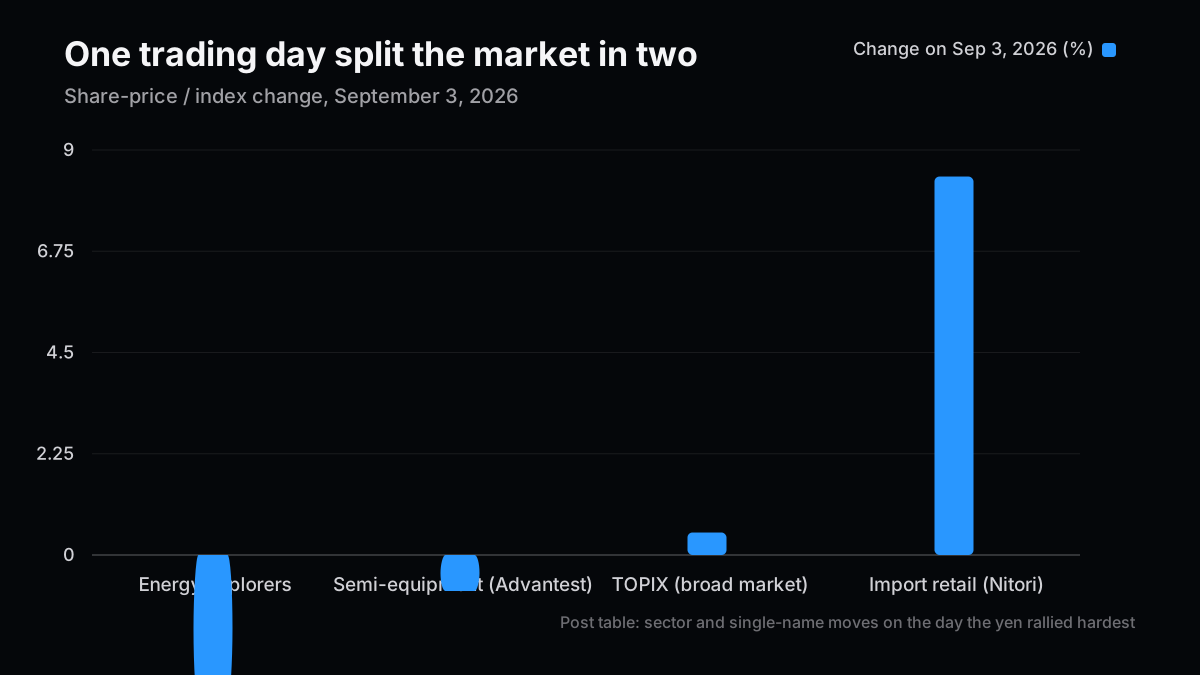
ニトリの8.41%高は象徴的だと思う。家具・生活雑貨の多くを輸入に頼る同社にとって、円高は仕入れコストの低下に直結する。同じ日、三菱商事・伊藤忠商事・三井物産といった総合商社も買われている。商社は資源権益とドル建て資産を抱える一方、輸入・トレーディング機能も併せ持つため、為替の影響は単純な「円高で下がる」に収まらない。この分散構造こそが、商社株が市場平均以上に堅調だった理由だろう。逆に、ドル建て収益に依存する資源開発株や、輸出比率の高い半導体製造装置株は、同じ日にはっきりと売られた。円高は日本株全体を一様に押し下げるのではなく、企業ごとの収益構造という補助線を引いたときに初めて、勝ち組と負け組がくっきり分かれる。テーマとして「日本株」を語る記事の多くが、この補助線を素通りしているように見える。
結論を先に言うと、短期はボラティリティ、中期は選別、というのが今の私のスタンスだ。
前編で示した3シナリオのうち、「メイン:利上げ」で描いた160〜165円への再上昇というシナリオは、ベッセント発言によって実質的に書き換えられた。金利差が縮む方向というより、日銀側の利上げ幅そのものが変数になっている。現時点でのシナリオを更新する。
| シナリオ | 9月17〜18日会合 | ドル円 | 日本株への含意 |
|---|
| ベース:25bp利上げ・織り込み通り | 1.00%→1.25% | 153〜157円で安定 | 輸出株は一時的下押し、内需・輸入株が優位を維持 |
| メイン:25bp利上げ+タカ派ガイダンス | 1.00%→1.25%、追加利上げを示唆 | 148〜153円へ一段の円高 | 選別が本格化、輸出株の下押し継続 |
| テール:50bpジャンボ利上げ | 1.00%→1.50%(高田委員提案の延長) | 145〜150円、スクイーズ的動き | 輸出株に急激な打撃、内需・小型株へローテーション加速 |
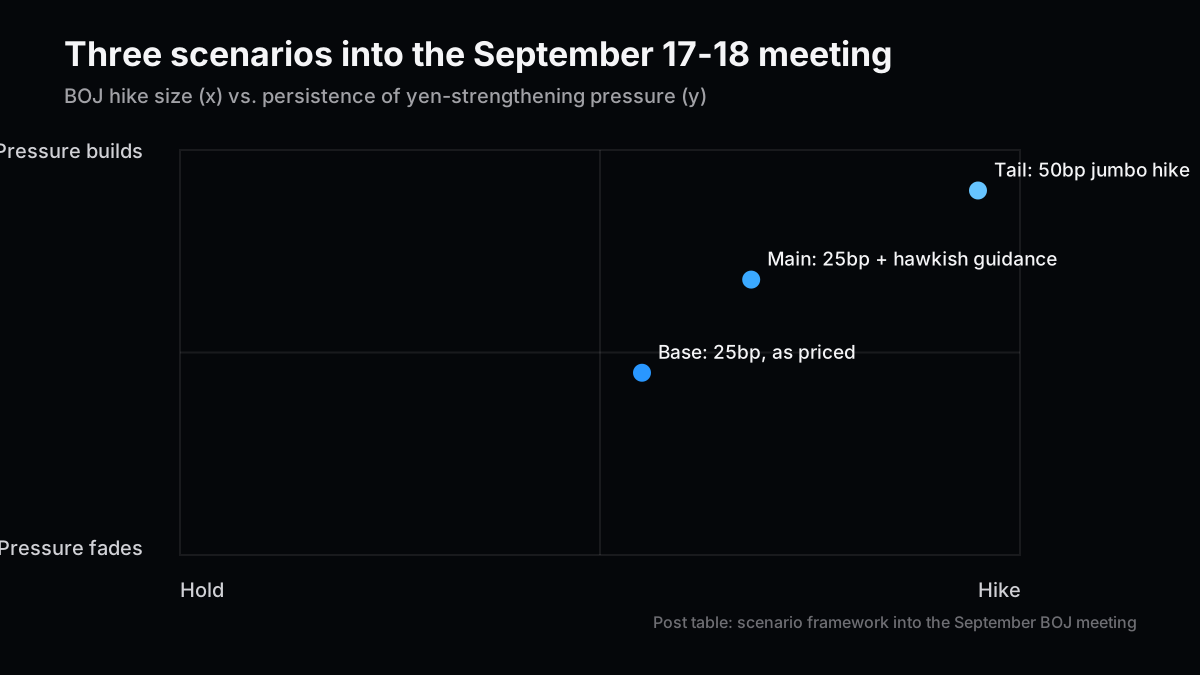
前々回の記事では、AI設備投資銘柄について「短期はニュートラル、中期は選別ロング」という結論を出した。日本株についても、構図は驚くほど似ている。テーマとして「日本株を買う/売る」を語る局面はもう終わっていて、為替感応度という一本の軸で銘柄を並べ替える局面に入っている。具体的には、ドル建て収益比率が高い輸出・資源株のウェイトを落とし、輸入依存度が高い内需・小売株と、資源とトレーディングを併せ持つ分散型の総合商社を相対的に厚くする——これが現時点での私の配分だ。バリュエーション面での余地については、以前バフェット指数を扱った記事で確認した通り、米国株に比べれば日本株はまだ許容度が残っていると見ているが、今回の利上げ観測がその余地をどこまで削るかは、9月17〜18日を待たないと見えてこない。
この見立てが崩れる条件も書いておく。9月17〜18日の会合で日銀が利上げを見送り、かつ植田総裁がその理由として7月の実質消費支出の弱さを明示した場合、今回の利上げ観測は外圧ではなく本来のデータに基づくものだったことになり、「外圧としての利上げ」という本稿の骨格そのものが崩れる。そのときは輸出株の戻りを買う側に回る。
外からの圧力で動く金融政策と、内側で弱っている消費実態。このねじれがどちらに決着するかを、9月17〜18日の日銀会合が最初に採点する。
次号の記事案
- 案1:9月BOJ会合の答え合わせ — 実際の利上げ幅(25bp/50bp/見送り)とドル円・日本株の反応を、本稿のベース/メイン/テールシナリオに照らして採点する。
- 案2:総合商社の為替耐性を財務データで検証する — 「分散構造だから底堅い」という本稿の仮説を、三菱商事・伊藤忠商事・三井物産のセグメント別収益とドル建て資産比率まで落とし込んで確認する。
- 案3:日米中銀の「規律」路線を比較する — ウォーシュ議長と植田総裁がともに見せる「フォワードガイダンスを避ける」姿勢を、2026年の中央銀行コミュニケーションの潮流として捉え直す。
本文の事実関係と数値前提は、読者が確認できる一次情報・公的資料を優先して掲載している。
本記事は情報提供を目的としたものであり、特定の銘柄・通貨ペア・取引の推奨や投資助言ではありません。執筆者は記事内で言及した資産クラスにポジションまたは利害関係を持つ可能性があります。調査、翻訳、校正の一部に生成AIを利用していますが、最終的な内容はZYL0が確認しています。詳細は免責事項をご確認ください。
Tightening by Pressure: Bessent, a Firmer Yen, and the Choice Facing Japanese Equities
Part 1 started from Fed Chair Warsh's Jackson Hole speech and traced what it did to rates and dollar-yen. The piece right before this one traced how a blowout jobs print pushed US equities down through the discount rate. Both pieces were written from the US side of the table. Then, late in the same week, the rate story crossed the Pacific and came back from the other direction. A single remark from US Treasury Secretary Scott Bessent about Japanese monetary policy moved dollar-yen by more than three yen in under a week and pushed the Bank of Japan's September meeting into "a hike is nearly certain" territory. That felt like it belonged alongside Part 1. And the more I dug into it, the clearer it became that this tightening pressure is not coming from strong domestic demand in Japan — it is coming almost entirely from outside. If Part 1 was the US-side rate shock, this is its mirror image on the Japanese side.
My honest first reaction to reading these comments was: he really said the quiet part out loud.
Speaking around a G20-related gathering in North Carolina, Bessent made a string of pointed comments about Japan's monetary and fiscal policy. On Sunday, August 30, he reportedly met with BOJ Governor Kazuo Ueda directly and pressed the case for a rate hike — a US Treasury official told Japanese public broadcaster NHK as much. He then called Abenomics "a tremendous success" while adding that Japan should "let that run and stop the reflation," saying Japan can "sit back and enjoy the benefits." Given that Prime Minister Sanae Takaichi has built her platform on expansionary fiscal policy, this reads as a pointed jab at her own agenda.
Laid out chronologically, the sequence of remarks shows a deliberate design.
| Date | Remark | Implication |
|---|
| Aug 30 (Sun) | Met Ueda directly, pressed the case for a hike | Direct political pressure on the BOJ |
| Aug 31 - Sep 1 | "A tremendous success in Abenomics," Japan should "let that run and stop the reflation" | A jab at PM Takaichi's expansionary fiscal stance |
| Sep 1 | Japan should "do the right thing" on policy, end "outdated ideas about big stimulus" | A push on both fiscal and monetary fronts |
| Sep 2 | Recent yen moves were "not disorderly" | Not opposition to intervention, but tacit approval of yen strength |
Pressuring fiscal and monetary policy in the same breath is not a common move. Bessent went further still, voicing "strong support for Japan's decisive market and monetary steps to address the substantial undervaluation of the yen." Support the intervention, stop the reflation, hike rates — all three demands point the same direction. I am comfortable calling that external pressure and not much else.
This is the point most likely to get garbled, and it matters for the title of this piece, so let me nail it down first.
I have seen some coverage and social posts frame this as yen weakness. It is the opposite: dollar-yen went down, meaning the yen got stronger. When I wrote Part 1 on August 28, dollar-yen sat around 159.4. From there, Bessent's comments and hawkish remarks from BOJ board member Hajime Takata combined to pull it down to 156.71 by September 3. Nearly three yen of movement in under a week is a large move by any FX standard.
Tracing the path from the intervention through this latest leg makes the sequence clear.
| Point in time | USD/JPY | Context |
|---|
| Jul 30 (pre-intervention) | 163.99 | A genuine 40-year low for the yen |
| Jul 31 (joint intervention) | 157.40 | First US-Japan joint intervention in 28 years |
| Aug 28 (Part 1 baseline) | ~159.4 | A partial rebound off the intervention low |
| Sep 3 (after Bessent's remarks) | 156.71 | Compounded by Takata's own hawkish comments |
| Sep 4 (after the jobs print) | 156.23 | Barely dented despite a print that ran roughly 3x consensus |
What I find most telling is September 4. As I laid out in the prior piece, that day's US jobs report landed at roughly three times consensus, and the dollar rallied broadly on the back of it. Yet dollar-yen barely moved off 156.23. If the dollar is strong across the board and dollar-yen still does not budge, that tells you the yen-side story — BOJ hike expectations — is outmuscling the dollar-side story on this particular pair right now. It is a small but useful litmus test for which side of the Pacific currently carries more gravitational pull.
The backdrop is worth spelling out too. Between July 31 and August 26, Japan spent a record ¥15.4 trillion (roughly $96 billion) defending the yen — the largest monthly intervention on record. The pre-intervention slide to 163.99 reflected not just the rate differential but also investor unease over PM Takaichi's fiscal expansion plans. President Trump characterized the coordinated action as "a signal of friendship," though in practice it also served US interests: narrowing the trade deficit and underwriting Japan's pledged $550 billion in US investment. Intervention, diplomacy, and monetary policy are unusually tangled together in this episode.
The closer the meeting gets, the more the real question shifts from whether the BOJ hikes to how large the move turns out to be — that is my honest read at this point.
The BOJ's policy rate currently sits at 1.00%. The July 31 meeting held there on an 8-1 vote, with board member Hajime Takata dissenting in favor of 1.25% (as I noted in Part 1). The next meeting is September 17-18. Governor Ueda has said underlying inflation is "quite close" to the 2% target and stated plainly that the board will "fully discuss" a hike "at every policy meeting, including the next one." When asked directly whether he objected to markets nearly fully pricing a September hike, he declined to comment — which I read as closer to tacit agreement than genuine ambiguity.
As with the jobs-report piece, the reported hike probabilities disagree across sources — the same pattern shows up again here.
| Source | As of | Implied hike probability |
|---|
| Verified primary reading (Sep 4 AM) | Sep 4 | ~98% |
| Press reading A | Sep 2 | ~92% |
| Press reading B | Early Sep | ~84% |
| Tightening priced through year-end | Sep 3 | ~49bp (up from ~22bp at end of July) |
What strikes me more than the headline probability is that 49bp figure priced through year-end. Pricing more than a single 25bp move implies the market is no longer just betting on September in isolation — it is starting to price a September-and-December combination. Takata has kept leaning hawkish since, and there is now real chatter that the BOJ could deliver a 50bp "jumbo" hike at the September meeting rather than the standard 25bp.
One aside worth flagging: Ueda's studied refusal to comment on market pricing echoes, almost eerily, Warsh's line from Part 1 about being "committed to a discipline, not to a decision." Both chairs are deliberately withholding forward guidance. Whether that is coincidence or a shared house style among 2026's central bankers, I honestly cannot say yet.
This is the section I most wanted to write.
When Japan's statistics bureau released July household spending data on September 4, I had to read it twice. Real spending by households of two or more people fell 3.6% year over year — the eighth straight month of decline, and the sharpest drop since January 2024's 6.3% fall. Consensus had expected a 1.6% decline, so this was a substantial miss. Nominal spending fell 1.5%. A ministry official attributed it to households "spending selectively while restraining outlays overall."
Breaking it down by category, the categories closest to daily necessities show the steepest declines.
| Category | Jul 2026 YoY (real) | Note |
|---|
| Total household spending | -3.6% | 8th straight decline; sharpest since Jan 2024 |
| Housing | -16.4% | The single steepest drop |
| Utilities | -9.2% | Worse than June's -7.1% |
| Transport & communication | -8.5% | Worse than June's -5.7% |
| Food | -1.3% | An improvement from June's -2.5% |
| Furniture & household goods | +0.7% | One of the few categories in the green |
Masato Koike, an economist at Daiwa Institute of Research, noted that even with wages rising, "downward pressure on consumption is expected to intensify as higher prices become more pronounced going forward." Fresh food prices rose 7% year over year in July, so even as real wages turn positive on paper, the felt sense of belt-tightening has not gone away.
Now recall the shape of the prior piece. In the US, a strong jobs print confirmed economic strength, and that strength reinforced hike odds — numerator and denominator moved the same direction. Japan's case is twisted the other way. Consumption data has been negative for eight straight months. And yet BOJ hike expectations strengthened over the same week regardless. The reason is not overheating domestic demand — it is a remark from across the Pacific. When policy direction and the underlying economic reality point opposite ways, I think "tightening by pressure" is the honest name for it.
I spent a stretch of my career managing cross-border projects between Japan and the US in English, and I learned something that keeps resurfacing here. Project assumptions and deadlines get fixed by whichever side holds the leverage, regardless of how ready the other side actually is. No matter how loudly the local team argues that the data is not there yet or that more time is needed, once the party with leverage locks in a timeline, everyone else shifts into reconciliation mode. Watching the exchange between the BOJ and the US Treasury this week, that same feeling came right back. Ueda's carefully repeated line — "we discuss it at every meeting" — was, ironically, only sustainable until an explicit external push arrived.
Even a single trading day, September 3, made this asymmetry unusually visible.
Start with exporter sensitivity. Toyota discloses in its own investor materials that every ¥1 of yen strength against the dollar cuts annual operating profit by roughly ¥50 billion (and ¥10 billion per euro). The company typically budgets around ¥150 to the dollar, so a move into the mid-156 range eats directly into the FX gains that had been accumulating on the books.
On that same September 3, the Nikkei 225 fell 111 points to close at 64,214.48 — a fourth straight decline and its lowest close in roughly a month — while the TOPIX held up, adding 0.5% to 4,102.04. That divergence between the two indexes is itself a clue about where the winners and losers sit.
| Name / sector | Change on Sep 3 | Nature of FX exposure |
|---|
| Energy explorers | -3.26% | Dollar-denominated revenue erodes on yen strength |
| Advantest (semiconductor equipment) | -0.8% | Export-heavy, margins compress as the yen strengthens |
| TOPIX (broad market) | +0.5% | Diversified, so the impact is diluted |
| Nitori Holdings (import retail) | +8.41% | Import costs fall, lifting margins |
Nitori's 8.41% gain feels like the cleanest illustration in the whole data set. The company sources much of its furniture and household goods from overseas, so a firmer yen flows straight through to lower input costs. On the same day, the big trading houses — Mitsubishi Corp, Itochu, Mitsui & Co — also rallied. Trading houses hold resource interests and dollar-denominated assets, but also run import and trading operations, so their FX exposure does not collapse into a simple "yen strength is bad" story. That diversification is likely exactly why they outperformed the broad market that day. Dollar-revenue names — resource explorers, export-heavy semiconductor equipment makers — sold off clearly on the same tape. A firmer yen does not push Japanese equities down uniformly; the winners and losers only separate once you draw the line through each company's actual revenue structure. Most theme-level "Japan equities" coverage skips straight past that line.
My conclusion up front: short-term volatility, medium-term selection — that is where I currently stand.
Of the three scenarios laid out in Part 1, the "main case" that pointed to a re-widening toward 160-165 has effectively been rewritten by Bessent's remarks. The variable is no longer primarily the rate-gap direction; it is the size of the BOJ's own hike. Here is the updated framework.
| Scenario | Sep 17-18 meeting | USD/JPY | Implication for Japanese equities |
|---|
| Base: 25bp hike, as priced | 1.00% -> 1.25% | Stable 153-157 range | Exporters take a temporary hit; domestic-demand and import names hold up |
| Main: 25bp hike + hawkish guidance | 1.00% -> 1.25%, signals more to come | Another leg down to 148-153 | Selection intensifies; exporters keep sliding |
| Tail: 50bp jumbo hike | 1.00% -> 1.50% (extension of Takata's proposal) | 145-150, squeeze-like action | A sharp hit to exporters; accelerated rotation into domestic-demand and small caps |
In the prior piece, I landed on "neutral on the short term, selectively long on the medium term" for AI-capex names. The shape of the call here is strikingly similar. The phase where you simply buy or sell "Japan equities" as a theme is over; this is a phase for re-sorting names along a single axis — FX sensitivity. Concretely, I am trimming exposure to dollar-revenue exporters and resource names, and building relative weight in import-heavy domestic-demand and retail names, along with the diversified trading houses that straddle both resource and import exposure. On valuation room, the Buffett Indicator piece I wrote earlier suggested Japanese equities still carry more cushion than US equities — but how much of that cushion this rate-hike cycle eats into is something I cannot see clearly before September 17-18.
Let me also state what would change my mind here. If the BOJ holds at its September 17-18 meeting and Governor Ueda explicitly cites the weakness in July's real consumption spending as the reason, then this round of hike expectations would turn out to have been driven by the underlying data after all, not external pressure — and the entire "tightening by pressure" framing of this piece falls apart. In that case, I would become a buyer of the exporter names on the bounce.
Monetary policy being pushed from outside, against a consumption picture that is weakening from within — the September 17-18 BOJ meeting is the first place that tension gets scored.
Next Issue Ideas
- Idea 1: Grading the September BOJ meeting — Score the actual hike size (25bp, 50bp, or a hold) and the dollar-yen and equity reaction against this piece's base/main/tail scenarios.
- Idea 2: Stress-testing trading-house FX resilience with real numbers — Take this piece's "diversified structure holds up better" hypothesis down to segment-level revenue and dollar-asset exposure at Mitsubishi Corp, Itochu, and Mitsui & Co.
- Idea 3: Comparing the "discipline" playbook at the Fed and the BOJ — Read Warsh's and Ueda's shared instinct to withhold forward guidance as part of a broader 2026 pattern in central-bank communication.
Facts and figures in this piece prioritize primary and official sources readers can verify themselves.
This article is for informational purposes only and does not constitute investment advice or a recommendation of any specific security, currency pair, or trade structure. The author may hold positions or interests related to the asset classes discussed. Generative AI was used for parts of research, translation, and proofreading, with final review by ZYL0. See the disclaimer for details.