ウォーシュ・ショック[前編]ジャクソンホール講演で変わった金利とドル円の風景
前々回・前回とイラン情勢の半年を検証し、タンカー株や海上保険という具体的な投資機会に着地させた。ただ、後編を書き終えたあともずっと引っかかっている前提があった。あの2本の記事は、暗黙のうちに「金利はおおむね現状程度で推移する」という土台の上に立っていたということだ。8月28日のジャクソンホール講演を読んで、その土台自体を疑うべきタイミングが来たと感じている。今回は原油でも地政学でもなく、ポートフォリオ全体の割引率を左右する金利そのものと、そこから波及するドル円の風景を扱う。
ケビン・ウォーシュ氏は2006年から2011年までFRB理事を務めた人物で、2026年1月30日にトランプ大統領から次期FRB議長として指名された。上院での承認投票は54対45——史上もっとも党派色の強いFRB議長承認投票になったと報じられている。5月13日に承認、5月22日に就任し、パウエル前議長の後任として金融政策のかじ取りを引き継いだ。
8月28日のジャクソンホール経済政策シンポジウムでの基調講演は、就任からちょうど100日目のタイミングで行われている。私が最初に驚いたのは、次回会合の予告や明確な反応関数の提示を意図的に避けた点だ。ウォーシュ氏は「私はここで、決定にではなく規律にコミットすると申し上げたい」と述べ、続けて「市場参加者が次の一手を求めてFRBばかり見るような構造を、私たちは許容すべきではない」と踏み込んでいる。フォワードガイダンスを積極的には使わない、という立場を就任100日目に自ら明言したに等しい。
インフレ認識については、思ったより踏み込んでいた。PCE(個人消費支出)インフレ率は前年比3.7%で推移しており、ウォーシュ氏はこれを「懸念すべき水準」と表現した。夏場の物価指標そのものは市場予想より穏やかだったとしつつも、「基調的なトレンドが改善したとは言えない」と釘を刺している。
市場の反応は、正直こちらが身構える間もないほど速かった。数字で置いておく。
| 指標 | 講演前 | 講演後 | 変化幅 |
|---|
| 2年債利回り | — | 4.31% | +8bp |
| 10年債利回り | — | 4.72% | +4bp |
| 30年債利回り | — | 5.21% | +2bp |
| ドル指数(DXY) | — | 99.66 | +0.6% |
| 9月利上げ織り込み確率(CME) | 約35% | 約57〜60% | +22〜25pt |
9月利上げ確率が1日で35%から60%近くまで跳ねるというのは、私の感覚ではかなり大きい値動きだ。前週まで市場は「据え置き継続」をほぼ既定路線として織り込んでいたから、その前提が根元から揺さぶられたと見ていい。株式も同日下落しており、これは「タカ派サプライズ」に対する典型的な反応だと言える。
FF金利誘導目標は現在3.50〜3.75%。7月29日のFOMCで5会合連続の据え置きが決まったばかりだった。次回FOMCは9月15〜16日で、四半期に一度の経済見通し(SEP)とドットプロットの公表を伴う会合にあたる。つまりウォーシュ議長にとって、講演で語った「規律」という言葉の中身を数字で示す最初の機会になる。
ここで一度、2024年との比較を置いておきたい。円キャリー取引が全盛だった2024年半ば、FF金利は5.25〜5.50%、日銀の政策金利は0〜0.1%で、日米金利差は5.15〜5.25ポイントあった。それが2026年8月時点では、FF3.50〜3.75%、日銀1.00%——金利差は2.50〜2.75ポイントまで縮小している。
| 時点 | FF金利誘導目標(上限) | 日銀政策金利 | 日米金利差 |
|---|
| 2024年半ば(円キャリー全盛期) | 5.50% | 0.10% | 5.15〜5.25pt |
| 2026年8月(現在) | 3.75% | 1.00% | 2.50〜2.75pt |
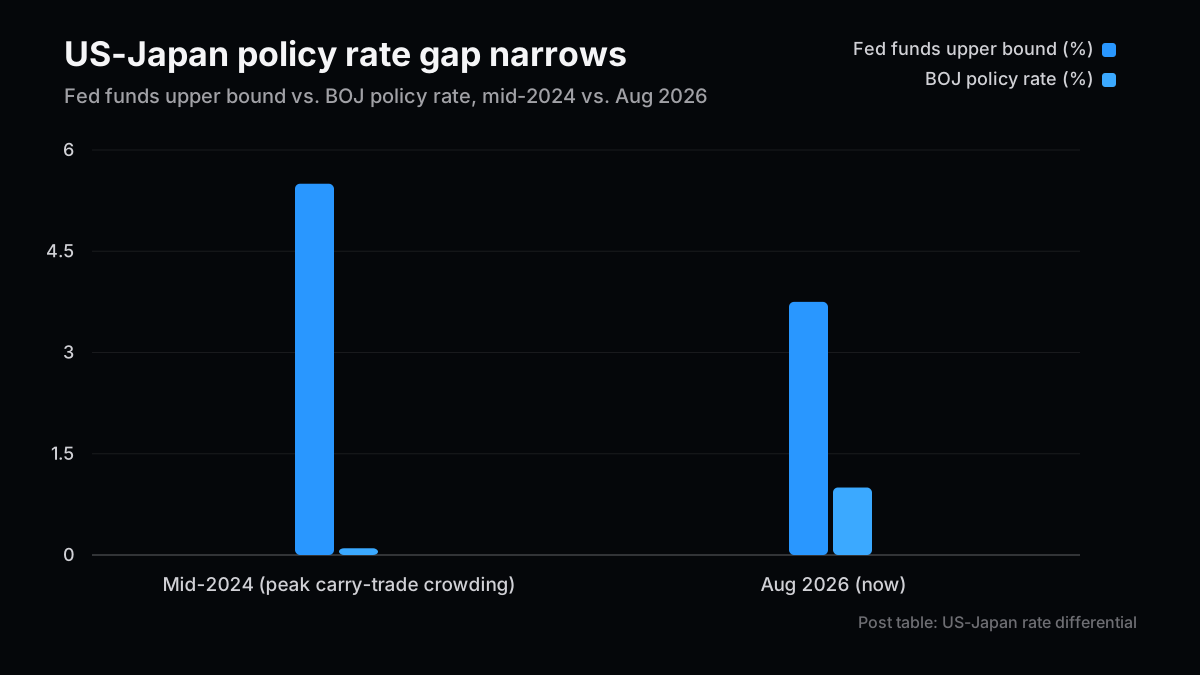
この構図だけを見ると、「金利差は縮んでいるのだから円は買われやすいはず」と読みたくなる。ただし——ここは強調しておきたいのだが——もしウォーシュ議長の講演が9月の利上げを後押しするなら、縮んだはずの金利差が再び拡大方向に振れる。日銀も年内にもう1回、1.25%への追加利上げに動くという観測が優勢だが(7月会合は8対1で据え置き、高田委員が1.25%への引き上げを提案している)、FRBが利上げに動けば、日銀の利上げペースを打ち消してしまう可能性がある。金利差の「方向」は、水準そのものより読みにくい変数だと思う。
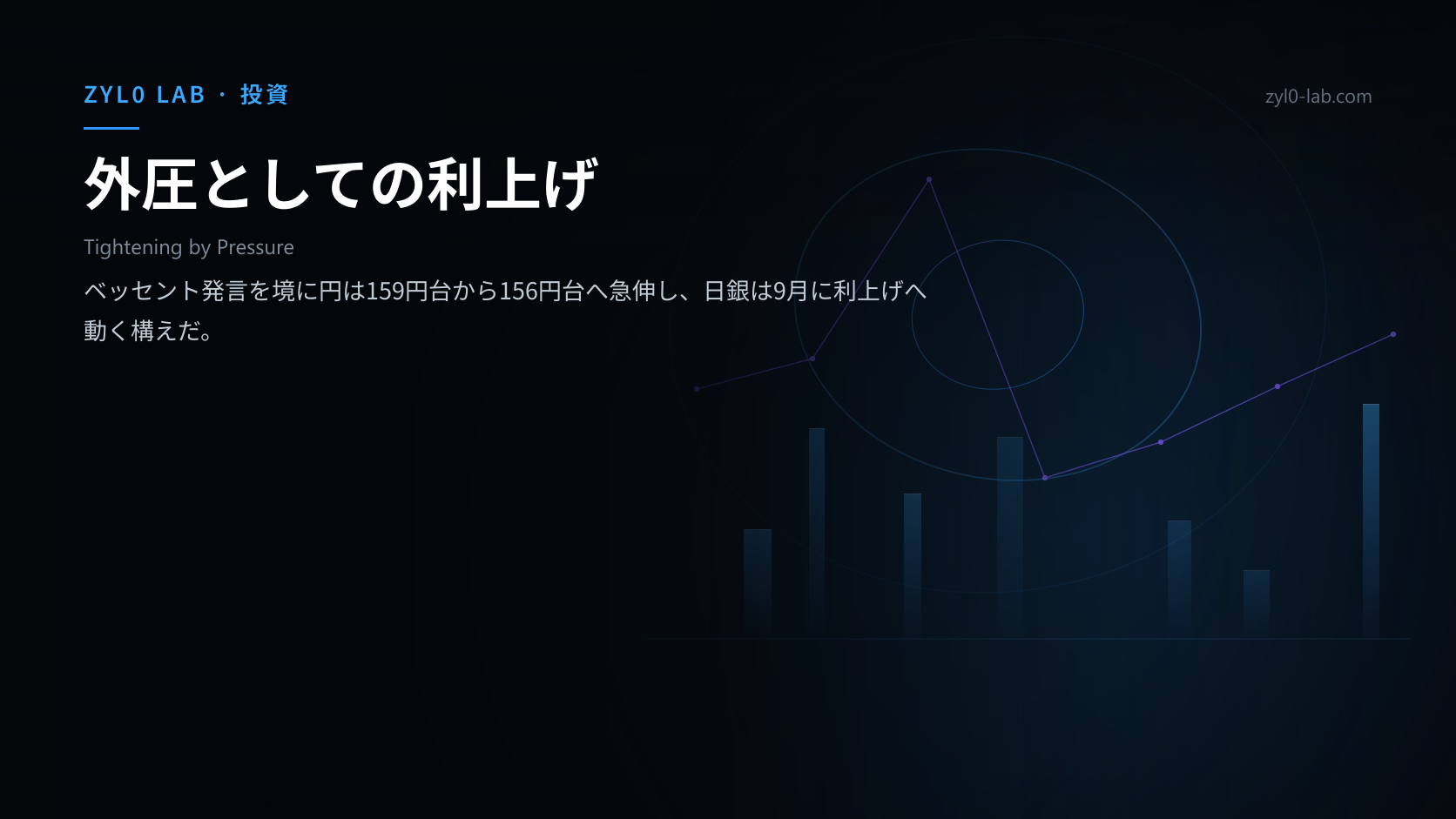
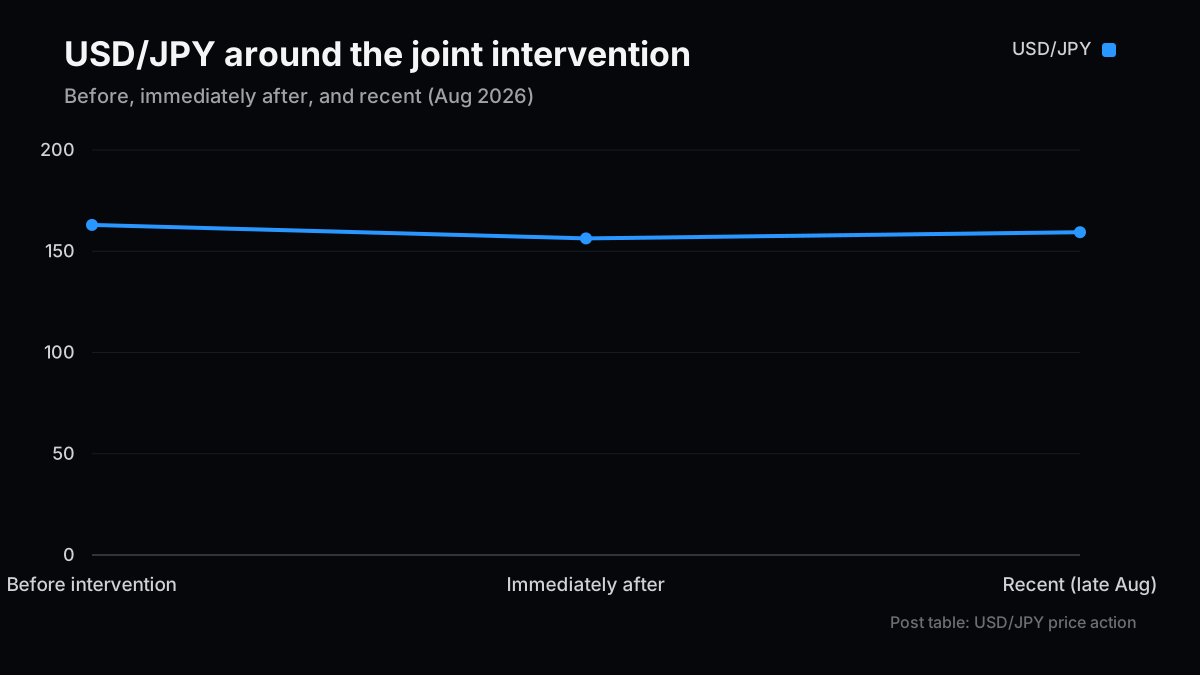
ドル円の値動きを振り返ると、直近半年で最大のイベントは米・日の協調介入だった。介入前、ドル円は163円台——実に40年ぶりの高値水準まで売られていた。米・日双方が協調介入を認めた発表直後には156円台まで急落し、直近(8月下旬)は159円台まで戻している。
| 時点 | ドル円 | 背景 |
|---|
| 協調介入前 | 163円台 | 40年ぶり高値水準 |
| 協調介入直後 | 156.34円 | 米・日が協調介入を公式に認める |
| 直近(8月下旬) | 159.4円前後 | 介入後の反発、水準を切り上げ直す |
この値動きの背景にあるのが、CFTC統計に現れる円売りポジションの縮小だ。投機筋の円ネットショートは6月末時点で約13.8万枚あったが、介入警戒を受けて8月11日時点では約5.95万枚まで縮小している。半分以下への圧縮であり、率直に言って「介入は効いた」と評価していい規模だと思う。
ただし、ここからが本題だ。円売りポジションが縮んだのは事実だが、ゼロになったわけではない。年初来では記録的な水準まで積み上がっていた経緯があり、ポジションを積み直す余地は依然として残っている。2024年7〜8月の円キャリー巻き戻し——わずか数週間でドル円が162円から140円台まで急落した局面——を思い出すと、ポジションが薄い局面での急変動リスクは、むしろポジションが厚い局面より読みにくいというのが私の実感だ。北米駐在中に投資先の資金計画をドル建てで組んだ経験があるのだが、あのとき痛感したのは、為替差損益は「ポジションが薄いから動意が乏しい」とは限らない、ということだった。
ここで、ドル円について私が想定する2つの方向性を挙げておく。
- 金利差再拡大シナリオ:9月にFRBが利上げに動き、日銀が様子見に回れば、縮んだはずの金利差が再び開く。円売りポジションは再拡大しやすく、160円台後半への戻りも視野に入る。
- 日銀追加利上げ+介入警戒シナリオ:日銀が年内に1.25%への利上げに踏み切り、かつ介入への警戒感が投機筋のポジション積み増しを抑制すれば、薄いポジションのままスクイーズ(踏み上げ)が起きやすい環境が続く。
どちらに転ぶかは、9月FOMCの結果次第という面が大きい。個別の売買判断としてではなく、ポジションの厚みと金利差の方向という2つの軸で状況を追うのが、この局面では実務的だと考えている。なお、金利上昇局面では高配当株・REIT・小型株といった金利感応度の高いセクターへの一般的な逆風も無視できないが、この点は後編のハイテク設備投資というテーマに直結するため、ここでは深入りしない。
ここまでの材料を、ベース・メイン・テールの3シナリオに統合する。
| シナリオ | 9月FOMC | ドル円 | 含意 |
|---|
| ベース:据え置き継続 | 3.50〜3.75%で据え置き | 155〜160円レンジ | 金利差方向は不変、ポジションは緩やかに戻る |
| メイン:利上げ | 25bp利上げ、3.75〜4.00%へ | 160〜165円へ再上昇 | 円売りポジション再拡大、介入再警戒 |
| テール:日銀先行利上げ+FRB据え置き | 据え置きだが日銀が1.25%へ利上げ | 150円割れも視野 | 薄いポジションでのスクイーズ |
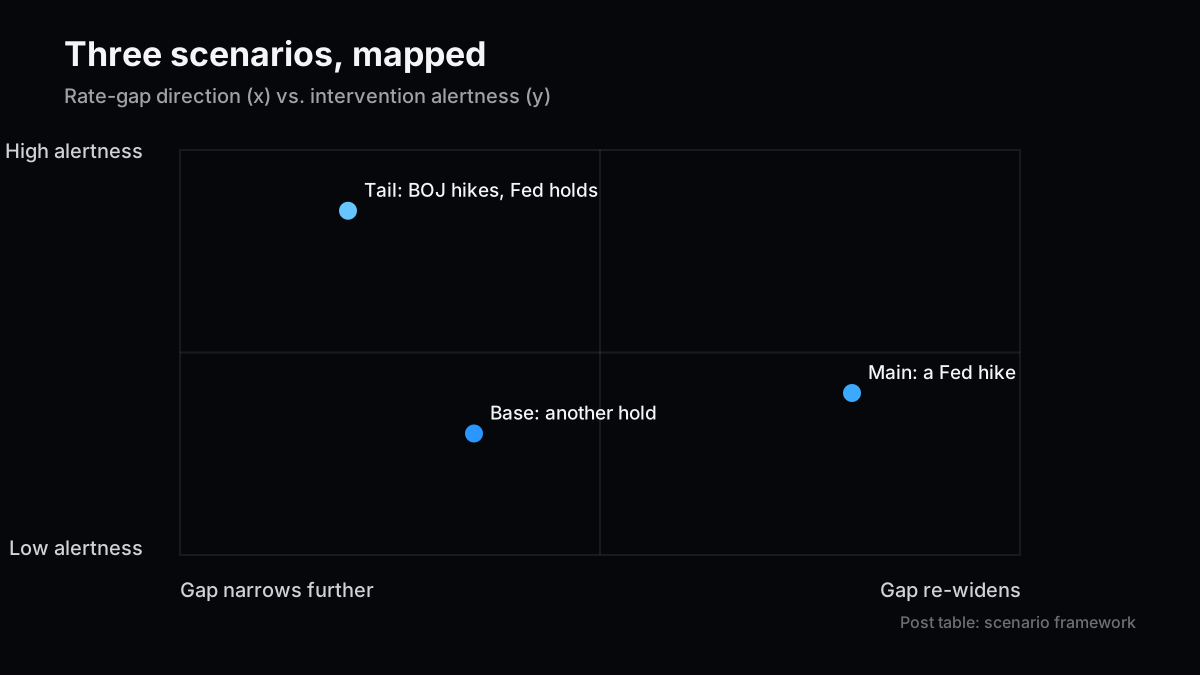
私自身は、ウォーシュ議長が「規律」という言葉をあえて選んだ以上、9月に無理に利上げへ踏み切るとは考えていない——正直、五分五分よりはやや据え置き優勢と見ている。ただし、この見立てが崩れる条件も明示しておく。9月のPCEコアインフレが前年比3.5%を上回って加速した場合、据え置きシナリオは後退し、利上げシナリオの確度が大きく上がると考えている。
次の変数は、この金利上昇圧力が実体経済のどこに波及するかだ。後編では、2026年に合計約7,250億ドルという規模まで膨らんだハイパースケーラー4社の設備投資が、金利上昇環境でどこまで耐えられるかを具体的に検証する。
次号の記事案
- 案1:金利上昇はハイテク設備投資をどこまで揺らすか(後編) — 前編で確認した金利シナリオを踏まえ、Microsoft・Amazon・Alphabet・Metaの資金調達構造と設備投資の減速トリガーを検証する。
- 案2:9月FOMC後の答え合わせ — 実際の利上げ有無とSEP・ドットプロットの内容を、本記事のベース/メイン/テールシナリオに照らして採点する。
- 案3:円キャリー取引の巻き戻し再点検 — 2024年7〜8月の巻き戻し局面と比較しながら、CFTCポジション統計の月次更新を追跡する。
本文の事実関係と数値前提は、読者が確認できる一次情報・公的資料を優先して掲載している。
本記事は情報提供を目的としたものであり、特定の銘柄・通貨ペア・取引の推奨や投資助言ではありません。執筆者は記事内で言及した資産クラスにポジションまたは利害関係を持つ可能性があります。調査、翻訳、校正の一部に生成AIを利用していますが、最終的な内容はZYL0が確認しています。詳細は免責事項をご確認ください。
The Warsh Shock — Part 1: How Jackson Hole Rewired the Rate and Dollar-Yen Outlook
Over the last two pieces I worked through six months of the Iran conflict and landed on concrete plays in tanker stocks and marine war-risk insurance. But something kept nagging at me after I finished Part 2 of that series: both articles quietly assumed rates would keep drifting along roughly where they already were. Reading Kevin Warsh's August 28 Jackson Hole speech, I think that assumption itself is now worth questioning. This time the subject isn't oil or geopolitics — it's the rate backdrop that discounts every position in a portfolio, and the dollar-yen picture that flows from it.
Kevin Warsh, who served on the Fed's Board of Governors from 2006 to 2011, was nominated by President Trump as the next Fed Chair on January 30, 2026. The Senate confirmation vote came in at 54-45 — reportedly the most partisan Fed Chair confirmation vote in history. He was confirmed on May 13 and sworn in on May 22, taking over monetary policy from outgoing Chair Jerome Powell.
His keynote at the Jackson Hole Economic Policy Symposium on August 28 landed exactly 100 days into his term. What struck me first was how deliberately he avoided previewing the next meeting or laying out a clear reaction function. He said, "I stand here today committed to a discipline, not to a decision," and went further: "We should not indulge a regime in which market participants are looking primarily to the Fed for their next trade." That's about as close as a sitting chair gets to declaring, on day 100, that he doesn't intend to lean on forward guidance.
His read on inflation was more pointed than I expected. PCE inflation is running at 3.7% year over year, and Warsh called that "concerning." He allowed that the summer's inflation prints came in better than forecast, while insisting the underlying trend hasn't meaningfully improved.
The market reaction was fast enough that I barely had time to brace for it. Here's the scoreboard.
| Indicator | Before the speech | After the speech | Change |
|---|
| 2-year Treasury yield | — | 4.31% | +8bp |
| 10-year Treasury yield | — | 4.72% | +4bp |
| 30-year Treasury yield | — | 5.21% | +2bp |
| Dollar index (DXY) | — | 99.66 | +0.6% |
| September hike odds priced (CME) | ~35% | ~57-60% | +22-25pt |
Watching September hike odds jump from 35% to nearly 60% in a single session is a genuinely large move by my own read. Going into the speech, markets had all but priced in "another hold" as the base case, so this rattled that assumption at the root. Equities sold off the same day — the textbook reaction to a hawkish surprise.
The Fed funds target sits at 3.50-3.75% today, held for a fifth consecutive meeting at the July 29 FOMC. The next meeting is September 15-16, and it's one of the quarterly meetings that comes with an updated Summary of Economic Projections and dot plot — in other words, Warsh's first real opportunity to put numbers behind the word "discipline."
Worth pausing here for a 2024 comparison. Back when the yen carry trade was at its most crowded, in mid-2024, the Fed funds rate sat at 5.25-5.50% against a Bank of Japan rate of 0-0.1% — a 5.15-5.25 point gap. As of August 2026, that's Fed 3.50-3.75% against BOJ 1.00%, a gap that has compressed to roughly 2.50-2.75 points.
| Point in time | Fed funds upper bound | BOJ policy rate | US-Japan differential |
|---|
| Mid-2024 (peak carry-trade crowding) | 5.50% | 0.10% | 5.15-5.25pt |
| August 2026 (now) | 3.75% | 1.00% | 2.50-2.75pt |
Taken at face value, this reads as "the gap has narrowed, so the yen should find buyers more easily." But — and this is worth stressing — if Warsh's speech does end up pushing the Fed toward a September hike, that narrowed gap swings back the other way. The BOJ is widely expected to deliver one more hike this year, to 1.25% (the July meeting held at 1.00% on an 8-1 vote, with board member Hajime Takata dissenting in favor of 1.25%), but a Fed hike could easily outrun the BOJ's own tightening pace. The direction of the rate gap, I'd argue, is a harder variable to read than its level.
Looking back at dollar-yen price action, the single biggest event of the past six months was the joint US-Japan intervention. Before it, dollar-yen had sold off to the 163 handle — a genuine 40-year high. Right after both governments confirmed the coordinated intervention, it dropped sharply to the 156 handle, and has since climbed back to around 159 by late August.
| Point in time | USD/JPY | Context |
|---|
| Before the joint intervention | 163 handle | A genuine 40-year high |
| Immediately after | 156.34 | US and Japan officially confirm intervention |
| Recent (late August) | ~159.4 | A partial rebound off the intervention low |
Behind that price action sits a real shift in CFTC positioning. Speculative net-short yen positions stood at roughly 138,000 contracts at the end of June, and shrank to about 59,500 by August 11 on intervention risk. That's a drop of more than half, and honestly, it's a large enough move that I'd call the intervention effective.
But here's where the real story starts. Shorts shrinking doesn't mean shorts are gone. Positioning had built up to record levels earlier in the year, and there's clearly room left to rebuild. I keep coming back to the July-August 2024 carry-trade unwind — dollar-yen collapsed from 162 to the 140s in a matter of weeks — and my honest read is that a thin positioning backdrop is often harder to forecast than a crowded one, not easier. I structured a portfolio company's dollar-denominated financing plan while posted in North America, and the lesson that stuck was that FX P&L doesn't get quieter just because positioning looks thin.
Here are the two directional scenarios I'm weighing for dollar-yen specifically:
- Rate-gap re-widening: if the Fed hikes in September while the BOJ stays on hold, the gap that just narrowed reopens. Yen shorts would likely rebuild, putting the upper-160s back in play.
- BOJ hike plus intervention caution: if the BOJ delivers its 1.25% hike this year while lingering intervention risk keeps speculative funds from rebuilding shorts too aggressively, the thin-positioning setup stays vulnerable to a squeeze.
Which one plays out depends heavily on the September FOMC outcome. Rather than a single directional call, I think the practical approach here is tracking two axes — how crowded positioning is, and which way the rate gap is moving. Rising rates generally also weigh on rate-sensitive sectors — high dividend payers, REITs, small caps — but that thread connects directly to Part 2's tech-capex theme, so I'll leave it there for now.
Pulling this together into a base/main/tail framework:
| Scenario | September FOMC | USD/JPY | Implication |
|---|
| Base: another hold | Held at 3.50-3.75% | 155-160 range | Rate-gap direction unchanged; positioning drifts back |
| Main: a hike | 25bp hike to 3.75-4.00% | Back up to 160-165 | Yen shorts rebuild; intervention risk resurfaces |
| Tail: BOJ moves first, Fed stays put | Fed holds, but the BOJ hikes to 1.25% | Break below 150 possible | A squeeze against thin positioning |
My own take: given that Warsh deliberately chose the word "discipline," I don't think he forces a hike through in September purely on optics — if anything, I'd lean slightly toward another hold rather than a coin flip. But here's the condition that would change my mind: if September's core PCE accelerates above 3.5% year over year, the hold scenario loses ground fast and the odds of a hike rise materially.
The next question is where this rate pressure actually lands in the real economy. In Part 2, I'll dig into whether the roughly $725 billion in combined 2026 capex from the four hyperscalers can hold up under a higher-rate environment.
Next Issue Ideas
- Idea 1: How Far Rate Risk Reaches Into Tech Capex (Part 2) — Building on this piece's rate scenarios, a look at how Microsoft, Amazon, Alphabet, and Meta fund their buildouts, and what would actually trigger a capex slowdown.
- Idea 2: Grading the September FOMC — Checking the actual hike decision and the SEP/dot plot against this article's base/main/tail scenarios.
- Idea 3: Revisiting the yen carry unwind — Tracking monthly CFTC positioning updates against the July-August 2024 unwind as a comparison case.
The factual and numerical assumptions in this article are anchored to primary or public materials readers can verify.
This article is for informational purposes only and does not constitute investment advice or a recommendation of any specific security, currency pair, or trade structure. The author may hold positions or interests related to the asset classes discussed. Generative AI was used for parts of research, translation, and proofreading, with final review by ZYL0. See the disclaimer for details.