フィジカルAI連載①:学習データ・シミュレーション・運用基盤に挑むスタートアップ
フィジカルAIの記事を書くと、読者からの質問はほぼ必ず「どのロボット会社が勝つのか」に集まる。だが私が3月にフィジカルAIの投資テーマ記事を書いて以来ずっと気になっているのは、ロボットの「脳」より手前にある配管——データを集め、仮想空間で試し、現場で動かし続ける層のほうだ。
確認時点:2026年10月3日。 企業の調達額・評価額は各社の発表と報道に基づく。報道ベースで未確定のものはその旨を記した。比率や合計は本稿での計算値である。
結論から書くと、私はこの層を「地味だが、最初に現金が動く場所」と見ている。
3月の記事で、私は「基盤モデルとプラットフォームには今コア配分、ロボット本体は2027年に押し目で拾う」と書いた。その後の半年で、Physical Intelligenceの評価額は約56億ドルから約117億ドルへほぼ倍になった。基盤モデルへの資金集中は想定どおりに進んでいる。一方で、そのモデルを鍛えるデータや、動かした後の運用を担う会社の名前は、ほとんど話題にならない。
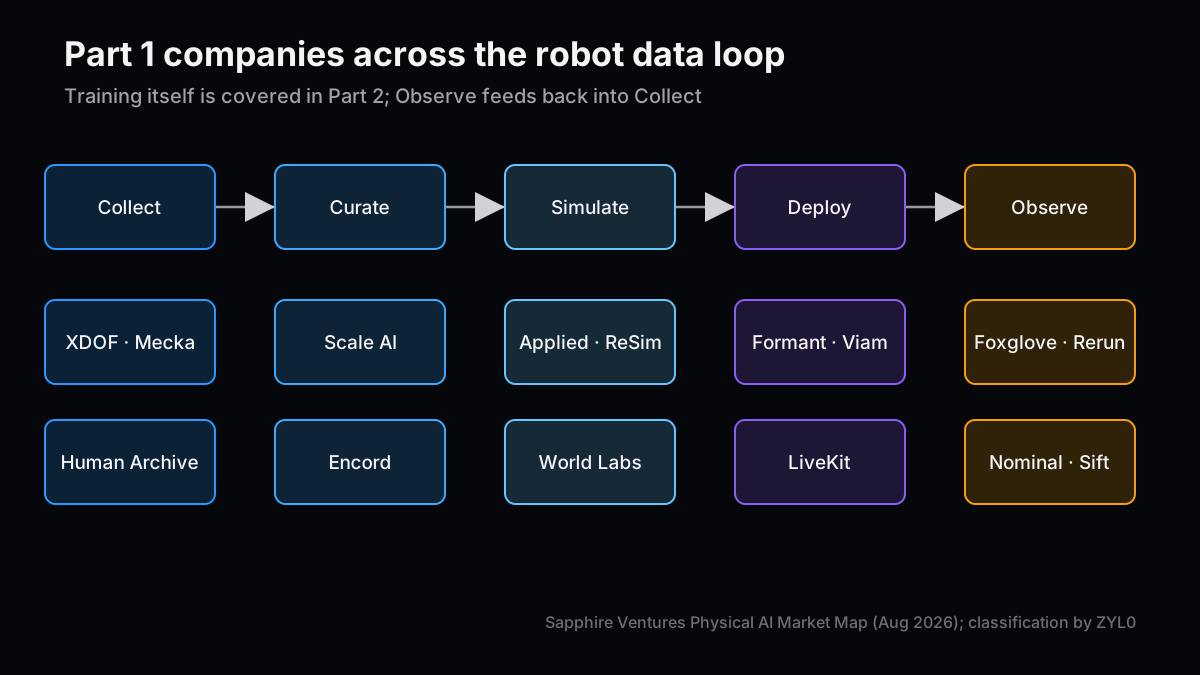
連載の地図として使うのは、Sapphire Venturesが2026年8月27日に公開した「Physical AI Market Map」だ。同社はフィジカルAIを6つの層に分けた。ハードウェア、ロボットの形態、用途、Development(開発)、Infrastructure & Enablement(運用基盤)、Intelligence & Models(知能とモデル)である。本連載は次の3回でその後ろ半分を読む。
| 回 | 対象レイヤー | 中心となる問い |
|---|
| ①(本稿) | Development/Infrastructure & Enablement | データ・シミュレーション・運用のどこが詰まっているか |
| ② | Intelligence & Models | ロボットの「脳」を誰がどう作るか |
| ③ | Hardware | アクチュエータ・手・センサーは何がボトルネックか |
資金の流れも確認しておく。SapphireがPitchBookのデータで示したフィジカルAIへのVC投資額は、2024年の127億ドルから2025年には218億ドルへ増えた。約1.7倍である。Cartaの2026年第1四半期レポートでは、同社上の企業が調達した304億ドルのうち6割超がAI企業に向かい、基盤モデル企業のSeries A評価額の中央値は3億ドル、AI以外の企業は5,500万ドルだった。Cartaは同じレポートで「ハードウェアは静かな勝者」とも書いている。
整理してみて驚いたのは、詰まりの多くが「量」ではなく「種類の違い」から来ていることだった。
言語モデルにはインターネットという巨大な教材があった。ロボットにはそれがない。動画は大量にあるが、その多くには「どの関節をどれだけの力で動かしたか」という行動ラベルが付いていない。Sapphireは遠隔操作データについて、1時間のデータを作るのに人の労働がもう1時間かかると書く。オフショアでも安くはならず、インターネット規模には届かない。
気になった詰まりを順に挙げる。数えたら6つあった。
| 課題 | 中身 | 何が律速か | 本稿で扱う企業 |
|---|
| 行動ラベルの不足 | 動画はあるが、関節角や力のデータが付いていない | 収集の人件費 | XDOF, Mecka, Human Archive, Scale |
| embodiment gap | 人の動画は「何が起きたか」を示すが「どう動かしたか」は示さない | 体の違いの変換 | Human Archive, Mecka |
| sim-to-real gap | 物理、触覚、センサーノイズの再現が不完全 | 実データでの較正 | Applied Intuition, ReSim, Zeromatter, 世界モデル各社 |
| テレメトリの量 | Sapphireによれば自律車両1台で1日にテラバイト級 | 保存・検索・デバッグ | Foxglove, Rerun, Nominal, Sift, Roboto |
| 通信と遠隔介入 | 倉庫・建設現場・洋上では接続が不安定 | 低遅延の映像と制御 | LiveKit, Reactor |
| 異機種フリートの運用 | 機種ごとにソフトと更新手順が違う | 共通の運用層 | Formant, Viam, OpenMind |
ここで一つ、数字の扱いに注意したい。各社が掲げる「データ時間」は、同じものを測っていない。Big Tech4社のcapexを同じ定義に直した記事と同じ作業を、データ時間でもやってみた。
| データ源 | 規模 | データの種類 | 出典・時点 |
|---|
| DROID+Open X-Embodiment(公開データ) | 約5,000時間 | ロボット操作 | Scale(2025年9月) |
| Scale AI 自社ラボ | 10万時間超 | ロボット実機の稼働時間 | Scale(2025年9月) |
| Generalist GEN-1の事前学習 | 50万時間超 | 人が装着する低コストデバイス | Generalist(2026年4月) |
| DYNA-2の事前学習 | 100万時間超 | 人の一人称動画 | DYNA(2026年8月) |
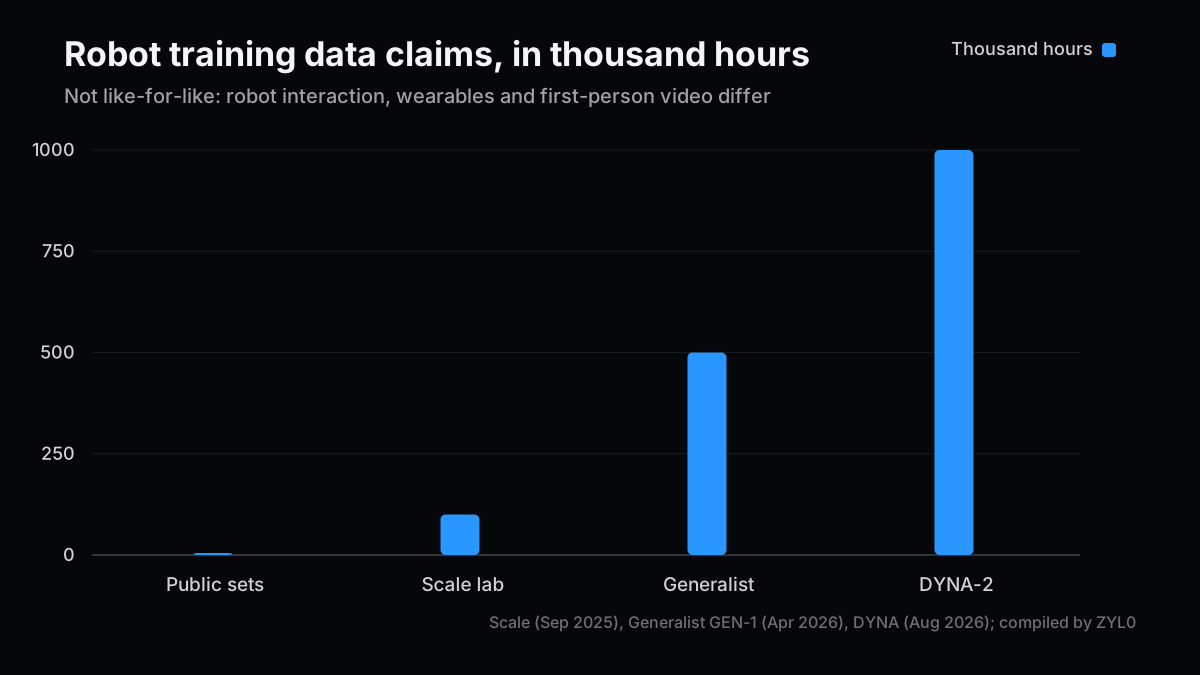
公開データの約5,000時間は、グラフ上ではほとんど見えない。差は200倍にもなる。ただし、これを「DYNAのデータはScaleの10倍価値がある」と読むのは誤りだ。一人称動画には行動ラベルがなく、実機データには体の制約がそのまま入っている。時間の単位が同じでも、学習に効く情報量は違う。
この層を見ていて私が一番強く感じたのは、「データを集める会社」と「データを作る会社」が分かれ始めていることだ。
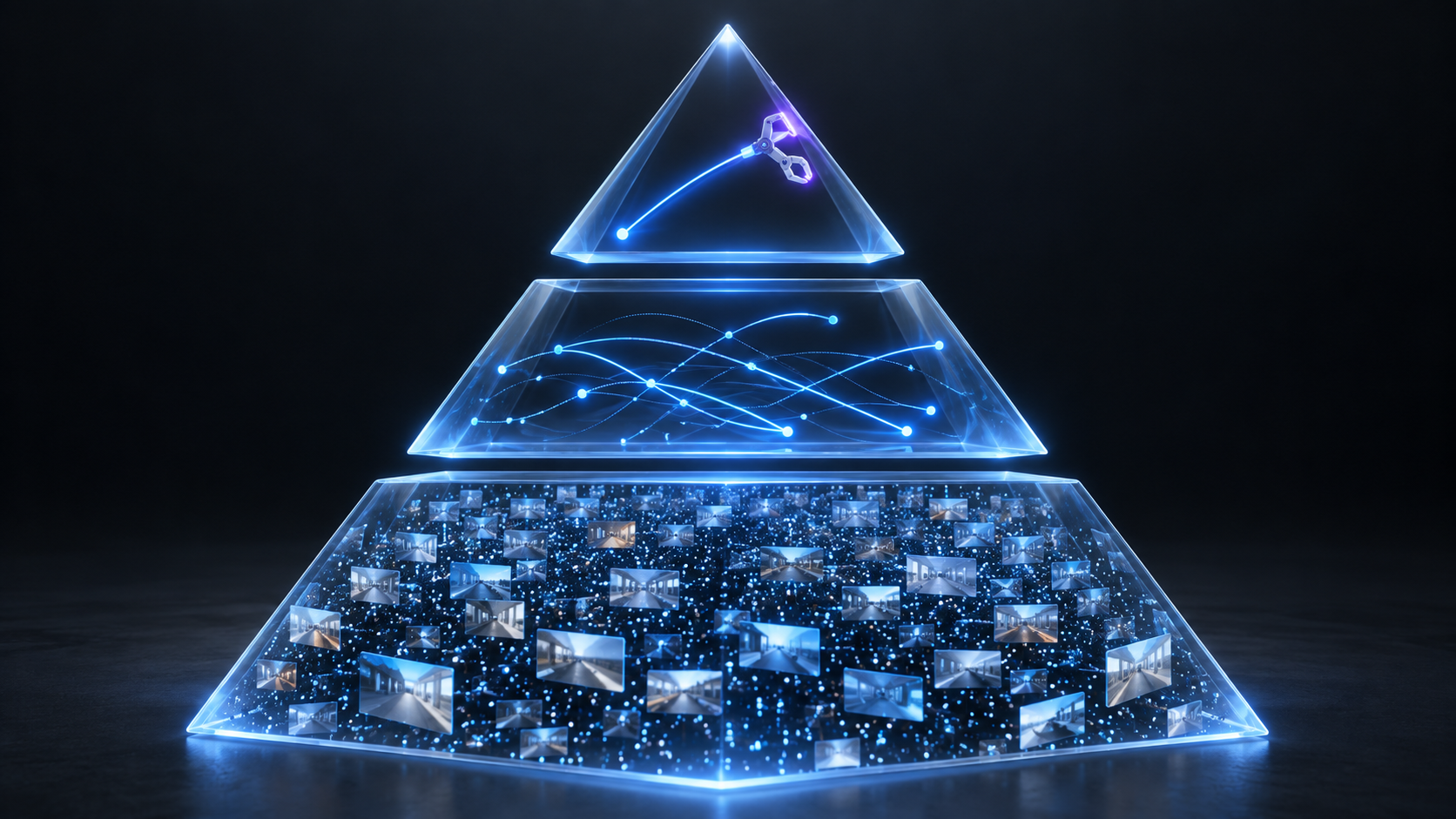
XDOFは2024年10月創業。UC Berkeleyで博士課程にいたPhilipp Wu氏らが立ち上げた。2026年6月17日にステルスを抜け、Thrive Capital、Spark Capital、a16z、Lux、WndrCoから計7,000万ドルを調達している。技術方針は3層のピラミッドだ。頂点に配備済みロボットの遠隔操作データ、中段に低コストの遠隔操作装置GELLOのデータ、裾野に人が装着するセンサーの一人称データを置く。UC Berkeleyと公開した「ABC」データセットは13万本の操作軌跡を含む。顧客は約20社で、複数のフロンティアAIラボが入る。9月には評価額約12億ドルでのSeries B交渉が報じられたが、本稿執筆時点で確定発表はない。
Meckaは逆に、ロボットを使わない。独自のボディセンサーとiPhoneで人の手振りや歩き方を記録し、ロボット企業に売る。Framework Ventures主導で計6,000万ドルを調達し、締結済み契約ベースで年1億ドルのランレートを見込むと説明している。Sequoia主導で評価額約5億ドルの交渉も報じられた。Human Archiveはさらに割り切っている。インドのギグワーカーに1,000台超のカメラ付きヘッドセットを配り、RGB-D、動作、触覚、力のデータを同期して集める。調達額は820万ドルだ。
Scale AIは言語モデル時代のラベリング事業をそのまま物理側に広げた。2025年9月の発表では、サンフランシスコの試作ラボで10万時間超の実機稼働を積み、Physical IntelligenceやGeneralistを顧客に挙げた。Encordは収集ではなく管理側に立つ。2026年2月にWellington Management主導で6,000万ドルのSeries Cを調達し、管理するデータ量は1年で約1PBから5PB超へ増えたという。
ここで私の経験を一つ挟みたい。車載EEPROMのプロセス開発をしていた頃、「装置の問題」と報告されていた収率不良の根本原因を、TCADのプロセスシミュレーションで特定したことがある。効いたのはシミュレーションの精緻さではなかった。実測値で何度も較正し直したことだ。較正のないシミュレーションは、どれだけ綺麗でも現場の判断には使えなかった。
この経験から、私はシミュレーション企業を「どれだけ現実データで較正するループを持っているか」で見ている。
Applied Intuitionはその点で最も厚い。自動車向けシミュレーションから始め、上位20社の自動車メーカーのうち18社を顧客に持つ。2025年6月に6億ドルのSeries Fを調達し、評価額は150億ドル。現在はトラック、防衛、鉱山、建機、汎用ロボットへ領域を広げている。ReSimは2024年9月に1,030万ドルのシードを調達したピッツバーグの会社で、既存のシミュレーターやログ再生ツールの上で仮想テストを並列に回すクラウド基盤を作る。Zeromatterはセンサーシミュレーションと環境生成に特化し、AWS・Google Cloud・Azureのマルチクラウド対応を売りにする。
Sapphireのマップでは、世界モデルもこのDevelopment層に入っている。私はここを「データを作るエンジン」として読む。方策モデルそのものは第2回で扱う。
| 企業 | 直近の調達(発表・報道) | プロダクト/技術方針 |
|---|
| World Labs | 10億ドル、評価額50億ドル(2026年2月) | 3D世界を生成・編集する「Marble」。Autodeskが2億ドルを出資 |
| Decart | 3億ドル、評価額約40億ドル(2026年5月、Radical Ventures主導) | リアルタイムに映像世界を生成するモデル。運転シミュレーションも公開 |
| General Intuition | 2.2億ドル、評価額62億ドル(2026年9月) | ゲームプレイ映像で行動を学ぶモデルとAPI。1月にも3.2億ドルを調達 |
| AMI(Advanced Machine Intelligence) | 10.3億ドルのシード(2026年) | Yann LeCun氏の研究所。行動条件付きの世界モデル |
General Intuitionの主張は面白い。人はゲームもロボットも「視覚とコントローラー入力」で操作する。だからゲームの映像は、行動ラベル付きの動画として使える、というものだ。本当にそうか。ゲームの物理はゲームエンジンが作った近似で、摩擦や変形は現実と違う。私はここに、さきほどの較正の問題がそのまま残っていると見ている。
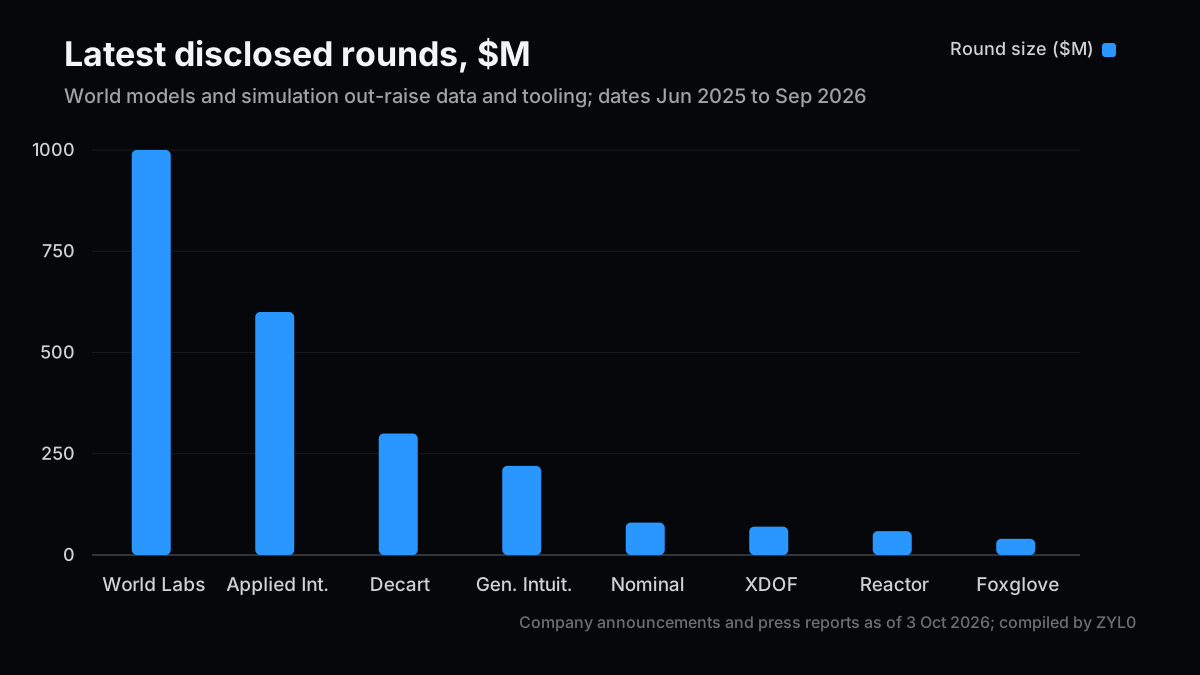
資金の偏りは図のとおりだ。2026年に入ってから世界モデル3社(World Labs、Decart、General Intuition)が発表した調達は合計約18.4億ドル。同じ期間に可観測性・試験データ・通信・知覚の5社(Nominal、Sift、Reactor、LiveKit、Luxonis)が発表した調達は合計約2.95億ドルで、約6倍の差がある。これは各社の発表額を私が足し合わせた値で、期間内に非公表の調達があれば変わる。
正直に言うと、この層は私自身の失敗の記憶と重なる。
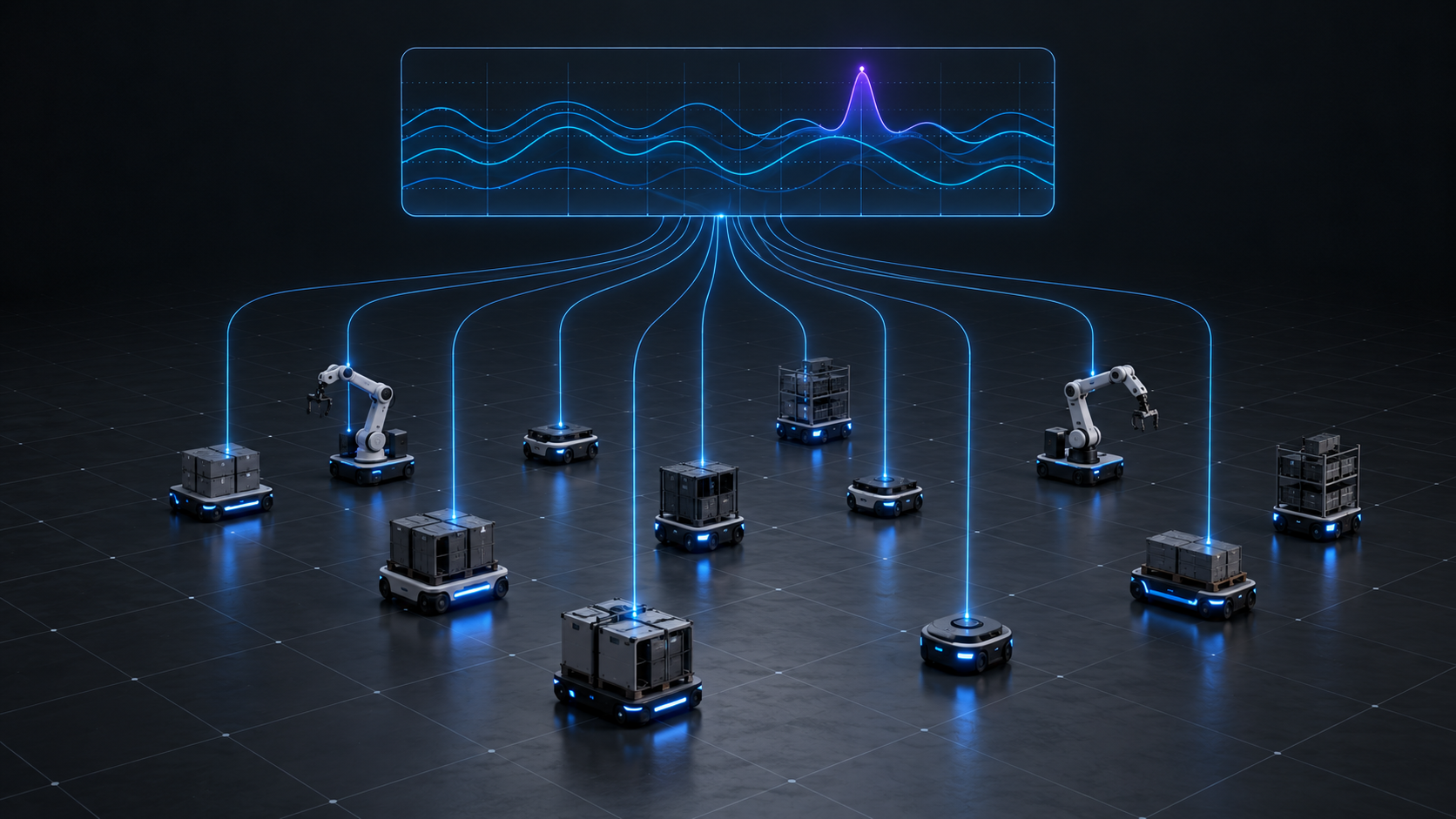
事業開発に移った後、河川の洪水検知システムをAWSのIoT Core、Lambda、DynamoDBで独学で組み、運用したことがある。手を焼いたのはセンサーそのものではなかった。通信が途切れる前提での設計と、平常時に流れ続ける「何も起きていない」データの扱いだ。肝心の異常は、データ全体のごく一部にしか現れない。その数分を後から探し出せなければ、システムは改善できなかった。
ロボットのフリートは、この問題を桁違いの規模で抱える。
Foxgloveはロボットのログを可視化・管理するツールの会社で、ROSで広く使われるログ形式MCAPの開発元でもある。2025年11月にBessemer主導で4,000万ドルのSeries Bを調達し、2026年4月には統合データ基盤を発表した。Rerunはオープンソースのログ・可視化ツールから始まり、多モーダルデータ向けのデータベースへ広げている。2025年3月にPoint Nine主導で1,700万ドルのシードを調達した。
NominalとSiftは、出自が航空宇宙・防衛のハードウェア試験だ。Nominalは2026年3月、Founders Fund主導、Sequoia、Lux、General Catalyst、Lightspeed参加で8,000万ドルを調達し、評価額は10億ドルに達した。10か月で1.55億ドルを集め、売上は1年で7倍になったという。Siftは元SpaceXのエンジニアが2022年に創業し、2026年3月にStepStone主導で4,200万ドルのSeries Bを調達した。RobotoはAmazonのドローン配送部門出身者が作った、センサーログ検索の会社である。
LiveKitはWebRTCベースのリアルタイム通信基盤で、2026年1月にIndex Ventures主導で1億ドルを調達し、評価額は10億ドル。顧客の中心は音声AIだが、同社は自らを「音声・映像・フィジカルAIエージェントの基盤」と位置づける。遠隔操作でロボットを救援する場面では、100ミリ秒を切る遅延が効く。Reactorは2026年5月に計5,900万ドルでステルスを抜けた。Series AはLightspeedが主導した。世界モデルの推論を本番で回すための基盤で、フレームを50ミリ秒未満で端末に届けると主張する。業界平均は約400ミリ秒だという。これは同社の主張で、第三者の測定ではない。
Formantはフリート管理・遠隔操作・インシデント管理のクラウドで、2023年10月にBMW i Ventures主導で2,100万ドルを調達した。ViamはMongoDB共同創業者のEliot Horowitz氏が率いる。2025年3月にUnion Square Ventures主導で3,000万ドルのSeries Cを調達し、2026年6月にはTech Mahindraとの提携を発表した。OpenMindはハードウェア非依存のロボットOS「OM1」と、ロボット同士が身元と文脈を共有するプロトコル「FABRIC」を作る。2025年8月にPantera Capital主導で2,000万ドルを調達した。
知覚ではLuxonisが面白い。OAKカメラとDepthAIでロボットに奥行き認識を与える会社で、7年以上にわたり外部資本なしで事業を続けた。2026年7月に初の機関投資家ラウンドとして1,400万ドルを調達している。
| 企業 | 区分 | 直近の調達 | プロダクト |
|---|
| Foxglove | 可観測性 | 4,000万ドル(2025年11月、Bessemer主導) | ログ可視化・データ管理、MCAP |
| Rerun | 可観測性 | 1,700万ドル(2025年3月、Point Nine主導) | OSSのログ・可視化、多モーダルDB |
| Nominal | 試験データ | 8,000万ドル、評価額10億ドル(2026年3月) | ハードウェア試験の実行・監視・解析 |
| Sift | テレメトリ | 4,200万ドル(2026年3月、StepStone主導) | 機械センサーデータの取り込み・解析 |
| LiveKit | 通信 | 1億ドル、評価額10億ドル(2026年1月) | WebRTC基盤、遅延100ミリ秒未満 |
| Reactor | 推論基盤 | 計5,900万ドル(2026年5月、Lightspeed主導) | 世界モデルの本番推論 |
| Viam | 統合基盤 | 3,000万ドル(2025年3月、USV主導) | 機器・データ・AIをつなぐOSS |
| OpenMind | ロボットOS | 2,000万ドル(2025年8月、Pantera主導) | OM1とFABRIC |
MangoBoostのDPU記事では、宣伝文句をデータ経路に戻してから評価した。この層にも同じ姿勢が要る。「遅延50ミリ秒」「データ5PB」といった数字は、どの条件で、何を測った値かを確かめるまで投資判断に使わない。
結論として、私はこの層を3つに分けて持つ。
1つ目はデータ収集だ。短期はロング、中期はニュートラルとする。XDOFやMeckaの売上の伸びは本物に見える。だが遠隔操作データは「1時間のデータに1時間の人手」という構造から逃れられない。粗利はソフトウェアよりサービス業に近くなりやすい。
2つ目の可観測性・試験データは中期ロングだ。ログ形式や試験手順が一度組み込まれると、乗り換えの費用が積み上がる。資金調達額では世界モデルに大きく負けているが、私にはここが一番スイッチングコストの効く場所に見える。
3つ目の世界モデルは、評価額が先に走っている。General Intuitionは1年足らずで評価額が62億ドルになった。ロボット企業が実際に評価工程に組み込んだ事例が出るまでは、短期ニュートラルで見る。
上場株で触れる手段は限られる。NVIDIA(Isaac・Cosmos)、World Labsに2億ドルを出したAutodesk、Siftに出資するGVを持つAlphabetなどは間接的な露出にとどまる。この層の大半は、当面は非上場の中で価値が決まる。
| シナリオ | 条件 | 確認する証拠 | 投資への含意 |
|---|
| ベース | データ収集企業の売上は伸びるが、粗利はサービス業並み | XDOFのSeries B条件、Meckaの契約の売上化 | 収集は数量の勝負。評価額は売上倍率で抑えられる |
| メイン | 世界モデルが評価・合成データの標準工程になる | ロボット企業がDecart・World Labs・General IntuitionのAPIを評価に組み込む事例 | シミュレーションと可観測性に需要が集中 |
| テール | 基盤モデル企業が収集・運用を内製し、独立系が挟まれる | Physical IntelligenceやSkildの自社データ工場、NVIDIAツールの無償化 | 独立系ツール企業の価格決定力が下がる |
この見立てが崩れる条件も書いておく。人の一人称動画だけで学んだモデルが、遠隔操作データを使うモデルと同じ成功率を第三者評価で示した場合、遠隔操作データ企業への私の評価は下がる。DYNA-2はその方向の主張をしているが、現時点では同社の発表である。
- XDOFのSeries Bが報道どおりの評価額で確定するか
- Nominalの買収先がロボティクス領域に及ぶか
- NVIDIAのオープンなツール群が独立系の有料製品をどこまで代替するか
- 世界モデルのAPIが、ロボットの評価・テスト工程の請求書に載るか
次回は、ここで集めたデータを受け取る側、ロボットの「脳」を作る企業を読む。
次号の記事案
- 案1:ロボット基盤モデル企業の評価額を検証する — Skild AIの140億ドル、Physical Intelligenceの約117億ドルを、売上・データ量・配備台数と並べて連載②で読む。
- 案2:遠隔操作データ1時間の原価を試算する — 人件費・装置・品質管理を分け、データ収集企業の粗利がどこまで上がりうるかを公開情報から逆算する。
- 案3:世界モデルAPIの価格と推論コスト — Reactorの遅延主張とDecart・World LabsのAPI条件を比べ、評価工程に入るための損益分岐を探る。
本記事は情報提供を目的としたものであり、特定銘柄の売買や投資助言ではありません。筆者は記事内で触れた企業の有価証券を保有している可能性があります。調査・執筆・翻訳の一部に生成AIを利用しています。調達額・評価額には報道ベースの未確定情報を含み、合計や比率は本文に記した方法による筆者の計算値です。詳細は免責事項をご確認ください。
Physical AI Series ①: The Startups Building the Data, Simulation and Ops Stack
Whenever I write about physical AI, reader questions converge on one thing: which robot company wins. But ever since my March piece on physical AI as an investment theme, what has nagged at me is the plumbing that sits in front of the robot brain — the layer that collects data, tests policies in simulation, and keeps fleets running once they ship.
As of October 3, 2026. Round sizes and valuations come from company announcements and press reports; anything reported but not confirmed is flagged. Totals and ratios are my own calculations.
My short answer: this layer is unglamorous, but it is where cash changes hands first.
In March I wrote that I wanted core exposure to foundation models and platforms now, and would pick up robot hardware on a dip in 2027. Six months later, Physical Intelligence's valuation has roughly doubled, from about $5.6 billion to about $11.7 billion. Capital is concentrating in foundation models just as expected. Meanwhile the companies that feed those models data, and keep the robots alive after deployment, barely get mentioned.
The map for this series is Sapphire Ventures' Physical AI Market Map, published on August 27, 2026. Sapphire splits physical AI into six layers: hardware, embodiment and form factor, applications, Development, Infrastructure & Enablement, and Intelligence & Models. This series reads the back half of that stack in three parts.
| Part | Layer | Core question |
|---|
| ① (this post) | Development / Infrastructure & Enablement | Where are data, simulation and operations getting stuck? |
| ② | Intelligence & Models | Who is building the robot brain, and how? |
| ③ | Hardware | What is the real bottleneck in actuators, hands and sensors? |
The money backdrop matters. Using PitchBook data, Sapphire shows venture investment in physical AI rising from $12.7 billion in 2024 to $21.8 billion in 2025 — roughly 1.7x. Carta's Q1 2026 report found that of the $30.4 billion raised by companies on its platform, more than 60% went to AI. The median Series A valuation for AI foundation model companies was $300 million, against $55 million for non-AI companies. The same report calls hardware "the quiet winner."
What surprised me when I laid this out is that most of the friction comes from differences in kind, not shortages of quantity.
Language models had the internet as a textbook. Robots have nothing equivalent. Video is plentiful, but very little of it carries action labels — which joint moved, with how much force. Sapphire puts the teleoperation problem bluntly: every hour of teleop data costs an extra hour of human labor. Offshoring does not make it cheap, and it never reaches internet scale.
Here are the choke points I ended up with. There turned out to be six.
| Bottleneck | What it is | What limits it | Companies in this post |
|---|
| Missing action labels | Video exists, but without joint angles or force | Labor cost of collection | XDOF, Mecka, Human Archive, Scale |
| Embodiment gap | Human video shows what happened, not how the body did it | Translating between bodies | Human Archive, Mecka |
| Sim-to-real gap | Physics, touch and sensor noise are imperfectly modeled | Calibration against real data | Applied Intuition, ReSim, Zeromatter, world-model labs |
| Telemetry volume | Sapphire notes a single autonomous vehicle can produce terabytes a day | Storage, search, debugging | Foxglove, Rerun, Nominal, Sift, Roboto |
| Connectivity and remote rescue | Warehouses, construction sites and offshore sites have patchy links | Low-latency video and control | LiveKit, Reactor |
| Mixed-fleet operations | Every robot model has its own software and update process | A shared operations layer | Formant, Viam, OpenMind |
One caution on numbers. The "hours of data" that companies advertise do not measure the same thing. In my post restating Big Tech capex on one definition, I normalized four disclosures before comparing them. Here is the same exercise for training data.
| Data source | Scale | Type of data | Source and date |
|---|
| DROID + Open X-Embodiment (public) | ~5,000 hours | Robot interaction | Scale (Sep 2025) |
| Scale AI's own lab | 100,000+ hours | Production hours on real robots | Scale (Sep 2025) |
| Generalist GEN-1 pretraining | 500,000+ hours | Low-cost wearables on humans | Generalist (Apr 2026) |
| DYNA-2 pretraining | 1,000,000+ hours | Human first-person video | DYNA (Aug 2026) |
The public datasets' ~5,000 hours barely register on the chart. The gap is 200x. But reading that as "DYNA's data is worth ten times Scale's" would be a mistake. First-person video has no action labels; real-robot data carries the body's constraints directly. The unit is the same, but the information that actually trains a policy is not.
The strongest impression this layer left on me is that "companies that collect data" and "companies that generate data" are splitting into two businesses.
XDOF was founded in October 2024 by Philipp Wu, who ran into the data wall as a PhD student at UC Berkeley, and his co-founders. It came out of stealth on June 17, 2026 with $70 million from Thrive Capital, Spark Capital, a16z, Lux and WndrCo. Its technical approach is a three-tier pyramid: teleoperation on deployed robots at the top, data from GELLO — a low-cost teleop rig — in the middle, and first-person data from wearable sensors at the base. The "ABC" dataset it released with UC Berkeley contains 130,000 manipulation trajectories. It has about 20 customers, including several frontier AI labs. In September, reports said it was negotiating a Series B at roughly a $1.2 billion valuation; nothing had been confirmed as of writing.
Mecka takes the opposite route and skips robots altogether. It records human gestures and gaits with custom body sensors and iPhones, then sells the data to robotics companies. It has raised $60 million in rounds led by Framework Ventures and says signed contracts point to a $100 million annual run rate. A Sequoia-led round at around a $500 million valuation has also been reported. Human Archive is even more stripped down: it has handed more than 1,000 camera headsets to gig workers in India and captures synchronized RGB-D, motion, tactile and force data. It has raised $8.2 million.
Scale AI extended its language-era labeling business into the physical world. In September 2025 it said its San Francisco prototyping lab had logged more than 100,000 production hours, and named Physical Intelligence and Generalist as customers. Encord sits on the management side rather than collection. It raised a $60 million Series C led by Wellington Management in February 2026 and says the data it manages grew from about 1 PB to more than 5 PB in a year.
Let me bring in some personal experience here. When I worked on automotive EEPROM process development, I traced a yield problem that had been written off as "an equipment issue" to its real root cause using TCAD process simulation. What made the difference was not how sophisticated the model was. It was recalibrating it against measured data, again and again. An uncalibrated simulation, however pretty, was useless for decisions on the line.
That is why I judge simulation companies by one question: how tight is their loop for calibrating against real-world data?
On that measure Applied Intuition is the deepest. It started in automotive simulation and counts 18 of the top 20 automakers as customers. It raised a $600 million Series F at a $15 billion valuation in June 2025, and is pushing into trucking, defense, mining, construction equipment and general robotics. ReSim, a Pittsburgh company that raised a $10.3 million seed in September 2024, builds cloud infrastructure for running virtual tests in parallel on top of existing simulators and log-replay tools. Zeromatter specializes in sensor simulation and environment generation, and sells multi-cloud support across AWS, Google Cloud and Azure.
On Sapphire's map, world models also sit in this Development layer. I read them here as data engines; the policy models themselves are for Part 2.
| Company | Latest round (announced or reported) | Product / technical approach |
|---|
| World Labs | $1B at a $5B valuation (Feb 2026) | "Marble," for generating and editing 3D worlds; Autodesk invested $200M |
| Decart | $300M at ~$4B (May 2026, led by Radical Ventures) | Real-time generated video worlds; has shown driving simulation |
| General Intuition | $220M at $6.2B (Sep 2026) | Action models and an API trained on gameplay video; also raised $320M in January |
| AMI (Advanced Machine Intelligence) | $1.03B seed (2026) | Yann LeCun's lab; action-conditioned world models |
General Intuition's pitch is clever. People play games and operate robots the same way — vision in, controller input out — so gameplay footage is effectively action-labeled video. Is that really true? Game physics is an approximation produced by a game engine; friction and deformation are not the real thing. To me, the calibration problem I described above is still sitting right there.
The tilt in funding is plain in the chart. Since the start of 2026, the three world-model companies (World Labs, Decart, General Intuition) have announced roughly $1.84 billion in rounds. Over the same period, five tooling companies across observability, test data, connectivity and perception (Nominal, Sift, Reactor, LiveKit, Luxonis) announced about $295 million — roughly a 6x gap. Those are my sums of announced amounts; undisclosed rounds would change them.
Honestly, this layer overlaps with one of my own painful lessons.
After moving into business development, I taught myself enough AWS to build and run a river flood-detection system on IoT Core, Lambda and DynamoDB. The hard part was not the sensors. It was designing for connections that drop, and handling the endless stream of "nothing is happening" data in normal conditions. The anomalies that mattered showed up in a tiny fraction of the data. If I could not find those few minutes after the fact, I could not improve the system.
Robot fleets have the same problem at a vastly larger scale.
Foxglove builds visualization and data-management tools for robot logs, and created MCAP, the log format now widely used with ROS. It raised a $40 million Series B led by Bessemer in November 2025 and launched a unified data platform in April 2026. Rerun began with open-source logging and visualization and is expanding into a database for multimodal data; it raised a $17 million seed led by Point Nine in March 2025.
Nominal and Sift come out of aerospace and defense hardware testing. Nominal raised $80 million in March 2026, led by Founders Fund with Sequoia, Lux, General Catalyst and Lightspeed, reaching a $1 billion valuation. It raised $155 million in ten months and says revenue grew sevenfold in a year. Sift was founded in 2022 by former SpaceX engineers and raised a $42 million Series B led by StepStone in March 2026. Roboto, built by alumni of Amazon's drone-delivery program, focuses on searching sensor logs.
LiveKit is real-time communications infrastructure built on WebRTC. It raised $100 million at a $1 billion valuation in January 2026, led by Index Ventures. Voice AI is its core customer base, but it positions itself as infrastructure for voice, video and physical AI agents. When a remote operator has to rescue a stuck robot, latency under 100 milliseconds matters. Reactor emerged from stealth in May 2026 with $59 million, with Lightspeed leading the Series A. It builds infrastructure for serving world models in production and says it delivers frames to devices in under 50 milliseconds, against an industry average of about 400. That is the company's claim, not an independent measurement.
Formant offers cloud software for fleet management, teleoperation and incident handling; it raised $21 million led by BMW i Ventures in October 2023. Viam is led by MongoDB co-founder Eliot Horowitz. It raised a $30 million Series C led by Union Square Ventures in March 2025 and announced a partnership with Tech Mahindra in June 2026. OpenMind builds OM1, a hardware-agnostic robot operating system, and FABRIC, a protocol that lets robots verify identity and share context with each other. It raised $20 million led by Pantera Capital in August 2025.
In perception, Luxonis stands out. Its OAK cameras and DepthAI software give robots depth perception, and it ran for more than seven years without outside institutional capital before raising a $14 million Series A in July 2026.
| Company | Category | Latest round | Product |
|---|
| Foxglove | Observability | $40M (Nov 2025, led by Bessemer) | Log visualization and data management; MCAP |
| Rerun | Observability | $17M (Mar 2025, led by Point Nine) | Open-source logging/visualization, multimodal DB |
| Nominal | Test data | $80M at $1B (Mar 2026) | Running, monitoring and analyzing hardware tests |
| Sift | Telemetry | $42M (Mar 2026, led by StepStone) | Ingesting and analyzing machine sensor data |
| LiveKit | Connectivity | $100M at $1B (Jan 2026) | WebRTC infrastructure, sub-100ms latency |
| Reactor | Inference | $59M total (May 2026, Lightspeed-led A) | Production inference for world models |
| Viam | Integration | $30M (Mar 2025, led by USV) | Open-source layer linking devices, data and AI |
| OpenMind | Robot OS | $20M (Aug 2025, led by Pantera) | OM1 and FABRIC |
In my MangoBoost DPU post, I translated marketing claims back into data paths before judging them. This layer needs the same discipline. Numbers like "50 ms latency" or "5 PB of data" should not drive an investment decision until you know under what conditions, and measuring what.
My conclusion is to hold this layer as three separate positions.
First, data collection: short-term long, medium-term neutral. The revenue growth at XDOF and Mecka looks real. But teleoperation data cannot escape the "one hour of data, one hour of labor" structure, so margins tend to look more like services than software.
Second, observability and test data: medium-term long. Once a log format or a test workflow is embedded, switching costs pile up. These companies are badly out-raised by the world-model labs, but this looks to me like the place where switching costs bite hardest.
Third, world models: valuations are running ahead. General Intuition reached a $6.2 billion valuation in under a year. Until robot companies actually wire these models into their evaluation pipelines, I stay short-term neutral.
Public-market exposure is thin. NVIDIA (Isaac and Cosmos), Autodesk (which put $200 million into World Labs), and Alphabet (whose GV backs Sift) offer only indirect exposure. For now, most of this layer's value will be set in private markets.
| Scenario | Condition | Evidence to watch | Implication |
|---|
| Base | Data-collection revenue grows, but margins stay service-like | XDOF's Series B terms; Mecka's contracts turning into revenue | Collection is a volume game; valuations capped by revenue multiples |
| Main | World models become a standard step for evaluation and synthetic data | Robot companies building Decart, World Labs or General Intuition APIs into testing | Demand concentrates in simulation and observability |
| Tail | Foundation-model companies bring collection and ops in-house, squeezing independents | Physical Intelligence or Skild running their own data factories; NVIDIA tools going free | Independent tooling vendors lose pricing power |
What would change my mind: if a model trained only on human first-person video matches a teleop-trained model's success rate in an independent evaluation, my view of teleop-data companies goes down. DYNA-2 claims progress in that direction, but for now it is the company's own announcement.
- Whether XDOF's Series B closes at the reported valuation
- Whether Nominal's acquisitions reach into robotics
- How far NVIDIA's open tools displace paid products from independents
- Whether world-model APIs start showing up on robot companies' test and evaluation invoices
Next time I turn to the receiving end of all this data: the companies building the robot brain.
Next Issue Ideas
- Idea 1: Stress-testing robot foundation model valuations — Put Skild AI's $14 billion and Physical Intelligence's ~$11.7 billion next to revenue, data volume and deployed units in Part 2.
- Idea 2: What one hour of teleop data really costs — Separate labor, rigs and QA to back out how far data-collection margins can climb, using only public information.
- Idea 3: World-model API pricing versus inference cost — Compare Reactor's latency claims with Decart and World Labs API terms to find the break-even for joining robot test pipelines.
This article is for informational purposes only and is not investment advice or a recommendation to buy or sell any security. The author may hold securities of companies mentioned. Generative AI was used in parts of the research, writing and translation. Some round sizes and valuations are reported but unconfirmed; totals and ratios are the author's calculations using the methods described. See the disclaimer for details.