AI Chip Investments 1: Three Layers of Customers, Supply and Applications
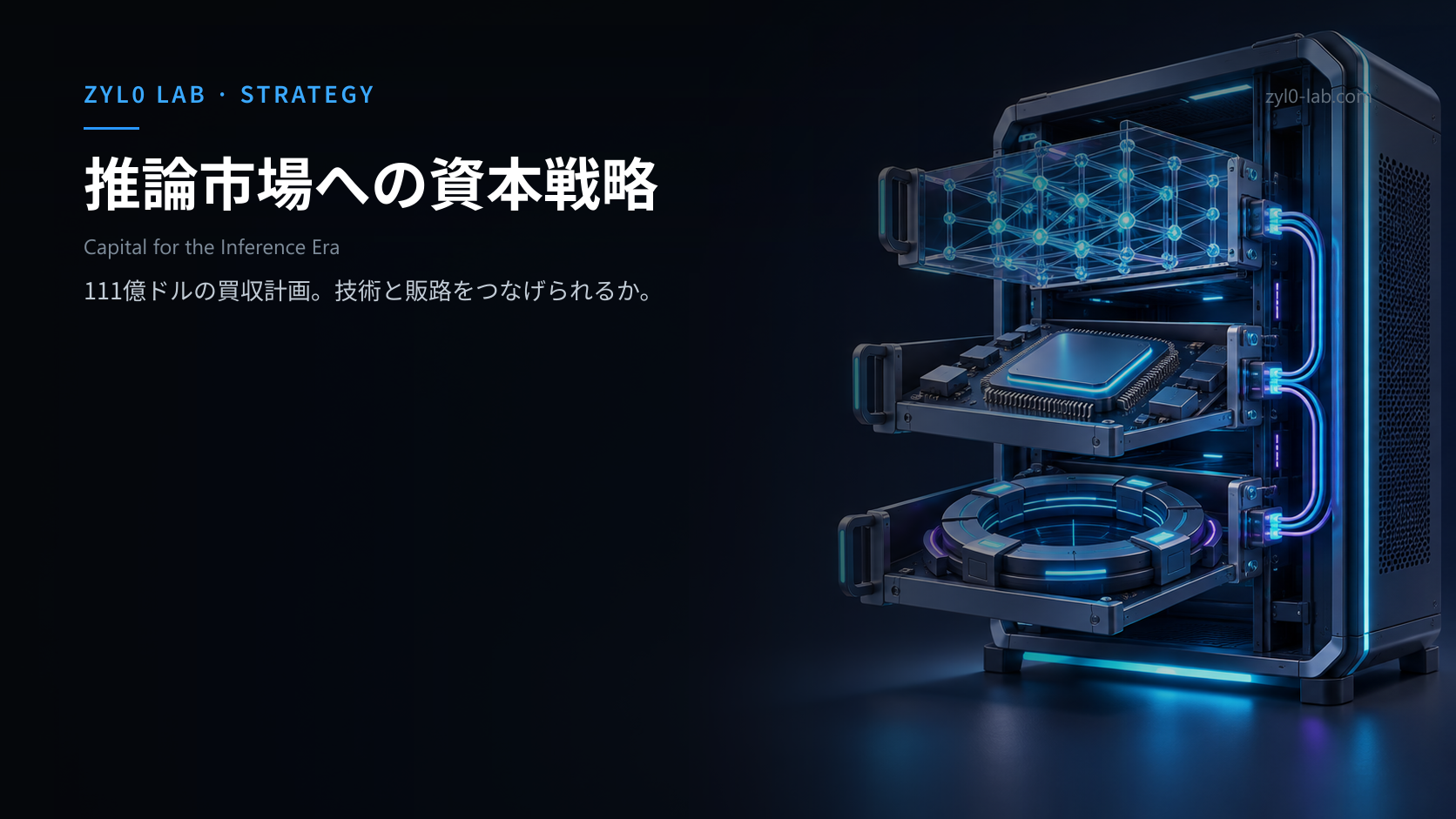
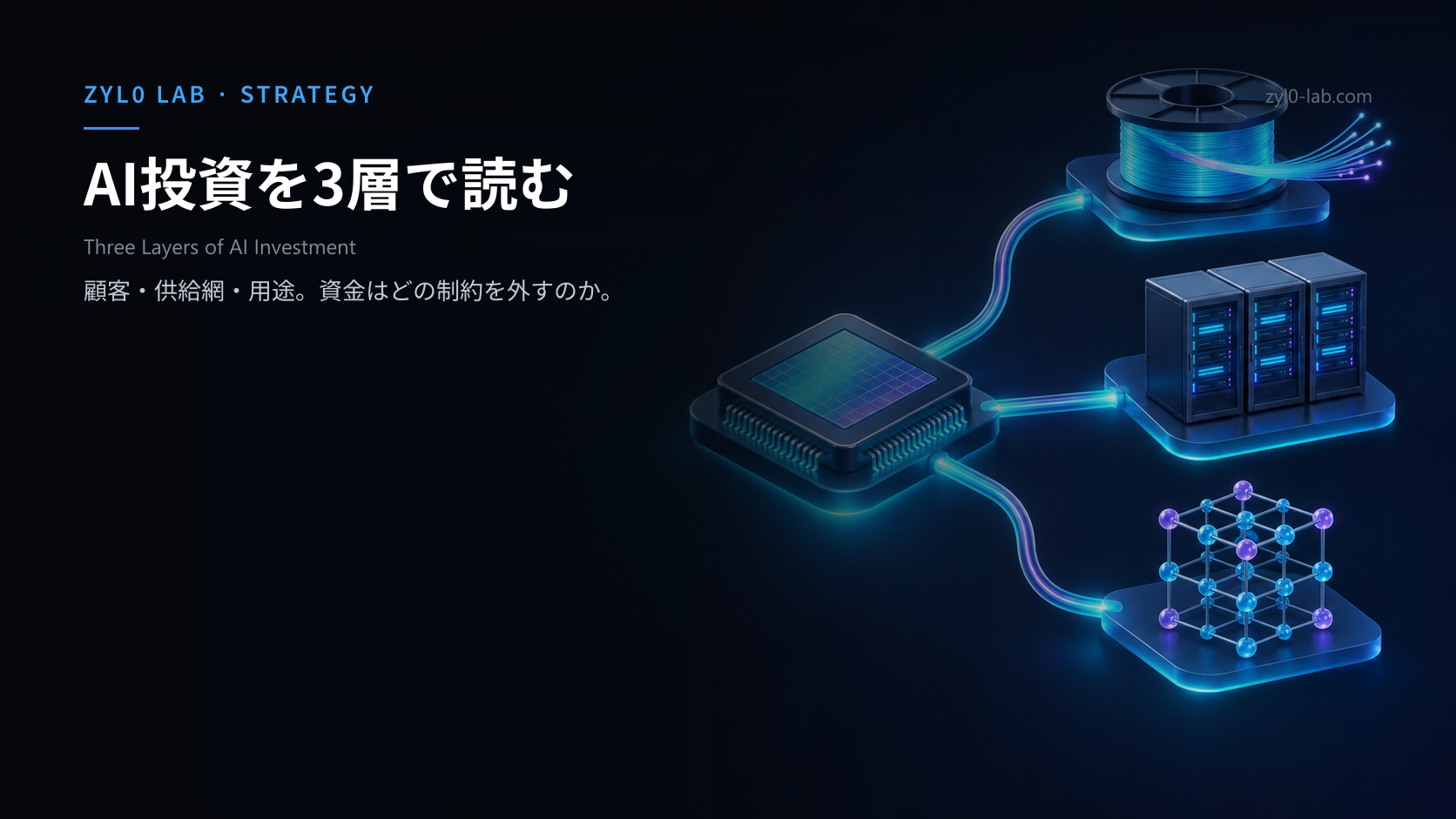
Read strategic AI investments across customer financing, supply capacity and new applications, separating announced equity commitments from completed spending.
Read strategic AI investments across customer financing, supply capacity and new applications, separating announced equity commitments from completed spending.

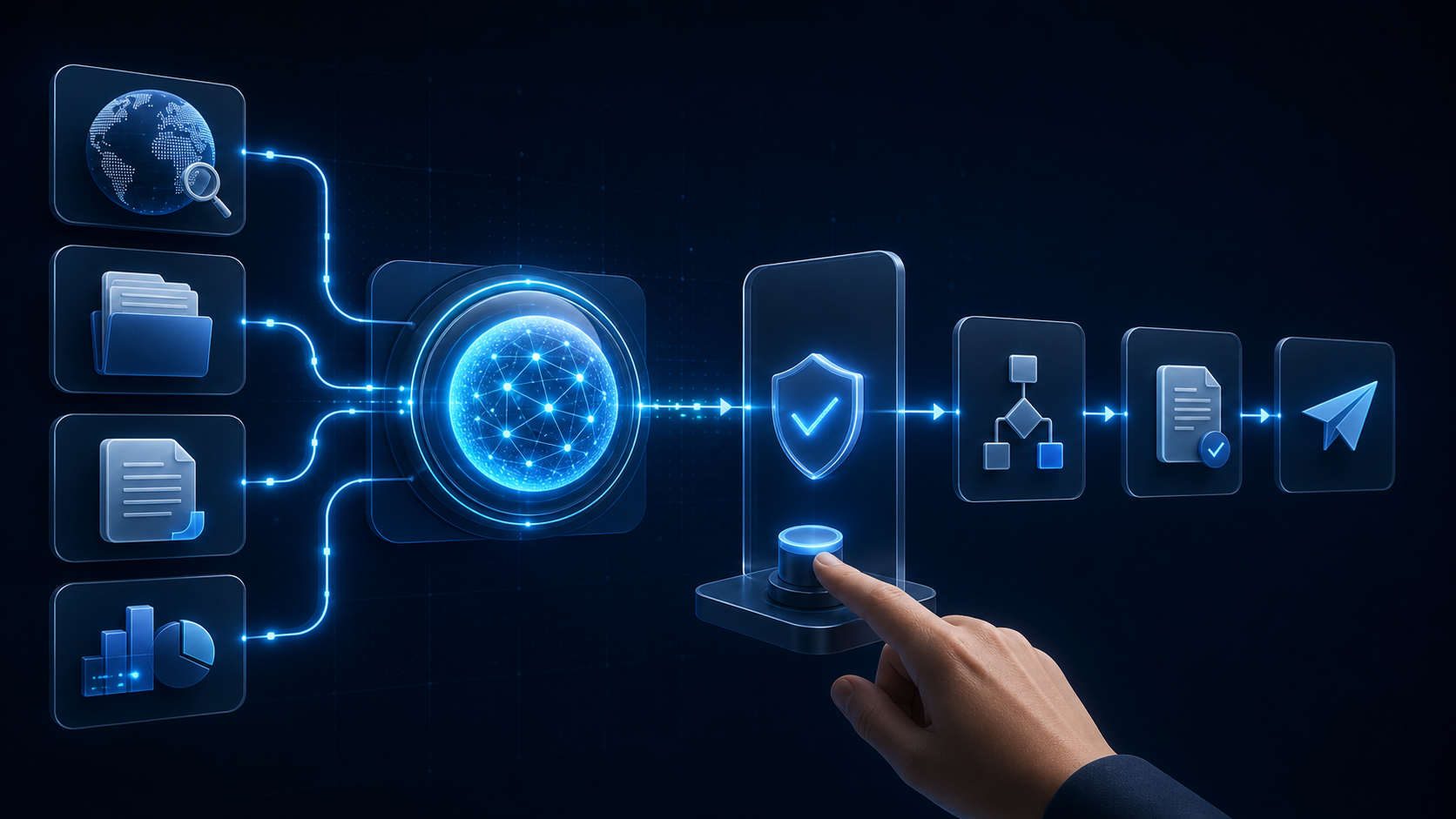
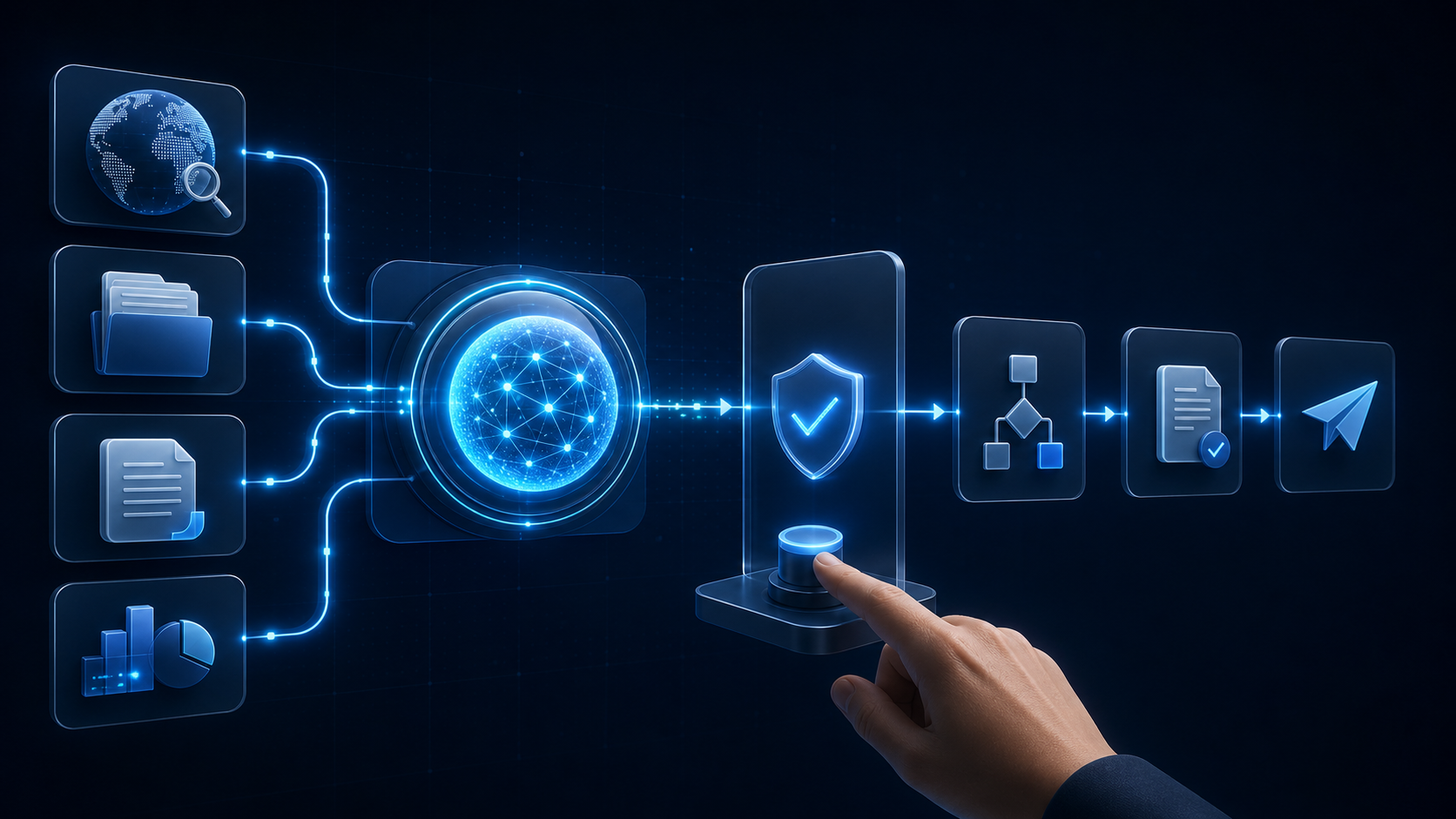
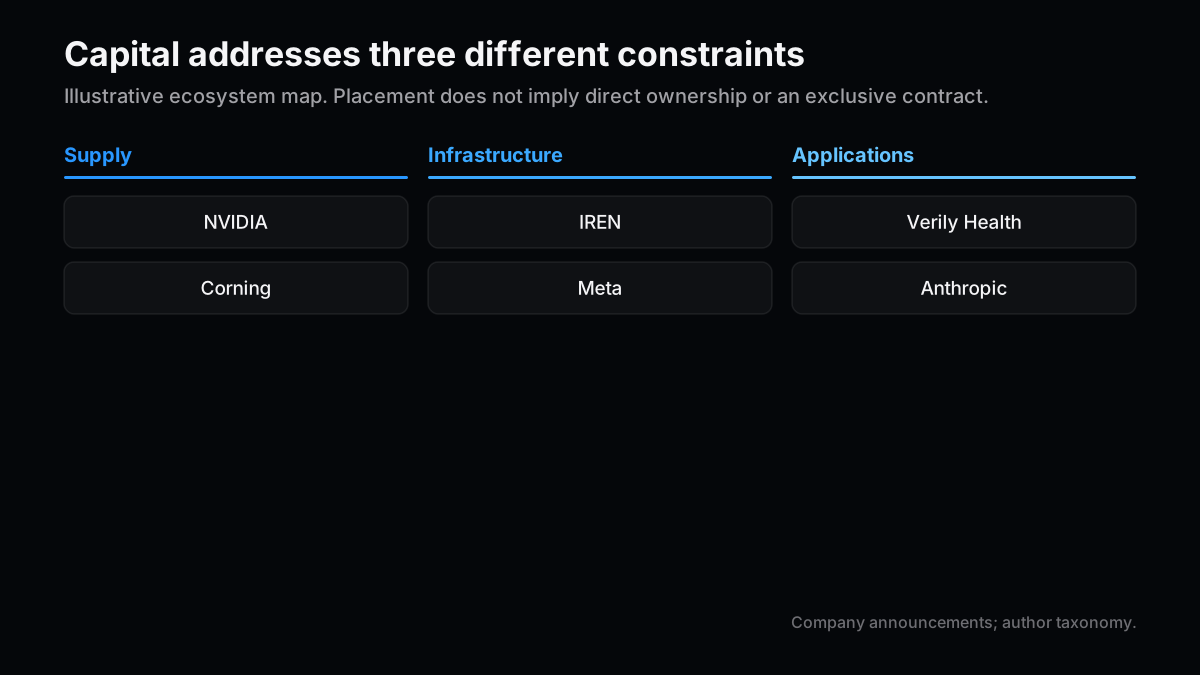
Strategic AI investment does more than recruit another customer. NVIDIA's announced $3 billion Meta investment and its right to invest up to $2.1 billion in IREN are different financial instruments. I read the strategy through three layers: customer funding, supply constraints and new applications.
This assessment uses public information only, checked on November 7, 2026. NVIDIA series, part 2 examines selected announcements from May through October 2026. It is not a complete portfolio inventory. Announcements do not establish completed investment or exclusive purchasing commitments.
Post 74 explained why an ownership percentage alone cannot determine value. Strategic investment has the same problem. A headline amount can describe purchased shares, a conditional investment right or support for expanded production. Those distinctions change the economics.
Separate Announced Amounts From Cash Already Spent
The public record supports the following classification. Dollar amounts are not added together because commitments, rights and completed transactions are different things.
| Announcement and counterparty | Publicly described arrangement | Meaning of the amount | What this source does not establish |
|---|---|---|---|
| October 27, Meta | Intended investment in an equity offering | $3 billion announced investment | Final settlement and all additional purchase terms |
| May partnership, IREN | Right to invest in ordinary shares | Up to $2.1 billion, conditional on GPU delivery and other requirements | Full investment of the maximum amount |
| September 9, Verily Health | Receipt of NVIDIA investment support | Individual amount undisclosed | Ownership percentage or purchasing obligation |
| May 6, Corning | US optical-connectivity capacity partnership | Commercial and technology collaboration | An equity breakdown from this release alone |
The sources differ: NVIDIA's announcement for Meta, IREN's annual report and Verily's own funding announcement. Corning's capacity plan is not treated as another standardized minority-equity check. Each document establishes a different boundary of knowledge.
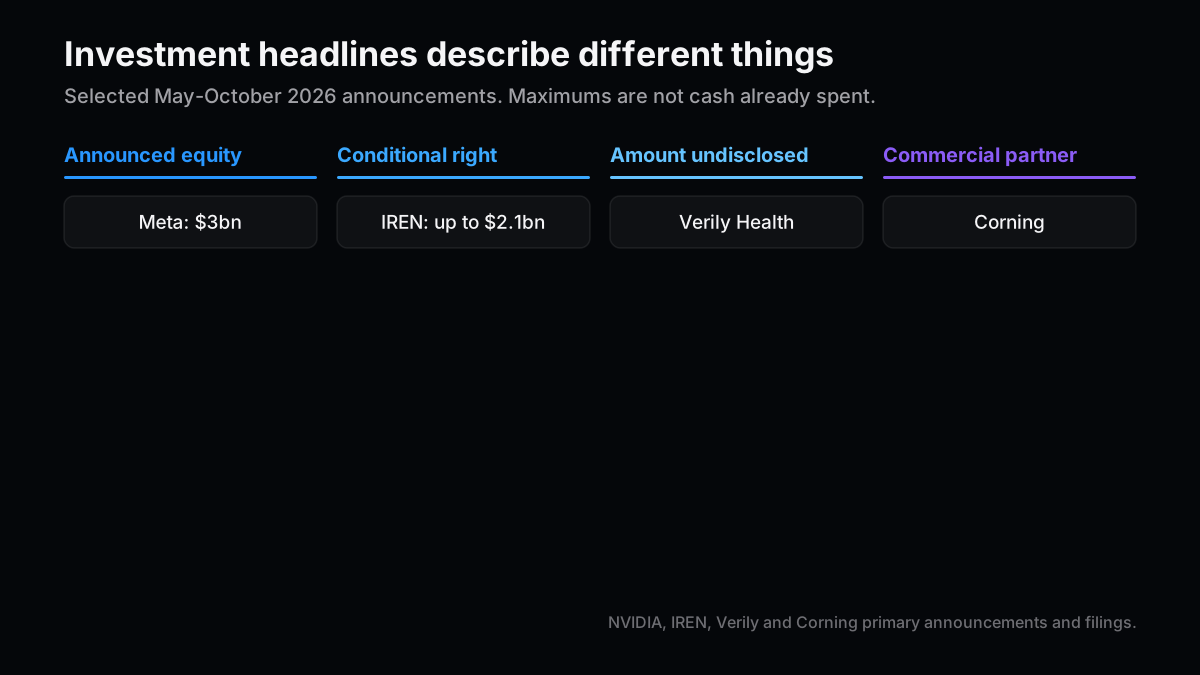
Adding every maximum commitment creates an impressive headline and an unreliable cash estimate. It tells us neither when funding leaves the investor nor how it returns. Contract conditions and repayment paths are more useful than a league table of announced amounts.

Layer One: Capital That Helps Customers Deploy
An investment in Meta supplies capital to a major chip customer. NVIDIA also describes collaboration spanning Vera Rubin, CPUs and networking. My inference is that the objective extends beyond accelerator shipments to a sustained system-level relationship.
It does not follow that every dollar invested returns as NVIDIA revenue. Meta can use capital for other purposes. Neither incremental sales nor an investment return can be calculated from the announced check alone.
IREN provides a clearer example of conditionality. Its annual report describes a right for NVIDIA to invest up to $2.1 billion in ordinary shares, linked to delivery of up to 600,000 GPUs and regulatory conditions. This is not confirmation that $2.1 billion has already reached IREN. It links potential funding to deployment progress.
| Effect on the customer | Potential supplier benefit | Investor concern |
|---|---|---|
| Funding for equipment | Larger deployments become possible | Demand depends partly on access to capital |
| Faster system adoption | Products beyond GPUs may be adopted | Delayed operation and collection |
| A longer relationship | More software and design integration | Investment and receivable exposures overlap |
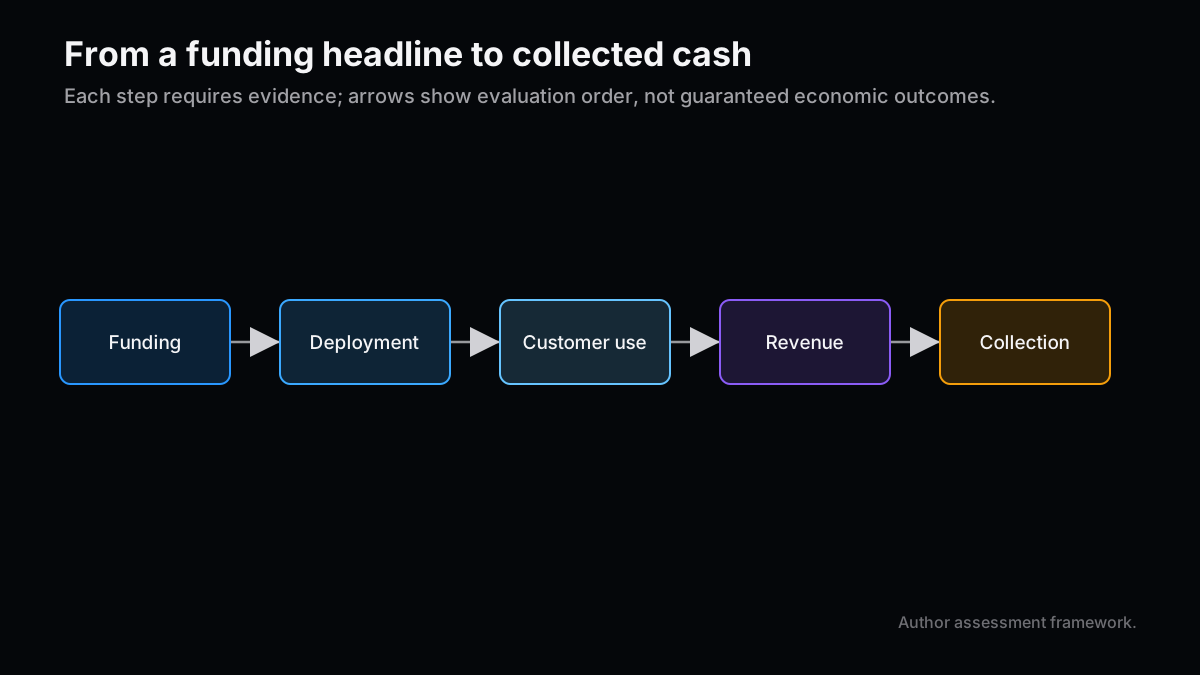
This structure alone does not establish improper revenue recognition. It does require evaluating investment returns and product sales together. How much cash remains after funding the relationship? That connects directly to the collection issue in part 1.
Layer Two: Removing Constraints Outside the GPU
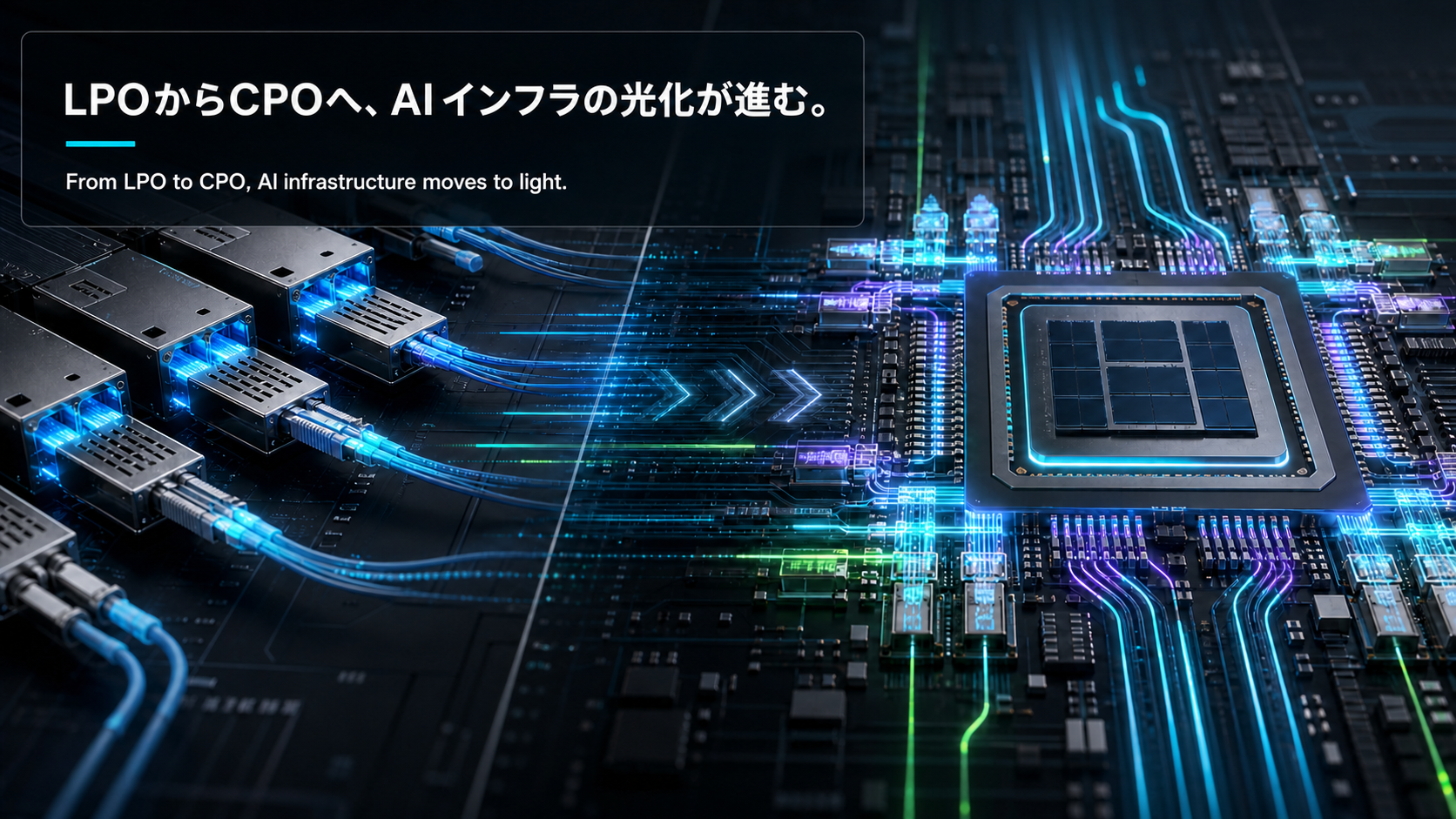
The Corning partnership targets a tenfold expansion in US optical-connectivity manufacturing capacity, more than 50% growth in US fiber capacity and three new plants. These are announced plans, not completed productive capacity.
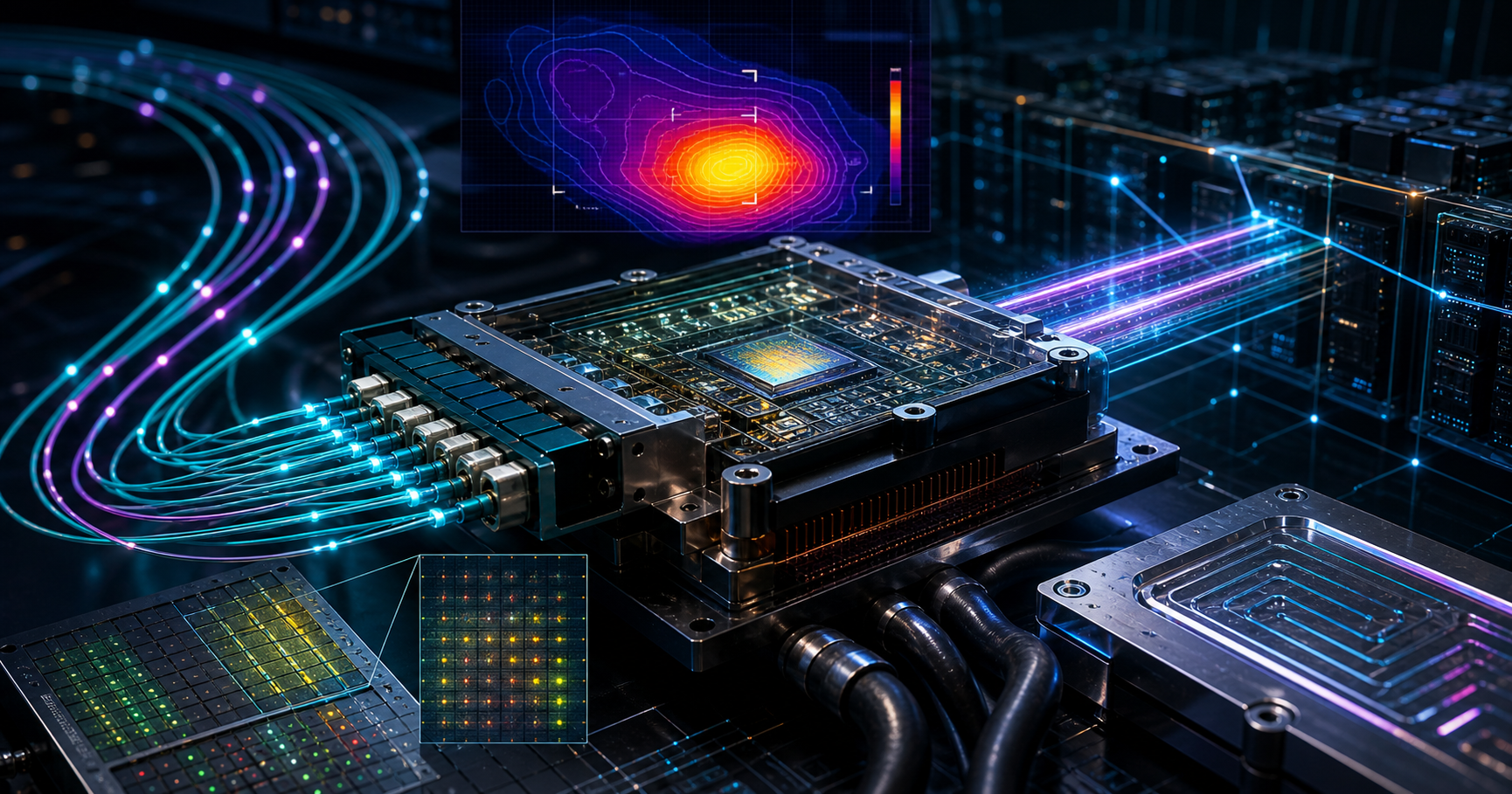
More GPUs do not automatically create usable compute. Connectivity, electricity, cooling and construction can all delay deployment. I interpret supply-chain involvement as an attempt to shorten the path between selling equipment and having that equipment operate economically.
When I developed technology maps for investment themes, product categories alone often hid the binding constraint. Mapping adjacent processes revealed whose delay could stop the whole system. The same approach is useful here: arrange companies by the sequence required to bring capacity into service.
The benefit may outlast the next six to eighteen months of sales. But capacity arriving after demand peaks becomes excess capacity. Removing a bottleneck does not guarantee permanent pricing power; sometimes it removes the scarcity that supported prices in the first place.

Layer Three: Expanding Compute Into Operational Work
Verily Health describes its Pre Platform as a data and AI foundation and confirms NVIDIA investment support. The individual amount is undisclosed. The announcement cannot support an estimate of future GPU purchases or a precise ownership stake.
Its strategic relevance is still worth examining. It points beyond model developers toward workflows requiring data preparation, governance and domain-specific operations. Buying equipment does not instantly create that market. Adoption depends on users, operational change and usable data, with a potentially slower route to revenue.
Private-market evidence provides context. Anthropic's May 2026 Series H, led by Sequoia and other investors, raised $65 billion at a $965 billion post-money valuation. Those are round totals, not NVIDIA's individual contribution. Carta reports that approximately 57% of capital invested at Series B and later in 2026 went to AI companies on its platform. That is a platform sample, not the global investment universe.
Capital concentration does not prove profitable application demand. My reading is more restrained: abundant funding accelerates competition while the eventual distribution of profit remains unsettled. Suppliers may benefit first, but they still need end customers who can support the system economically.
The Long-Term Objective Is an Operating Market
Putting the layers on a timeline changes what should count as success.
| Horizon | Strategic hypothesis | Observable result | Remaining uncertainty |
|---|---|---|---|
| 6–18 months | Enable customer deployments | Delivery, commissioning and collection | Demand without continued supplier funding |
| 18–36 months | Relax connectivity and infrastructure constraints | Capacity completion and utilization | Overcapacity and capital requirements |
| 3–5 years | Expand operational applications | Repeat usage and profitability | Productization, regulation and adoption speed |
These are my evaluation horizons, not company revenue forecasts. Expanding the addressable operating market is rational. The capital required to do so must nevertheless remain visible beside semiconductor margins, rather than disappearing behind them.

A Constructive Strategy View, With a Capital-Efficiency Test
I am constructive on a strategy that addresses supply constraints and application demand together. I would become less positive if maintaining product growth required continually increasing financial support to customers. A stock assessment also needs the price paid and cash returns after that support.
| Scenario | Conditions | Long-term implication | Assessment |
|---|---|---|---|
| Base case | Funded capacity operates and customers pay | Market expansion supports sales | Constructive on the strategy |
| Main upside | New applications grow without supplier financing | Demand becomes self-financing | Reward improving capital efficiency |
| Tail risk | Additional funding coincides with slower collection | Investment and receivable losses can overlap | Reduce the assessment |
What would change my mind: deployment and customer revenue increase, yet cash recovery including investment outlays does not improve. The size of the growth story cannot compensate indefinitely for that failure.
The useful watch points are commitment exercise, operational capacity, revenue from external customers and the need for follow-on support. Counting funding announcements is easier, but it answers the wrong question. The decisive transition is from capital creating a market to a market generating its own capital.
Related Posts
- AI Chip Earnings 1: The Gap Between Profit and Cash — Cash generation supporting the investment strategy.
- AI Chip Investments 2: Capital for Inference — Acquisitions and an open adoption ecosystem.
- The 1% Stock Option and Dilution — Separating ownership from monetary value.
References
- NVIDIA–Meta collaboration and $3 billion investment announcement, October 27, 2026
- IREN 2026 annual report: NVIDIA partnership and investment right
- Verily Health funding announcement, September 9, 2026
- NVIDIA–Corning capacity expansion announcement, May 6, 2026
- Anthropic Series H, co-led by Sequoia and others, May 28, 2026
- Carta State of Private Markets Q3 2026, November 5, 2026
Next Issue Ideas
- Idea 1: Who Earns the Yield on AI Equipment Finance? — Follow two-year cash returns across suppliers, operators and asset owners.
- Idea 2: When Optical Expansion Changes Pricing — Compare at least three suppliers on commissioning dates and utilization.
- Idea 3: Operational AI Without Heavy Customer Capex — Compare adoption costs and repeat revenue across healthcare, design and enterprise software.
This article is not investment advice. The author may hold securities mentioned. Generative AI assisted its preparation. Please read the disclaimer before making an investment decision.