Kimi K3 vs Claude Fable 5 vs GPT-5.6: Benchmarks, Pricing, and When to Use Which
A July 2026 deep comparison of Kimi K3, Claude Fable 5, and GPT-5.6 on independent benchmarks and pricing, with a practical task-routing implementation for agent builders.

A July 2026 deep comparison of Kimi K3, Claude Fable 5, and GPT-5.6 on independent benchmarks and pricing, with a practical task-routing implementation for agent builders.


Kimi K3 vs Claude Fable 5 vs GPT-5.6: Benchmarks, Pricing, and When to Use Which
In the past six weeks, the title of "strongest frontier model" changed hands three times: Claude Fable 5 on June 9, GPT-5.6 Sol on June 26, and Kimi K3 on July 16. This hit home for me personally — the agent fleet in ValuScope, the in-house app I documented through No. 38, runs on pinned models, and this generational shift handed me homework: which agent moves to which model? This post is my working note for that homework, built around data from the independent evaluation site Artificial Analysis.
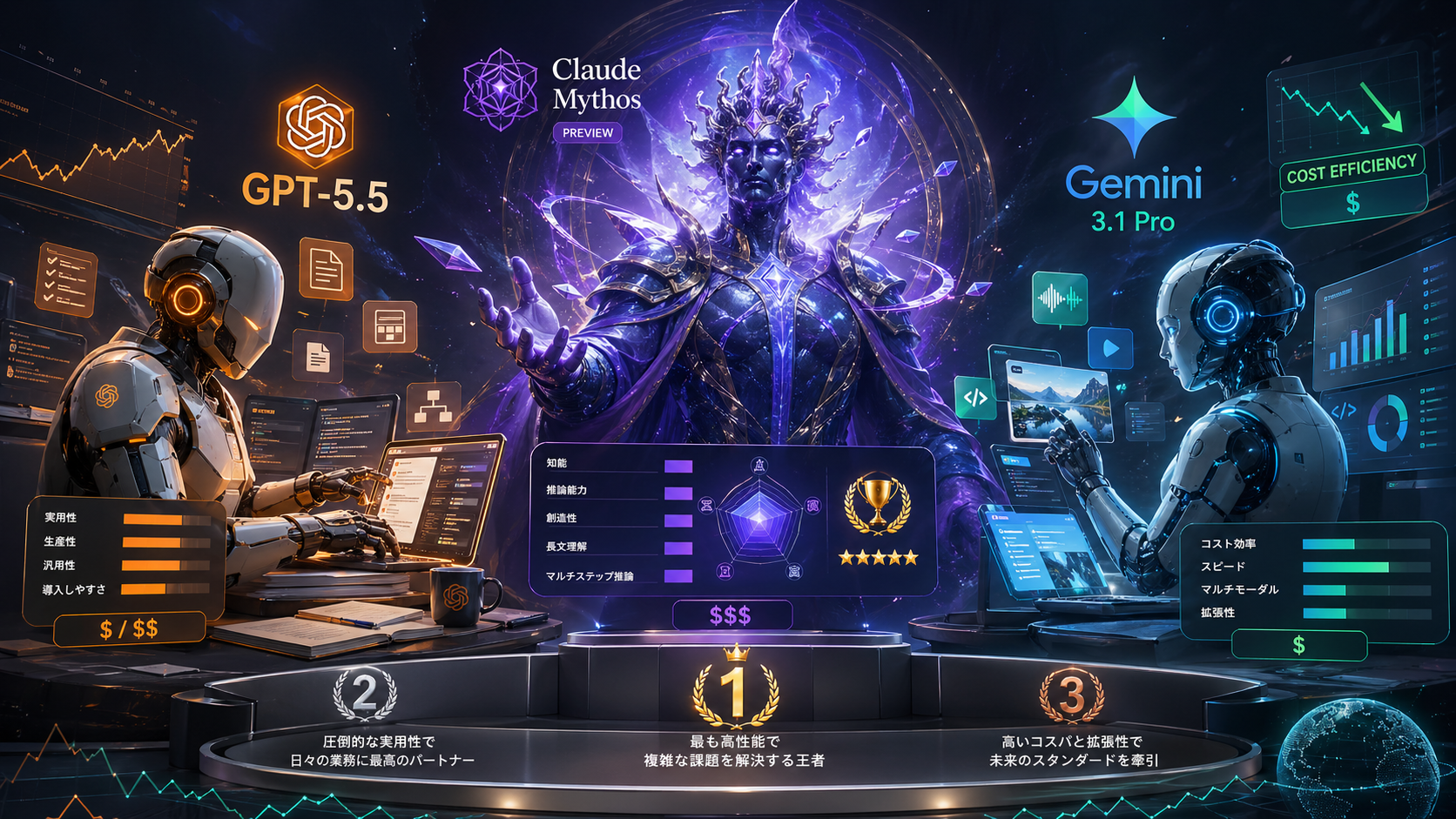
When I compared GPT-5.5 and Claude Mythos in No. 10, I wrote that "the tug-of-war between the two US leaders will continue for now." Seven months later, that call is half wrong. A Chinese open-weight model from Moonshot AI has climbed to within arm's reach of the two leaders on the aggregate index.
This is part one of a two-part series (the performance piece). Part two (No. 40) digs into the three labs behind these models — their founding stories and the research lineages of their founders.
Version note: All figures are as of July 23, 2026, verified against Artificial Analysis Intelligence Index v4.1, official announcements, and press reports. Rankings in this field flip within weeks — always check the latest numbers via the references at the end.
TL;DR: What You'll Learn
| Topic | What you'll learn |
|---|---|
| Overall standings | The AA Intelligence Index top tier: Fable 5 (60), GPT-5.6 Sol (59), Kimi K3 (57) |
| Benchmark deep dive | How the winner splits three ways across GDPval-AA v2, AA-Briefcase, and Frontend Code Arena |
| Pricing structure | $3/$15 vs $10/$50 vs $5/$30 — the ranking inverts on "cost per intelligence point" |
| Implementation | A task-routing policy with code, and the pitfalls between benchmark and production |
Three Rewrites of the Leaderboard in Six Weeks — Where the Intelligence Index Stands
Start with the map. Honestly, back in June I did not expect to be redrawing it within a month and a half.
The Artificial Analysis Intelligence Index (v4.1) is an independent composite of multiple evaluation sets spanning reasoning, math, coding, and real-world tasks. As of July 23, 2026, the top tier looks like this, followed by Claude Opus 4.8, GPT-5.5 (xhigh), Claude Sonnet 5, and GLM-5.2.

| Model | Lab | Release | Index (max setting) | API price ($/M, in/out) |
|---|---|---|---|---|
| Claude Fable 5 | Anthropic | Jun 9, 2026 | 60 | $10 / $50 |
| GPT-5.6 Sol | OpenAI | Jun 26 preview → Jul 9 GA | 59 | $5 / $30 |
| Kimi K3 | Moonshot AI | Jul 16 | 57 (#4 of 189 models) | $3 / $15 |
A lot of character hides inside those three points. Read only the ranking and it is "two US leaders plus a Chinese chaser" — but Kimi K3 is an open-weight model, and no open-weight model has ever reached #4 on the frontier composite before. On the Japanese AI news show AI QUEST, AI researcher Shota Imai introduced K3 with the line that its developer is "number one in the world in AI research" — a reference to the citation record of Moonshot founder Yang Zhilin. His story is the heart of part two.
The same week, notably, Google delayed Gemini 3.5 Pro, while "Gemini 4 teaser" posts made the rounds on social media. The show read that as a sign of urgency, and I agree. This post stays focused on the three models that have actually shipped.
What the Composite Hides — The Winner Splits Three Ways by Use Case
Choosing a model on the composite index alone is, to my mind, like running job interviews on test scores alone.
When I joined my CVC, the investment team had no unified quality standard for investment reviews — every deal was examined on a different set of axes. Only after we fixed the evaluation axes first and templated them did deals become comparable at all. Model evaluation works exactly the same way. Unless you fix "what does this benchmark measure" up front, you drift wherever each lab's cherry-picked release notes push you. So let me fix three axes: (1) reproduction of real occupational work (GDPval-AA v2), (2) long-horizon agentic execution (AA-Briefcase), (3) frontend implementation (Frontend Code Arena).

| Benchmark | What it measures | 1st | 2nd | 3rd |
|---|---|---|---|---|
| GDPval-AA v2 | Real tasks across 44 occupations, 9 industries | Fable 5 Max (1,815) | GPT-5.6 Sol Max (1,747.8) | Kimi K3 (1,687) |
| AA-Briefcase | Long-horizon knowledge work | Fable 5 Max (1,587) | Kimi K3 (1,527) | GPT-5.6 Sol Max (1,495) |
| Frontend Code Arena | Head-to-head frontend implementation | Kimi K3 (1,679) | Fable 5 (1,631) | GPT-5.6 Sol (1,618) |
What surprised me most in this table is K3 beating GPT-5.6 Sol on AA-Briefcase. Long-horizon agents are the territory OpenAI has cultivated hardest, and I did not expect an open-weight model to take second place there. K3's first place in Frontend Code Arena matches what Tom's Hardware reported as "beating Fable 5." Though — let me be honest here — a 50-point gap in an arena-style eval feels, in my hands, less like "clearly won" and more like "pulled even."
The individual benchmarks are worth listing too. On SWE-Bench Pro, Fable 5 leads at 80.3% — the metric Anthropic positions as closest to production software work, with the gap over its own Opus 4.8 widening as tasks get longer and more complex. On Terminal-Bench 2.1, OpenAI reports 88.8% for Sol and 91.9% for Sol Ultra, above the 88.0% posted by both Claude Mythos 5 and GPT-5.5. A different winner on every benchmark — that is the actual state of July 2026.
Architecture and Pricing — 2.8T of Mass, and an Inverted "Cost per Intelligence Point"
After the scores come the internals and the price tags. To me this is the most interesting part of the generational shift.
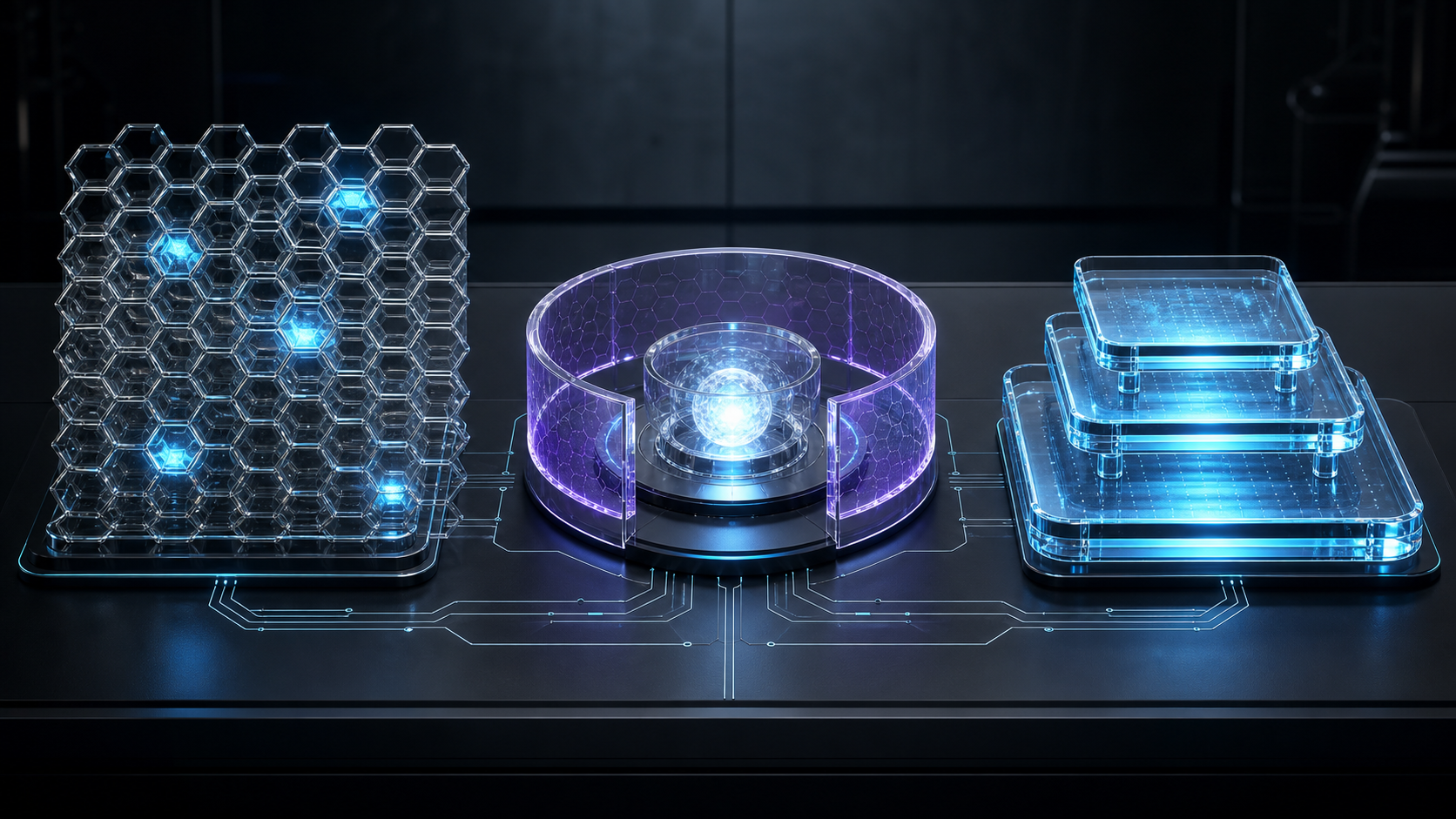
Kimi K3 is the largest open-weight MoE (Mixture of Experts) ever shipped, at 2.8 trillion total parameters. It activates only 16 of 896 experts per token and leans on KDA and Attention Residuals for compute efficiency, with a 1M-token context window and native multimodality. Note that Moonshot has not published an active-parameter count — "2.8T runs on every token" is not how to read it.
Claude Fable 5 is the first model in the new "Mythos class" that Anthropic created above the Opus line. It shares identical weights with the restricted-access Claude Mythos 5, adding safety classifiers that reroute high-risk queries to Opus 4.8 (triggering in under 5% of sessions on average). Context is 1M tokens; output caps at 128k.
GPT-5.6 ships as a three-tier family: flagship Sol, half-price Terra, and the fastest, cheapest Luna — a "pricing staircase" designed in from day one.
| Item | Kimi K3 | Claude Fable 5 | GPT-5.6 Sol / Terra / Luna |
|---|---|---|---|
| Architecture | 2.8T MoE (896 experts / 16 active) + KDA | Mythos class (Mythos 5 weights + safety classifiers) | Undisclosed, three tiers |
| Context / output | 1M / undisclosed | 1M / 128k | Not officially confirmed |
| Input price ($/M) | $3 ($0.30 on cache hit) | $10 | $5 / $2.5 / $1 |
| Output price ($/M) | $15 | $50 | $30 / $15 / $6 |
| Weights | Open (staged release) | Closed | Closed |
Divide by intelligence and the picture flips. Per index point, Fable 5's crown (60) costs roughly 2× Sol (59) and about 3.3× K3 (57) on output price. — No, let me correct myself: that division is itself too crude. For a long-horizon agent saturating a 1M context, input costs diverge more than 30× between K3's $0.30 cache-hit rate and Fable 5's $10. Yet a few percentage points of task success rate can invert effective cost once retries are counted. Unit price only means something next to the question "which benchmark's winner looks like my workload."

One more thing, as The Decoder points out: K3's $3/$15 also announces the end of the "super-cheap Chinese AI" era. Through the K2.6 generation, Chinese labs competed on prices an order of magnitude lower; K3, having pulled level on quality, has moved its price up to the US floor. The era of choosing Chinese open models on cheapness alone ended this quarter, in my view.
Implementing Task Routing, and the Pitfalls
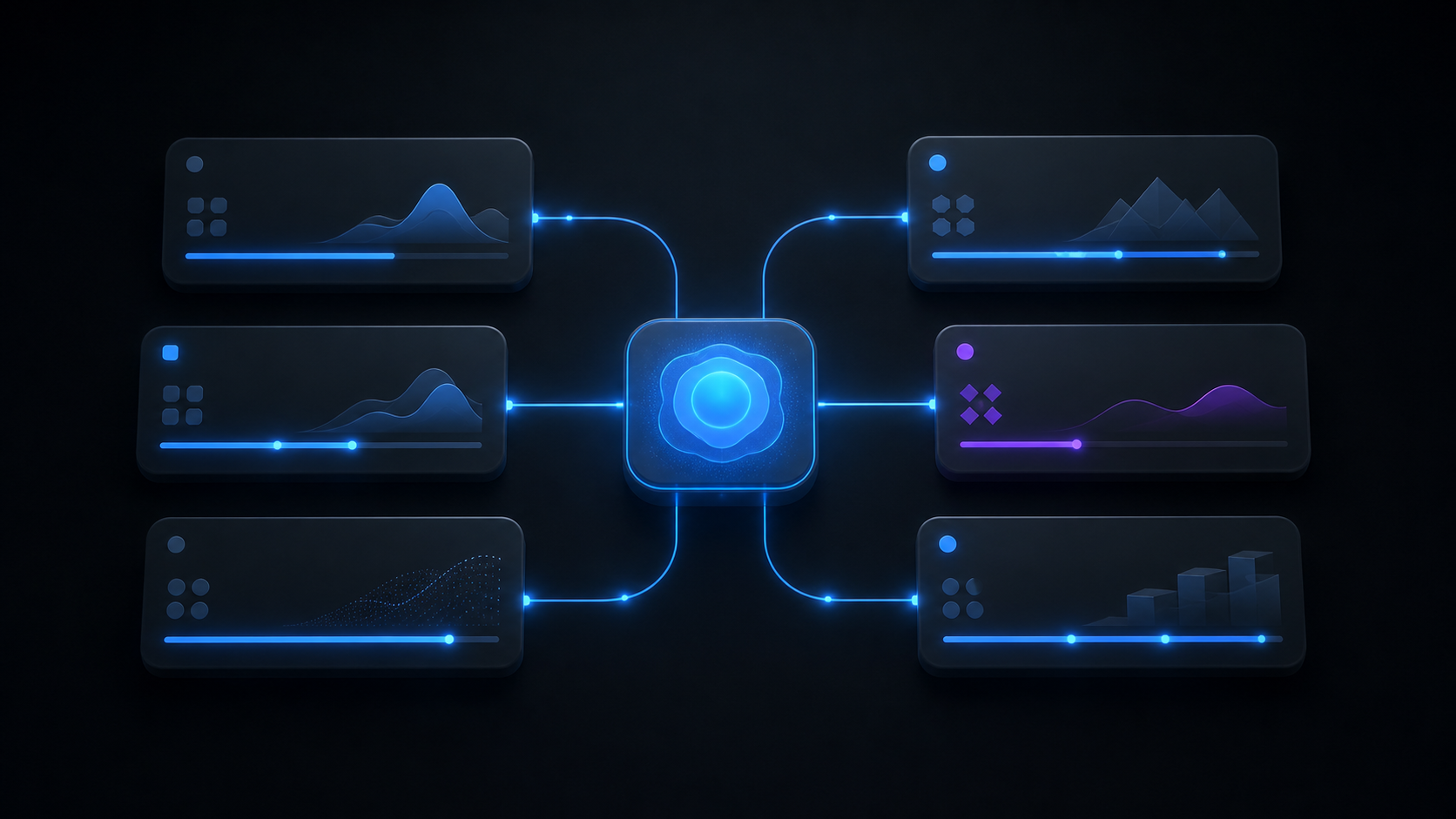
My conclusion first: I stopped giving everything to one model.
Here is the allocation policy for ValuScope's agent fleet as of July 2026. As I wrote in No. 38, each agent demands different properties, so the allocation follows the benchmark axes.
| Task | Assignment | Rationale |
|---|---|---|
| Long-horizon company-research agent | Claude Fable 5 | #1 on AA-Briefcase, 80.3% SWE-Bench Pro |
| Frontend implementation & prototypes | Kimi K3 | #1 on Frontend Code Arena (1,679) |
| General drafts, summaries, classification | GPT-5.6 Sol / Terra | Index 59 at ~1/3 the price, tier-tunable |
| High-volume batch processing | GPT-5.6 Luna / K3 cached | The $1/$6 floor tier and $0.30 cache hits |
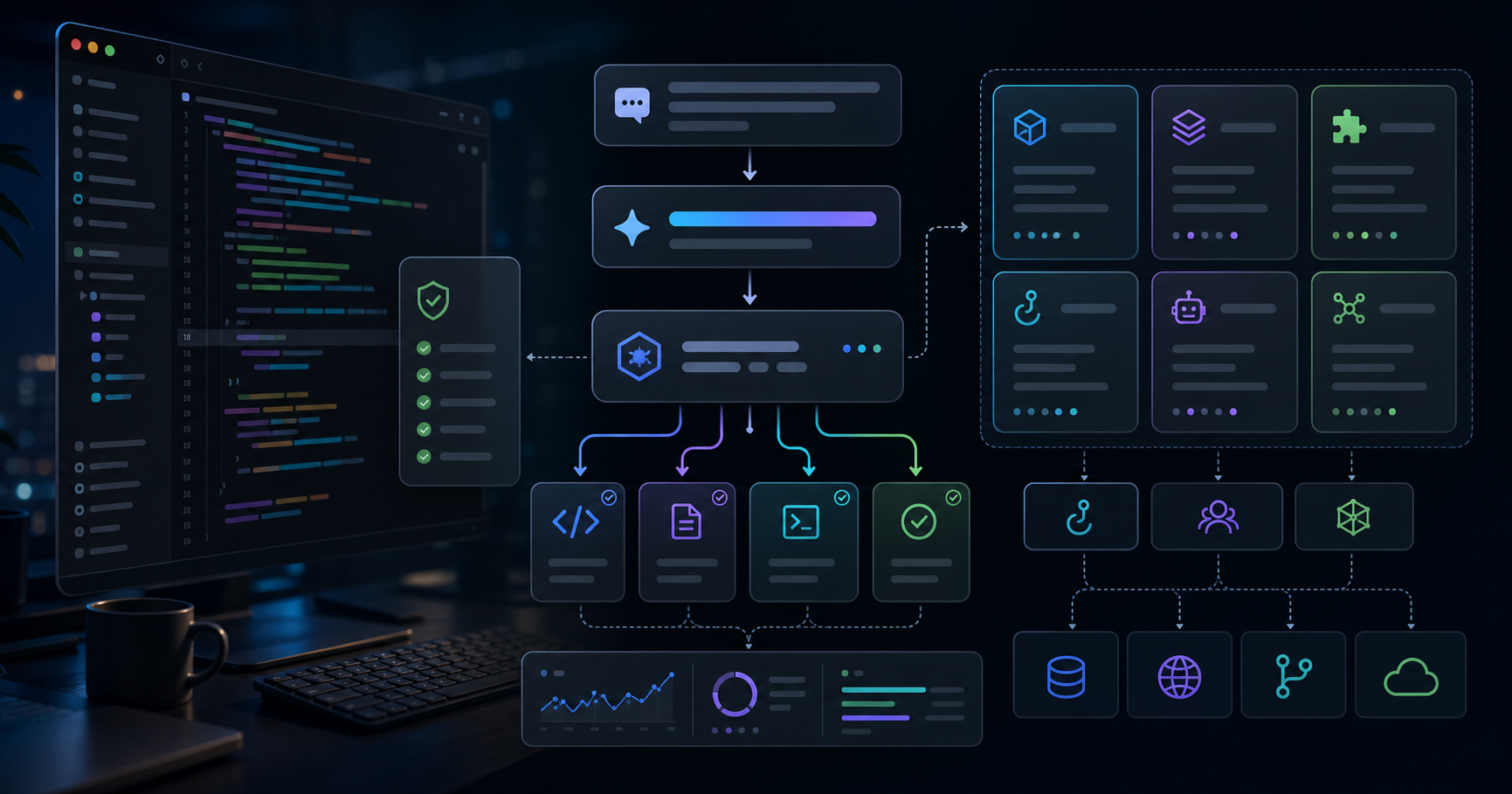
The routing itself needs only a thin function. Through OpenRouter all three expose the same interface, so the minimal implementation is just this:
// model-router.ts: route tasks across the July 2026 frontier trio via OpenRouter
const MODELS = {
  frontend: 'moonshotai/kimi-k3', // Frontend Code Arena #1 (1,679)
  longAgent: 'anthropic/claude-fable-5', // AA-Briefcase #1 (1,587)
  general: 'openai/gpt-5.6-sol', // Index 59 at ~1/3 of Fable 5 cost
  bulk: 'openai/gpt-5.6-luna', // $1/$6 for high-volume drafts
} as const

type Task = keyof typeof MODELS

export async function complete(task: Task, prompt: string) {
  const res = await fetch('https://openrouter.ai/api/v1/chat/completions', {
    method: 'POST',
    headers: {
      Authorization: `Bearer ${process.env.OPENROUTER_API_KEY}`,
      'Content-Type': 'application/json',
    },
    body: JSON.stringify({
      model: MODELS[task],
      messages: [{ role: 'user', content: prompt }],
      // cap output tokens to keep cost predictable ($15-$50 per 1M output)
      max_tokens: 4096,
    }),
  })
  if (!res.ok) throw new Error(`router: ${res.status} for ${MODELS[task]}`)
  const json = await res.json()
  return json.choices[0].message.content as string
}
Before you run it, here are the traps. I counted them — all four sit in the gap between benchmark numbers and production.
- Benchmark optimization suspicion: TechTimes flagged a "benchmark problem" in its GPT-5.6 review. The top three are heavily optimized against public benchmarks, and 1–3 point gaps barely correlate with felt differences in real work. Do not skip a small eval on your own tasks.
- K3's weights arrive in stages: K3 is reported as open-weight, but as of July 23 the full weight release trails the API launch. If your plan assumes self-hosting, confirm the release timing and license terms first.
- Fable 5's classifier rerouting: Under 5% of sessions, but swaps to Opus 4.8 happen automatically. If your use case needs eval reproducibility, always log and check the response's model ID. I missed this and spent half a day chasing phantom score variance.
- Data residency: If I name one case where this routing does not fit, it is regulated industries handling confidential data. K3's API runs primarily on Chinese-affiliated hosting, which internal policy may rule out — and self-hosting a 2.8T MoE presumes a multi-node GPU cluster, which is no realistic answer for individuals or small teams.
Closing — Not "One Winner" but a Three-Way Division of Labor
One table to close.
| Angle | Current winner |
|---|---|
| Composite index | Claude Fable 5 (60) |
| Cost performance | GPT-5.6 Sol (59 at ~1/3 the price) |
| Frontend implementation | Kimi K3 (#1 in the Arena) |
| Long-horizon agents | Fable 5, with Kimi K3 a close second |
Having finished writing, I am honestly not confident this routing will still hold in three months — the turnover is that fast. But the procedure of "fix the evaluation axes before looking at the numbers" survives any number of leaderboard rewrites.
Part two (No. 40) digs into the founding stories of Moonshot AI, Anthropic, and OpenAI, and the research lineages of their founders. Why does the first author of Transformer-XL obsess over 1M-token context? A model's design philosophy is legible in its founder's research history.
Next Issue Ideas
- Idea 1: The Realistic Cost of Self-Hosting Kimi K3 — Inference Infrastructure for a 2.8T MoE vs the API — Once weights land, compute the GPU cluster configuration, monthly cost, and throughput of running K3 yourself, down to the break-even point against API usage.
- Idea 2: A Three-Way Agent CLI Harness Match — Claude Code vs Codex CLI vs Kimi CLI on the Same Issues — Measure the harness-side differences, not the model, on identical issues in an identical repository: tool-call counts, wall time, success rates.
- Idea 3: Building a Private 30-Question Mini-Eval So Benchmarks Cannot Fool You — Against the problem that public benchmark gaps fail to correlate with felt quality, a step-by-step, implementation-included guide to carving an evaluation set from your own workload.
Related Posts
- The Researchers Behind Kimi K3, Fable 5, and GPT-5.6: Founding Lineages of Moonshot, Anthropic, and OpenAI — Part two of this series: the three labs' founding stories and research lineages.
- GPT-5.5 vs Claude Mythos: Comparing the AI Frontier's Two Leaders — The previous generation's two-way comparison; the baseline this post's standings moved from.
- Operating Agentic Apps: A ValuScope Workflow and Measurement Guide — The operations guide for the agent app whose model selection this post revisits.
References
The figures and facts in this post are anchored to the following sources readers can verify (as of July 23, 2026).
- Artificial Analysis: Independent AI model benchmarks (Intelligence Index)
- AI QUEST: Kimi K3 closes on Claude Fable 5 and GPT-5.6; its developer is "world #1 in AI research" (YouTube)
- VentureBeat: China's Moonshot AI releases Kimi K3, the largest open-source model ever
- Tom's Hardware: 2.8-trillion-parameter Kimi K3 beats Claude Fable 5 in Frontend Code Arena
- OpenAI: Previewing GPT-5.6 Sol (official announcement)
- The Decoder: Kimi's open model K3 nears GPT-5.6 Sol and Fable 5 while signaling the end of super-cheap Chinese AI
This article is for informational purposes only and does not constitute investment advice or a recommendation of any specific service, stock, or contract structure. Benchmark scores and prices are published values as of the time of writing and are subject to change. Generative AI was used for parts of research, translation, and proofreading, with final review by ZYL0. See the disclaimer for details.