Mapping AI Semiconductor Startups: d-Matrix, TetraMem, MangoBoost, and the Post-GPU Design Race
A practical map of AI semiconductor startups across DPUs, in-memory compute, GPU alternatives, and edge NPUs.
A practical map of AI semiconductor startups across DPUs, in-memory compute, GPU alternatives, and edge NPUs.


Mapping AI Semiconductor Startups: d-Matrix, TetraMem, MangoBoost, and the Post-GPU Design Race
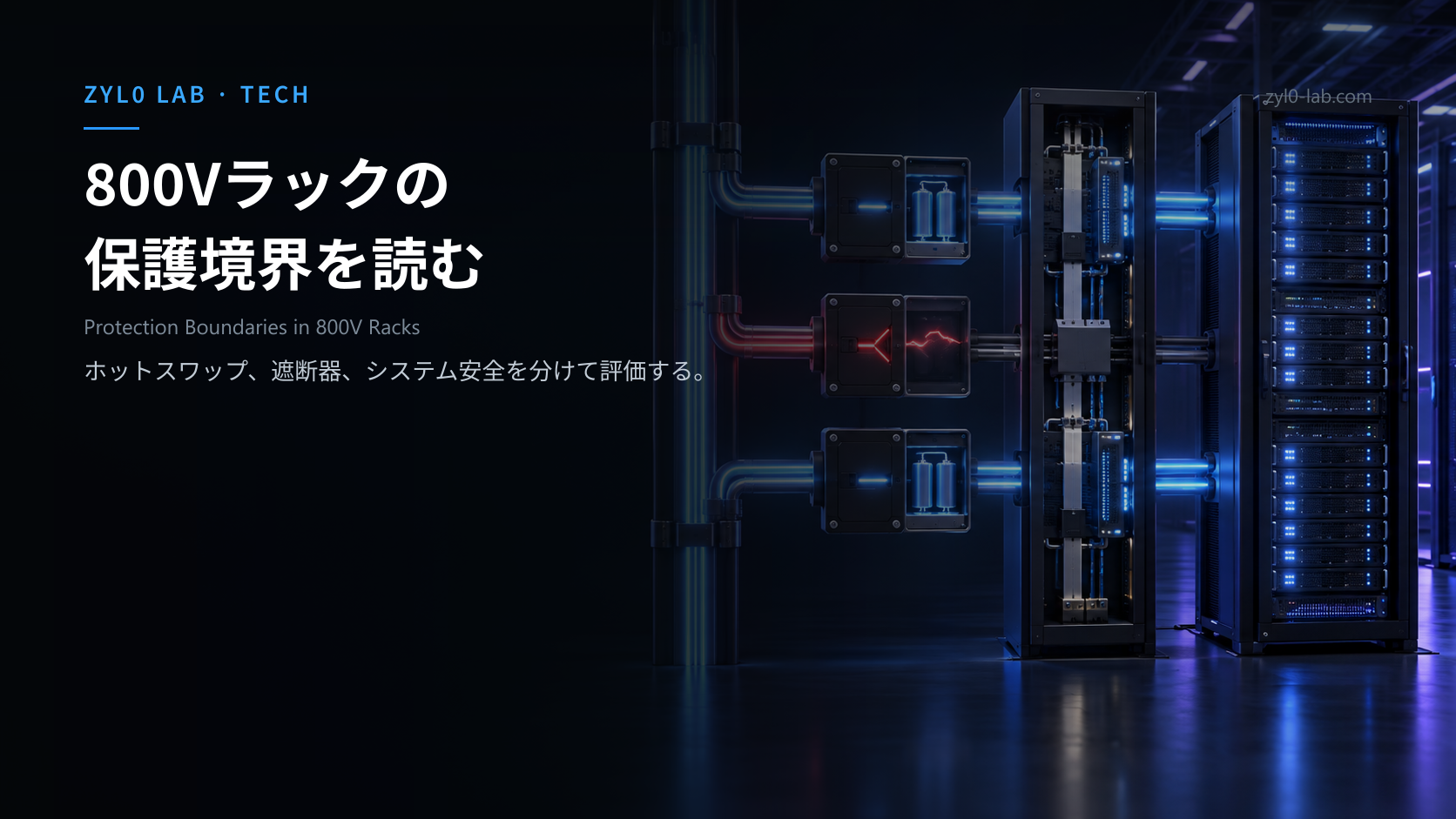
September 25, 2026 update—short answer: MangoBoost's current BoostX line is FPGA-based DPU card hardware. RoCE AI addresses GPU-to-GPU RDMA; NRT is an NVMe/RDMA target. CPU offload should be measured by path before it is credited as a faster GPU job. The product-and-SDK examination with a transfer-floor calculation spells out those limits.
When I research AI semiconductors, one company says it is replacing GPUs, another says it removes the memory bottleneck, and a third says it makes the data center more efficient. Put all of them on one performance chart and the distinction disappears.
I worked on automotive EEPROM process development and volume ramp before moving into CVC, where I have used technology maps to evaluate startups. For AI chips, I do not start with TOPS. I start with three questions: which data movement disappears, which operation is specialized, and what software burden is pushed onto the customer? This article places d-Matrix, TetraMem, MangoBoost, and their adjacent competitors on one map.
Note: this piece is an outside-in read based solely on public information — company releases, product pages, papers, and press coverage.
Version note: Product and shipment status was checked as of July 25, 2026, using company websites, product pages, and official announcements as the primary sources. Performance figures are vendor-reported under stated conditions and should not be read as direct comparisons across products.
TL;DR: What This Article Covers
| Category | Startups | Bottleneck being attacked | My reading |
|---|---|---|---|
| DPU / data path | MangoBoost, Enfabrica | Network, storage, and memory traffic around GPUs | Not a sidekick to the GPU; a foundation layer that determines cluster utilization |
| Digital / analog IMC | d-Matrix, TetraMem, EnCharge AI, Mythic | Data movement between memory and compute | Strong for inference power and latency, but precision, flexibility, and manufacturing decide the outcome |
| GPU-replacement accelerators | Groq, Cerebras, Tenstorrent | The power, cost, and control overhead created by GPU generality | The compiler that keeps up with model changes matters more than a peak benchmark |
| Edge NPU / AIPU | Axelera AI, Hailo | Cloud dependency, power, and privacy | At 2.5–8W, comparing against a data-center GPU is often the wrong question |
The key distinction is architectural. MangoBoost focuses on the path around computation; TetraMem focuses on the physical distance between storage and arithmetic; Groq focuses on execution order and compiler control. They are all “AI chip” companies, but they are not solving the same layer.
1. First, Split the Phrase “GPU Replacement”
The first thing to remember is that a GPU is not solving one problem.
Training combines large matrix operations, collective communication, checkpointing, and recomputation. Inference repeatedly reads model weights, maintains KV cache, and serves small requests with low latency. At the edge, cooling, power, and connectivity are constrained from the start.
That is why DPU, TPU, NPU, and GPU should be read as labels for which layer has been specialized, not as a simple ranking. TPU originated as Google’s Tensor Processing Unit product family, while NPU and AIPU are broader labels used by many companies for neural-network processors.
More GPU memory bandwidth does not help if the network is congested. Less data movement does not help if the model cannot map cleanly onto the specialized engine. To me, the AI semiconductor race increasingly looks less like “replace one GPU” and more like eliminate the place where the AI system waits.
Before deployment, I often estimate how many bytes of weights have to move per second instead of looking only at peak TOPS. It is a simple way to avoid classifying the bottleneck incorrectly.
def arithmetic_intensity(params_b, weight_bits, tokens_per_s):
    weight_bytes = params_b * 1_000_000_000 * weight_bits / 8
    moved_per_second = weight_bytes * tokens_per_s
    return moved_per_second / 1e12


def choose_architecture(workload):
    if workload in {"network", "storage", "security"}:
        return "DPU"
    if workload in {"matrix_inference", "low_power_edge"}:
        return "NPU_or_IMC"
    if workload in {"flexible_training", "mixed_models"}:
        return "GPU_or_general_accelerator"
    return "benchmark_before_buying"
This does not predict hardware performance. It is a conversation starter for asking whether weights fit in a cache or must be repeatedly fetched from external memory.
2. DPUs: MangoBoost and Enfabrica Attack the Layer Outside the Compute Core
What stands out in the DPU category is the shift from making the accelerator itself faster to keeping expensive GPUs busy.
MangoBoost: From DPU to a Full Stack
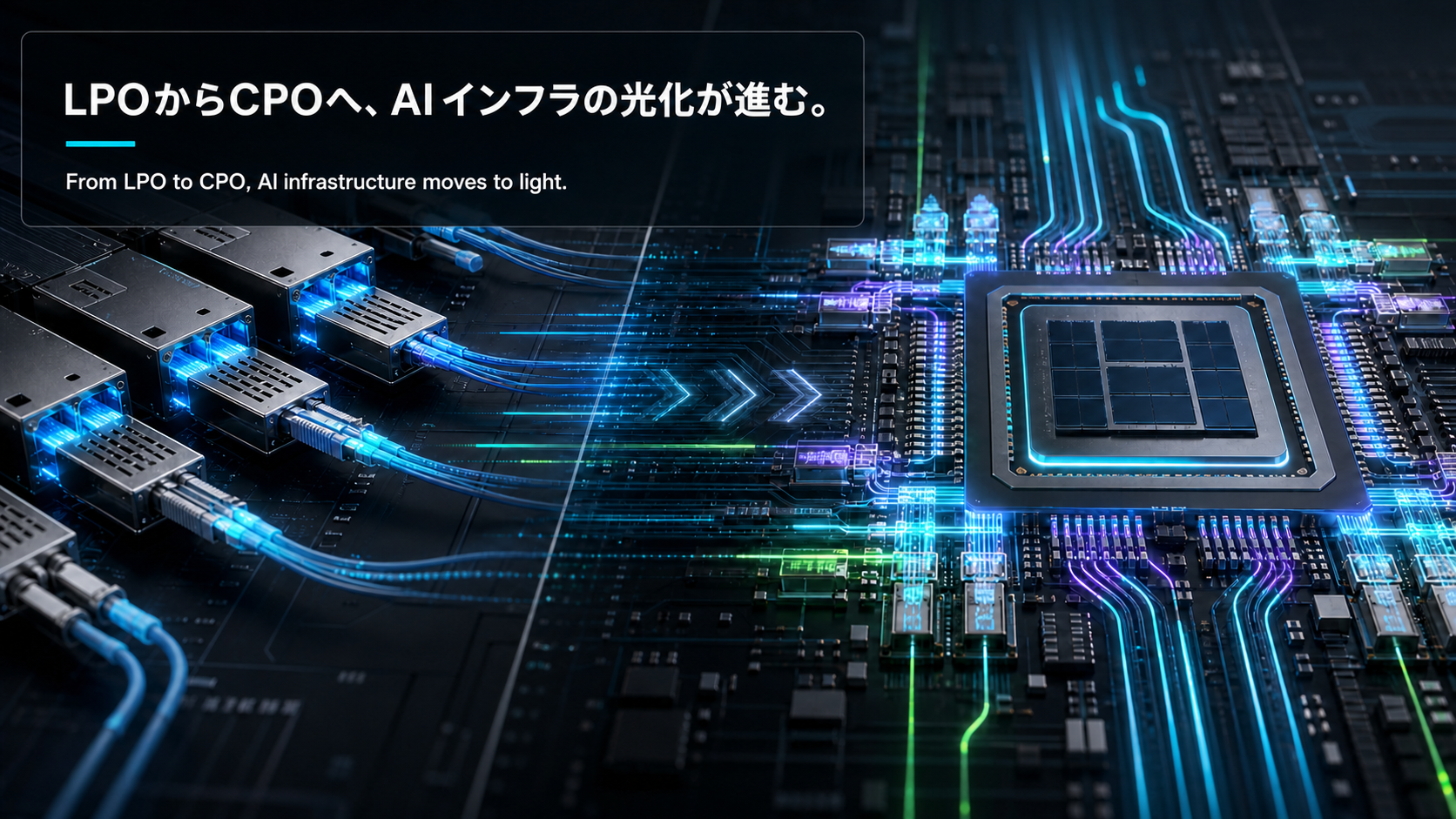
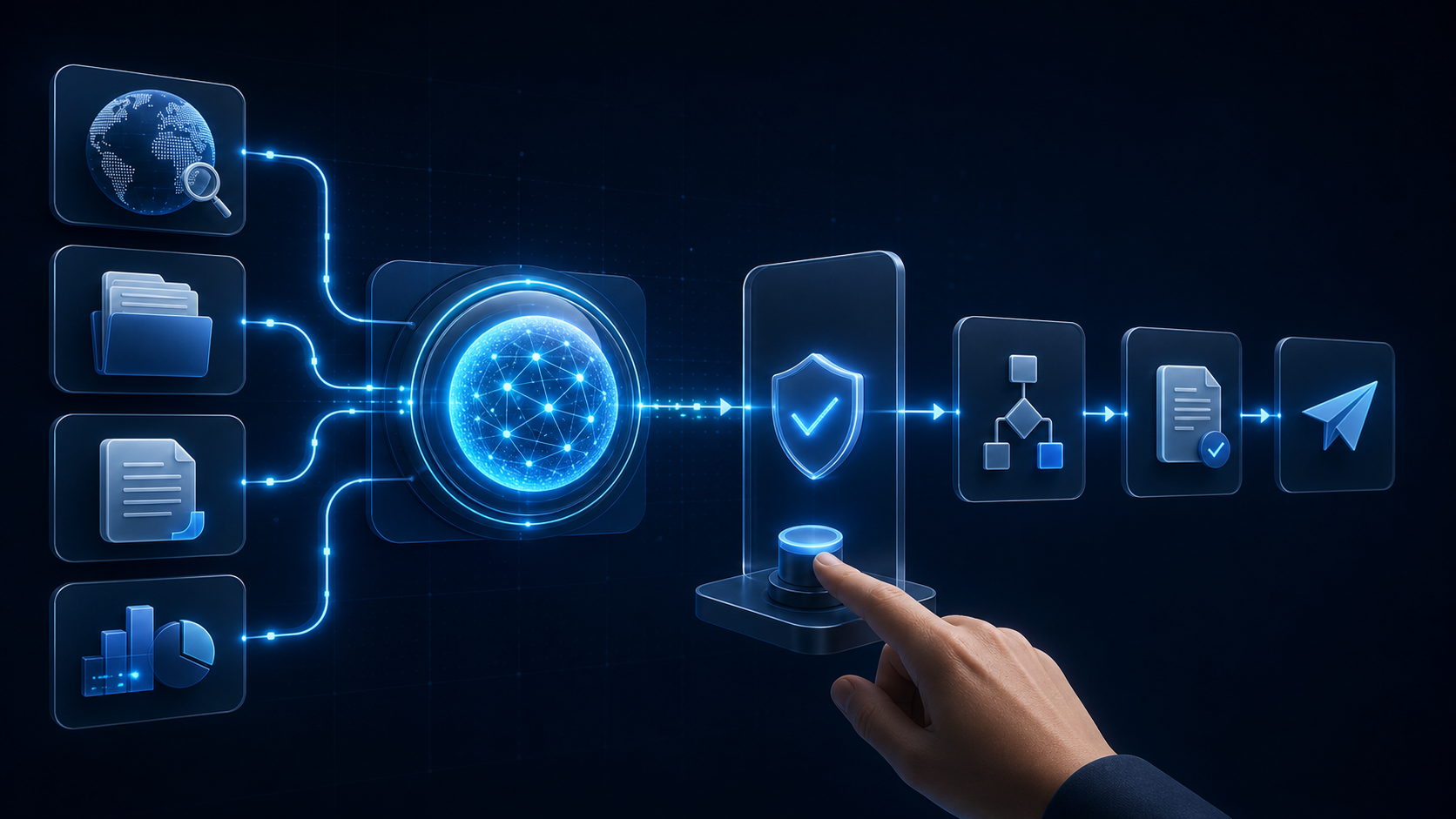
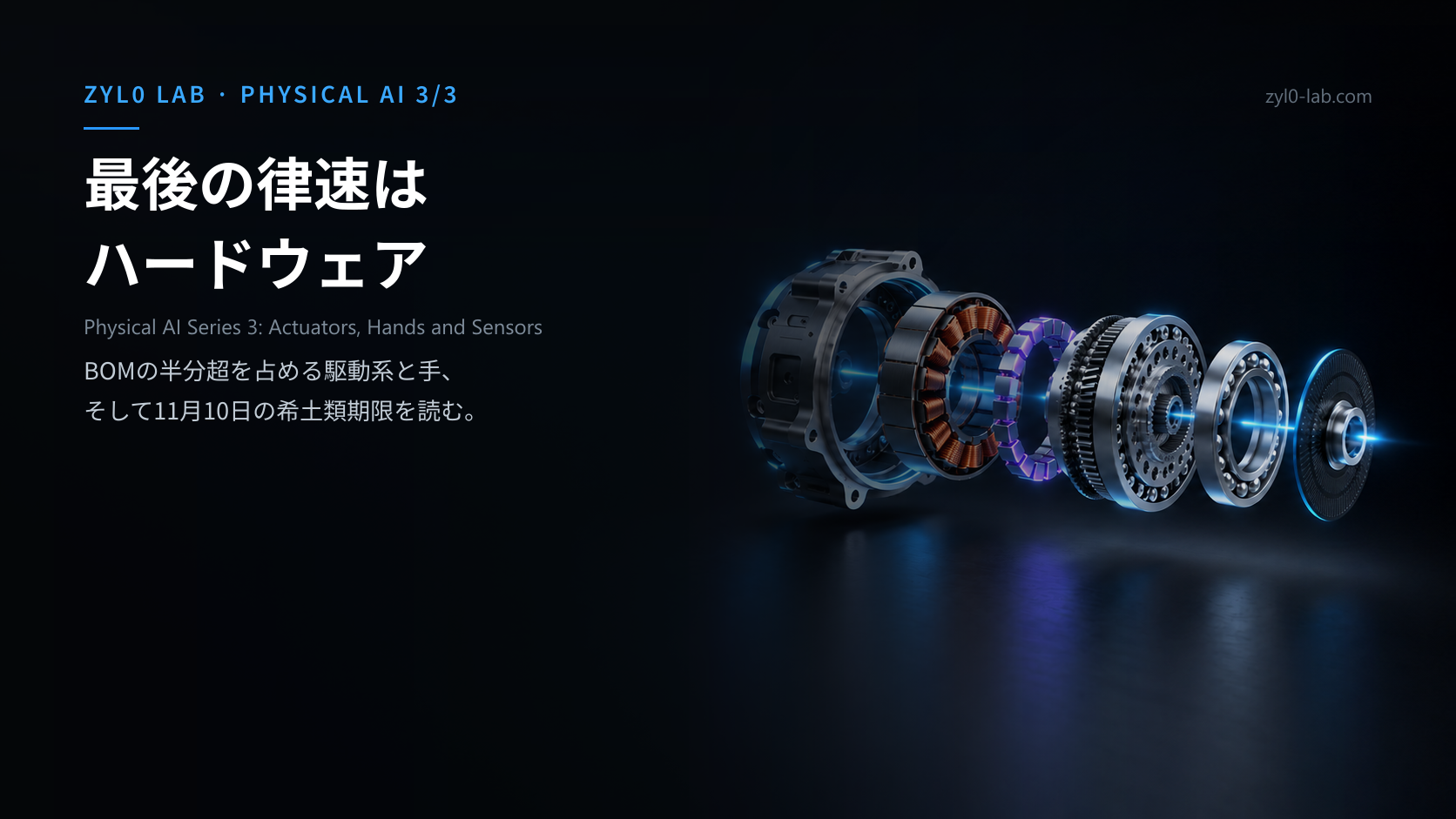
MangoBoost positions its DPU as an offload engine for networking, storage, and security, allowing GPUs to focus on AI computation. Its GPU-Storage-Boost and LLMBoost efforts, together with MLPerf submissions using AMD Instinct GPUs, make it more useful to view MangoBoost as an AI server utilization company rather than as a standalone chip vendor.
The pain point is not necessarily slow GPU arithmetic. Data reads, inter-node communication, storage I/O, and CPU control can all make a GPU wait. MangoBoost’s answer is to combine DPU, RDMA, storage optimization, and inference software to remove waiting around the GPU.
Enfabrica: More AI Fabric Than Conventional DPU
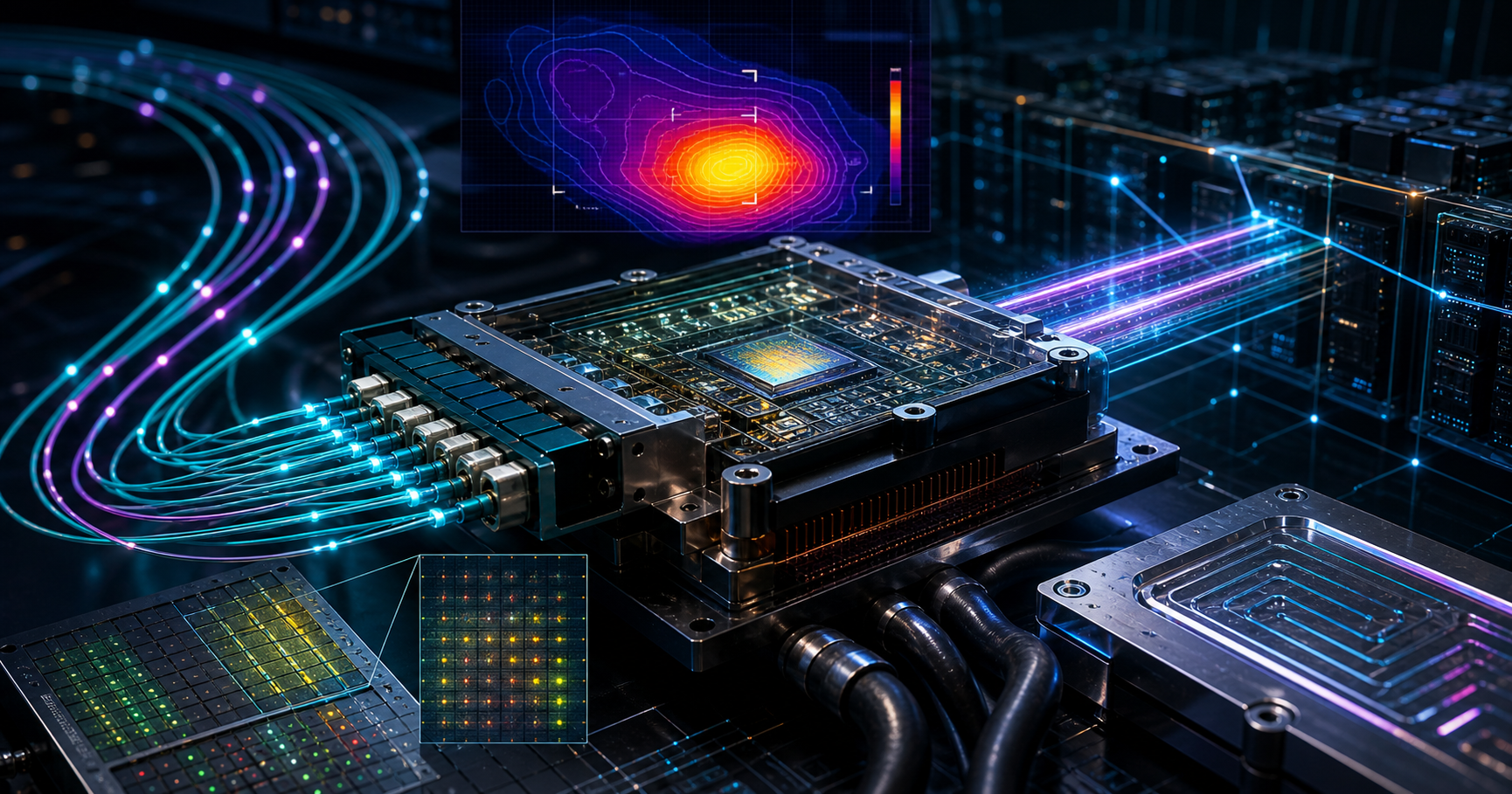
Enfabrica’s ACF-S is positioned as a SuperNIC for multi-GPU systems, combining 800GbE, PCIe, and CXL into a more integrated path. Its EMFASYS concept treats CXL-attached DDR5 as a networked memory fabric, reducing dependence on the local memory of individual GPU servers.
Strictly speaking, it is more accurate to call Enfabrica the data-path and memory-pooling layer next to the DPU than to place it in exactly the same box as MangoBoost. That distinction matters when comparing them: MangoBoost emphasizes offload and system integration, while Enfabrica emphasizes bandwidth, routing, and memory abstraction.
Where DPUs Go Next
The next question will be whether a DPU can expose one scheduling surface across GPUs, CPUs, CXL memory, NVMe, and Ethernet. Agentic workloads generate many short inferences, long contexts, and tool calls, which increases data movement. MangoBoost’s move from DPU to system and data-center infrastructure looks like a natural response to that change.
The commercial challenge is that DPU value appears in utilization and total cost of ownership, not in a simple chip benchmark. Integration with a customer’s existing network and storage may matter more than an extra percentage point of silicon performance.
3. Digital and Analog IMC: d-Matrix and TetraMem Target the Memory Wall
The most interesting contrast for me is that d-Matrix and TetraMem both use the phrase “in-memory computing,” yet they make very different bets on precision and manufacturing.
d-Matrix: Digital IMC for Data-Center Inference
d-Matrix’s Corsair integrates digital in-memory compute based on SRAM into chiplets, targeting lower latency and power for generative-AI inference. In its June 2026 announcement, d-Matrix said Corsair had entered full production and was beginning volume shipments to priority customers. The inclusion of JetStream networking, Aviator software, and rack-scale configurations is just as important as the compute architecture.
In a conventional GPU, weights move from memory to arithmetic units and results move back. d-Matrix keeps digital arithmetic and a more familiar software model while placing compute closer to the weights. Compared with analog IMC, this can reduce direct exposure to ADC/DAC errors, but SRAM area, capacity, and chiplet communication become central constraints.
TetraMem: ReRAM and Analog Compute from Edge to Cloud
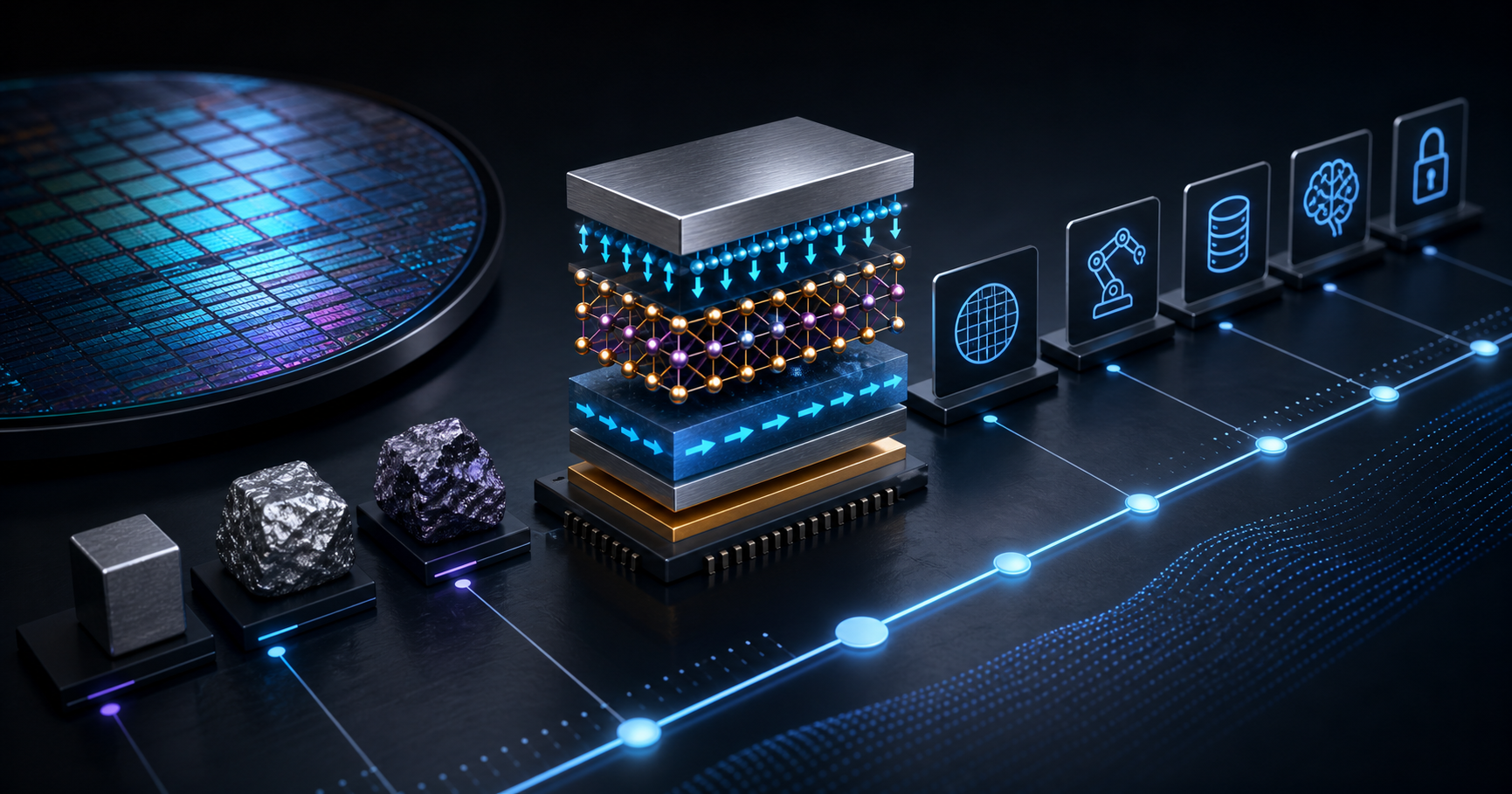
TetraMem centers its architecture on ReRAM-based analog in-memory computing. Its public roadmap describes the MLX200 SDK and analog IMC SoC production samples in 2025, followed by MLX200 production shipments and expansion toward 12nm, 5nm, and 3nm in 2026 and beyond.
The appeal of analog IMC is physical: the memory cell’s state participates in vector-matrix multiplication, compressing data movement and multiplication at the same time. For always-on sensors, audio, and industrial equipment, it does not need to beat a cloud GPU on TOPS. The hard parts are device variation, ADC/DAC overhead, endurance, quantization, and model updates. From process development, I know that a clean circuit concept does not automatically remain clean at production yield.
EnCharge AI and Mythic: The Branches Around IMC
EnCharge AI describes charge-domain analog IMC that can be delivered as chiplets, ASICs, or PCIe cards across edge-to-cloud systems. Mythic has focused on analog matrix processing with model parameters stored in flash, targeting low-power edge AI.
Putting all four companies in one row would be misleading. d-Matrix is primarily a data-center inference story; TetraMem and Mythic lean toward power-constrained edge systems; EnCharge AI describes a path from edge to cloud. Their memory devices, precision targets, software responsibilities, and customers differ even when the acronym is the same.
The Future of IMC
I do not expect IMC to replace GPUs wholesale. I expect it to enter layers where weight reuse is high and the compute pattern is stable. Digital IMC will compete on data-center manufacturing and software compatibility; analog IMC will compete on TOPS/W and always-on operation.
4. GPU Alternatives: Groq, Cerebras, and Tenstorrent Accept Different Constraints
The GPU’s moat is not just performance. It is CUDA, libraries, developers, and model support. Startups therefore create differentiation by accepting constraints that a GPU cannot easily accept.
| Company | Product language | Specialization axis | Best fit |
|---|---|---|---|
| Groq | LPU | Static scheduling, on-chip SRAM, compiler control | Low-latency LLM inference |
| Cerebras | Wafer-Scale Engine | Treating a whole wafer as one large processor | Large-scale training and inference with enormous on-chip bandwidth |
| Tenstorrent | AI Graph Processor | Tensix cores, RISC-V, dataflow, developer openness | Training and inference teams willing to work closer to the hardware |
Groq’s LPU uses on-chip SRAM as primary weight storage and relies on a purpose-built compiler for static execution scheduling. That can make latency predictable, but it also means the system has less room to absorb operators and shapes outside its intended path.
Cerebras puts wafer-scale WSE-3 and massive on-chip memory and bandwidth at the center. Its manufacturing approach is different from simply making a conventional GPU larger: redundant cores and routing are used to route around defects. Tenstorrent brings RISC-V control processors, Tensix cores, and a developer-facing software stack closer to the hardware.
The industry problem here is who pays the cost of software migration. A startup can be faster than a GPU in a selected workload and still fail to enter a rack if the customer’s models, quantization, communication, monitoring, and failure recovery do not work. My hypothesis is that the winner will not be the chip with the highest isolated number, but the company whose compiler and runtime keep pace with model change.
5. Edge NPUs and AIPUs: Axelera AI and Hailo Operate in a Different Economy
At the edge, “tokens per second” alone is not a useful decision metric.
Axelera AI’s Metis AIPU is presented in the company’s specifications as delivering 214 TOPS in a 4–8W power envelope. Europa extends the portfolio to 629 TOPS for heavier edge and enterprise use while keeping the Voyager SDK across the range. Hailo announced general availability of Hailo-10H in July 2025, targeting on-device LLM and VLM workloads at around a 2.5W typical power level.
The pain points are cloud bandwidth, connectivity failures, personal data, and thermal design. The answer is to keep inference local and send only the necessary information upstream. In a factory, vehicle, camera, or robot, an always-on NPU can create more product value than a GPU with a few extra points of accuracy.
Axelera AI is trying to scale one SDK from vision to language models. Hailo extends an established vision-AI developer base toward generative AI. Both are selling an accelerator that can be integrated into an existing product, not simply the strongest chip in a laboratory.
The future is not only smaller NPUs. Sensors, preprocessing, NPU, local memory, security, and wireless connectivity will increasingly be combined into one SoC, coordinated with DPU and GPU resources in the cloud. Treating edge and data-center semiconductors as separate markets can hide this connection.
6. Common Direction: From Chips to Heterogeneous Computing
Once these companies are placed on one map, the future AI server looks less like “GPU or another chip” and more like a stack of specialized layers.
| Layer | Role | Representative design themes |
|---|---|---|
| Model compute | Matrix operations, attention, convolution | GPU, LPU, AIPU, IMC |
| Weights and cache | Capacity, bandwidth, reuse | SRAM, HBM, LPDDR, ReRAM, CXL memory |
| Data path | Networking, storage, RDMA | DPU, SuperNIC, memory fabric |
| Software | Compilation, quantization, placement, observability | SDK, runtime, model optimization, orchestration |
Three directions follow.
First, memory hierarchy will be redesigned. d-Matrix and TetraMem’s IMC, EnCharge AI’s analog compute, and Enfabrica’s CXL memory fabric use different mechanisms, but all address the distance between arithmetic and storage.
Second, DPUs and accelerators will become more coordinated. Instead of a DPU merely moving data and an LPU or GPU merely computing, KV cache, storage, encryption, network scheduling, and model execution will become one inference pipeline.
Third, software portability becomes more important as specialized silicon proliferates. Connecting PyTorch, ONNX, vLLM, proprietary compilers, and quantization tools is not a secondary task. The more differentiated the hardware, the more likely the SDK becomes the bottleneck.
When I build a technology synergy map for an investment case, I do not put a company in a box based only on the chip label. I also record how quickly it can enter an existing rack, which software can be reused, and where the system can fall back when the accelerator fails. In AI semiconductors, operational reversibility is almost as important as architectural differentiation.
7. Gotchas: Do Not Overread TOPS or “X Times Faster Than GPU”
The easiest way to make an AI-chip article wrong is to treat numbers from different workloads as if they were the same measurement.
- TOPS is not effective throughput: Precision, batch size, sequence length, sparsity, and memory movement must be aligned.
- Do not mix training and inference: d-Matrix and Groq lean toward low-latency inference, while Cerebras and GPUs can support broader training configurations. The winner changes with the workload.
- Check the SDK: Look for supported operators, quantization, vLLM or ONNX integration, debugging, and profiling.
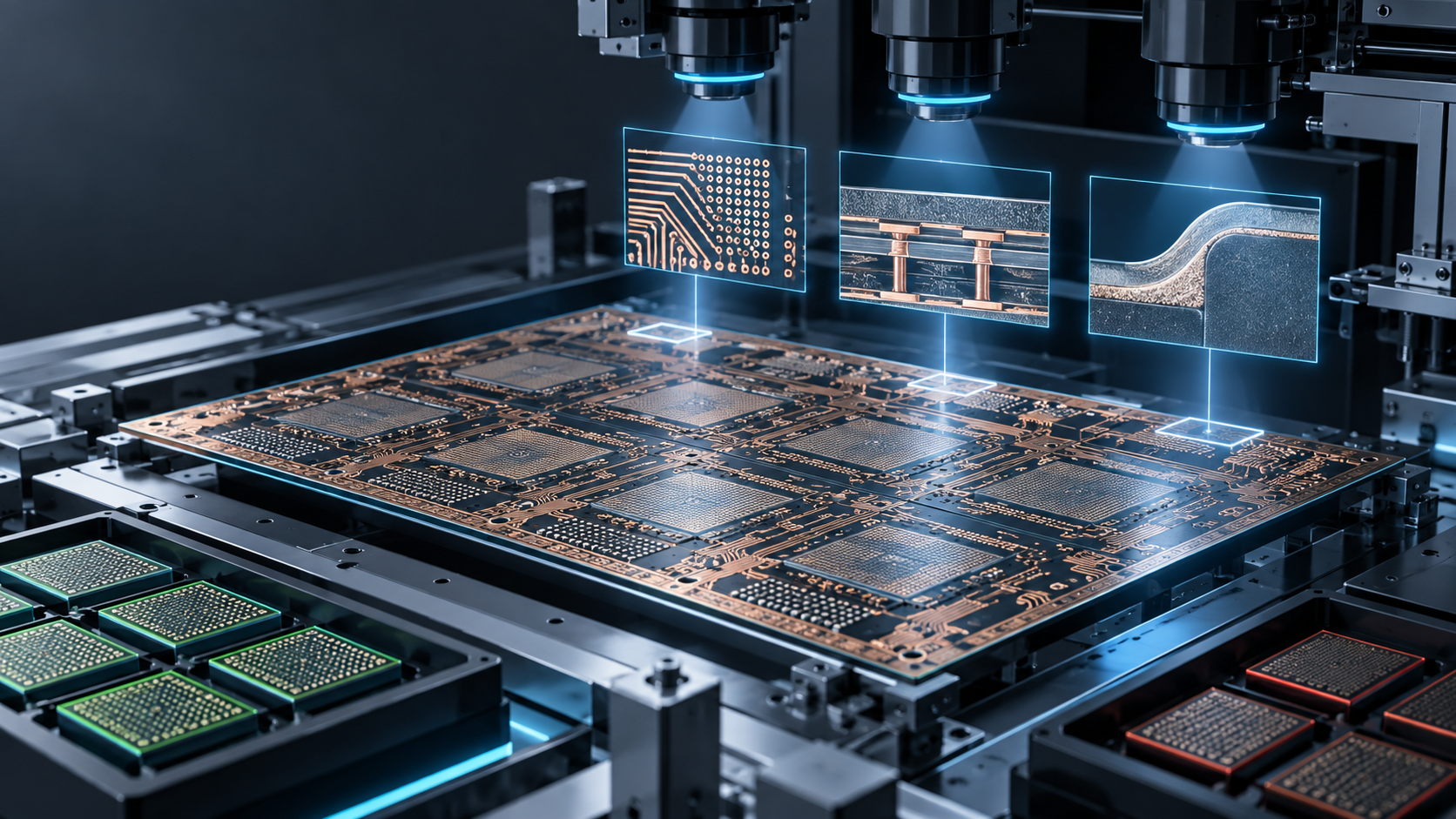
- Separate manufacturing stages: Tape-out, sample, evaluation kit, production shipment, and a live customer rack are different milestones.
- Measure TCO at rack level: Include memory, NICs, power, cooling, server configuration, operations, and cloud usage—not just chip price.
- Keep the competitor definition broad: TetraMem competes not only with another analog IMC startup, but also with low-power NPUs and model compression itself.
Official performance figures are usually best-case results. In investment committee, when I see a striking number, I look first for the conditions under which it disappears. For chips, that level of skepticism is usually appropriate.
8. Conclusion: Choose the Bottleneck Before Choosing the Winner
d-Matrix, TetraMem, and MangoBoost all fit the label “AI semiconductor startup,” but they solve different problems. d-Matrix targets memory movement in data-center inference, TetraMem targets analog in-memory computing from edge toward cloud, and MangoBoost targets the data path and utilization around GPUs.
Including their competitors produces five practical conclusions:
- GPU alternatives are decided by workload fit and software follow-through, not only by compute-core performance.
- IMC reduces data movement while accepting harder trade-offs in precision, capacity, variation, and model updates.
- DPUs may look like they are outside AI compute, but they influence effective GPU performance and TCO.
- Edge NPUs do not need to beat cloud GPUs; they solve communication, power, and privacy constraints.
- Product value appears at the system level: chip, memory, network, SDK, and operations together.
I have stopped asking which startup will defeat NVIDIA. I ask instead: which wait time disappears for this customer, and which specialized layer removes it? The companies that can answer that question with a concrete data flow are the ones most likely to create the next computing layer.
Next Issue Ideas
- Idea 1: Designing a Real AI-Chip Benchmark — Build an inference benchmark that controls model, batch, sequence length, power, and cost instead of comparing TOPS alone.
- Idea 2: Decomposing a GPU Server with CXL Memory and DPUs — Follow MangoBoost and Enfabrica’s ideas through NVMe, RDMA, and CXL data paths at implementation level.
- Idea 3: Reading Analog IMC Through Process Yield — Examine where ADC/DAC design, ReRAM variation, and endurance become productization constraints.
Related Posts
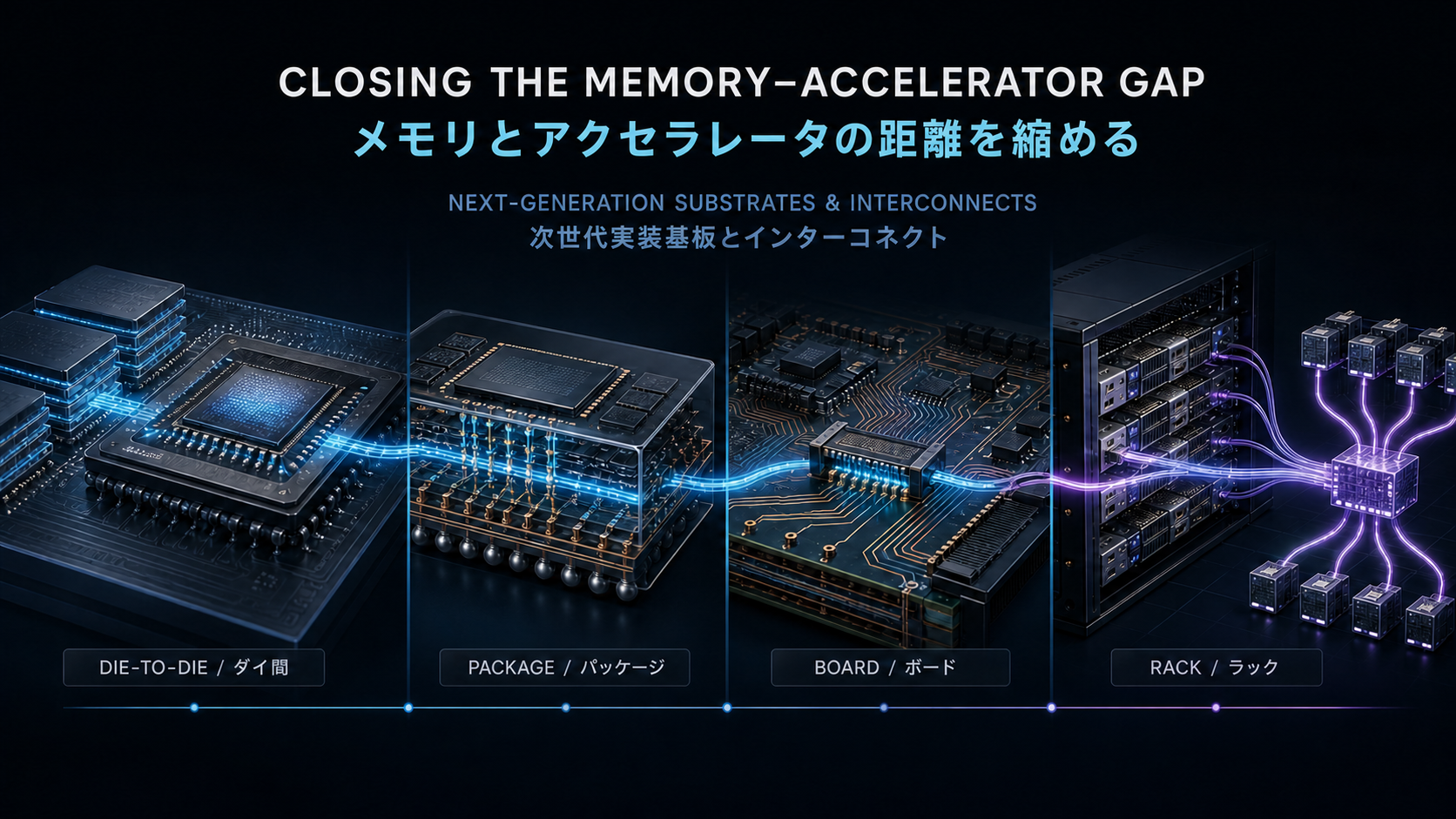
- Closing the Distance Between Memory and Accelerators: What Elephantech, Absolics, and Eliyan Reveal About the Next-Generation Substrate — The follow-up, one layer out: implementation substrates and packaging between chips.
- What Did NVIDIA × Groq Change? — Capital and ecosystem mechanics in AI infrastructure.
- Semiconductor VC Series 1 — Themes and evaluation axes for semiconductor venture investment.
- Semiconductor VC Series 2 — A follow-up comparison of semiconductor technology, markets, and exits.
References
The main technical and product claims were checked against the following official sources.
- d-Matrix: Corsair AI Inference Platform Enters Full Production
- TetraMem: About and Product Roadmap
- MangoBoost: About, DPU, and AI Infrastructure
- Enfabrica: ACF-S SuperNIC and EMFASYS
- Groq: LPU Architecture
- Axelera AI: AIPU Product Portfolio
This article is for informational purposes only and does not constitute investment advice or a recommendation to buy any specific stock, company, product, or service. Performance figures are based on company-published materials and do not guarantee cross-product comparability or future results. Generative AI was used for parts of the research, translation, and proofreading, with final structure and review by ZYL0. See the disclaimer for details.