Drone Logistics From Experiment to Everyday: Market Size and Top Companies
A CVC breakdown of the drone-logistics market growing >45% CAGR — Zipline, Wing, Matternet, and Japanese players — with short and mid-term investment scenarios.
A CVC breakdown of the drone-logistics market growing >45% CAGR — Zipline, Wing, Matternet, and Japanese players — with short and mid-term investment scenarios.


Drone Logistics: From Experiment to Everyday
I worked on EV second-life storage and semi-solid battery deals at a corporate VC, and I also designed and built our company's river-flood-detection IoT system from scratch on AWS (IoT Core, Lambda, DynamoDB, API Gateway). Both experiences hammered home the same lesson: hardware plus autonomous operations are about three times messier than pure software. That's the lens I want to apply here — not "drone specs," but unit economics, regulatory cadence, and ops-software maturity.
The Age of Aerial Delivery Has Arrived
Let me first put the picture down flat.
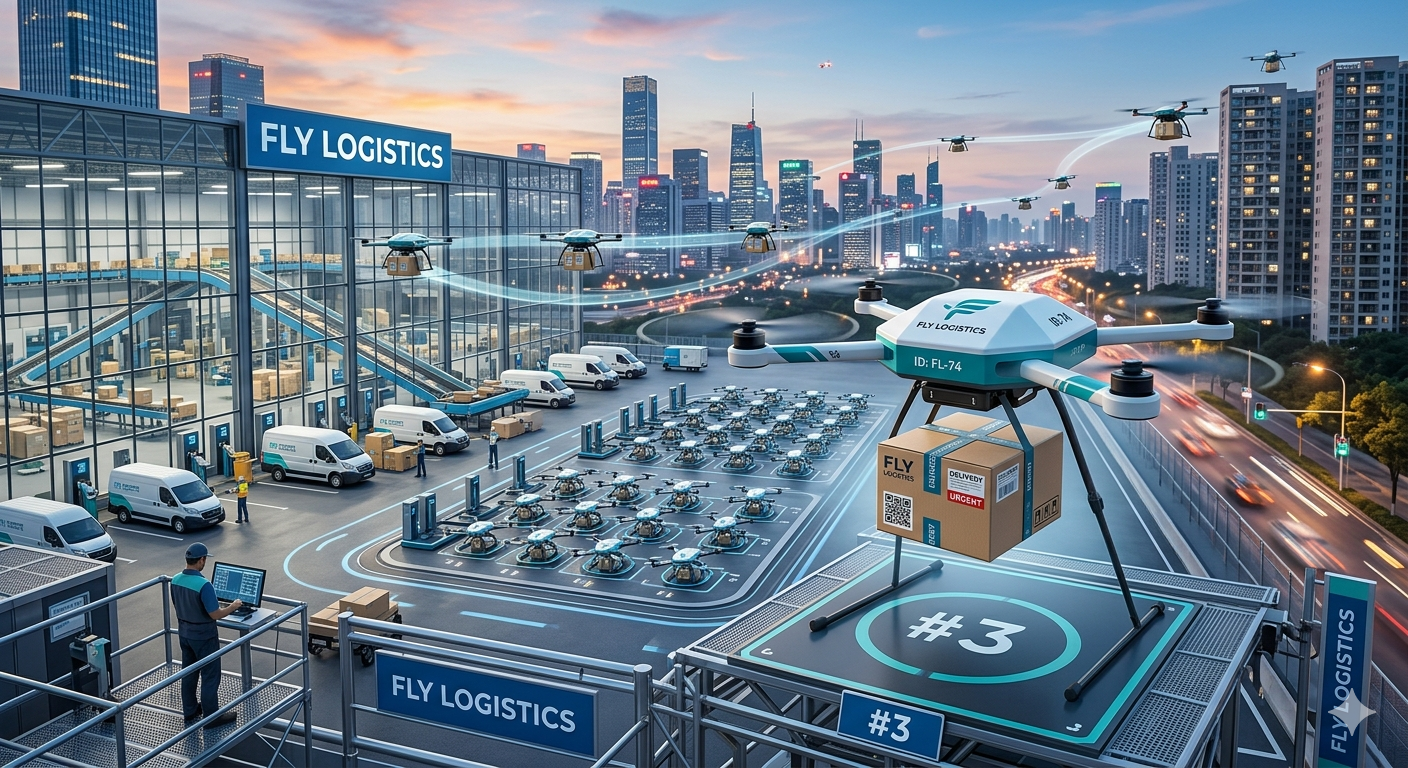
Drone delivery has finally moved beyond the experimental stage and is settling into everyday infrastructure. 2026 is the year that inflection became unmistakable. In January, Zipline — the world's largest drone delivery company — raised $800M (initial $600M + add-on $200M), reaching a $7.6B valuation. The same month, Alphabet's Wing expanded its Walmart partnership by 150 stores, with a plan to build a 270-location nationwide network by end-2027. In March, Wing announced expansion into the San Francisco Bay Area.
These aren't just press releases. To me, they're the signal that unit economics and regulatory readiness crossed their critical thresholds simultaneously. A decade of maturation collided with three structural forces — same-hour e-commerce demand, last-mile cost pressure, and gaps in healthcare access — and the result is a step change.
Zipline CEO Keller Cliffton put it bluntly: "In 2026, autonomous logistics becomes part of daily life in multiple US states." Their US delivery volumes have grown +15% week-over-week for seven straight months, so the rhetoric is grounded.
Market Size: 45–48% CAGR
Forecasts vary on definition, but they agree on one thing: annual growth above 40%.
| Research firm | 2025 estimate | 2030–35 forecast | CAGR |
|---|---|---|---|
| IMARC Group | $1.3B | $34.7B (2034) | 43.8% |
| Mordor Intelligence | $0.66B | $6.78B (2031) | 47.6% |
| Precedence Research | $2.05B | $103.7B (2035) | 48.1% |
| Future Market Insights | $2.1B | $87.6B (2035) | 45.5% |
| Grand View Research (drones) | $83.8B | $182.5B (2033) | 9.5% |
| Fortune Business Insights | $3.47B | $21.0B (2034) | 19.5% |
The spread reflects whether "drone logistics" includes hardware/software/infrastructure or only the delivery service. But all forecasts agree on a multi-tens-of-billions market by the early 2030s.
The three demand drivers
1. "Hyper-immediate" e-commerce delivery. Wing's top quartile of users orders three times a week. The actual SKUs: eggs, ground beef, tomatoes, avocados, phone chargers — everyday goods. Same-hour delivery is becoming the expectation; "within 30 minutes" is increasingly normal.
2. Structural medical-logistics demand. Drones broke into healthcare logistics first. Zipline started in Rwanda with blood products and now serves 5,000+ hospitals and clinics across five African countries. Japan ran its first Level 4 area-based pharmaceutical drone deliveries in Nagasaki in January 2026.
3. Regulatory tailwinds. The US FAA is accelerating BVLOS (beyond visual line of sight) rulemaking, and the Trump administration issued an executive order to support drone industry growth. Japan's Level 4 framework opened in December 2022, and a national UTM (drone traffic management) build-out is on track for fiscal 2026.
Segment notes
Retail and logistics is the largest application at 45.6% share, but the fastest-growing segment is medical supplies (51.4% CAGR). Asia Pacific is the fastest-growing region at 51.9% CAGR — dense urban centers plus archipelago/mountain logistics gaps make the use cases unusually rich.
Coming back to my IoT-build instinct: the real moat in drone logistics is not the airframe — it's the ops software and UTM stack. Once a fleet exceeds ~10 aircraft, software completeness becomes the rate-limiter. That matches what I learned standing up the river-flood IoT demo in six months.
Players Worth Watching
The market has moved from experimentation into scaling, and winners are starting to take shape.
Zipline International — the runaway leader
Founded 2014, HQ San Francisco. Valuation $7.6B. 2M+ deliveries; 125M+ autonomous miles flown. The crucial differentiator is vertical integration — airframe + launch/recovery + logistics software in a single stack. Platform 1 (P1) is a fixed-wing for 120-mile round trips (medical / corporate / government). Platform 2 (P2) is a residential short-haul drone, up to 8 lbs within ~10-mile radius.
Adoption acceleration is striking: the Dallas hub took 10 weeks to hit 100 deliveries/day at first; new hubs reach the same level in two days. Q3 daily targets exceeded by 30%; Q4 target hit six weeks early.
Investor base: Fidelity, Baillie Gifford, Valor Equity Partners, Tiger Global, Paradigm.
Wing Aviation (Alphabet) — platform play
Walmart partnership scaled from 2 stores in Dallas (2023) → Atlanta (2025) → +150 stores (Jan 2026). Network targets 270 stores by end-2027, addressing roughly 40M Americans (~12% of the population). Delivery volume tripled in the past 6 months. Public-market exposure flows through GOOG/GOOGL — Wing alone is hard to size, but it could become the next Waymo-style "hidden value" line item.
Matternet — medical-logistics specialist
Silicon Valley-based, FAA Part 135 certified. M2 carries up to 2 kg over 12.5 miles, with temperature-controlled containers for blood and pharmaceuticals. Total raised $74M — small enough that M&A is the more likely outcome than IPO, in my view.
Wingcopter — global VTOL maker
German VTOL fixed-wing maker. 150 km/h max speed, 100 km range with 2 kg payload. Active in Africa, Latin America, and Asia — including Okinawa blood-transport trials with Itochu and ANA Holdings. Together with Zipline, Wing, and Matternet, the top four hold ~70% market share.
Japanese players: ACSL × Aeronext — riding the "2024 problem"
ACSL (TSE: 6232) is Japan's only domestic drone maker with Level 4 type certification. Through "AirTruck" (5 kg payload, 20 km range), co-developed with Aeronext, the pair is rolling out municipal last-mile delivery. Japan's "2024 problem" — a structural truck-driver-hours shortage — adds a regulatory tailwind to the demand side.
| Company | Country | Funding/Mkt cap | Total deliveries | Strength | Watch event |
|---|---|---|---|---|---|
| Zipline | US | $7.6B (val) | 2M+ | Full-stack vertical integration | IPO candidate (2026–27) |
| Wing | US (Alphabet) | Alphabet sub | undisclosed | 270-store Walmart partnership | Bay Area expansion |
| Matternet | US | $74M raised | undisclosed | Medical + FAA Part 135 | Saudi expansion |
| Wingcopter | Germany | $125M+ raised | undisclosed | VTOL long range; emerging mkts | Mexico, Okinawa |
| ACSL | Japan | TSE 6232 | pilot stage | Domestic Level 4 cert | UTM build-out (FY2026) |
| Amazon Prime Air | US | Amazon sub | ~16,000 | 50,000 SKU integration | Operating in 5 states |
Investment Scenarios & Routes
In 2026, the addressable market is still only $1–3B — early stage. Pure-play public exposure is limited, but several routes exist.
Scenario analysis
| Scenario | 2030 market size | Development | Investment implication |
|---|---|---|---|
| Base | $8–12B | Phased BVLOS rules, urban scaling | Zipline IPO success; incumbents enter |
| Main | $15–25B | UTM completed; routine in major cities globally | Category re-rating; M&A wave |
| Upside tail | $30B+ | AI autonomy leap; full regulatory liberalization | Autonomous-mobility theme sweeps markets |
| Downside tail | <$5B | Major accident triggers regulatory freeze | Growth stalls; valuation correction |
Investment routes
Pre-IPO / venture. Zipline at $7.6B is still private, with Fidelity, Baillie Gifford, and Tiger Global anchoring crossover rounds. From watching late-stage rounds inside CVC, this is the kind of company that prices the "category leader" premium at IPO.
Alphabet (GOOG/GOOGL). Wing-related re-rating is possible if the 270-store rollout lands.
Japanese names. ACSL (6232) is the only domestic Level 4-certified maker — scarcity premium. Itochu (8001) and ANA Holdings (9202) carry indirect exposure via Wingcopter partnerships.
Why "winner-takes-all" doesn't apply here
The structural feature I'd most underline: this market is not a winner-takes-all market. Regional regulatory differences, the diversity of use cases (healthcare vs. retail vs. industrial), and the hardware-plus-software full-stack complexity make space for multiple winners. Zipline's long-haul medical, Wing's retail platform plays, Matternet's urban healthcare, ACSL's Japanese Level 4 — each can occupy a distinct, durable niche.
Watch items going forward
- Zipline IPO timing & terms — 2026 H2 to 2027 IPO window most likely
- FAA BVLOS final rule — timing and substance gate scaling
- Japan's UTM build-out — fiscal 2026 completion target
- Amazon Prime Air — only ~16,000 deliveries to date, but Amazon-network integration could flip the leaderboard quickly
- Iran war supply-chain disruption — global logistics fragility highlights drone delivery's "alternative-route" value, especially in medical and emergency supplies
Bottom line: drone logistics is a "position now" theme. Market size is still small ($1–3B), but the 45%+ CAGR runway is real. Leaders like Zipline have decisively transitioned from experimentation into scaling, and the next 2–3 years will lock in the structural winners. The window to position is open — and it won't stay open forever.
Next Issue Ideas
- Idea 1: A data-updated follow-up — Revisit the thesis with fresh numbers and separate what strengthened from what broke.
- Idea 2: A practical template edition — Turn the article into a checklist readers can reuse for investing, pricing, or technical operations.
- Idea 3: The bear-case test — Define the conditions that would invalidate this view and map the indicators to watch next.
Related Posts
- Physical AI: The Next Investment Frontier — The world-model investment angle behind the "brains" of autonomous machines, drones included
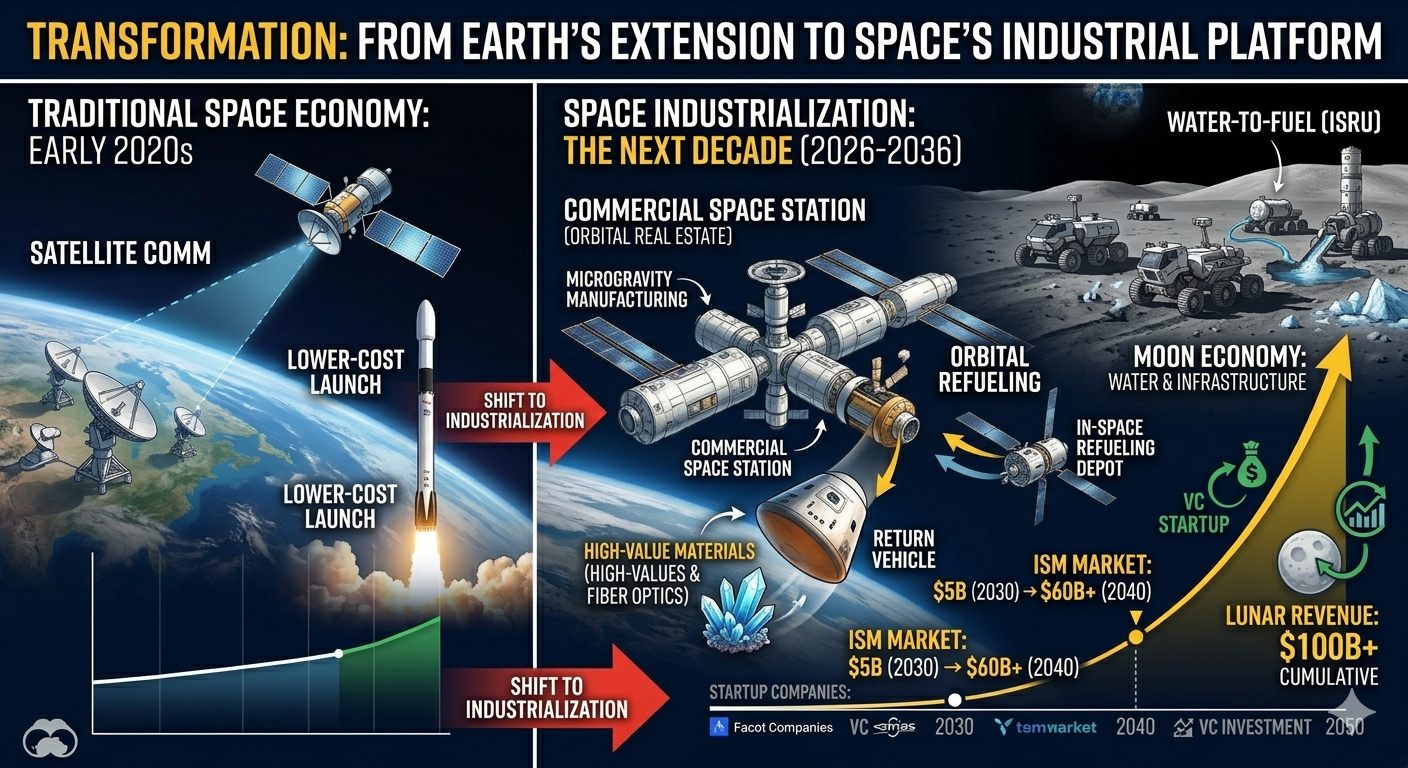
- 8 Megatrends in Space Startup Investing: From Earth Extension to Space Industrialization — A CVC view of space themes where autonomous operations are the key enabler
References
The factual and numerical assumptions in this article are anchored to primary or public materials that readers can revisit during AdSense review and future updates.
This article is for informational purposes only and does not constitute investment advice or a recommendation of any specific stock, service, or contract structure. The author may hold positions or interests related to companies or services mentioned. Generative AI was used for parts of research, translation, and proofreading, with final review by ZYL0. See the disclaimer for details.