Meta, Amazon, Google and Microsoft Q1 2026 Earnings Compared: AI Payback and Valuation
Meta, Amazon, Alphabet and Microsoft side by side for Q1 2026: revenue growth, operating margin, cloud and AI metrics, 2026 capex plans and the gap to fair-value estimates — and which one is turning AI spend into returns most efficiently.

Meta, Amazon, Alphabet and Microsoft side by side for Q1 2026: revenue growth, operating margin, cloud and AI metrics, 2026 capex plans and the gap to fair-value estimates — and which one is turning AI spend into returns most efficiently.


Decoding Big Tech Q1 2026 Earnings: A Comparative Analysis of Meta, Amazon, Google, and Microsoft
I read Big Tech earnings every quarter from a CVC seat — both for company cloud-and-AI-tool decisions and for our investment portfolio. With AI capex now north of $600B annually, the only useful frame, in my experience, is to separate "ad-AI," "cloud-AI," and "ecosystem-AI" and grade each company against the right ROI structure. Q1 2026 is the first quarter where those three different ROI structures showed up clearly in the numbers — that's the lens this piece is built around.
If you came here asking which of Google, Meta, Amazon and Microsoft is spending the most on AI, the short answer is that the headline capex figures are built on different definitions and cannot be lined up as reported. Restating the same April–June 2026 quarter onto the cash purchases-of-property-and-equipment line gives Alphabet $44.9bn, Amazon $54.2bn, Microsoft $35.8bn and Meta $30.1bn — and both Alphabet and Amazon spent more than their operating cash flow. The method and the primary sources are in the follow-up that restates all four disclosures on one definition.
Updated 20 September 2026: the figures below, including the "$600B combined" framing, are as of Q1 2026. The Q2 2026 filings moved full-year plans to $130–145bn for Meta (including principal payments on finance leases), $195–205bn for Alphabet (purchases of property and equipment), roughly $220bn for Amazon and roughly $175bn for Microsoft on a calendar-year basis. Those definitions do not match, so the totals should not simply be added.
A Synchronized Print That Marks "Year One of AI Monetization"
Let me put the quarter's structure down flat first.
In late April 2026, the US Big Tech cohort delivered Q1 2026 earnings in rapid succession. The question that weighed on the market through 2024 and 2025 — "is the massive AI capex actually converting into revenue?" — finally got a meaningful answer. Meta alone raised its 2026 capex plan to $135B; combined with Amazon, Microsoft, and Alphabet, the four-company total is expected to exceed $600B in 2026. Quite literally, a scale of investment without precedent.
This quarter, the answer came back in concrete form. Google Cloud is now generating Gemini API revenue at roughly a $150B annual run-rate. Microsoft's AI business reached a $37B annual run-rate, up 123% YoY. Meta is monetizing AI in real time through higher ad conversion and longer time-on-platform. Amazon's growth re-accelerated, driven by AWS AI workloads. The answer to "can AI actually make money?" is, this quarter, clearly tilting toward yes.
But the four companies make money from AI in structurally different ways. Valuation, momentum, and risk profiles diverge meaningfully. Drawing on Morningstar analyst reports and live market data, this piece compares the four across multiple dimensions and asks where the real investment opportunity sits today.

Q1 Earnings — Side-by-Side KPIs
| Metric | Meta | Amazon | Alphabet (Google) | Microsoft |
|---|---|---|---|---|
| Revenue (YoY) | $56.0B (+33%) | $181.5B (+15%) | $110.0B (+22%) | $82.9B (+18%) |
| Operating margin | 41% (-90bp) | 13.1% (+130bp) | 34% (+220bp) | 46.3% |
| EPS | n/d | $8.47 (E/F) | n/d | $4.27 (vs $4.06 cons.) |
| Cloud / AI KPI | Ad price +12%, vol +19% | AWS +28%, $150B run-rate | Cloud +63%, $20B | Azure +40%, AI $37B run-rate |
| 2026 capex plan | $135B | $200B | Sharp increase (n/d) | $190B |
| Morningstar rating | ★★★★ Undervalued | ★★★ Near fair value | ★★★★ Undervalued | ★★★★★ Materially undervalued |
| Fair value estimate | $850 | $280 (raised from $260) | $433 (raised from $340) | $600 |
| Current price | $669 | $263 | $350 | $424 |
| Discount to FV | -21% | -6% | -19% | -29% |
Even at this level, the table makes two things intuitive: Microsoft is the most attractive on valuation, and Amazon offers the most balanced risk/reward today.
Company-by-Company Deep Dive
Meta — The Ad-AI Engine Has Arrived; Capex Becomes the Question
If I had to summarize Meta's quarter in one line: the ad-AI engine has finally come of age. Q1 revenue grew 33% YoY to $56B. Time spent on AI-recommended Reels content rose 10%, Facebook video time +8%, and Instagram conversion rate +1.6%. These are direct fingerprints of AI capex flowing into ad revenue.
The structure is ideal: AI-optimized ad algorithms are pushing both ad price (+12% YoY) and ad volume (+19%) at the same time. Morningstar's emphasis is well-placed — Meta's reach of 3.8B+ daily active users lets the scale economics of AI investment actually work. The bigger the data corpus, the better the model, the better the ad performance, the higher the ad price. A self-reinforcing flywheel.
The pushback came from capex. Guidance was raised from $125B to $135B, and the stock sold off after-hours. Reality Labs (VR/AR) continues to bleed roughly $16B+ in annual operating losses, amplifying investor concern over discipline. Morningstar held its $850 fair value, leaving the current $669 share price 21% undervalued. The fork is whether to read the post-print drawdown as excessive worry about AI capex or as a fair pricing of execution risk.
Amazon — AWS Re-accelerates; E-commerce Resilience Confirmed
Amazon's biggest surprise this quarter was the re-acceleration of AWS. AWS revenue growth hit 28% YoY, on a $150B annual run-rate. Both AI and traditional cloud workloads are showing strong demand. Every segment beat Morningstar's estimates, and Morningstar raised its fair value from $260 to $280.
AWS is only 17% of total revenue but produces the bulk of consolidated operating profit — that structural fact is unchanged. Advertising remains a high-growth, high-margin engine, and operational efficiency gains in e-commerce (robotics, multi-node optimization) flow straight to the operating margin (11.8% → 13.1%).
That said, Morningstar's call is currently "near fair value" (★★★, 3 stars). The stock has rebounded 25% over the past month, and most of the good news appears priced in. The 2026 capex plan of $200B will weigh on free cash flow for several years. For long-duration holders, AWS is still a great franchise; as a near-term entry, waiting for a pullback is the more rational stance.
Alphabet (Google) — Cloud Re-acceleration Erases the "AI Loser" Label
A year ago, the market saw Alphabet as the AI-race loser. Concern that OpenAI would erode search depressed the stock, and Morningstar held a cautious tone. This quarter changed that view at the foundation level.
Google Cloud grew 63% YoY, with revenue of $20B. Per Morningstar, Gemini API alone is at roughly a $15B annual run-rate, up sharply from $9B just one quarter earlier. Morningstar's fair value was raised from $340 to $433. The drivers behind the upgrade are growing confidence in TPU monetization (Google's custom silicon) and the accelerating commercial deployment of Gemini.
Search itself is also intact. The rollout of AI Overview and AI Mode has, so far, deepened existing-user engagement rather than leaking traffic to chatbots — search ad revenue grew 19% YoY. The biggest fear (that AI would eat search) is, for now, contradicted by the numbers.
Consolidated operating margin expanded by 220bp YoY, with margin gains in both Cloud and Services. The current $350 share price against Morningstar's $433 FV implies 19% upside — putting Alphabet alongside Meta as the most attractive valuation pair.
Microsoft — The Most Solid AI Monetization Story; The Cleanest Discount
Among the four, Microsoft was in a class of its own. Revenue grew 18% YoY to $82.9B, beating the high end of guidance, and EPS of $4.27 cleared consensus of $4.06 by a wide margin. Azure grew 40%, with AI alone at a $37B annual run-rate (+123% YoY).
The detail that stood out was Azure's capacity constraint. Demand is outrunning supply, and management explicitly said "supply will remain tight at least through end-2026." On the surface that reads negative, but the flip side is that demand is not in question — every new GW of capacity converts straight to revenue. The $190B 2026 capex plan is exactly the build-out that demand requires.
Morningstar held the $600 fair value (raising the growth outlook while trimming margin assumptions in places) and reaffirmed the ★★★★★ (5 stars) rating against the current $424 share price. That is "materially undervalued" — the strongest buy signal among the four. The combination of the OpenAI partnership, Copilot enterprise deployment (15M seats), and the bundled Azure / Microsoft 365 enterprise demand provides a diversification of growth engines that no peer matches.
Remaining Performance Obligations (RPO) ballooned 99% YoY to $627B. Roughly 25% of that is recognized as revenue within 12 months, giving Microsoft unusually high near-term revenue visibility.
AI ROI — Who Is Earning the Best Return?
The four companies' "AI capex → AI return" structures map out as follows.
| Company | Primary AI use | ROI mechanism | ROI certainty |
|---|---|---|---|
| Meta | Ad optimization & content reco | Direct lift in ad price & volume | High (already in the numbers) |
| Amazon | AWS infra & Trainium | AI cloud service revenue | High (demand-led, capacity-limited) |
| Alphabet | Google Cloud / Gemini API | Cloud revenue + search-ad defense | High (re-accelerating) |
| Microsoft | Azure AI / Copilot | Cloud revenue + license attach | Very high (Morningstar 5 stars) |
All four are converting AI capex into return. But Meta is concentrated in advertising and lacks a third-party cloud revenue stream, so AI upside is bounded by the core ad business. Microsoft, Amazon, and Alphabet operate the more general-purpose "AI infra-as-a-service" model, where adoption tailwinds compound directly into revenue.
Valuation Comparison
| Meta | Amazon | Alphabet | Microsoft | |
|---|---|---|---|---|
| Current price | $669 | $263 | $350 | $424 |
| Fair value | $850 | $280 | $433 | $600 |
| Discount to FV | -21% | -6% | -19% | -29% |
| Morningstar rating | ★★★★ | ★★★ | ★★★★ | ★★★★★ |
| Economic moat | Wide | Wide | Wide | Wide |
| Uncertainty rating | High | Medium | Medium | Medium |
| Capital allocation | Standard | Exemplary | Exemplary | Exemplary |
| Market cap | $1.70T | $2.83T | $4.23T | $3.15T |
| 2026 capex | $135B | $200B | Sharply up | $190B |
| 5-year revenue CAGR (est.) | 20% | 11% | n/d | 13% |
Scenarios — Bull, Base, Tail
| Scenario | Assumptions | Meta | Amazon | Alphabet | Microsoft |
|---|---|---|---|---|---|
| Bull | Full AI ROI, monopoly entrenchment, regulatory clearance | $1,100-1,200 | $340-360 | $550-600 | $700-750 |
| Base | Current trends continue; convergence toward FV | $800-900 | $270-300 | $410-460 | $570-630 |
| Tail | Antitrust action, AI ROI disappoints, recession | $400-500 | $180-220 | $250-300 | $360-420 |
The bull case probability is highest for Microsoft and Alphabet. Microsoft's OpenAI partnership and enterprise AI rollout are advancing on schedule. Alphabet has now demonstrated AI strength in both Cloud and Search. Meta's bull case is contingent on Reality Labs eventually monetizing and the antitrust suit resolving favorably.
The biggest tail risk sits at Meta. Depending on the FTC v. Meta ruling, structural breakup is not zero-probability — a name-specific risk that the other three do not share.
What to Watch From Here
Meta — Whether Q2 2026 sustains the ad-AI growth trajectory. Whether Reality Labs capex expands further. Antitrust case progress.
Amazon — Whether AWS holds 28%+ growth. Project Kuiper (satellite internet) execution. The margin impact of the Q2 capex ramp.
Alphabet — Whether Google Cloud sustains 60%+ growth. SEO structural shifts driven by AI Overview. Gemini API price/volume dynamics.
Microsoft — Whether Azure capacity constraints ease in H2 2026 as guided. Copilot enterprise seat trajectory. The OpenAI profit-sharing arrangement (in place through 2030).
Investment Calls
Microsoft (MSFT) — Bullish long. Morningstar 5 stars and a 29% discount to FV say the rest. The most stable enterprise-AI revenue mix, with capacity-constraint relief in H2 acting as a likely growth catalyst.
Alphabet (GOOGL) — Medium-term long. Google Cloud's explosive growth has changed the fundamentals. Despite the FV upgrade from $340 to $433, the stock still trades at a 19% discount. The "AI cannibalizes search" fear is being neutralized by this quarter's data.
Meta (META) — Short-term neutral, medium-term long. The ad-AI engine is real, but rising capex and antitrust overhang will cap the near-term upside. Watching whether sub-$600 acts as a more aggressive entry.
Amazon (AMZN) — Short-term neutral. The stock has run 25% in the past month and trades near FV. The long-run AWS thesis is unchanged, but at current levels much of the good news is in the price. Wait for a pullback.
The bigger picture: Q1 2026 marked the inflection into "year one of AI monetization." All four are turning AI capex into real returns. But weighing ROI certainty against valuation, the most attractive name today is Microsoft, followed by Alphabet. Meta and Amazon each carry name-specific considerations (antitrust, mean reversion of recent gains) that warrant patience.
Next Issue Ideas
- Idea 1: A data-updated follow-up — Revisit the thesis with fresh numbers and separate what strengthened from what broke.
- Idea 2: A practical template edition — Turn the article into a checklist readers can reuse for investing, pricing, or technical operations.
- Idea 3: The bear-case test — Define the conditions that would invalidate this view and map the indicators to watch next.
Related Posts
- Big Tech AI Capex Is Not Comparable As Reported — The follow-up that restates April–June 2026 on a cash basis and checks it against operating cash flow.
- Claude vs Gemini vs ChatGPT: A VC's Guide to the Latest Models — Claude Opus 4.7, Gemini 3.1 Pro, and GPT-5.4 Pro side-by-side in real VC workflow (April 2026).
- What Did NVIDIA × Groq ($20B) Change? Inference Consolidation, the Antitrust Tug-of-War, and Reading the Next Targets Through MangoBoost — The NVIDIA-Groq $20B deal analyzed across regulation and supply chain — contrarian screen for next acquisition targets…
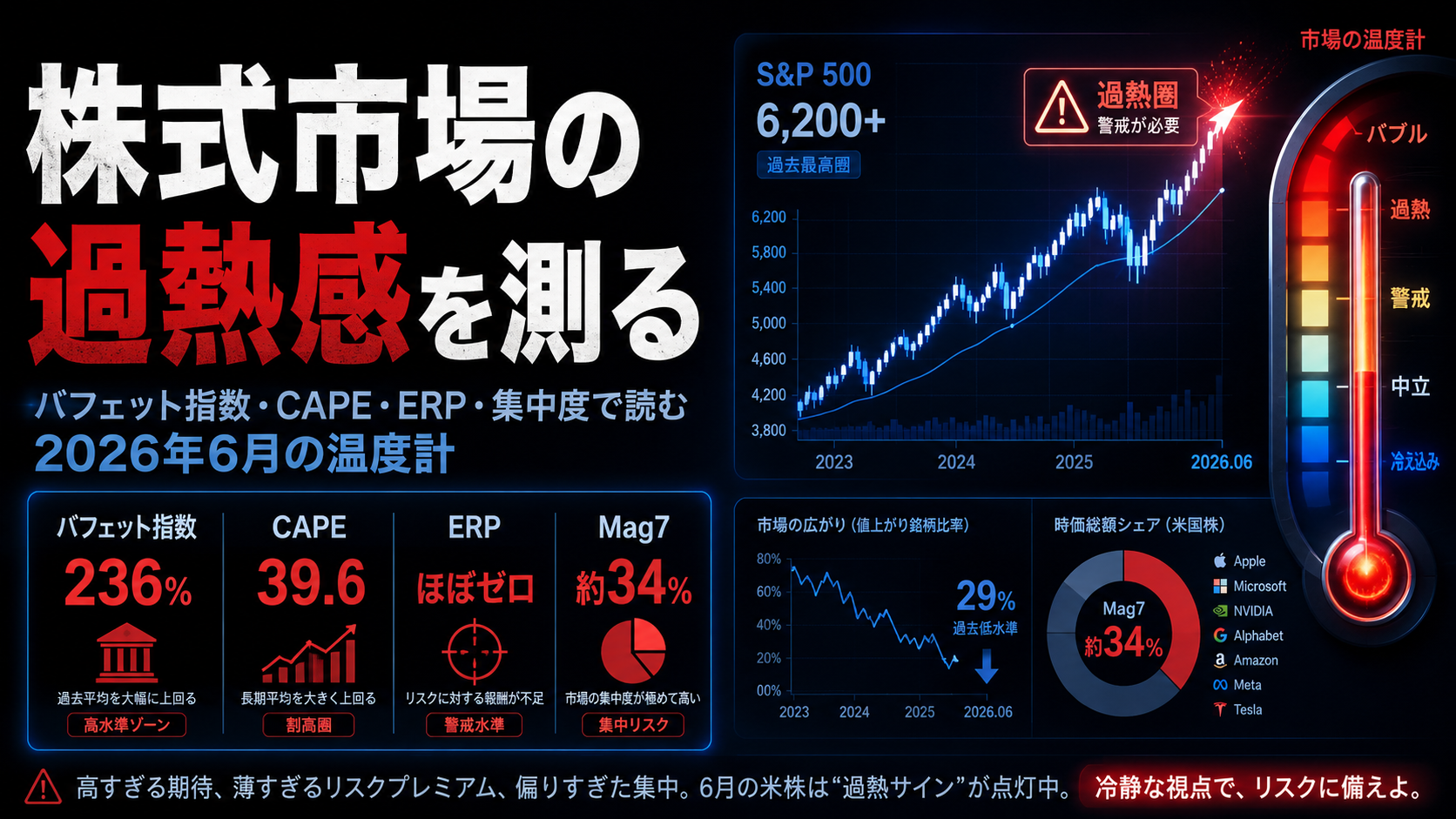
- Measuring Stock-Market Froth: Reading June 2026 Through the Buffett Indicator, CAPE, ERP, and Concentration — US equity froth in June 2026 measured across four indicators: Buffett Indicator 236%, CAPE 39.6, ERP near zero, and Ma…
References
The factual and numerical assumptions in this article are anchored to primary or public materials that readers can revisit during AdSense review and future updates.
- Microsoft investor relations
- Alphabet investor relations
- Amazon investor relations
- Meta investor relations
This article is for informational purposes only and does not constitute investment advice or a recommendation of any specific stock, service, or contract structure. The author may hold positions or interests related to companies or services mentioned. Generative AI was used for parts of research, translation, and proofreading, with final review by ZYL0. See the disclaimer for details.