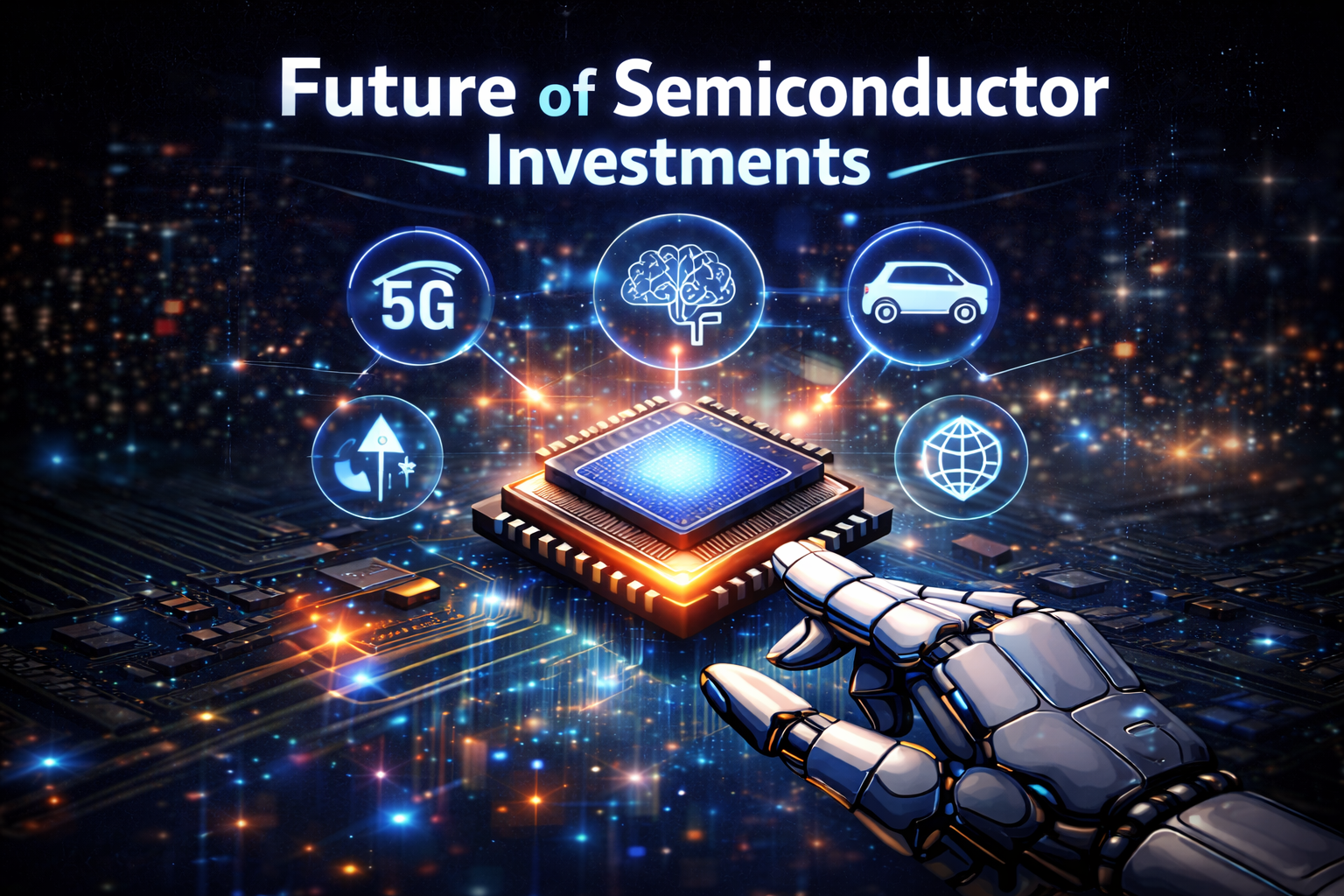
Reading the 8 AI Materials-Discovery Companies From the Outside: An MI Investment Map and Its Public Proxies
An outside-in read of eight AI materials-informatics companies — mapping the IP vs. vertical-integration split, public proxies, and overvaluation risks.
An outside-in read of eight AI materials-informatics companies — mapping the IP vs. vertical-integration split, public proxies, and overvaluation risks.


Reading the 8 AI Materials-Discovery Companies From the Outside: An MI Investment Map and Its Public Proxies
The AI-ification of materials development — materials informatics, or MI — is not abstract to me. After I moved into CVC, the investment themes I built myself were EV second-life stationary storage, semi-solid batteries, and recycling. When I executed an investment into a semi-solid battery startup, the work that ate the most time was confirming one thing: is this company's materials search really faster and cheaper than its rivals? Back then it was still researchers shuttling by hand between first-principles (DFT) calculation and bench experiments. Today we have generative AI designing crystal structures from scratch and robots synthesizing them autonomously.
This piece re-racks the eight companies running at that frontier — Cusp AI, Google DeepMind, Microsoft, Orbital Industries, Matlantis (Preferred Computational Chemistry), Citrine Informatics, Aionics, and Kebotix — not as a technology tour but through the lens of reading them from the outside as investment targets. What I want to see is not "an impressive model" but "where the moat forms, where the money comes from, and which stock lets me get exposure." As someone who came up through semiconductor process engineering, worked on automotive EEPROM volume production, and once used TCAD to pin the real root cause of a yield failure, I read this through commercialization stage and business-model divergence, not through pretty benchmark slides. This is a June 2026 snapshot; valuations and partnerships will move within six months.
Note: this piece is an outside-in read based solely on public information — company releases, product pages, papers, and press coverage.
From Screening to Inverse Design — What Actually Changed in MI
My first observation: the real change in MI is not that it got faster, it is that it changed direction.
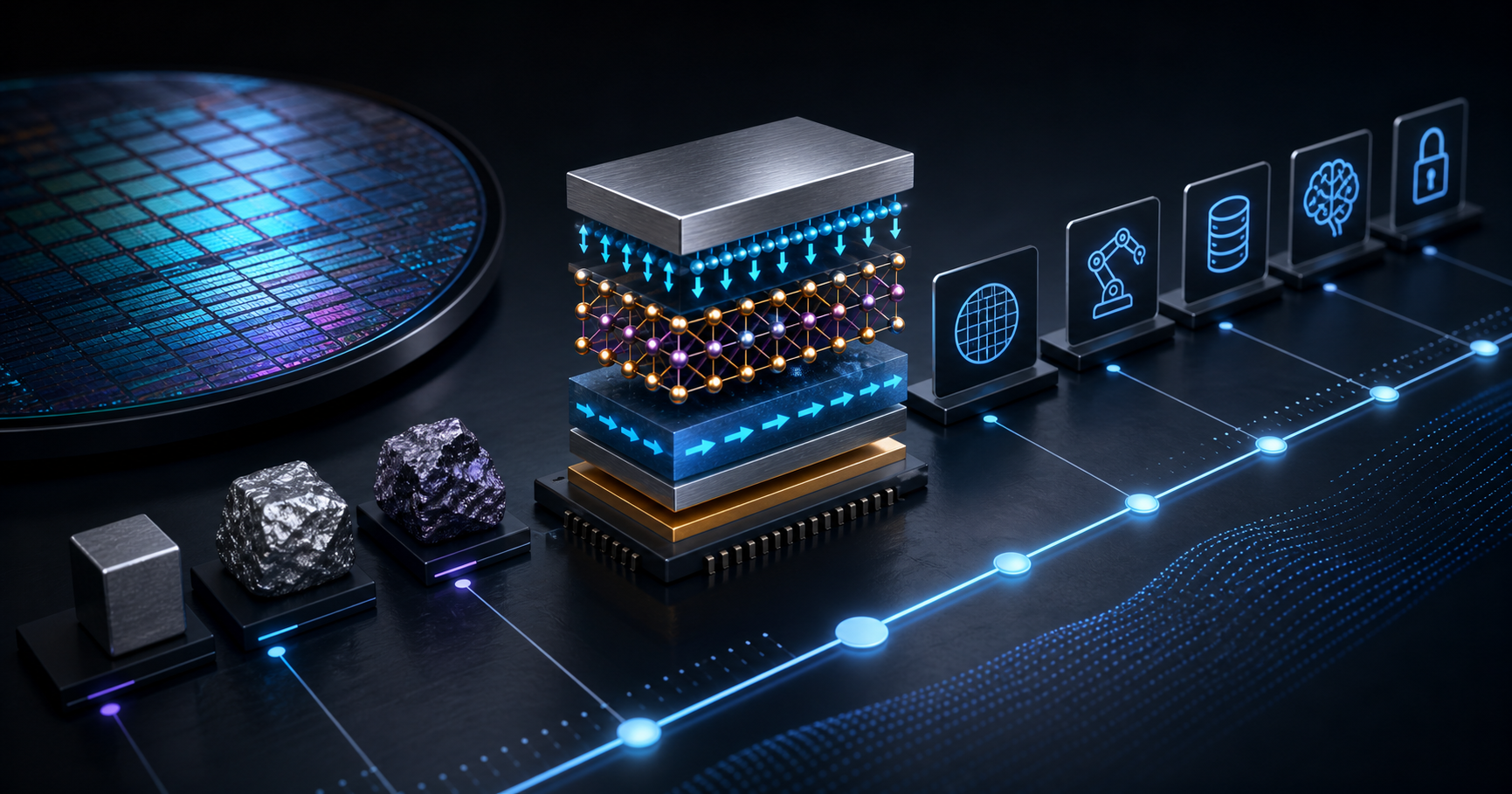
Old MI was "screening" — pulling the best-fitting candidates out of millions of known compounds. You search within the dataset you hold, so you cannot find what is not in it. What is now reaching practical use is "inverse design": starting from the property spec you want — thermal stability, CO₂ adsorption — and generating, from scratch, crystals and molecules that do not exist in nature. Cusp AI's generative platform and Microsoft's MatterGen (a diffusion model) are the archetypes, and they surface lattice arrangements no human would have guessed.
The second change is the collapse in compute cost. Matlantis's PFP, Orbital's "Orb," and Microsoft's MatterSim are, in effect, foundation models for physics simulation — emulators of quantum-chemical interatomic interactions trained on vast data. DFT runs that once occupied a supercomputer for days finish in seconds to minutes. MatterSim claims up to 500,000× over DFT; PFP claims up to 20,000,000×. Matlantis went further and integrated Anthropic's Claude Code so that a natural-language instruction alone can generate and run a simulation script — calculational chemistry that even a non-specialist can drive.
That is the technology trend. As an investor, the line I draw is: whose wallet does this technology reach, and how does it extract money? And there the landscape splits cleanly.
The First Line an Investor Draws: Three Business Models
A second observation. Line up the eight companies, and before any debate about technical merit, the monetization model splits three ways. This is where I sort first.
| Model | Companies | Source of value | Monetization speed | The CVC question |
|---|---|---|---|---|
| ① Infrastructure | Google DeepMind, Microsoft | Compute, foundation models, databases | Indirect (cloud consumption, ecosystem) | The parent is too large for direct upside |
| ② IP / platform | Cusp AI, Matlantis, Citrine, Aionics, Kebotix | Designed IP / SaaS licenses | Tied to chemical-industry adoption | Adoption-cycle length vs. valuation |
| ③ Vertical integration | Orbital Industries | Own end products (coolant, hardware) | Fast (sells direct) | Can they carry manufacturing risk? |
What bites here is the conservative adoption cycle endemic to chemicals and materials. A new material, however good, typically takes years to over a decade to clear qualification. That time axis is exactly what my semi-solid battery investment work hammered home. So model ② carries a structural risk: the technology is fast, but monetization lags.
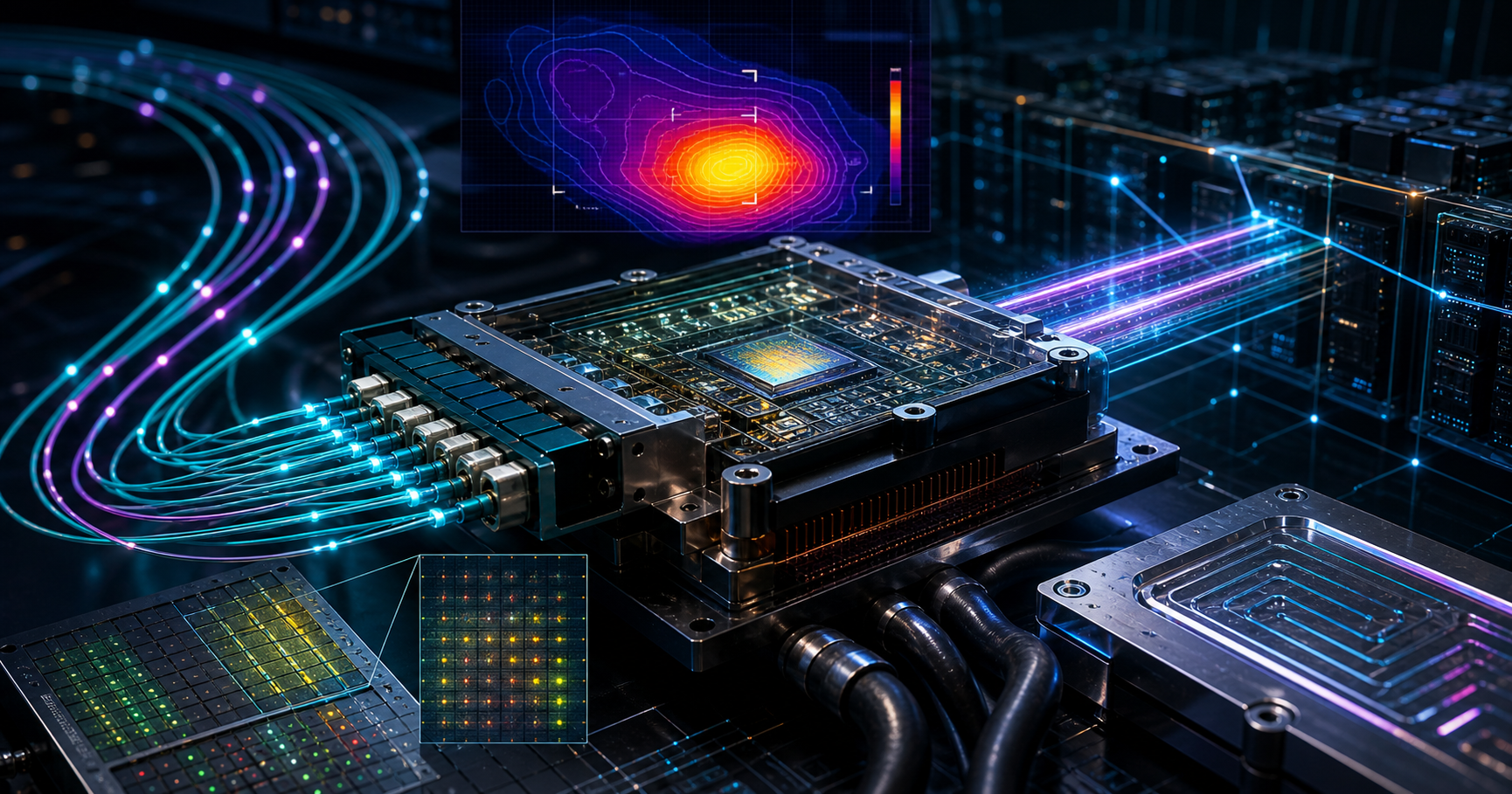
Orbital Industries chose path ③ — productize the AI-discovered material in-house and sell it directly. Against the ultra-urgent problem of data-center overheating, it supplies a package: a PFAS-free dielectric cooling fluid and its own modular cooling system. No waiting in the qualification queue; it stabs straight into the front line of demand. I read this divergence as the strategic watershed for materials startups going forward. In investment terms: for ② you press the IP moat and license-retention rate; for ③ you press manufacturing execution and inventory/yield risk — separately.
Mapping the Eight Companies
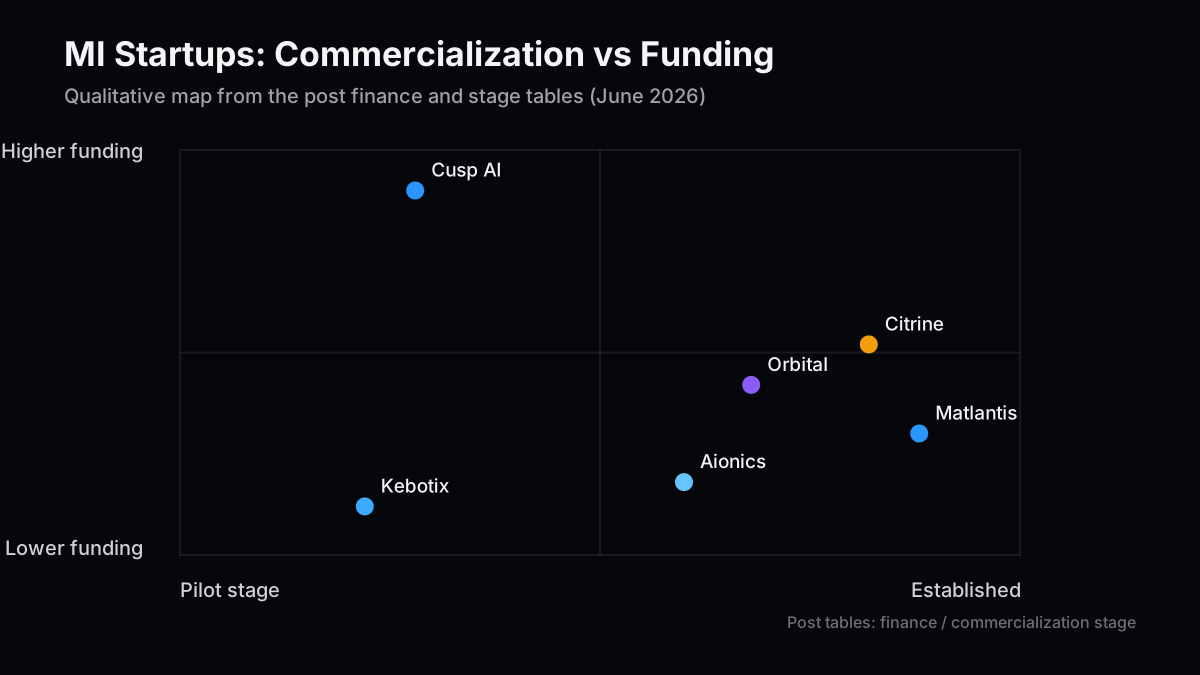
A third observation. The eight share the "AI materials" banner, but their funding stages and target materials are all over the map; one ruler will not measure them. I scan first on finance, then technology, then commercialization. Figures are as of the report (June 2026); Cusp AI's funding and valuation in particular are press-based.
Finance and Corporate
| Company | HQ | Founded | Total raised / stage | Lead investors | Founders / key people |
|---|---|---|---|---|---|
| Cusp AI | Cambridge UK / Amsterdam | 2024 | ~$220M (Series A) + reported $400M round | NEA, Temasek, NVIDIA, Samsung, Hyundai, Bezos Expeditions | C. Edwards (CEO), M. Welling |
| Google DeepMind | London | 2010 | Alphabet-owned (internal) | Alphabet | A. Merchant, E. D. Cubuk |
| Microsoft | Redmond | — | Self-funded (Azure-integrated) | Microsoft | AI for Science team |
| Orbital Industries | London / SF | 2022 | $50M (Series B) | Plural, NVIDIA (NVentures), Radical, Compound | J. Godwin (CEO), J. Gin-Pollock |
| Matlantis | Tokyo | 2021 | ¥310M capital (JV) | PFN, ENEOS, Mitsubishi Corp. | D. Okanohara (CEO), Ju Li (advisor) |
| Citrine Informatics | Redwood City | 2013 | $81.3M (Series B era) | Innovation Endeavors, others | G. Mulholland (CEO), B. Meredig (CSO) |
| Aionics | Evanston | 2020 | $7.81M (Series A) | Trousdale Ventures, UP Partners | A. Sendek (CEO), L. Pellouchoud (CTO) |
| Kebotix | Cambridge MA | 2017 | Undisclosed (Seed–Early) | WEF, MIT Tech Review, etc. | C. Kreisbeck (CCO) |
Finance alone makes Cusp AI's outlier status obvious: founded in 2024, over $220M raised, and a reported additional $400M round taking its valuation to $2.6B. Aionics, by contrast, has raised $7.81M; Kebotix is undisclosed. Funding in the same industry differs by two orders of magnitude. Any debate about investment merit is meaningless without that gap in view.
Technology and Core Models
| Company | Platform | Core model | Performance metric | Target materials |
|---|---|---|---|---|
| Cusp AI | Inverse-search materials engine | Inverse-design generative AI | Candidates from a 300T-plus space in 6 months | Porous crystals (MOF), carbon capture, PFAS removal |
| Google DeepMind | GNoME crystal DB (open) | GNN (graph neural network) | 2.2M stable crystals predicted (380k stable) | Inorganic crystals, semiconductors, superconductors |
| Microsoft | Azure Quantum Elements | MatterGen (diffusion), MatterSim | 500,000× DFT, 0–5,000 K / up to 1,000 GPa | Solid electrolytes, thermal conductors, catalysts |
| Orbital Industries | Orb simulator, LINUS | LINUS property model, autonomous design | 100k atoms on a single GPU, 31% error cut | PFAS-free coolant, dielectrics |
| Matlantis | Matlantis™ (SaaS) | PFP (universal NN potential) | 72 elements, 20,000,000× DFT | Metal catalysts, semi crystals, electrolytes, polymers |
| Citrine Informatics | Citrine Platform | Failed-data-integrating ML, no-code UI | 30+ variables optimized in parallel | Formulated chemicals, polymers, coatings, adhesives |
| Aionics | Battery-design API | Quantum sim + high-throughput ML | Fast molecular prediction of electrolyte stability | Lithium, solid-state, aviation batteries |
| Kebotix | Closed-loop AI system | Reaction-route generative deep learning | Autonomous screening of reaction intermediates | Optoelectronic materials, additives, bio-precursors |
On technology, the axis I find most decisive is "general vs. specialized." Matlantis-style generality — handling 72 elements with no task-specific training — transfers across customers and picks no niche. Aionics's battery focus or Kebotix's optoelectronics focus, conversely, cut deep with the right customer but address a narrow market. Neither is strictly better, but my read is that generality has a higher revenue ceiling, while specialization tends toward higher margin and retention.
Commercialization Stage
| Company | Stage | Validation partners | Demonstrated result |
|---|---|---|---|
| Cusp AI | Pilot / early revenue | Kemira (water treatment) | PFAS-removal MOF designed from 300T candidates in 6 months |
| Google DeepMind | Research / academic | Berkeley National Lab | 41 new materials autonomously synthesized in A-Lab |
| Microsoft | Production / enterprise | PNNL | Solid electrolyte cutting Li by 70%, proven in under 9 months |
| Orbital Industries | Commercial shipping / infra | AWS, DC operators | PFAS-free dielectric cooling fluid brought to market |
| Matlantis | Established SaaS (global) | ENEOS, Cellforce, Hyundai | 150+ deployments, methanol catalyst compressed to weeks |
| Citrine Informatics | Established SaaS (global) | Huntsman, Stepan | Flame-retardant insulation formulation dev time cut 30% |
| Aionics | API in commercial use | Cellforce, Resonac | Electrolyte-prediction API in production, expanding to aviation |
| Kebotix | Pilot complete | BP | Synthesis-route discovery for renewable-feedstock precursors |
This third table is the most eloquent for an investor. Matlantis and Citrine, at "established SaaS," already book paid-license revenue with customers scattered worldwide. Cusp AI and Kebotix are at the pilot stage, with valuation and expectation running ahead. I use the gap between commercialization stage and funding/valuation as my first lens for spotting overvaluation.
How to Read This From the Outside — Focus Points and Red Flags
A fourth observation. Reading an MI company is startlingly similar to reading a semiconductor startup: the question is not "does it work" but "does it close at volume" — meaning commercial adoption. Here is the one-pager I use.
| Evaluation axis | What to look at | Good sign | Red flag |
|---|---|---|---|
| Model nature | General vs. specialized, training dependence | Handles multicomponent systems with no retraining | Only runs on a demo-limited system |
| Quality of partners | Counterparty caliber and contract | Real co-development at Kemira / PNNL level | Logos only, stuck at MOU |
| Commercialization | Existence of paid licenses | Recurring billing, visible retention | Grants/PoC only, no revenue |
| Data assets | Proprietary and failed-experiment data | Failed experiments folded into training (Citrine-style) | Just reprocessing public databases |
| Autonomous lab | Predict → synthesize → validate loop | A-Lab / Kebotix-style autonomous synthesis | Prediction only, validation outsourced |
| IP / moat | Ownership of patents / design IP | The firm holds IP on what it designs | IP flows to the customer, no moat remains |
And the red flag I am watching most closely right now is valuation — not as theory. I have sat in an investment committee, recognized that a follow-on round's valuation was excessive, opposed it with data, and led the renegotiation. MI is precisely the setup that falls into this pattern.
| Red flag | Why it's dangerous | Question to ask |
|---|---|---|
| Pilot-stage commercialization but outlier valuation | Expectation runs ahead; dilution risk | What is the actual recurring revenue and retention? |
| Only "fastest / highest accuracy" benches | Conflates lab conditions with volume distribution | Reproducibility in the customer's production environment? |
| Partnerships are press-release based | No money is moving | The real NRE / PO / license terms? |
| A roster of giant sponsor names | Names used to inflate valuation | Each investor's actual check size and terms? |
| Ambiguous IP ownership | No moat; degrades into contract work | Who owns the patents on the designed material? |
By name: Cusp AI's technology and team are first-rate (Welling, with Hinton, LeCun, and ex-ASML van den Brink advising), and the Kemira PFAS-removal MOF designed from 300 trillion candidates is a genuine result. Even so, a $2.6B valuation in two years has drawn an overvaluation debate in the market. I press that point coldly, separate from my view of the technology, as dilution and future-round risk. A good company and a good investment are not always the same thing.
Public Proxies and the Private Watchlist
A fifth observation. Fine — the MI appeal is clear, so what can I actually buy? As an individual investor, realistically the only reach is through public proxies. Of the eight, the only pure listed names you can really invest in are DeepMind (Alphabet) and Microsoft — and both parents are far too large for MI to move the earnings needle. So instead of "buying MI directly," I hunt for the adjacent listed companies that profit when the MI flywheel spins.
| Public proxy | Ticker | MI linkage | My read |
|---|---|---|---|
| Alphabet | GOOGL | DeepMind GNoME / A-Lab | The headline name, but contribution is tiny — option value |
| Microsoft | MSFT | Azure Quantum Elements, MatterGen | Works medium-term via Azure consumption |
| NVIDIA | NVDA | NVentures (Cusp/Orbital) + compute + cooling demand | Biggest beneficiary of MI compute demand |
| Amazon | AMZN | Orbital cooling tie-up, SageMaker JumpStart | Indirect upside via DC cooling and cloud |
| ENEOS | 5020.T | Matlantis co-owner | One of the few listed windows into Matlantis |
| Mitsubishi Corp. | 8058.T | Matlantis co-owner | Same, but exposure is diluted |
| Resonac | 4004.T | Aionics tie-up + semi materials | A combined battery/semi-materials play |
The most coherent exposure, ironically, is not a company that designs materials — it is NVIDIA. MI's inverse design and foundation physics models all run on GPU compute, Orbital's coolant exists to cool those very GPUs, and NVentures itself has invested in Cusp and Orbital. The pick-and-shovel seller carries the least leaky exposure. Next is MSFT, where AQE works medium-term in the context of lifting Azure consumption. ENEOS, Mitsubishi, and Resonac are rare listed windows into Matlantis and Resonac's materials, but the parents are large and the exposure thin, so I treat them as theme insurance.
On the private side, my watchlist places the commercially proven Matlantis (along with parent PFN) and Citrine as "primary targets if a secondary or IPO appears," Orbital as "the name to watch for vertical-integration execution," and Cusp, Aionics, and Kebotix as "semi-watch, contingent on valuation and adoption."
Scenarios and the Investment Call
Finally, here is a scenario frame for how the MI theme pays off over 2026–2028 — and I tie the "models" I sorted above to the scenario where each wins.
| Scenario | Subjective probability | Story | Beneficiary model / names |
|---|---|---|---|
| Base | 50% | MI diffuses steadily at commercial scale; compute demand grows | Infrastructure (NVDA, MSFT), established SaaS (Matlantis, Citrine) |
| Bull | 20% | Inverse design + autonomous labs pull adoption forward; DCs accelerate | Vertical integration (Orbital), NVDA, AMZN |
| Bear | 20% | Chemical-industry adoption is slower than hoped; monetization slips | Only generalist SaaS survives; pure listed names (GOOGL, MSFT) |
| Tail | 10% | Some startups face down-rounds and funding strain | Thin-exposure listed proxies are relatively safe |
What works across every scenario is the infrastructure side that owns compute demand. So my investment call is explicit: near-term, I get exposure through public proxies, anchored on NVDA and MSFT. I do not buy MI itself; I ride the structure where the more MI spins, the more compute, cloud, and cooling sell.
Medium-term, I see appeal in the vertical-integration name, Orbital. A design that bypasses the chemical-industry adoption cycle to stab directly into the ultra-urgent DC-cooling demand monetizes fast, and direct backing from NVIDIA and AWS underwrites its strategic importance. But because it takes on manufacturing, inventory, and yield risk, I keep ongoing checks on execution as a condition here.
For the private pure-MI plays, my current conclusion is caution on valuation. Even with first-rate technology, for names where the gap between commercialization stage and valuation has widened — Cusp AI being the archetype — I watch coldly how investors actually get paid at the next round. Riding good technology at too high a price is the failure I most want to avoid as an investor. This is my view as of June 2026, and I will mark it to market in six months.
Next Issue Ideas
- Idea 1: The Liquid-cooling BOM Investment Map — Coolants, CDUs, and Dielectric Fluids, Component by Component — Spinning off from Orbital's dielectric coolant, decompose the AI data-center liquid-cooling bill of materials by component. A sequel to this post's "vertical integration × cooling" thread, drilling down to listed suppliers.
- Idea 2: The MI Adoption Map for Solid-State and Semi-solid Batteries — Can Aionics-style APIs Beat In-house Battery R&D? — Starting from my own semi-solid battery investment, grade MI adoption in battery-materials search maker by maker. A deep dive on the Resonac and Cellforce cases.
- Idea 3: A Sensitivity Analysis of MI Startup Valuations — Quantifying Commercialization Stage and Dilution Risk — Using Cusp AI's $2.6B as the case, quantify, contrarian-style, the fair valuation range by commercialization stage and the dilution risk of the next round.
Related Posts
- A Sensitivity Analysis of MI Startup Valuations: Quantifying Cusp AI's $2.6B by Commercialization Stage and Dilution Risk — Sensitivity analysis of the Cusp AI $2.6B valuation: ARR-multiple grids by commercialization stage and next-round dilu…
- Reading the 9 NPU / AI-Accelerator Developers From the Outside: An Edge-Inference Investment Map and Its Public Proxies — An outside-in read of nine NPU developers — the NVIDIA-Groq consolidation, memory-wall architecture splits, public proxies,…
- Spintronics Investment Roadmap 2030: Equipment, Materials, and IP Before the UTokyo Device — UTokyo's 40-picosecond non-volatile quantum switching device is exciting, but equipment, materials, inspection, and IP…
References
The factual and numerical assumptions in this article are anchored to primary or public sources that readers can revisit during review and future updates (as of June 2026).
- Kemira × CuspAI: AI-designed materials to remove PFAS from drinking water
- Financial Times: Jeff Bezos backs UK start-up CuspAI in $400mn round
- Microsoft Azure Quantum: screening 32 million candidates for a better battery
- Google DeepMind: Millions of new materials discovered with deep learning (GNoME)
- TNW: Orbital Industries raises $50M Series B for AI-designed data-centre hardware
- GlobeNewswire: Matlantis brings Claude Code into its atomistic simulation platform
This article is for informational purposes only and does not constitute investment advice or a recommendation of any specific stock, service, or contract structure. The author may hold positions or interests related to companies or services mentioned. Generative AI was used for parts of research, translation, and proofreading, with final review by ZYL0. See the disclaimer for details.