8 Megatrends in Space Startup Investing: From Earth Extension to Space Industrialization
Eight structural trends emerging from space-focused VC deal patterns: lunar economy, in-orbit manufacturing, on-orbit servicing, reentry tech — the themes and opportunities defining the next decade, from a CVC angle.
Eight structural trends emerging from space-focused VC deal patterns: lunar economy, in-orbit manufacturing, on-orbit servicing, reentry tech — the themes and opportunities defining the next decade, from a CVC angle.


8 Megatrends in Space Startup Investing
I spent part of my CVC role mapping our parent company's tech stack and our portfolio's startup technologies into a synergy map. The biggest takeaway: don't think theme-by-theme; think in clusters where one bet leverages another. So with space startups, I want to read the eight trends not as a list but as a graph of mutual dependencies.
What Space VCs Are Betting On
Let me put the picture down flat first.
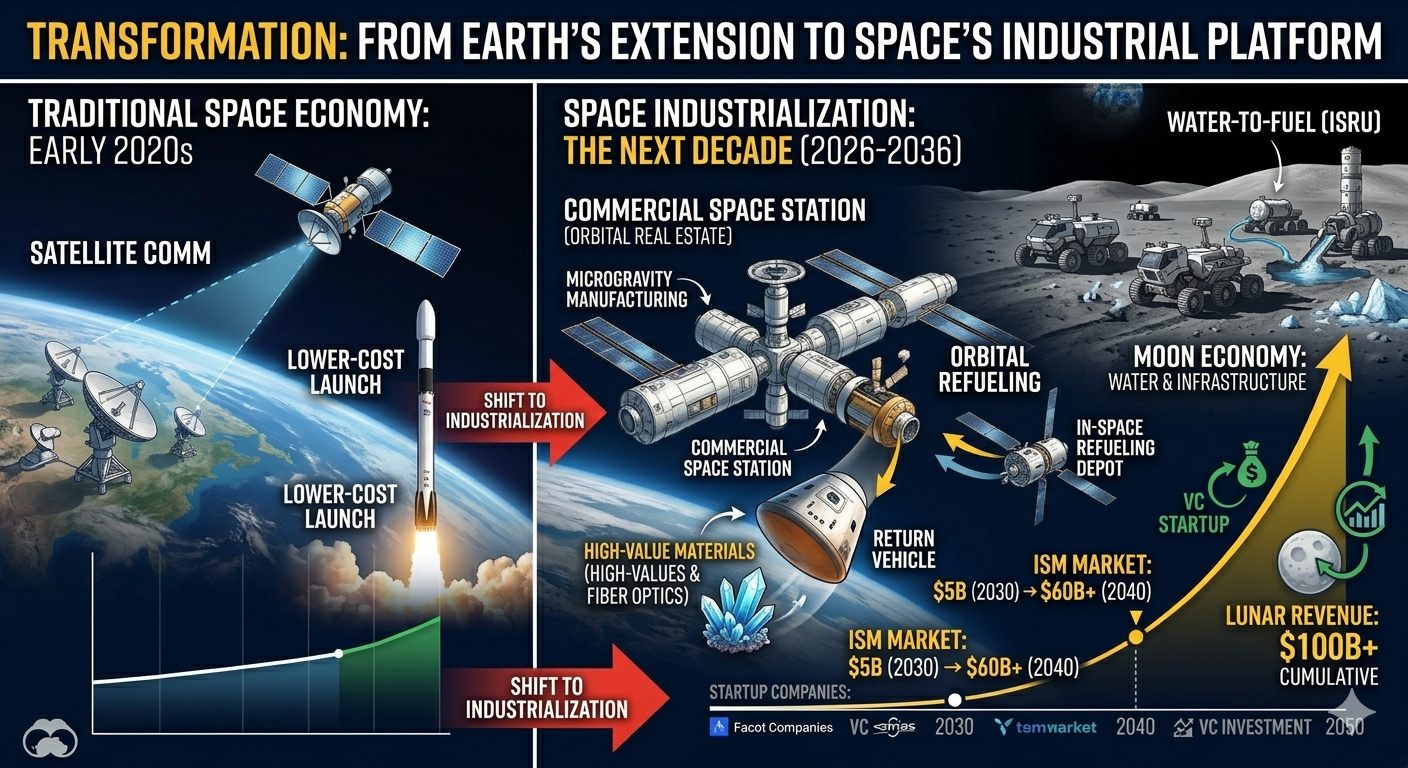
The space industry is at an inflection point. SpaceX has dramatically lowered launch costs, NASA's Artemis is preparing for crewed lunar return, and private capital is flowing in at speed. Space is shifting from an "exploration frontier" into an "industrial platform". PwC projects the total space economy at $1.7T by 2034 and $6.1T by 2064.
The growth is not in the legacy "launch + comms" stack — it's in the industrialization layer that uses space itself as a place to produce, manufacture, and source materials. Looking across space VC portfolios, eight megatrends stand out clearly.
Trend 1: Commercial Space Stations — "Orbital Real Estate" After ISS
ISS retires in the early 2030s, and the race for privately-led commercial stations is intensifying. NASA's Commercial LEO Destinations (CLD) program is funding multiple companies and openly transferring "space real estate" to the private sector.
Use cases differ structurally from ISS-era research stations. These are multipurpose orbital platforms: manufacturing, biotech, media production, space tourism. Construction needs shipyard-scale modular manufacturing, not aerospace-style serial assembly. The supply-chain shape — modules built at separate sites and integrated at the end — looks structurally familiar from other large-structure manufacturing, and that's actually one of my better personal anchors for understanding it.
Trend 2: In-Space Manufacturing — "What Can't Be Made on Earth"
ISM is $2.2B in 2025, projected at $5.2B by 2030 and $62.8–$135B by 2040 (forecasts vary), at 19–30% CAGR.
| ISM forecast | 2025 | 2030 | 2040 | CAGR |
|---|---|---|---|---|
| Allied Market Research | — | $21.3B (ISM + servicing + xport) | $135.3B | 20.3% |
| MarketsandMarkets | — | $4.6B | $62.8B | 29.7% |
| Research & Markets | $2.18B | $5.23B | — | 19.1% |
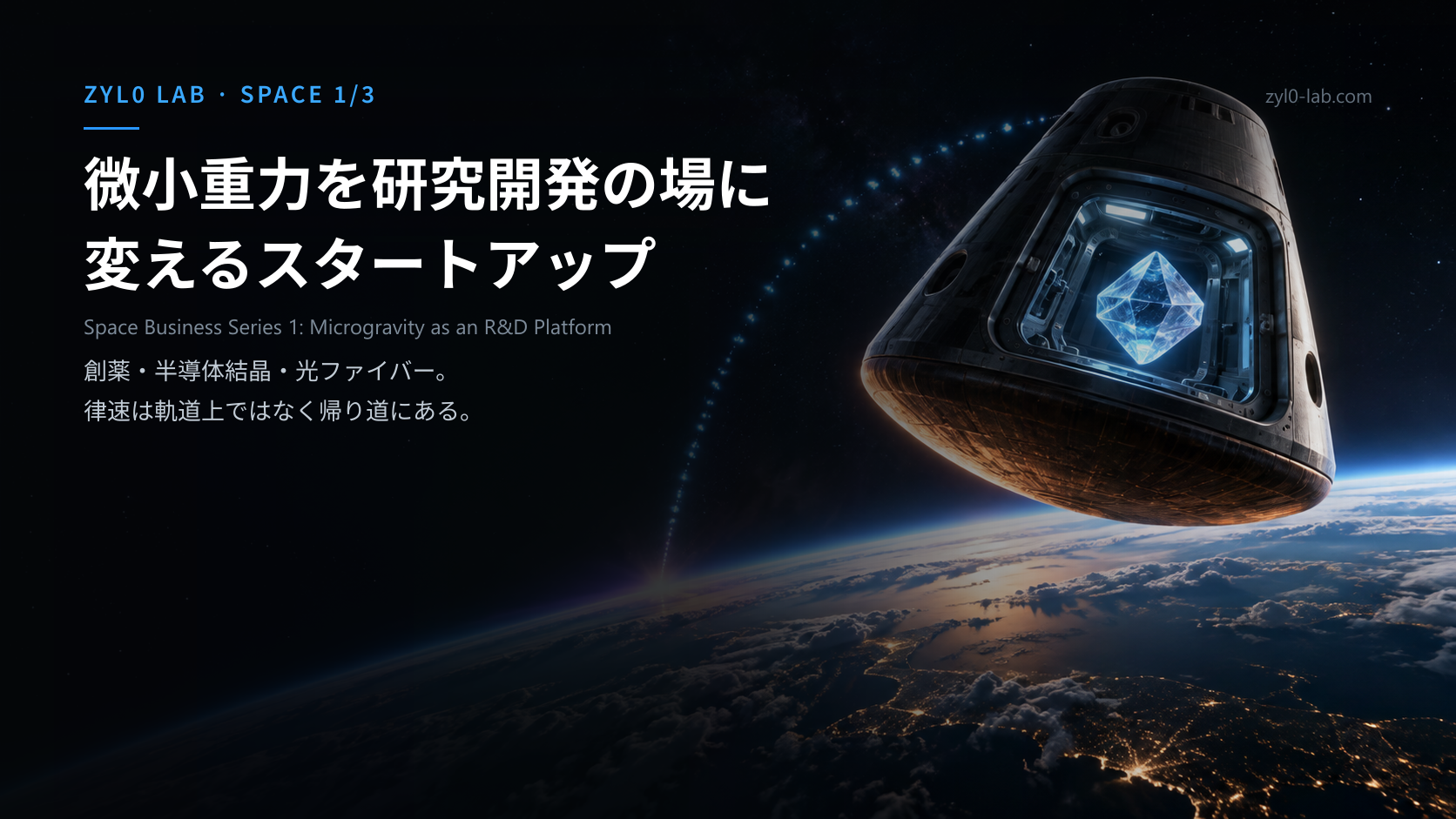
Microgravity enables products you cannot make on Earth: protein crystal growth without gravitational distortion, ultra-pure fiber optic without convection, homogeneous alloy castings. Pharmaceuticals and advanced semiconductor materials are where the "make-in-space, return-to-Earth" model is starting to pencil out economically.
The pivotal capability here is safe re-entry of high-value cargo. Combined with falling launch costs, the "space factory → Earth shipping" supply chain is finally crossing into commercial-economics territory.
Trend 3: Lunar Economy — Water, Infrastructure, Mobility
The lunar economy is no longer science fiction — that's the framing I'd most defend. PwC estimates cumulative lunar revenue of $93.9B–$127.3B from 2026–2050.
Lunar water — the "oil" of space
The single biggest driver is water ice at the lunar poles. Electrolyze it and you get hydrogen + oxygen propellant. With Earth-launch fuel costing tens of thousands per kg, on-Moon fuel production (ISRU) fundamentally changes deep-space economics. The lunar ISRU water market is forecast at $1.1B in 2024 → $6.5B in 2033 (18.7% CAGR). Artemis Accord signatories reached 61 nations by January 2026.
Lunar mobility — rovers as "space pickup trucks"
The lunar rover market grows from $3.8B in 2025 → $12.6B by 2034 (14.2% CAGR). NASA's LTVS contract commits up to $4.6B for unpressurized rovers carrying 2 astronauts 20 km per sortie over 14 days.
| Lunar economy markets | 2025 | 2030s | Notes |
|---|---|---|---|
| Lunar exploration tech | $11.4B | $18.9B (2029) | 13.4% CAGR |
| Lunar rovers | $3.8B | $12.6B (2034) | 14.2% CAGR |
| Lunar ISRU water | $1.1B | $6.5B (2033) | 18.7% CAGR |
| Space mining | $3.07B (2026) | $7.4B (2031) | 19.2% CAGR |
| PwC cumulative lunar | — | $93.9–$127.3B (2026–2050) | 5 segments |
Trend 4: On-Orbit Servicing — "The Gas Station of Space"
Satellite life is often capped by fuel depletion. Refueling on-orbit extends life by years, sometimes decades. OSAM (on-orbit servicing, assembly, and manufacturing) is expanding fast — life extension, debris removal, inspection and repair, orbit transfer. The debris-removal sub-market alone sits at ~$750M.
The business model rhymes with the oil industry. Pre-positioned propellant depots in orbit, on-demand service to client satellites — and longer-term, lunar-ISRU-to-orbit-depot value-chain integration is on the horizon.
Trend 5: Reusable Space Access — "To Space Like an Airplane"
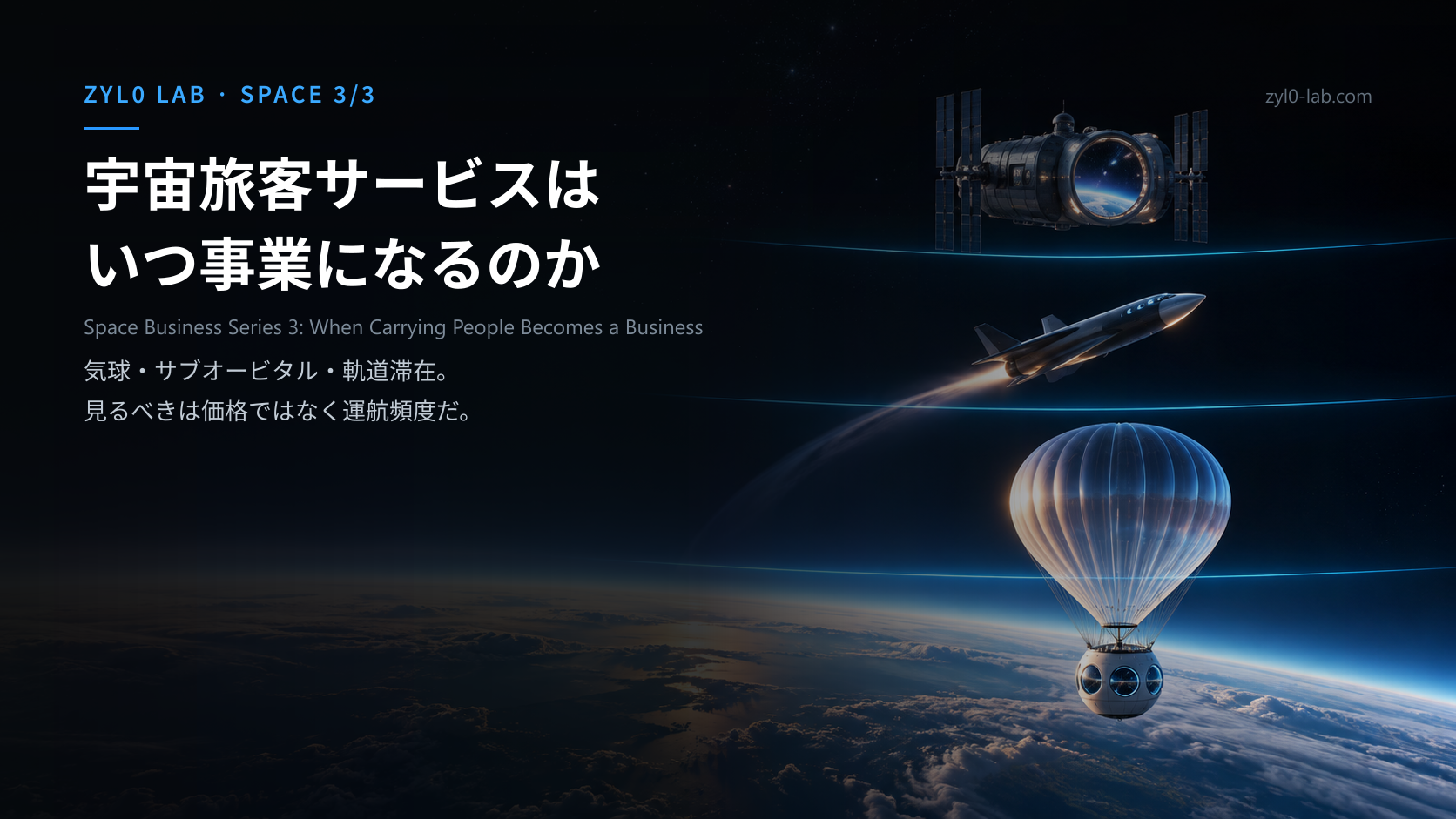
Falcon 9 and Starship cut launch cost. The next paradigm shift is horizontal-takeoff-and-landing spaceplanes: existing airport infrastructure, dramatically shorter turnaround.
If realized, space access flips from "rocket launch" to "flight booking." A critical sub-theme is purpose-built re-entry vehicles — the "last mile" of the space-manufacturing supply chain that brings high-value goods home safely.
Trend 6: Satellite IoT — Connecting Every Bluetooth Device From Space
Billions of IoT devices in places that terrestrial networks don't reach — oceans, deserts, polar regions, rural — are about to become directly addressable from satellites. Recent tech allows off-the-shelf Bluetooth chips to connect to satellites without any hardware modification.
I built a flood-detection IoT system on AWS (IoT Core, Lambda, DynamoDB, API Gateway) from scratch, and the experience that stuck with me was that coverage gaps are the actual bottleneck, not silicon. Satellite IoT closes that gap. SATCOM on-the-move is forecast at $42.8B by 2026 (19.3% CAGR), with IoT-focused LEO constellations as the fastest-growing sub-segment.
Trend 7: Space Radiation Shielding — Breaking the "Invisible Wall"
For long-duration stays on the Moon and in deep space, the biggest single technical wall is radiation. Galactic cosmic rays (GCR) and solar particle events (SPE) damage humans and electronics at levels the magnetosphere-protected LEO simply doesn't see.
Traditional shielding (metal plates, water tanks) carries an unaffordable mass penalty. Lightweight high-performance materials are the missing piece. This is a horizontal enabler — it gates the lunar economy, commercial stations, and deep space exploration simultaneously. With low penetration today, the entry timing is, in my view, particularly interesting.
Trend 8: Space Agriculture & Biotech — Building a "Space Ecosystem"
Long-duration missions need on-site production of food, medicine, and biomaterials. Controlled-environment biofarming maps directly onto stations and lunar bases — but the use cases are dual: climate-resilient vertical farming on Earth, rare-plant pharmaceutical production, specialized bioprocesses in simulated space conditions.
Microgravity biomedical research is parallel: protein crystal growth and organoid culture in space could accelerate drug development on Earth. The "from space hospital to Earth home" framing is being actively explored.
Investment Framework & Outlook
The most important section. Reading the eight trends as a list under-prices the structure — they need to be read on two axes: mutual dependency, and government anchor demand.
Positioning the 8 trends
| Trend | Market maturity | Key market size | Investment stage |
|---|---|---|---|
| Commercial space stations | Development | Post-ISS demand, $B-scale | Series A–C |
| In-space manufacturing | Demo → early commercial | $2.2B → $5.2B (2030) | Seed–Series A |
| Lunar economy | Exploration → commercial prep | $11.4B (exp tech, 2025) | Pre-seed–Series A |
| On-orbit servicing | Early commercial | $2.6B (2026) | Series A–B |
| Reusable space access | Development | Launch market $10B+ total | Seed–Series A |
| Satellite IoT | Early commercial | SATCOM total $42.8B (2026) | Post-seed–Series A |
| Space radiation shielding | Basic research → demo | Cross-cutting enabler | Seed |
| Space agriculture & biotech | Demo | Dual-use | Seed–Series A |
Scenario analysis
| Scenario | Space economy (2035) | Development | Investment implication |
|---|---|---|---|
| Base | $600–$800B | Artemis crewed lunar landing in 2027; one commercial station operational | Lunar/ISM enter their first scaling phase |
| Main | $1.0–$1.5T | Multiple commercial stations operating; lunar ISRU achieves first commercial production | OSAM and lunar infrastructure reach full monetization |
| Upside tail | $2T+ | Full Starship ops + sub-$100/kg launch; commercial lunar water mining | Space manufacturing/lunar economy reach "new internet"-scale markets |
| Downside tail | <$400B | Major Artemis delay; commercial stations cancelled; regulatory tightening | Space VC winter; thematic valuation correction |
Positioning
What unites all eight trends is government anchor demand — NASA CLPS, LTVS, CLD contracts, etc. The pattern of public procurement de-risking commercial scale-up rhymes with the early development of GPS and the internet. Pure private demand alone wouldn't carry the timeline.
The deeper structure is mutual dependency. No lunar water → no orbital fuel depot. No commercial stations → no space manufacturing scale. No re-entry tech → can't deliver what you make in space. No radiation shielding → no long-duration human presence. Investing in any one trend leverages the success of the others. From building synergy maps inside CVC, this is the kind of structure that compounds rather than substitutes.
Watch items going forward
- Artemis III (crewed lunar landing) schedule — currently 2027; the trigger that re-rates lunar startups
- Starship full operationalization — order-of-magnitude launch-cost drop is the industry-wide game changer
- FAA BVLOS and re-entry rules — commercial cargo re-entry frameworks unlock the full space-manufacturing return loop
- ISS retirement timeline — early 2030s; sets the deadline that pulls forward private investment
- China and India lunar programs — international competition expands the pie but layers in geopolitical risk
Bottom line: space is the next infrastructure investment. As the internet went from "communications infrastructure" to "economic infrastructure" in the 20th century, space is shifting from "a place to explore" to "a platform for industry" — and that move is now irreversible. The space economy, formed by these eight reinforcing megatrends, is, in my view, one of the largest sources of alpha for the next 10–20 years.
Next Issue Ideas
- Idea 1: A data-updated follow-up — Revisit the thesis with fresh numbers and separate what strengthened from what broke.
- Idea 2: A practical template edition — Turn the article into a checklist readers can reuse for investing, pricing, or technical operations.
- Idea 3: The bear-case test — Define the conditions that would invalidate this view and map the indicators to watch next.
Related Posts
- Physical AI: The Next Investment Frontier — The world-model thesis behind the autonomous remote operations space industrialization depends on
- Drone Logistics From Experiment to Everyday: Market Size and Top Companies — How autonomous logistics scales when unit economics and regulation cross their thresholds
- Wait, We Don't Actually Know How the Universe Ends? JWST and DESI Are Cracking Cosmology — 3 Wild Theories Explained — The science frontier beyond the business of space, in plain language
- Space Business Series ①: The Startups Turning Microgravity Into an R&D Platform — The follow-up: a three-part re-read that counts flights and returns instead of forecasts
References
The factual and numerical assumptions in this article are anchored to primary or public materials that readers can revisit during AdSense review and future updates.
- NASA technology transfer and commercialization resources
- ESA space economy resources
- Space Foundation space economy reports
This article is for informational purposes only and does not constitute investment advice or a recommendation of any specific stock, service, or contract structure. The author may hold positions or interests related to companies or services mentioned. Generative AI was used for parts of research, translation, and proofreading, with final review by ZYL0. See the disclaimer for details.