Claude vs Gemini vs ChatGPT: A VC's Guide to the Latest Models
Claude Opus 4.7, Gemini 3.1 Pro, and GPT-5.4 Pro side-by-side in real VC workflow (April 2026). Use-case fit plus three-way AI-lab investment scenarios and their implications for NVDA / MSFT / GOOGL.
Claude Opus 4.7, Gemini 3.1 Pro, and GPT-5.4 Pro side-by-side in real VC workflow (April 2026). Use-case fit plus three-way AI-lab investment scenarios and their implications for NVDA / MSFT / GOOGL.


Claude vs Gemini vs ChatGPT: A VC's Guide to the Latest Models
Overview
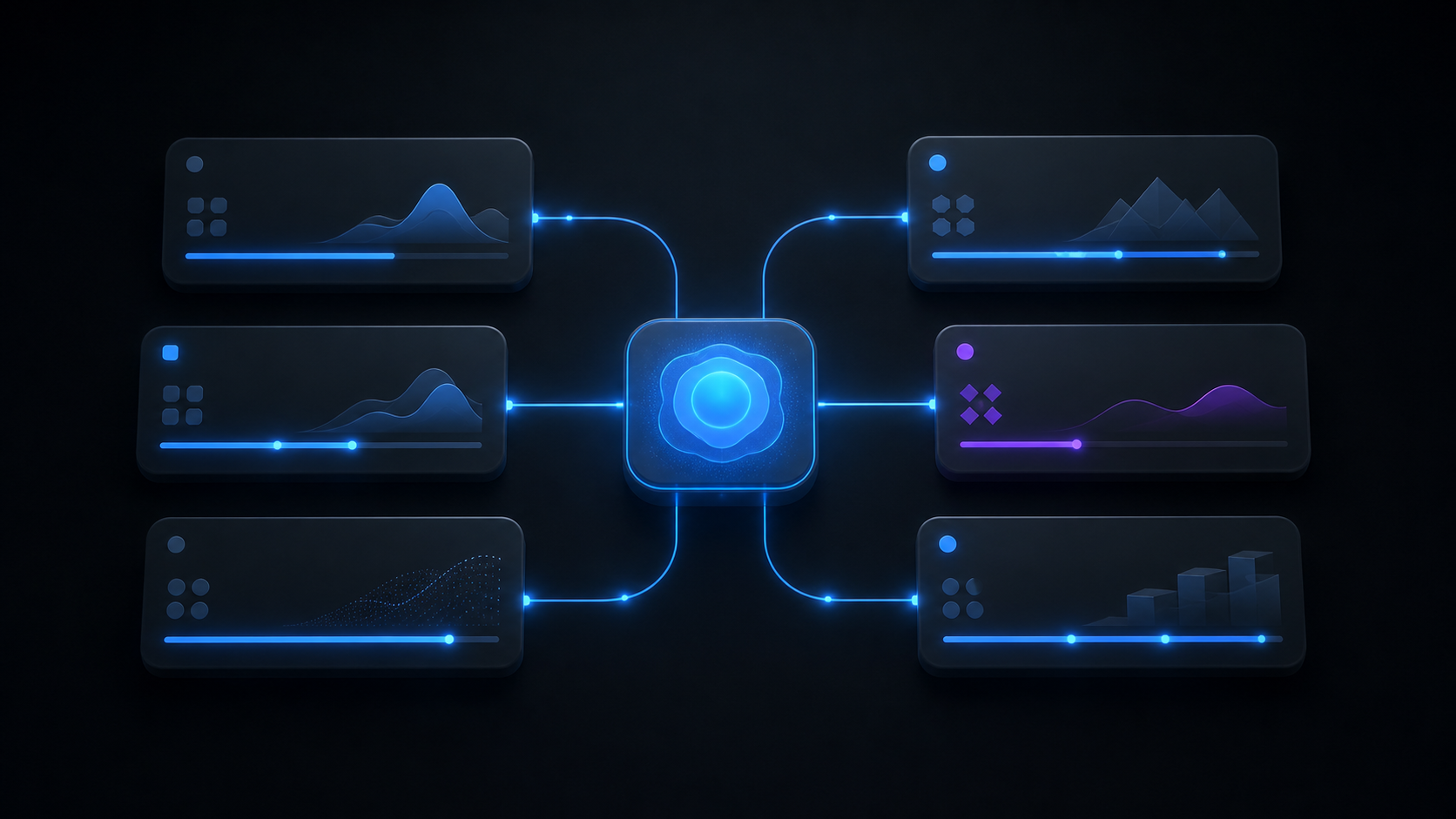
In the past two months, all three major AI labs have refreshed their flagships in rapid succession. OpenAI released GPT-5.4 (Pro / Thinking) on March 5, 2026. Anthropic shipped Claude Opus 4.7 on April 16. Google updated Gemini 3 to Gemini 3.1 Pro. These three are the current top tier.
As a VC who spends all day writing investment memos, summarizing earnings reports, and reading code with AI assistance, my honest take is: the era of "just use one model for everything" is over. Each flagship has sharpened its edges, and the differences matter in practice.
This article compares the three flagships as of April 2026, blending public benchmarks with real working-VC usage, and ends with my personal usage split.

Recent Trends
A quick look back at the last two years:
2024: GPT-4 Era Peaks, Claude Emerges
GPT-4o was effectively the default in 2024. Multimodal was polished; "just subscribe to ChatGPT Plus" was the right answer.
Then Anthropic's Claude 3.5 Sonnet arrived with coding quality that clearly exceeded GPT-4o. Cursor, Cline, Aider — the AI coding tool ecosystem standardized on Claude almost overnight.
Gemini, frankly, was underwhelming in early 2024. Gemini 1.5's 1M-token context was interesting, but response quality lagged GPT-4 and Claude.
2025: The Reasoning Era
Reasoning was the 2025 theme. OpenAI shipped o1 → o3 → o4 in rapid succession. Anthropic added "Extended Thinking" to Claude 3.7 Sonnet. Google countered with Gemini 2.5 Pro's "Deep Think."
For math, science, and coding — problems with correct answers — every flagship reached PhD-level competence.
2026: Multimodal + Agent Integration
Now the current lineup:
- OpenAI: GPT-5.4 Pro (March 5, 2026)
- Anthropic: Claude Opus 4.7 (April 16, 2026)
- Google: Gemini 3.1 Pro (with Deep Think)
The major shift: users no longer toggle "reasoning mode" — the model decides. Simple questions are fast, hard ones take longer. That's the new normal.
Another trend: computer-use agents are now practical. GPT-5.4 scored 75% on OSWorld, beating human experts (72.4%). 2026 is the year AI actually started driving browsers and PCs.
Performance Comparison
Key benchmarks and real-world feel as of April 2026:
Quick Comparison Table
| Dimension | Claude Opus 4.7 | Gemini 3.1 Pro | GPT-5.4 Pro |
|---|---|---|---|
| Release date | April 16, 2026 | Early 2026 (3.1 gen) | March 5, 2026 |
| SWE-bench Verified | 87.6% | 80.6% | ~82% |
| SWE-bench Pro | 64.3% | ~53% | ~55–58% |
| GPQA Diamond (science) | high | 94.3% | high |
| Humanity's Last Exam | — | 44.4% | — |
| ARC-AGI-2 (abstract reasoning) | — | 77.1% | 83.3% |
| BrowseComp (web ops) | — | — | 89.3% |
| OSWorld (PC ops) | — | — | 75% |
| MMMU-Pro (multimodal) | ◯ | 80.5% | ◎ |
| Context length | 200K (1M variant) | 1M | 1M–1.1M |
| Input price ($/1M tokens) | $5 | ~1/5 of Claude | $2.50 |
| Output price ($/1M tokens) | $25 | lowest tier | $15 |
| Native video/audio | △ | ◎ | ◯ |
Detail Per Axis
① Coding: Claude reclaims the crown
Opus 4.6 → 4.7 jumped SWE-bench Verified from 80.8% to 87.6%, a ~7-point gain that leapfrogs Gemini 3.1 Pro (80.6%) and GPT-5.4 (~82%). On the harder SWE-bench Pro, Opus 4.7 scores 64.3%, beating GPT-5.4 (~57.7%) and Gemini (~54.2%) by 10+ points.
CursorBench jumped 58% → 70%. In practice, "read this entire repo and point out the design flaws"-style prompts clearly land better on Claude.
② Science Reasoning: Gemini leads
GPQA Diamond 94.3% and MMMLU 92.6% put Gemini 3.1 Pro at the top of research-level knowledge and reasoning benchmarks. Google Research's foundational work shows up in rigor around symbolic math and paper comprehension.
③ Agentic / PC Control: GPT-5.4 dominates
BrowseComp 89.3% and OSWorld 75% (beats the 72.4% human expert baseline) make GPT-5.4 Pro the clear winner for "drive a browser and a PC" tasks. It also tops ARC-AGI-2 at 83.3% for abstract reasoning.
④ Long Context: Gemini's 1M wins on practicality
Claude offers a 1M context variant, but Gemini ships 1M as standard. For "dump 50 PDFs in one context" workloads, Gemini is the most cost-effective today.
⑤ Multimodal (video/audio): Gemini by design
Gemini was architected multimodal from day one — text, image, video, audio, code all unified. For summarizing a YouTube URL or turning long meeting recordings into minutes, Gemini is essentially the only choice.
⑥ Creative Writing: Claude still preferred
In blind human evaluations, Claude is picked 47% of the time vs. 29% for GPT-5.4 and 24% for Gemini. For investment memos and editorial drafts, Claude remains the safe choice.
⑦ Cost: Gemini crushes it
Gemini 3.1 Pro is roughly 1/5 of Claude Opus 4.7 and 1/4 of GPT-5.4. For batch processing and high-volume workloads, Gemini wins on pure economics.
Service Characteristics
Performance alone misses the "service + ecosystem" dimension.
Claude Opus 4.7 (Anthropic)
- Strengths: Coding/agentic focus, creative writing, Artifacts, MCP ecosystem, top-tier finance-agent performance
- Weaknesses: No image generation, weaker video/audio than Gemini, highest API price ($5/$25)
- Platforms: Claude.ai, Claude Code (CLI), API, AWS Bedrock, Google Vertex AI
Anthropic is clearly developer-and-enterprise-first. Opus 4.7 is specifically tuned to "execute instructions literally where prior models interpreted them loosely" — prompt craft now matters more. Claude Code has become my primary IDE since its 2025 launch.
Gemini 3.1 Pro (Google)
- Strengths: Google Search integration, Workspace (Gmail/Drive/Docs), native multimodal including video/audio, 1M context as standard, aggressively low pricing, strong science/math benchmarks
- Weaknesses: Coding polish still trails, less "first try" mindshare
- Platforms: gemini.google.com, AI Studio, Vertex AI, Google app integration, Gemini 3.1 Deep Think (Google AI Ultra subscribers)
Gemini's real advantage is Google ecosystem integration. Reading an entire corporate email inbox, cross-searching Drive docs — it dominates "daily work" surface area. Deep Think is a separate high-reasoning mode for science and engineering problems, switchable when you need it.
GPT-5.4 Pro (OpenAI)
- Strengths: Agentic capability (BrowseComp/OSWorld dominant), abstract reasoning (ARC-AGI-2 83.3%), plugins/GPTs ecosystem, DALL-E/Sora integration, Advanced Voice Mode, Canvas, brand scale
- Weaknesses: Long time-to-first-token (reasoning model), knowledge cutoff August 2025
- Platforms: ChatGPT (web/app), API, Microsoft Copilot, Pro/Enterprise plans only
GPT-5.4 Pro is a class apart as a computer-use agent. Beating human experts on OSWorld is symbolic — for multi-step workflows like "research in browser → update spreadsheet → post to Slack," GPT-5.4 Pro is the top candidate. Voice mode remains best-in-class.
My Personal Usage Split
Here's how I actually divide my time across all three (yes, I pay for all three — business expense).
Claude Opus 4.7 (Primary, ~50%)
Use cases: Coding, earnings-report analysis, investment memos, contract review, creative/editorial drafts
- Drafted this article in Claude
- Maintain this Nuxt 3 blog via Claude Code
- Load 100+ public PDFs into the 1M-context variant in one pass
- SWE-bench Pro 64.3% translates directly into superior large-codebase comprehension
- "Execute instructions literally" tuning fits my workflow
Gemini 3.1 Pro (Secondary, ~30%)
Use cases: Research, Google Workspace integration, video/audio, multilingual translation, high-volume batch
- Full conference recordings → key-point extraction
- Sorting mixed EN/JA/ZH pitch emails from my corporate inbox
- Latest-info research with Google Search grounding
- Absurdly cheap — my volume workhorse
- Deep Think when reading the technology of science/deep-tech startups
GPT-5.4 Pro (Secondary, ~20%)
Use cases: Web automation, image generation, voice, brainstorming, custom GPTs
- BrowseComp strength shines on "crawl 10 IR pages and extract earnings data"
- OSWorld strength means I can trust it to fill Excel/Sheets automatically
- Visuals for portfolio-company decks (DALL-E/Sora)
- Voice brainstorming while walking
- Founders still say "I tried it on ChatGPT…" — I need it for verification
My Conclusion
The "model war" is over. We're in the "specialization" phase. April 2026 boils down to this:
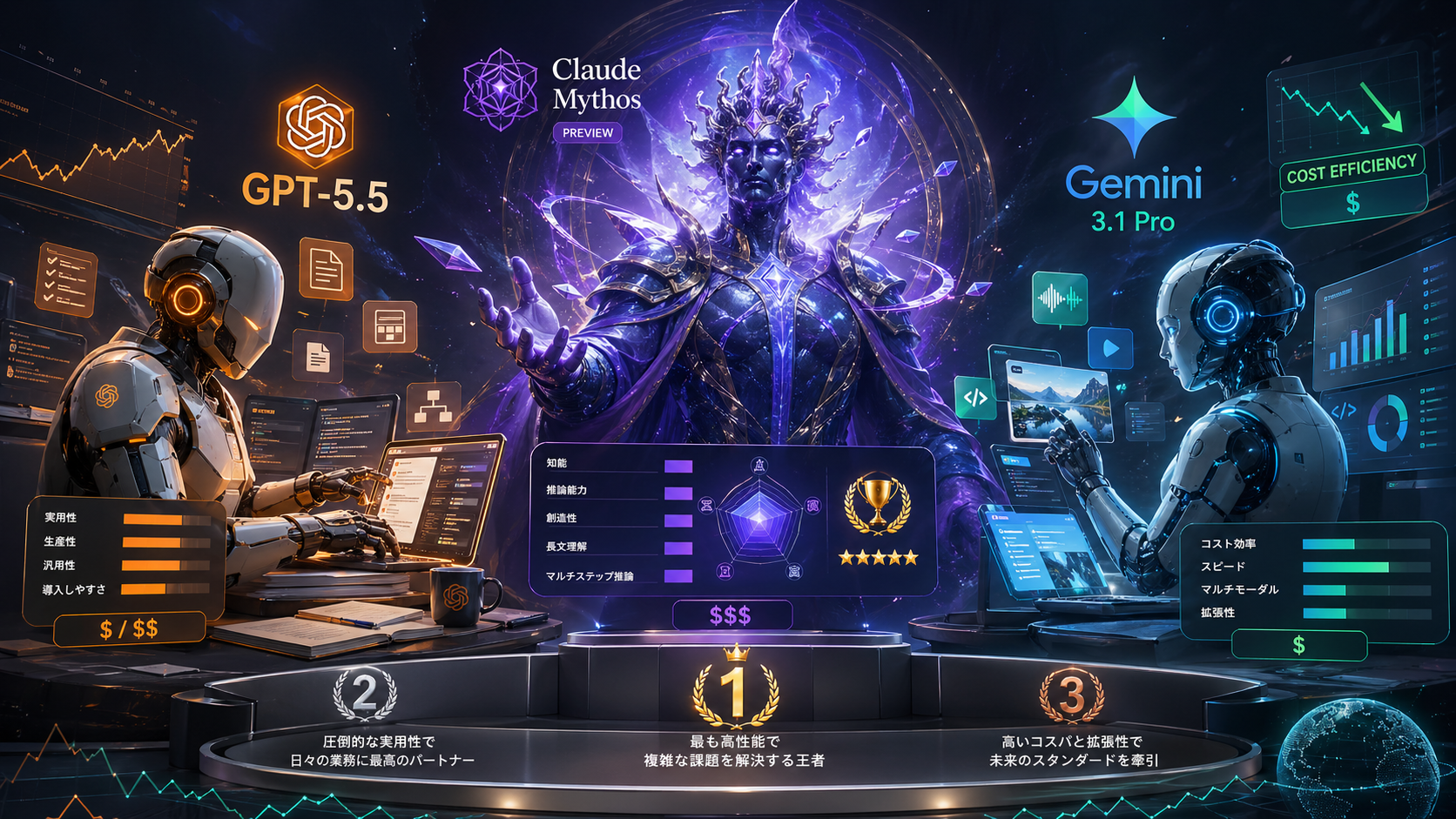
- Coding / long context / creative → Claude Opus 4.7
- Science / multimodal / volume / cost → Gemini 3.1 Pro
- Web+PC automation / abstract reasoning / ecosystem → GPT-5.4 Pro
One piece of VC advice: don't skimp on $20–30/month × 3 subscriptions. Workloads differ, and using them appropriately massively improves productivity.
Investment Scenario: The Three-Way Lab Race
This is where the piece earns its VC framing. The investor question isn't "which model wins?" — it's "how does the back-and-forth between the three labs ripple through related stocks?".
Scenario × related-name impact
| Scenario | Probability | OpenAI/MSFT | Anthropic (AMZN/GOOGL bet) | Google/GOOGL | NVDA |
|---|---|---|---|---|---|
| A. Three-way continues (base) | 50% | Neutral | Neutral | Slight upside | Core |
| B. Anthropic pulls ahead (Claude coding dominance) | 25% | Neutral | Upgrade | Neutral | Core |
| C. Google reverses (Gemini ecosystem integration wins) | 15% | Slight down | Neutral | Upgrade | Core |
| D. OpenAI agentic dominance | 10% | Upgrade | Neutral | Neutral | Core |
My current base case is A: the next ~12 months stay competitive, with leadership flipping between the three. From the CVC seat, the most useful position in this kind of regime is "benefits no matter who wins" — concretely NVDA (GPUs), ASML (lithography), TSMC (fab), ARM (IP).
Investment call & implications
For startup investors: building application-layer businesses that depend on a single model is dangerous. Just in 2026, the crown flipped from GPT-5.4 to Opus 4.7 in two months. Startups that abstract over multiple models and swap them transparently will be the ones that survive the next two crown flips.
For public markets: the more intense the competition between the three labs, the more capex flows into NVDA/ASML/TSMC. Trying to pick which lab wins is a worse risk-adjusted bet than positioning across the layer that benefits while everyone keeps running.
Watch items
- Next major versions of Claude / GPT / Gemini — does the crown keep flipping, or does someone consolidate the lead?
- NVDA earnings, datacenter segment — high beta to lab competition intensity
- OpenAI / Anthropic primary fundraising valuations — markup multiples are the temperature gauge
- Regulation (EU AI Act, US AI Bill of Rights implementation) — changes the cost structure of frontier model development
That's all for today. I'd love to hear how you split your usage.
Next Issue Ideas
- Idea 1: A data-updated follow-up — Revisit the thesis with fresh numbers and separate what strengthened from what broke.
- Idea 2: A practical template edition — Turn the article into a checklist readers can reuse for investing, pricing, or technical operations.
- Idea 3: The bear-case test — Define the conditions that would invalidate this view and map the indicators to watch next.
Related Posts
- GPT-5.5 Is Finally "AI That Works at Work" — But Mythos Is Still Far Ahead — A deep comparison of OpenAI's newly announced GPT-5.5 against Claude Mythos Preview and Gemini 3.1 Pro — strategic div…
- Decoding Big Tech Q1 2026 Earnings: A Comparative Analysis of Meta, Amazon, Google, and Microsoft — Q1 2026 earnings reveal Big Tech's AI capex showing up in the numbers.
References
The factual and numerical assumptions in this article are anchored to primary or public materials that readers can revisit during AdSense review and future updates.
This article is for informational purposes only and does not constitute investment advice or a recommendation of any specific stock, service, or contract structure. The author may hold positions or interests related to companies or services mentioned. Generative AI was used for parts of research, translation, and proofreading, with final review by ZYL0. See the disclaimer for details.