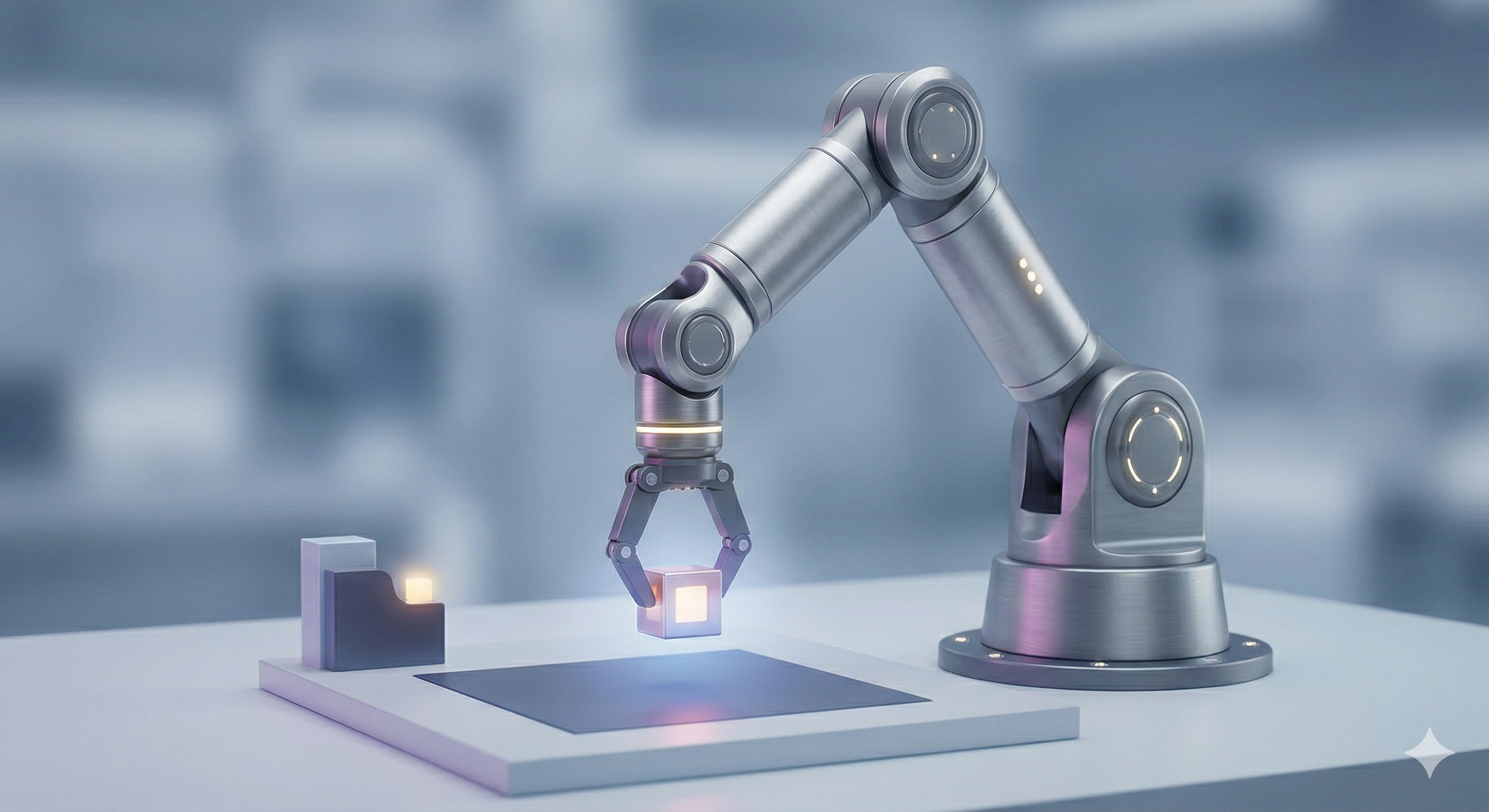
Physical AI Series ②: The Race to Build the Robot Brain
Part 2 compares how Physical Intelligence, Skild AI, Generalist, DYNA and others build robot foundation models, and how to read generalist-versus-specialist bets, deployment strategy and self-reported benchmarks.
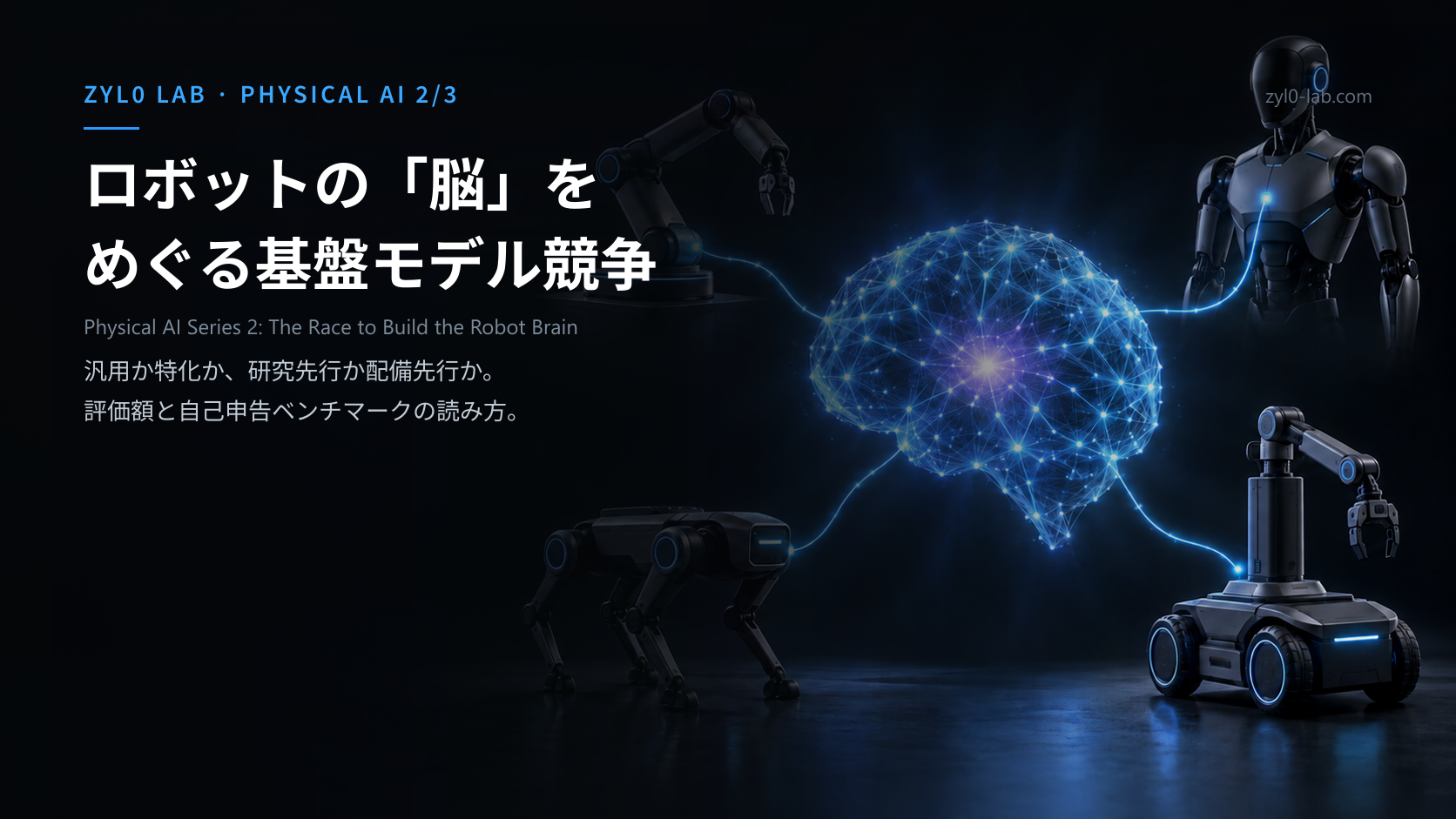
Part 2 compares how Physical Intelligence, Skild AI, Generalist, DYNA and others build robot foundation models, and how to read generalist-versus-specialist bets, deployment strategy and self-reported benchmarks.


Physical AI Series ②: The Race to Build the Robot Brain
In Part 1, I looked at the companies that collect, test and operate around robot training data. This time I turn to the receiving end: the companies building the robot brain. I expected this to be the hardest part to write, because nearly every number in this layer comes from the companies themselves.
As of October 3, 2026. Round sizes and valuations come from company announcements and press reports; unconfirmed reports are flagged. Unless stated otherwise, performance figures such as success rates come from each company's own tests.
A Market Where Valuations Run Ahead
Let me state my read up front: both the technical progress and the valuations in this layer are real, but there is still distance between them.
Sapphire Ventures' Physical AI map lists 13 companies under "Intelligence & Models": Covariant, NVIDIA, DYNA, Elorian, FieldAI, Flexion, Generalist, General Trajectory, Genesis AI, Physical Intelligence, RLWRLD, Skild AI and Synphony. Here are the latest rounds for the main ones.
| Company | Latest round | Valuation | Key investors |
|---|---|---|---|
| Skild AI | $1.4B Series C (Jan 2026) | $14B+ | Led by SoftBank; NVentures, Macquarie, Bezos, Lightspeed, Sequoia and others |
| Physical Intelligence | ~$1B Series C (2026) | ~$11.7B | Founders Fund, Lightspeed, Thrive and others (reported) |
| Generalist | $400M Series B (Jun 2026) | $2B | Led by Radical Ventures; NVentures, Bezos |
| FieldAI | $405M total (Aug 2025) | $2B | Bezos, Gates Frontier, NVentures, Khosla |
| Elorian | $55M seed (Apr 2026) | $300M | Striker, Menlo, Altimeter, NVIDIA |
| DYNA | $120M Series A (2025) | Undisclosed | CRV, First Round |
| Genesis AI | $105M seed (2025) | Undisclosed | Eclipse, Khosla, Bpifrance |
| Flexion | $50M Series A (Nov 2025) | Undisclosed | DST Global Partners, NVentures |
| RLWRLD | $26M Seed 2 (Feb 2026) | Undisclosed | Headline Asia, Z Venture Capital |
There are also reports that Generalist raised more at around a $3 billion valuation, and that Genesis AI was negotiating at about $3 billion pre-money. I could not confirm a final announcement for either as of writing.
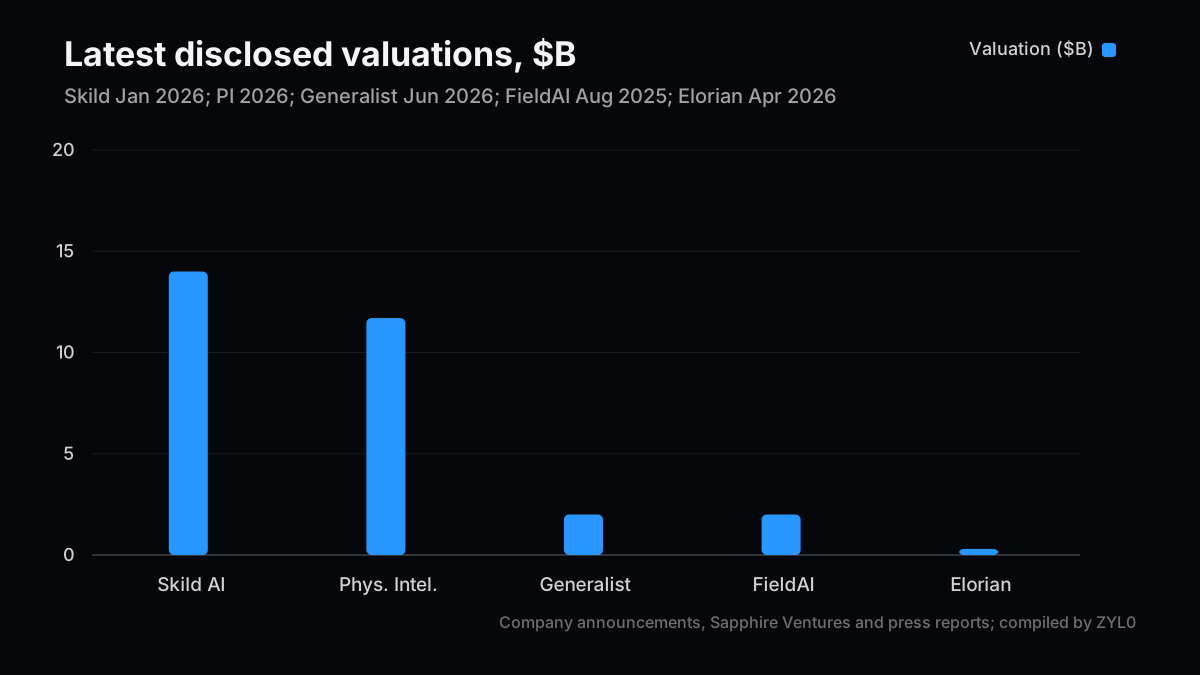
Carta's Q1 2026 report put the median Series A valuation for AI foundation model companies at $300 million. Elorian reached that level at the seed stage, before shipping a product.
It reminds me of an investment committee meeting from a few years back. I concluded that a follow-on round was priced too high, opposed it with data, and led the renegotiation. The tool I used was not a revenue multiple. It was a table matching valuation to milestones: what would the company need to prove before its next raise for this price to make sense?
Skild AI has disclosed roughly $30 million in 2025 revenue. A $14 billion valuation is about 470 times that (my calculation). On a revenue multiple, it does not add up. So the real question is what the next milestone is.
The Walls the Robot Brain Has to Clear
Writing the walls down changed my thinking a little. What is missing is less raw intelligence than reliability — and a way to measure it.
| Wall | What it means | Why it is hard | Examples of attack |
|---|---|---|---|
| Generalization | Working in rooms and with objects never seen before | Leaving the training distribution | π0.5 and π0.7 generalization; Elorian's visual reasoning |
| Different bodies | Arms, quadrupeds and humanoids have different joints | The action space differs by robot | Skild Brain; Gemini Robotics 2 |
| Reliability and long tasks | 99%+ success; tasks longer than ten minutes | A 1% failure rate is fatal on a real line | π*0.6 reinforcement learning; PI's long-term memory; GEN-1 |
| Latency and compute | Continuous control needs high-frequency inference | Bigger models are slower | Real-time action chunking; on-device versions |
| No shared yardstick | No standard benchmark; results are self-reported | Conditions never line up | NVIDIA Isaac Lab-Arena (Jan 2026) |
| Business model | Research-first or deployment-first | Hard to fund research and keep the data flywheel turning | PI's partner strategy; Skild's deployments |
Sapphire flags two debates in this layer: deployment-first versus research-first, and the lack of standard benchmarks. The first looks like a business question but is really technical too. Deploying brings data and revenue, but also exposes edge cases. Staying in research mode preserves options, but risks losing the data flywheel.

The measurement problem is easiest to see in concrete numbers.
| Company / model | Metric | Compared with | Conditions |
|---|---|---|---|
| Generalist GEN-1 (Apr 2026) | 99% average success | Same tasks where earlier models hit 64% | Company tests; ~1 hour of robot data per task |
| Generalist GEN-1 | Box assembly in 12.1 seconds | GEN-0 and π0 took about 34 seconds | Same boxes, company comparison |
| Generalist GEN-1.5 | 59% one-shot success | 83% with a few minutes of extra data | Company average across 10 tasks |
| DYNA-2 (Aug 2026) | 1,590 napkins per robot in an 18-hour shift | — | Company announcement |
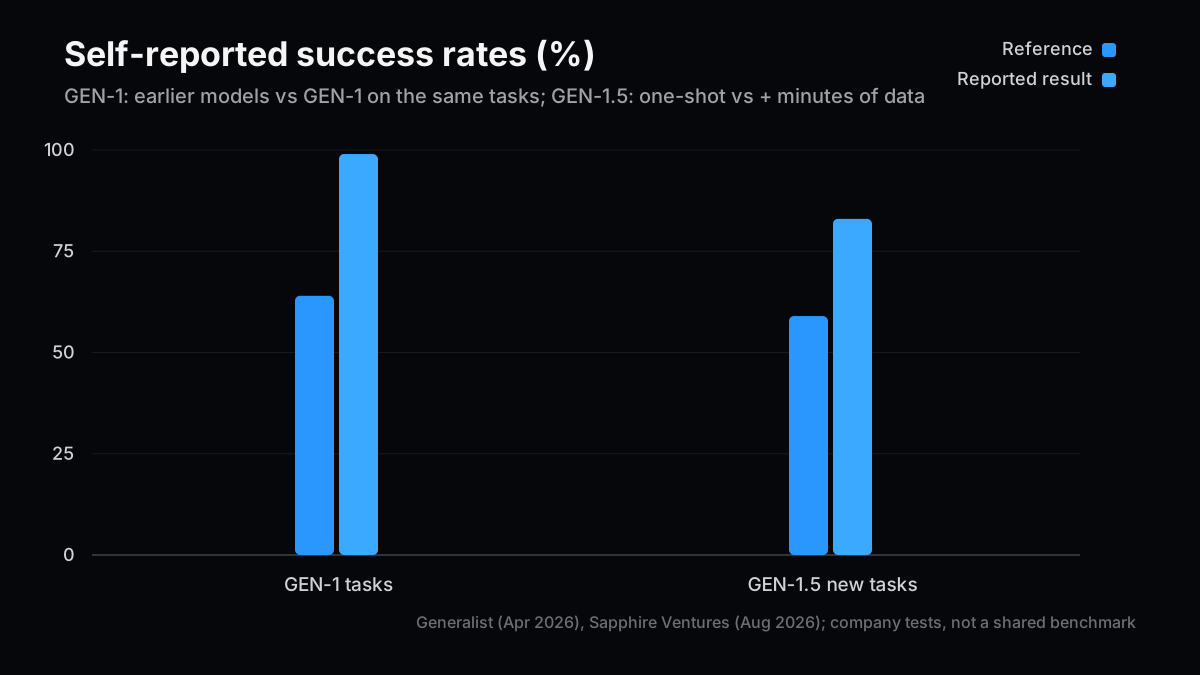
GEN-1's 99% is an impressive number. But the comparison is against "tasks where earlier models reached 64%," and the company chose the tasks. That is not a criticism; without a shared yardstick, this is the only way anyone can report progress. In my post on Big Tech capex, I refused to rank companies until their definitions matched. Success rates deserve the same treatment: no cross-company ranking until the conditions line up.
Diverging Strategies: From VLAs to World-Action Models
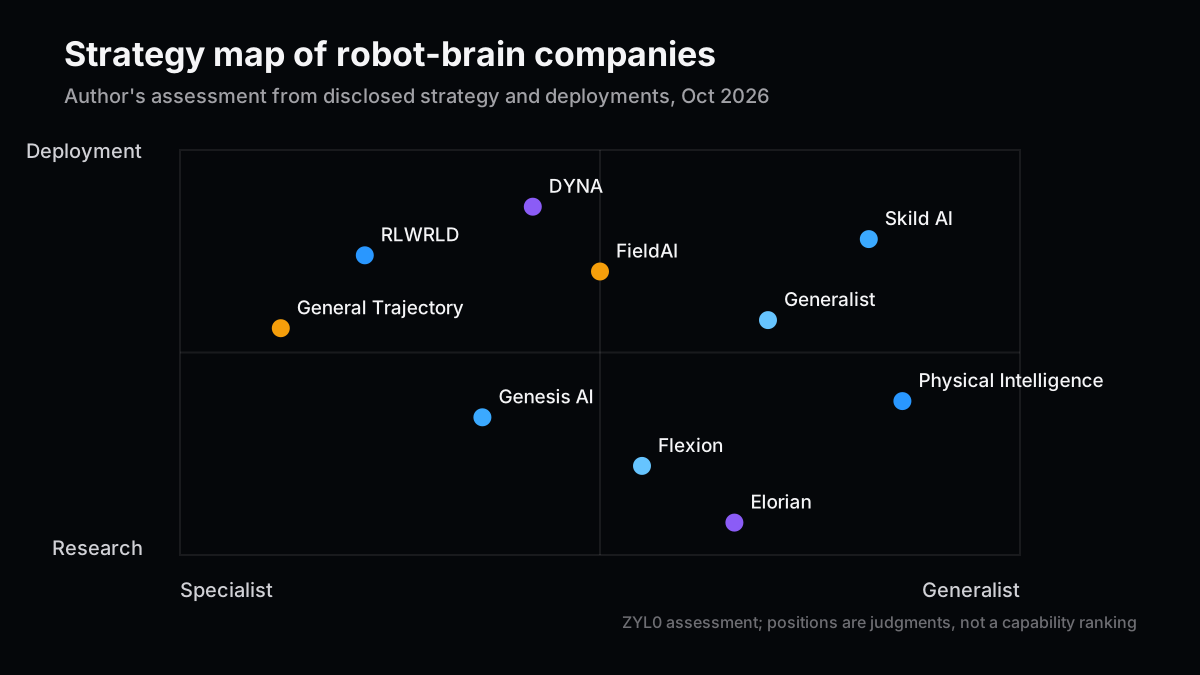
Reading the companies one by one, their strategies sort into four broad camps.
A general "intelligence layer": Physical Intelligence
Physical Intelligence (PI) wants to build for robots what APIs became for language models: a ready-made intelligence layer. It released its first generalist policy, π0, in October 2024, and published the weights for π0 and π0-FAST in February 2025. π0.5 showed generalization to unseen homes, and π*0.6 in November 2025 used reinforcement learning from real-world experience to raise success rates and throughput. π0.7, released in April 2026, emphasizes steerability and a step-change in generalization.
The post that caught my eye was "The Physical Intelligence Layer," from February 2026. In it, PI made clear it would not sell robots itself, but would validate its models in the field with deployment specialists such as Weave and Ultra. It is research-first, but it is trying to secure a data on-ramp.
Any body, paid by deployment: Skild AI
Skild AI raised $1.4 billion led by SoftBank in January 2026. Its core "Skild Brain" claims to control quadrupeds, humanoids, tabletop arms and mobile manipulators without prior knowledge of the body. Its training mixes four data sources: large-scale simulation, internet video, teleoperation and real deployments. It lists deployments across security, construction, delivery, data centers, warehouses and factory assembly, and generated about $30 million of revenue in 2025. Very few companies in this layer disclose revenue at all.
Scale through human data: Generalist and DYNA
Generalist's bet is to pretrain on human data rather than robot data. GEN-1 was pretrained on more than 500,000 hours of physical-interaction data gathered with low-cost wearable devices, and needs only about an hour of robot data per task. In June 2026 it raised a $400 million Series B led by Radical Ventures at a $2 billion valuation.
DYNA Robotics goes further. DYNA-2, announced in August 2026, is a "world-action model" trained solely on more than a million hours of human first-person video. Its predecessor, DYNA-1, was a VLA that mapped vision and language directly to action. DYNA-2 predicts future video frames from past ones, estimating consequences before it moves. The company has announced a rollout with the restaurant chain Din Tai Fung.
This shift from VLAs to world-action models is not DYNA's alone; Sapphire also calls it out. To me, the boundary between this layer and the world-model companies from Part 1 is starting to dissolve.
Deep in one environment or body: FieldAI, Genesis AI, Flexion, RLWRLD and others
FieldAI focuses on outdoor and industrial sites where maps and GPS cannot be trusted. It pitches "risk-aware" foundation models with physics-based uncertainty estimates, and had raised $405 million by August 2025. Genesis AI, a French company, builds a human-scale hand and the model that drives it as one system; it showed GENE-26.5 in May 2026. Flexion builds a reinforcement-learning stack for humanoids out of Zurich, and says plainly that it builds the brain, not the body.
One for readers in Japan: RLWRLD from South Korea trains its models inside live industrial sites, and its February 2026 Seed 2 included Z Venture Capital, the venture arm of LY Corporation. It is running proofs of concept in logistics and retail settings in Korea and Japan. The map also lists Elorian, focused on visual reasoning and founded by former Google DeepMind researcher Andrew Dai and others; General Trajectory, focused on factory picking; and Synphony, which builds strawberry-harvesting robots while selling evaluation data to foundation-model labs.
| Strategy | Representative companies | Strength | Weakness |
|---|---|---|---|
| General intelligence layer | Physical Intelligence | Research depth; open releases | Relies on partners for deployment data |
| Body-agnostic deployment | Skild AI | Revenue and deployment data | Valuation ~470x revenue |
| Scale via human data | Generalist, DYNA | Sheer data volume | The embodiment gap between humans and robots |
| Specific environments or bodies | FieldAI, RLWRLD, Genesis AI | Reliability in the field | Narrower markets |
The two platform giants: NVIDIA and Google DeepMind
Above the independents sit two giants. In January 2026, NVIDIA released Isaac GR00T N1.6, an open VLA for humanoids; new versions of its Cosmos world models; Isaac Lab-Arena, an environment for evaluating policies; and the Jetson T4000 module at $1,999 in volume. It gives the models away and earns on compute. The dynamic I described in my post on open versus closed AI models is replaying in robotics.
Google DeepMind announced Gemini Robotics 2 at the end of July 2026, demonstrating whole-body control of Apptronik's Apollo 2 humanoid. The ER 2 reasoning model is available in Google AI Studio, but the VLA itself remains limited to early-access partners.
Finally, the lesson of Covariant. It shipped RFM-1 for warehouses in March 2024, but in August that year Amazon took a non-exclusive license, and the three co-founders plus about a quarter of the staff moved to Amazon. I still go back to it as a reminder that research quality and business durability are different things.
The Investment Call and Scenarios
In March I wrote that I wanted core exposure to foundation models and platforms now. With valuations doubling in six months, I am adjusting that call.
For independent foundation model companies, I am short-term neutral and medium-term long — with the expectation that only two or three survive the medium term. My filter is whether a company has a data flywheel fed by deployments. Skild, which discloses revenue, and DYNA, with a restaurant rollout, are a step ahead on that front. PI leads on research depth, and I want to see how far its partner-led deployments spread.
In public markets, NVIDIA looks like the cleanest vehicle. The more open models it hands out, the more demand it creates for training, inference and Jetson. Alphabet owns both Gemini Robotics and, via CapitalG, a stake in PI. SoftBank led Skild's round, but the effect is small relative to SoftBank's size.
| Scenario | Condition | Evidence to watch | Implication |
|---|---|---|---|
| Base | Generalist models advance in research, but revenue comes from task-specific deployments | Skild and DYNA revenue; number of PI partners | Companies with deployment data justify their valuations more easily |
| Main | Generalist models become an API-style intelligence layer that robot makers adopt | External adoption of PI or Gemini Robotics; disclosed licensing revenue | Concentration in a few leaders, as with language models |
| Tail | NVIDIA's and Google's models erase the gap and independents get acquired | GR00T performance gains; another Covariant-style deal | Independent valuations fall sharply |
What would change my mind: if a generalist model matches or beats specialist models on a shared, third-party evaluation environment without extra task data. At that point I would drop my "generalists for research, specialists for revenue" view and lean toward betting on the general intelligence layer.
Watch Points
- Whether Skild AI discloses its 2026 revenue
- How many partners PI signs, and in which industries
- Whether a shared evaluation environment such as Isaac Lab-Arena ever lines up results across companies
- Whether Generalist's follow-on and Genesis AI's talks are confirmed
Next time: the last bottleneck that no brain, however smart, can think its way past — hardware.
Related Posts
- Physical AI Series ①: The Startups Building the Data, Simulation and Ops Stack — The data and operations layer that feeds these models
- Physical AI Series ③: Hardware Is the Last Bottleneck — The challenges in actuators, hands and sensors
- Physical AI: The Next Investment Frontier — My March comparison of AMI Labs and Physical Intelligence
- Open vs Closed AI Models: An Investor Playbook — Giving models away and earning on compute
References
- Sapphire Ventures: Physical AI: The Countdown to Robotics' ChatGPT Moment (Aug 27, 2026)
- Carta: State of Private Markets: Q1 2026
- Skild AI: Announcing Series C (Jan 14, 2026)
- Generalist: GEN-1: Scaling Embodied Foundation Models to Mastery (Apr 2, 2026)
- Physical Intelligence: The Physical Intelligence Layer (Feb 24, 2026)
- NVIDIA: New physical AI models released (Jan 5, 2026)
Next Issue Ideas
- Idea 1: A milestone table for robot foundation models — Map the valuations of Skild AI, PI and Generalist to the revenue, deployed units and success rates each needs before its next raise, and preview the 2027 rounds.
- Idea 2: Who builds the shared benchmark? — Compare NVIDIA's Isaac Lab-Arena with company-run tests, and explore what it would take for third-party evaluation to emerge — and what that would do to valuations.
- Idea 3: Robot foundation models in Asia — Use RLWRLD's LY Corporation backer and SoftBank's lead in Skild to map how Japanese corporates can engage with the brain layer.
This article is for informational purposes only and is not investment advice or a recommendation to buy or sell any security. The author may hold securities of companies mentioned. Generative AI was used in parts of the research, writing and translation. Some round sizes and valuations are reported but unconfirmed, and performance figures come from the companies' own tests. Multiples are the author's calculations. See the disclaimer for details.