LPO vs CPO: The 2026–2028 Optical Interconnect Migration Map for AI Infrastructure
AI data center optics will arrive as a two-stage rocket — LPO first, CPO next. A 2026–2028 migration map separating near-term bridge winners from medium-term CPO bets, with yield and thermal callouts and a scenario table.
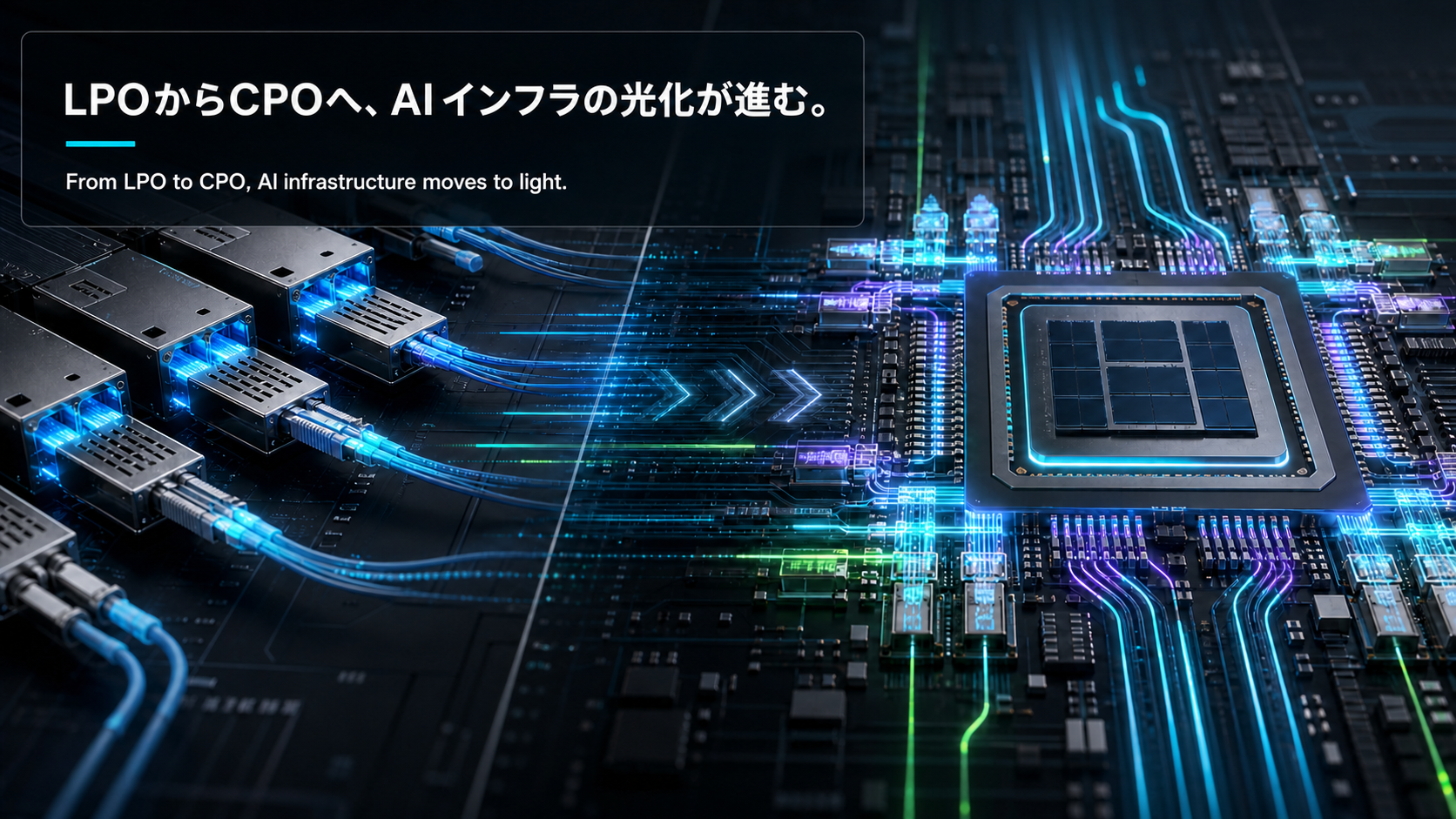
AI data center optics will arrive as a two-stage rocket — LPO first, CPO next. A 2026–2028 migration map separating near-term bridge winners from medium-term CPO bets, with yield and thermal callouts and a scenario table.


LPO vs CPO: The 2026–2028 Optical Interconnect Migration Map for AI Infrastructure
In the previous post (The Real CPO Ramp), I argued that CPO enters meaningful volume only from late 2027. Several readers came back with the same question: who owns the bridge between now and then, and is LPO safe to back? This piece is the sequel. I treat LPO (Linear-drive Pluggable Optics) as the near-term bridge and CPO (Co-Packaged Optics) as the medium-term winner, then lay out the migration map and the investable segments.
Coming from semiconductor process engineering, my first instinct is to ask when, in what order, and at what yield each technology stands up. LPO and CPO look like competitors but actually operate on different time axes. Mix up the short-term winner with the medium-term winner, and you get stranded the moment the bridge collapses. Read this as a snapshot of where I stand in May 2026. Six months from now the numbers will move.
What LPO and CPO Each Solve, and What They Sacrifice
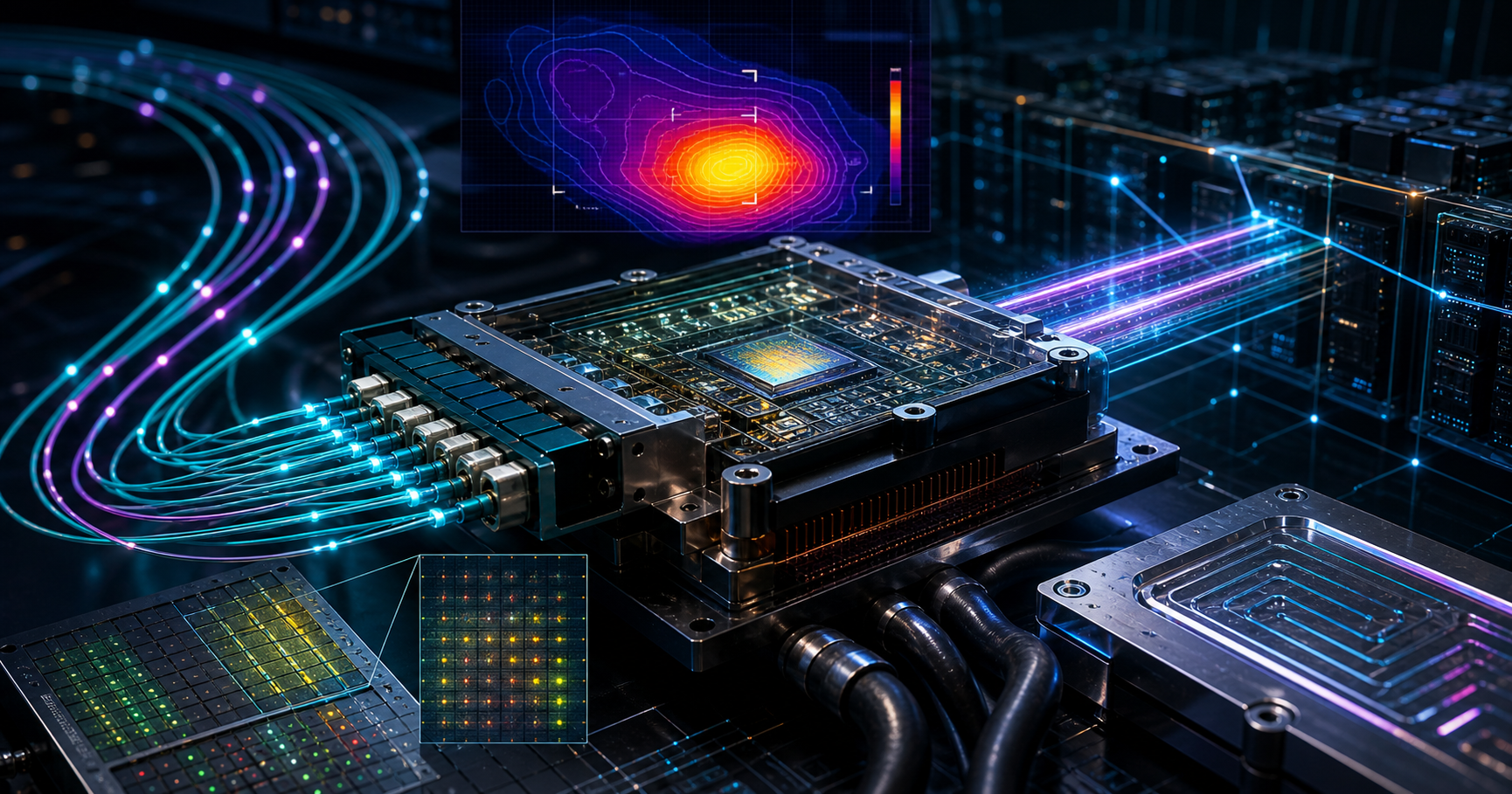
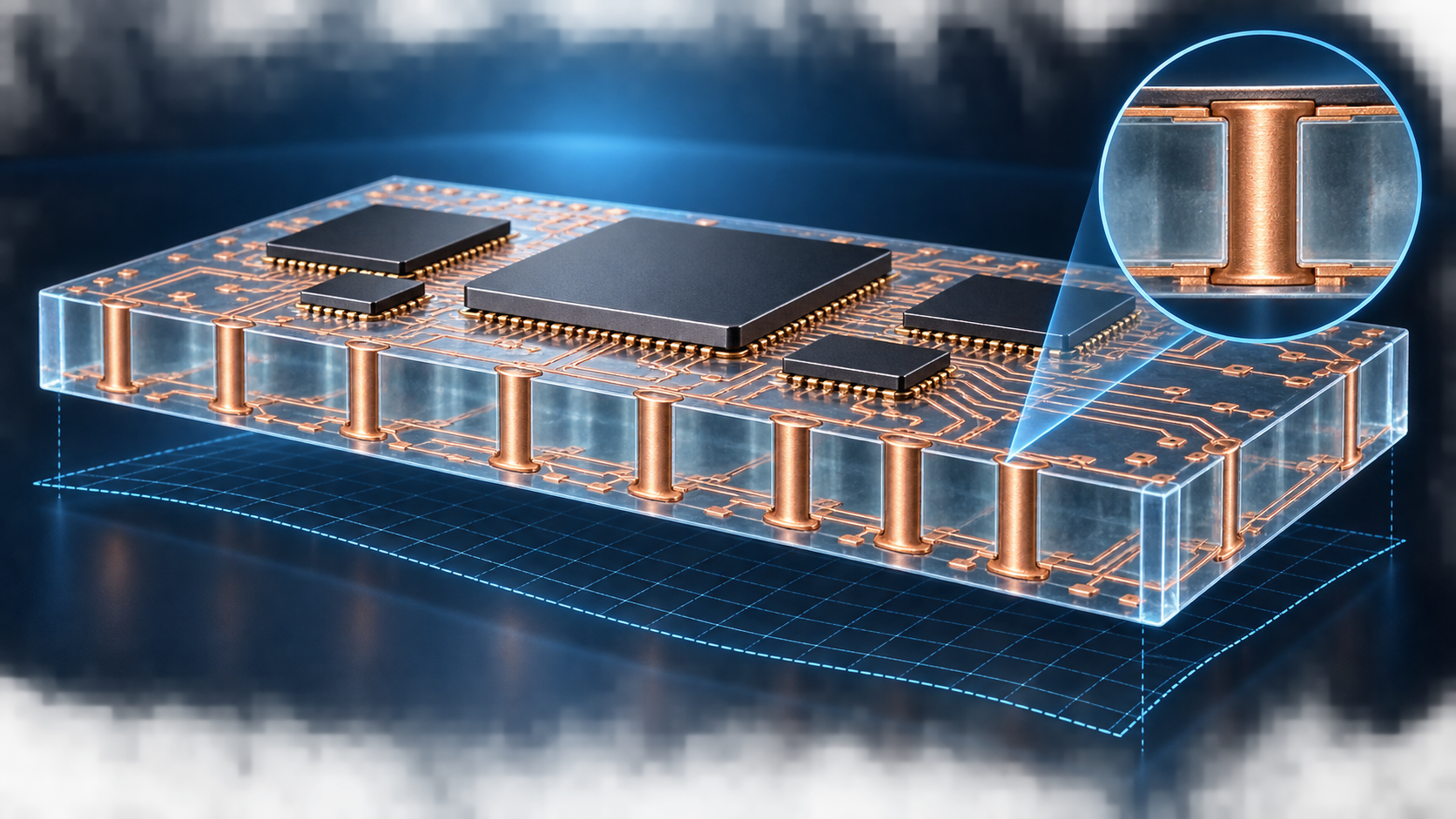
LPO and CPO point in the same direction — copper to light — but solve different problems. LPO is a near-term optimization that strips the DSP out of pluggable optical modules to cut power. CPO is an architectural shift that places the optical engine inside the switch ASIC package, minimizing electrical reach entirely.
| Dimension | LPO | CPO |
|---|---|---|
| What changes | DSP removed from pluggable module | Optics integrated into package |
| Power (per 800G port, rough) | ~8–10W (30–40% less than DSP-based) | ~5–7W (another 30–40% cut) |
| Latency | Saves the DSP budget (tens of ns) | Electrical I/O minimized further |
| Reach | In-rack to in-row (~500m) | Largely in-rack |
| Operational continuity | Pluggable-compatible, swappable | Field swap is hard |
| Manufacturing yield difficulty | Medium (fits current supply chain) | High (advanced packaging is the wall) |
| Serviceability | High (module-level swap) | Low (package-level swap) |
What sticks with me is that LPO trades 30–40% power for shifting signal-quality burden onto the link partners. Both the switch ASIC and the server NIC need enough equalization to absorb the missing DSP. That means LPO ramps fast and cheap — but each ASIC generation creates a hard "works/doesn't work" boundary for LPO. As I discuss below, this is the cruelest expiration date in the LPO trade.
The other subtlety is that the term "LPO" is already fragmenting in the field. Some vendors ship full LPO with no DSP and no clock-data recovery. Others ship "half LPO," which keeps a thin retimer in the module. From a power-budget perspective these are very different products, but the marketing language collapses them together. When evaluating LPO names, the first question to ask is which flavor they are shipping at volume — pure LPO buyers and half-LPO buyers do not always intersect.
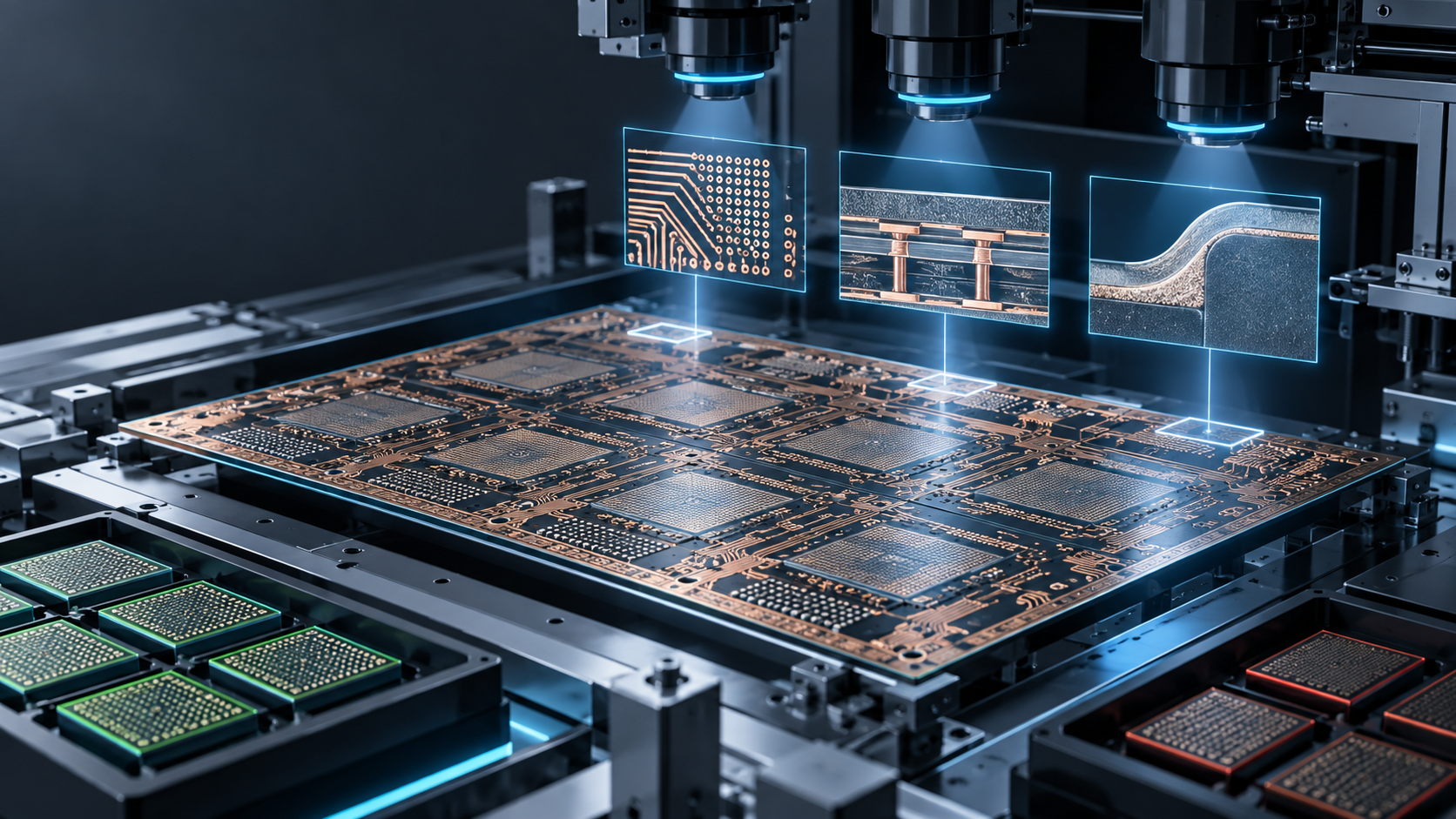
CPO genuinely sits above LPO on power and density. But the yield and thermal walls are steep. As I wrote previously, the five failure points — coupling shift, laser degradation, thermal drift, substrate warpage, inadequate test — all have to be solved together, inside the package. I do not see that happening within 2026. The first wave of CPO that ships at meaningful volume will, in my view, be a 1.6T product with external lasers and roughly 60–70% engine-level yield — high enough to be commercially interesting, but not high enough to displace pluggables outside lead-customer deployments.

The 2026–2028 Migration Map
When you draw the migration map, LPO and CPO run in parallel and swap roles. The questions are when the handover happens and which reach and bandwidth combinations CPO enters first. My current view is below.
| Period | Mainstream | Ramping | Limited adoption | Comment |
|---|---|---|---|---|
| 1H 2026 | Pluggable 800G (DSP) | LPO 800G | CPO 1.6T (samples) | Just before LPO volume kicks in |
| 2H 2026 | LPO 800G in parallel | LPO 1.6T, CPC | CPO 1.6T (lead hyperscalers only) | Aligned with switch ASIC refresh |
| 1H 2027 | LPO 1.6T | CPO 1.6T early volume | LPO 3.2T evaluation | Approaching LPO peak |
| 2H 2027 | LPO 1.6T + CPO 1.6T | CPO 3.2T samples | — | Crossover begins |
| 1H 2028 | CPO 1.6T/3.2T ramping | CPO 3.2T volume | LPO 3.2T (surviving niche) | LPO recedes to limited reach |
| 2H 2028 | CPO 3.2T mainstream | CPO 6.4T in discussion | LPO 3.2T (service) | LPO ends as a bridge, lives as service revenue |
Three points stand out. First, LPO probably peaks in 1H 2027. As switch ASIC generations turn, the equalization assumptions shift, and the reach/reliability tradeoffs of LPO get tougher from 3.2T onward. Second, CPO most likely enters at the 1.6T generation. The "CPO skips 1.6T and enters at 3.2T" scenario is unrealistic given how long yield ramps take — process learning curves for a fundamentally new package format do not compress by skipping a node. Third, 2H 2027 is the inflection — beyond that point, the LPO trade rotates from new deployment to service and replacement, which is a very different revenue profile and tends to be re-rated lower by the market.
To be clear, LPO does not vanish. It survives in longer reach (DR4/FR4-class), inter-rack links, and on the server NIC side where CPO cannot easily reach. There is also a real chance LPO sticks around in second-tier cloud and enterprise deployments that lag hyperscalers by 18–24 months on architecture refresh. But on short-reach AI switch interconnect, CPO will take the workload. As an investor, the key is to distinguish the "permanent LPO segment" from the "bridge LPO segment." Companies whose revenue mix tilts toward the bridge segment need to be valued on a much shorter duration than those serving the permanent segment.
Cutting the Investment Map by Segment
The LPO/CPO investment landscape is easier to read across five segments.
Segment 1: DSP-less LPO Transceivers
The core of the LPO trade. Public/major candidates include Innolight, Eoptolink, Coherent, Lumentum, AOI, and Hisense Broadband. Chinese names lead on cost; US names chase on quality and certification. The single most important signal in 2H 2026 is which player stands up 1.6T LPO at volume yield first.
| Player | Position | Attention | 2026 watch item |
|---|---|---|---|
| Innolight | China LPO leader, top shipments | High | Expansion of NA hyperscaler certification |
| Eoptolink | China #2, cost-driven | Medium | Sensitivity to US-China export controls |
| Coherent | US integrated, vertical in lasers | High | LPO margin and CPO transition design |
| Lumentum | US, strong in lasers | Medium | Speed of 1.6T LPO productization |
| AOI | US, heavy AWS dependency | Medium | Customer-concentration unwind |
Segment 2: Retimer / Redriver IP
Technology that extends LPO's shelf life. Removing DSP from LPO pushes equalization burden onto the ASIC and NIC sides. Retimers (signal shaping) and redrivers (signal amplification) absorb that burden. Astera Labs, Credo, Marvell, and Broadcom are the players. Volume and ASP for these IPs grow as LPO grows.
What I find most interesting is that retimer IP demand persists through the LPO-to-CPO transition. CPO's early generations still have link-quality variability, and external retimers will be designed in to absorb it. That makes this segment a neutral beneficiary of both LPO and CPO.
Segment 3: CPO Sub-assembly
The layer that builds optical engines, external lasers, and fiber attach as a bundle. Candidates include Coherent, Lumentum, Marvell (the post-Inphi optical engine group), Browave, and PHIX. The right mental model here is "the assembly shop for CPO," not CPO itself. The first bottleneck when CPO ramps will be sub-assembly yield, not the optical engine. From an investor's angle, I would look for two specific capabilities: hermetic packaging at micron-scale alignment tolerances, and burn-in equipment that handles both optical and electrical stress in parallel. Vendors with either capability today are scarce; vendors with both at volume capacity are rarer still.
Segment 4: PIC Foundries
Silicon photonics manufacturing infrastructure. GlobalFoundries (GF Fotonix), TSMC (COUPE), Tower Semiconductor, Intel Foundry, and AIM Photonics (US non-profit) are the main players. As CPO scales, 12-inch PIC line capacity becomes the binding constraint. Boring in the short term, likely re-rated from 2027 onward.
| Foundry | Process | Strength | Weakness |
|---|---|---|---|
| GF Fotonix | 45nm SOI PIC | Yield on hetero integration | Capacity expansion speed |
| TSMC COUPE | Adjacent to advanced nodes | Co-design with switch ASICs | Not PIC-pure-play |
| Tower Semi | RF/MEMS heritage | Strong on low-volume / mixed product | Limited at high volume |
| Intel Foundry | InP/Si integration | Vertical in lasers | Corporate uncertainty |
Segment 5: Fiber-shuffle and Connector Specialists
The most overlooked area in the CPO periphery. Senko, US Conec, Sumitomo Electric, Furukawa, and Fujikura are the players. CPO pulls several hundred to a thousand fibers per package, so shuffle and connector quality directly drive yield and MTBF. Unglamorous, but in my view this is the bottleneck that lasts the longest into CPO volume. A single connector misalignment can fail a multi-thousand-dollar package; a 99% per-connector yield translates to surprisingly weak system yield once you multiply across hundreds of connections. The Japanese fiber majors have an underrated structural advantage here because they have spent decades shipping fibers into telecom networks where reliability requirements are even stricter than data center norms.
Yield and Thermals: What Differs Between LPO and CPO
To translate the technical comparison into an investment lens, the contest is always yield and thermals. Here is what differs.
| Aspect | LPO | CPO |
|---|---|---|
| Main failure modes | Equalization failures, signal-quality variance | Coupling shift, thermal drift, substrate warpage |
| Yield-improvement loop | Module-level (absorbable outside the package) | Package-level (cannot be absorbed outside) |
| Test difficulty | Medium (existing ATE works) | High (optical + thermal test combination) |
| Thermal design constraints | Inside the pluggable cage (reuse) | Adjacent to the ASIC (new design required) |
| Supply-chain maturity | High | Low |
| ASP decay rate | Fast (Chinese price competition) | Slow (package-bound) |
LPO ramps fast because it fits the existing supply chain envelope. But ASP also drops fast. CPO ramps slowly, and ASP holds longer. "LPO earns through volume; CPO earns through value." That character difference flows directly into how to position.
From my EEPROM volume-production days, a product profile of "fast ramp, fast price erosion" rewards the players who design to capture the first two quarters of margin. Late-followers chasing on cost alone miss the ramp benefit entirely. Just applying that filter narrows the LPO universe meaningfully. The investment lesson is that headcount, capex, and inventory all have to be sized for the front of the curve, not the steady state — and most companies, including some otherwise excellent operators, structurally fail at this kind of pre-loaded ramp execution.
Scenario Analysis: The LPO → CPO Crossover
Here is my scenario frame. Unlike the table in the previous CPO-only post, this one is focused on the timing of the handover between LPO and CPO.
| Scenario | Subjective probability | LPO peak | CPO mainstream | Beneficiaries |
|---|---|---|---|---|
| Base | 50% | Q1–Q2 2027 | Q4 2027 – Q1 2028 | LPO transceivers first, CPO sub-assembly later |
| Bull (CPO pulled in) | 20% | Q4 2026 | Q2 2027 | CPO sub-assembly, PIC foundries |
| Bear (CPO delayed) | 20% | Q3–Q4 2027 | Q3 2028+ | LPO, retimer IP, service segment |
| Tail (LPO quality issues) | 10% | Cap in Q4 2026 | Q3 2027 | Pluggable life-extension, CPO leapfrog |
In the base case, 2H 2026 through 1H 2027 is the LPO trade window, and from 2H 2027 onward the rotation flips to CPO. The bull case shifts that rotation six to twelve months earlier. The bear case extends LPO's shelf life. The tail scenario — LPO quality issues — would, ironically, push CPO into being seen as the "rescue technology," accelerating its re-rating.
The segment I currently see as most mispriced is retimer / redriver IP. The market reads it as "LPO complement," but it is also the absorber for CPO's early link-quality variance. The neutral exposure to both LPO and CPO does not seem priced in. The runner-up is fiber-shuffle and connectors — likely to be discovered as the "last bottleneck" during CPO ramp, in my view.
DSP-less LPO transceivers themselves see growing volume but rapid ASP decay. I would watch "can they capture the first two quarters of margin?" more than the absolute margin level. US players forced into Chinese cost competition will see top-line growth but margin compression. Name-by-name selection matters here.
A Checklist for LPO-stage Investments
To close, a checklist for investing during the LPO window. The goal is to reduce the risk of being stranded when the bridge collapses.
- Customer concentration: What percent of revenue comes from the top three customers? Above 70% is a concentration risk.
- Product roadmap into CPO: Does the company have access to CPO sub-assembly, PIC, or connectors? Pure-play LPO companies face a tough survival story beyond 2028.
- Margin structure: If 1.6T LPO gross margin drops below 30%, that is the signal that price competition has started.
- Switch ASIC certification footprint: Certification status with Broadcom Tomahawk, NVIDIA Spectrum, Marvell Teralynx, etc. LPO lives or dies by ASIC-side compatibility.
- China exposure: If US-China export controls could halt shipments, a discount is required.
- Capability to pivot to service/replacement: After LPO peaks, can the company sustain revenue through the service segment?
- CPO-related R&D ratio: What percentage of R&D is allocated to CPO/PIC? Below 10% is a red flag.
The line I weigh most heavily is "CPO transition plan." Companies built only to earn from LPO will be decisively left behind in 2027–2028. Conversely, vertically integrated suppliers with footholds in both LPO and CPO will catch the largest tailwind across the handover.
To close. AI infrastructure optics will keep migrating — that view does not change from the last post. But the winning optical technology is not "the fastest light"; it is "the light you can keep manufacturing the longest." My May 2026 conclusion is a three-layer structure: take short-term cash with LPO transceivers, hold neutral exposure through retimer IP and connectors, build medium-term positions in CPO sub-assembly and PIC foundries. I will mark this to market in six months.
One last note for portfolio construction. The temptation when looking at LPO and CPO is to pick a single winner and concentrate. I would resist that. The honest read of the migration map is that timing risk dominates — even if you pick the right technology, mis-timing the rotation by two quarters can wipe out the trade. A diversified barbell across the LPO front and the CPO back, sized so that either rotation outcome leaves you with capital intact, is in my view the right structure for the bridge years. The single-name conviction comes back in 2H 2027, when the crossover is visible and the bottlenecks are priced.
Next Issue Ideas
- Idea 1: The Liquid-cooling Bill of Materials for AI Data Centers — CDUs, Connectors, Coolants, Sensors — Decompose the cooling BOM that ramps alongside CPO, component by component. This is the continuation of the "cooling periphery" thread left unfinished by the previous and current posts.
- Idea 2: How to Read Optical I/O Startups From the Outside — Insertion Loss, Thermals, Volume, Customer Validation — A practical framework for reading CPO sub-assembly and PIC foundry startups from public information, laid out as a checklist.
- Idea 3: The Economics of Silicon Photonics IP Licensing — A Value-chain Analysis of PIC Foundries vs. IP Vendors — Position private players such as Ayar Labs, Lightmatter, and Celestial AI, and compare the profitability of IP-license models against publicly traded PIC foundries.
Related Posts
- The Investment Map of AI Infrastructure's "Silicon Periphery": Power, Cooling, Optics, and Site Plays Hiding in Plain Sight — Watching only NVIDIA and AMD misses the point.
- The Real CPO Ramp: Winners in AI Data Center Optics Through Yield and Thermal Design — Optical conversion of AI datacenters is inevitable, but CPO mass production isn't just a bandwidth race.
- How to Read Optical I/O Startups From the Outside: Insertion Loss, Thermals, Manufacturability, and Customer Validation — An outside-in checklist for reading optical I/O startups from public information: insertion loss, thermals, manufacturing yield, and customer validation.
References
The factual and numerical assumptions in this article are anchored to primary or public materials that readers can revisit during AdSense review and future updates.
- OIF implementation agreements and CPO resources
- IEEE 802.3 Ethernet working group
- NVIDIA networking investor resources
This article is for informational purposes only and does not constitute investment advice or a recommendation of any specific stock, service, or contract structure. The author may hold positions or interests related to companies or services mentioned. Generative AI was used for parts of research, translation, and proofreading, with final review by ZYL0. See the disclaimer for details.