Certification Gates for 800V DC Data Centers: Separating Component Compliance from Facility Operation
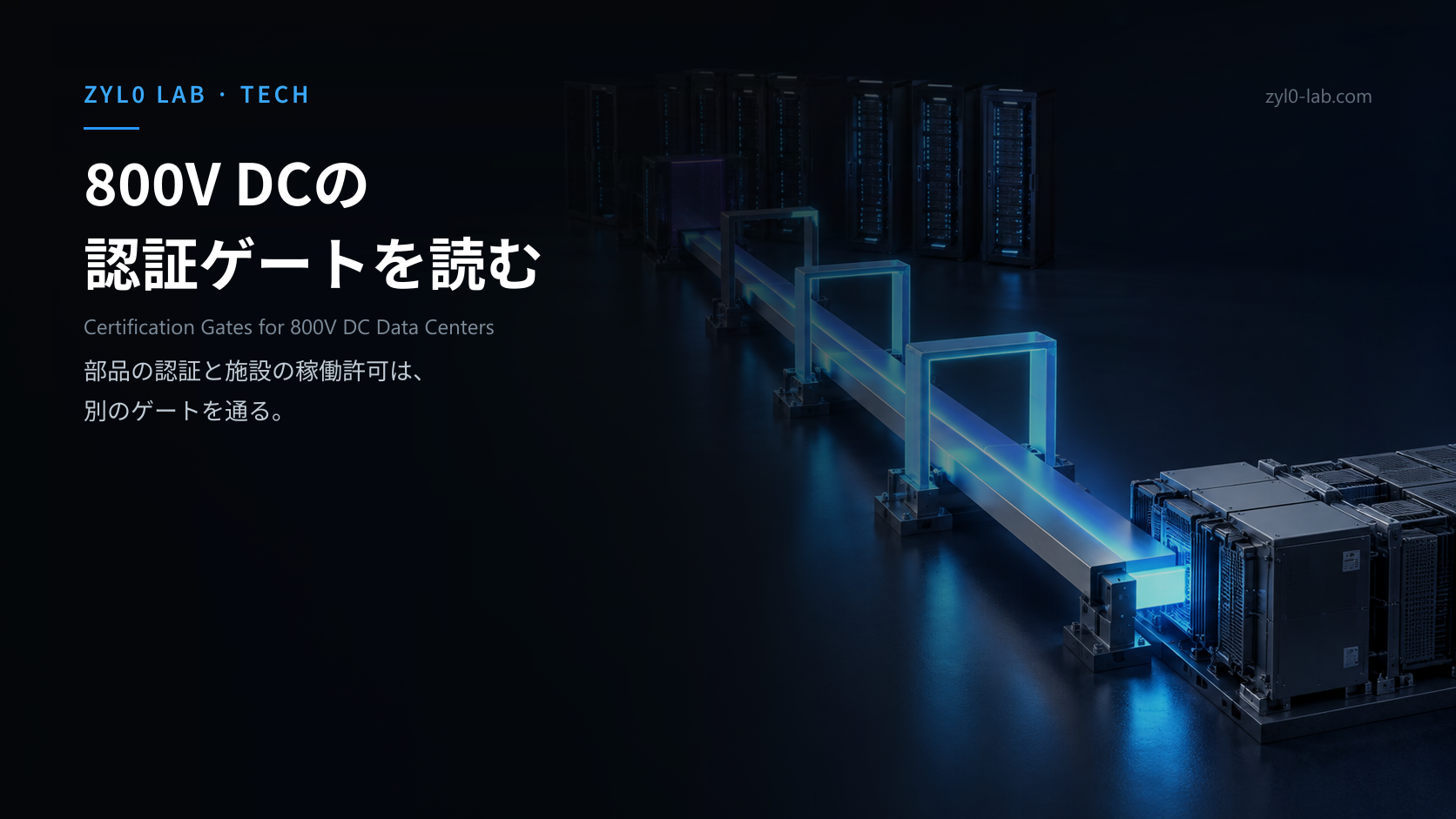
On an 800 VDC power path, certified can mean four different things. Using 2026 OCP and UL documents, this post separates component listing, assembly evaluation, installation code and site approval, then checks the 840 VDC protection ceiling against each limit.
On an 800 VDC power path, certified can mean four different things. Using 2026 OCP and UL documents, this post separates component listing, assembly evaluation, installation code and site approval, then checks the 840 VDC protection ceiling against each limit.


Certification Gates for 800V DC Data Centers: Separating Component Compliance from Facility Operation
This is an outside-in read based solely on public information. No company interviews or non-public materials were used.
800 VDC was one of the headline themes at the OCP Global Summit on October 12–15. The show floor had power racks, solid-state transformers (SSTs) and shelves that step 800 V down to 50 V, and several power specifications and white papers came out during the week. Yet OCP's own October 12 post says plainly that "the busway and layout designs for 800VDC distribution to the rack are still incomplete." There is still distance between what was on display and what a building can actually energize.
I care about that distance because of my years in automotive EEPROM process development, where I helped take products into volume production. A part could pass its component qualification and still have its schedule decided by the customer's system-level evaluation, where the conditions changed. "Qualified" means little until you say who checked what, and under which conditions.
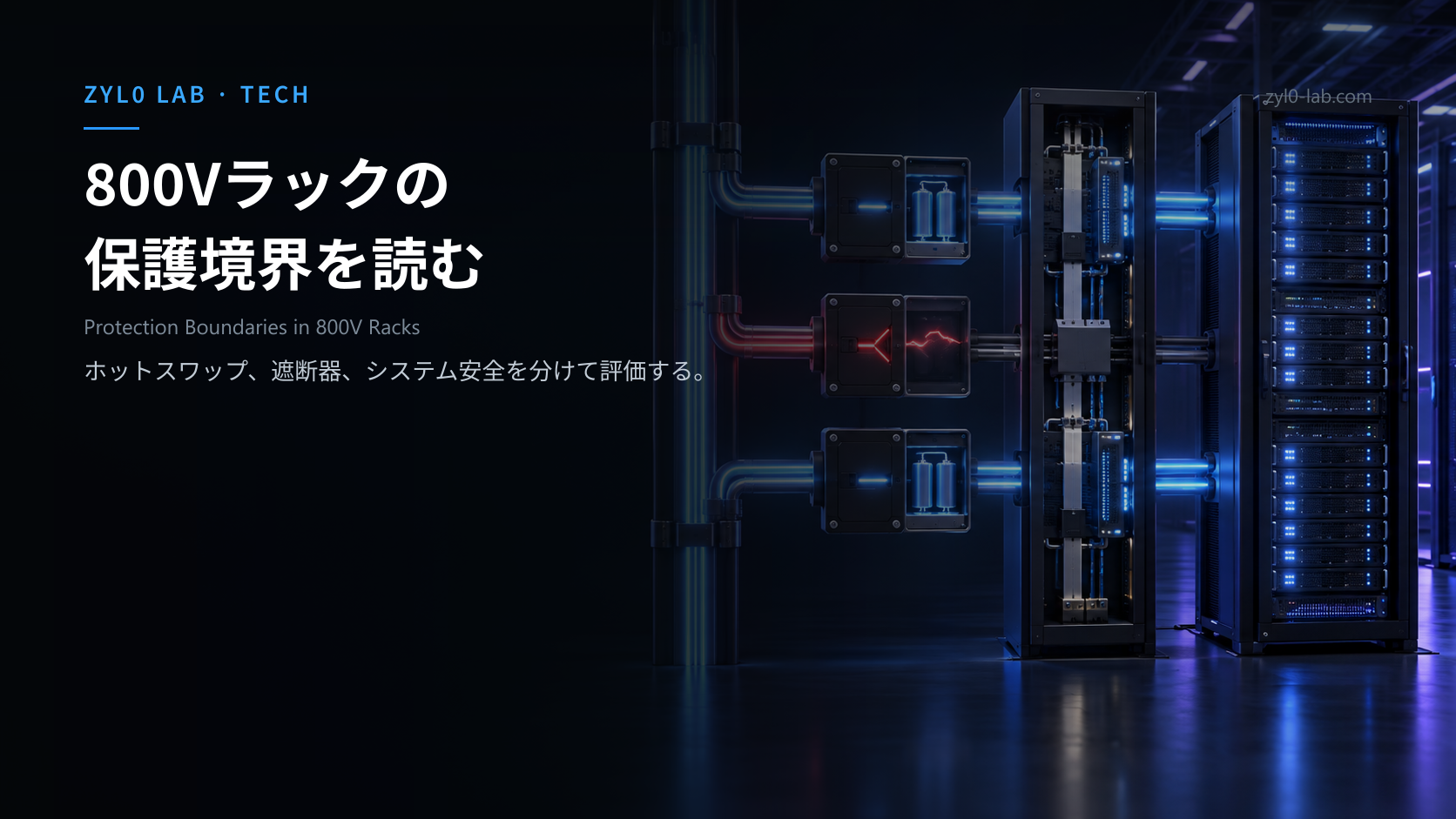
My previous post on 800 V rack protection split protection into three layers: the tray, the distribution branch and the facility. This one follows the permissions that have to pass through those layers. It is the "certification gates for data-center power" idea I flagged in that post's next-issue list.
Splitting "certified" into four gates
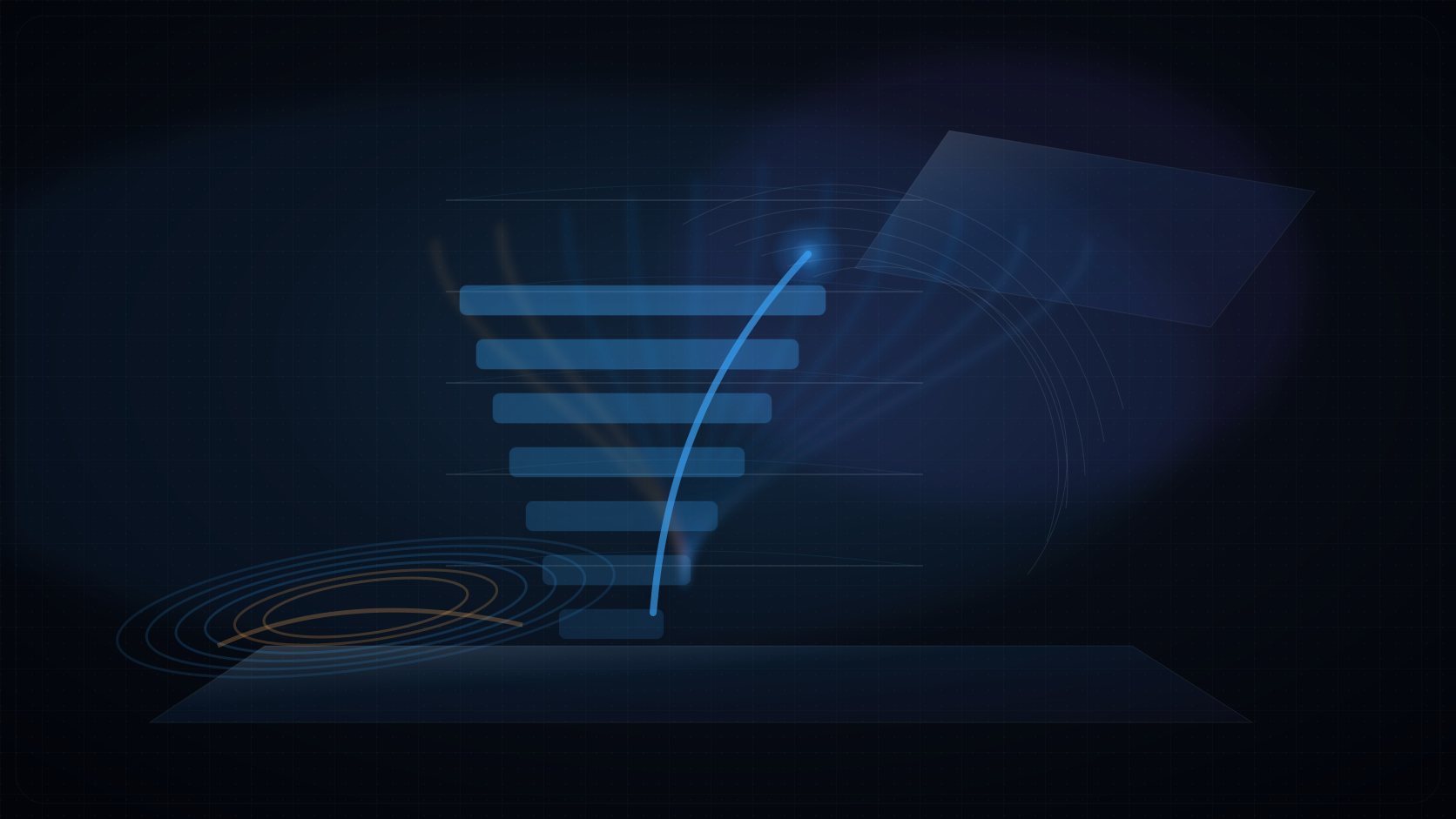
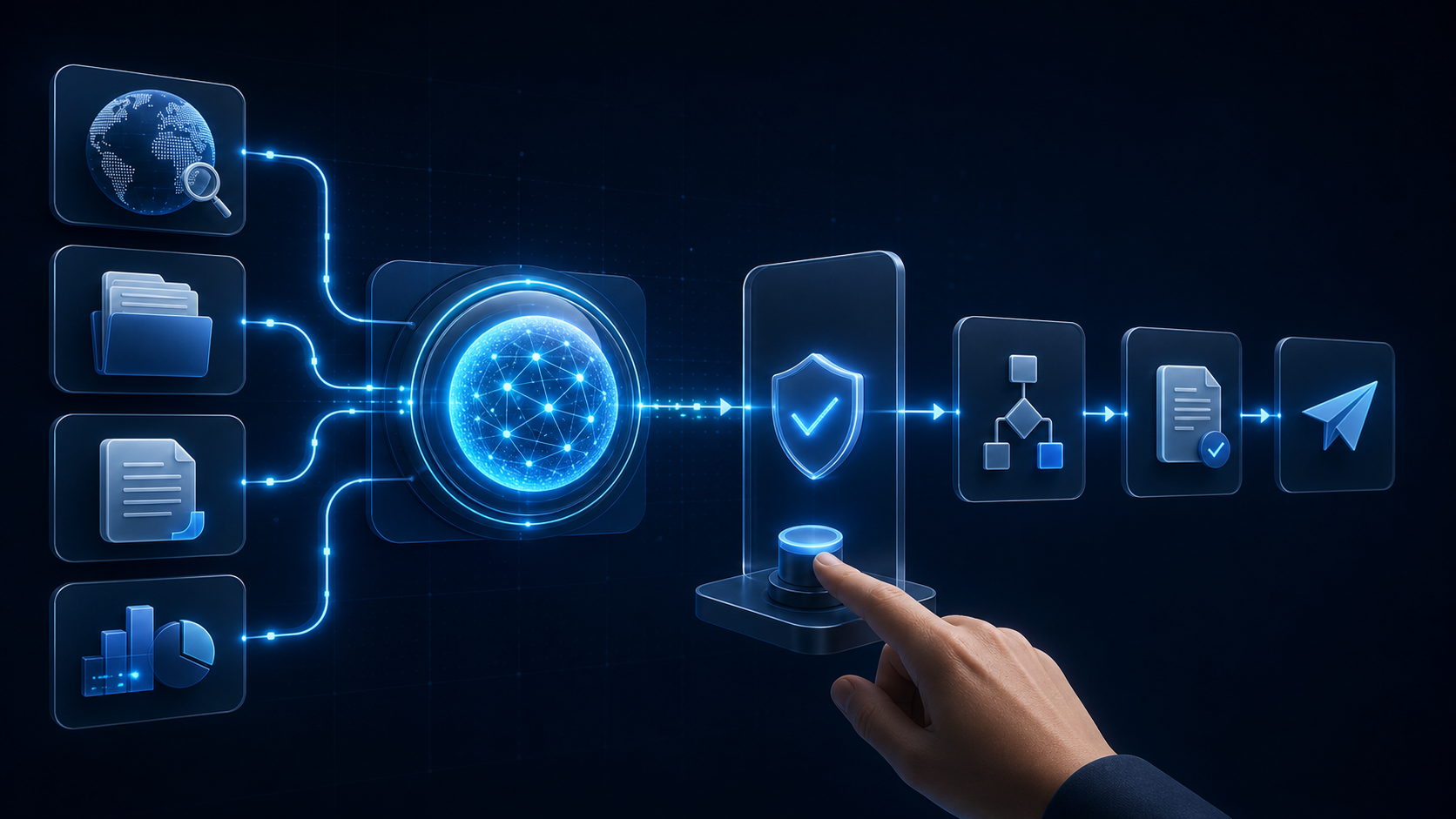
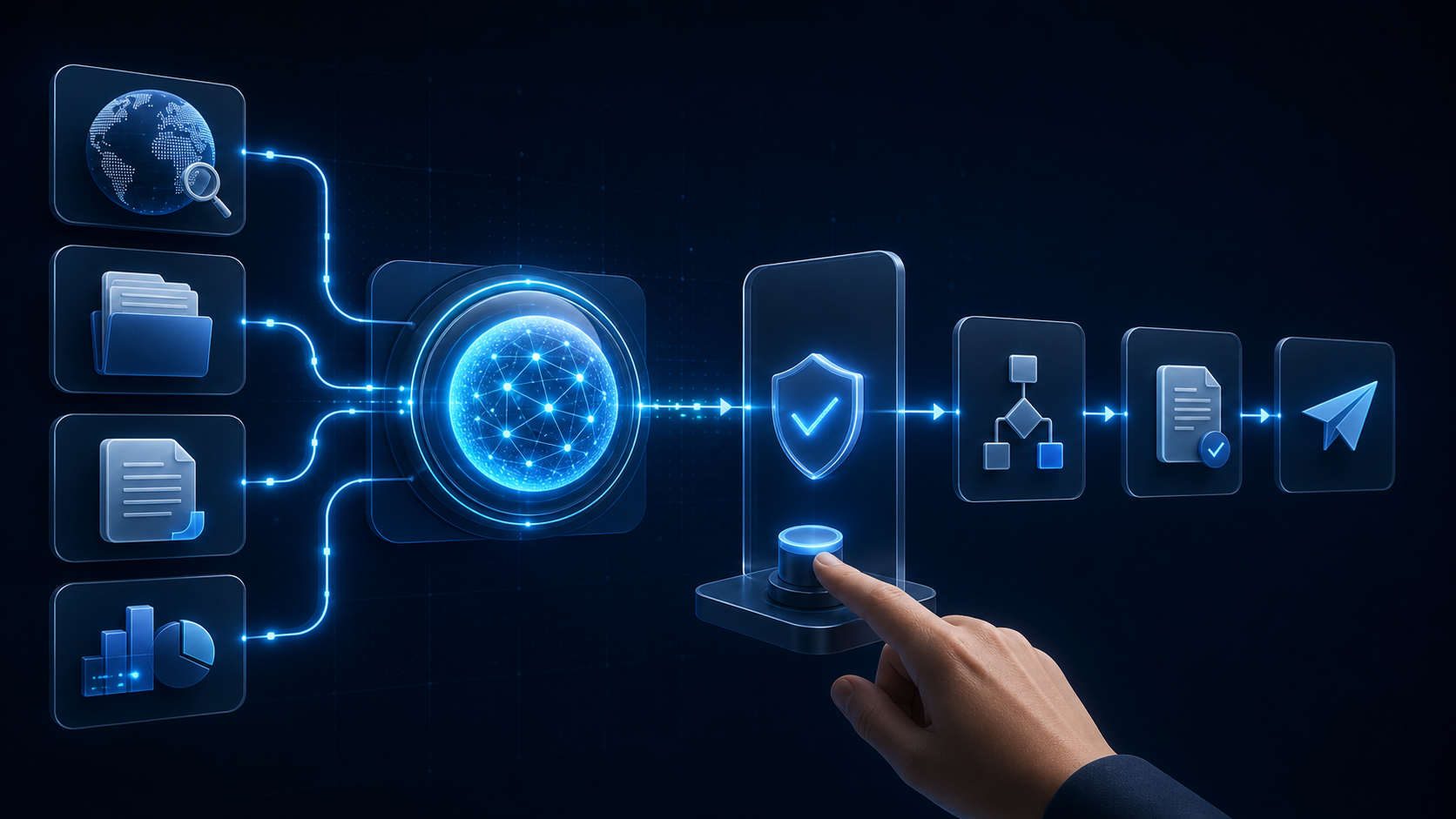
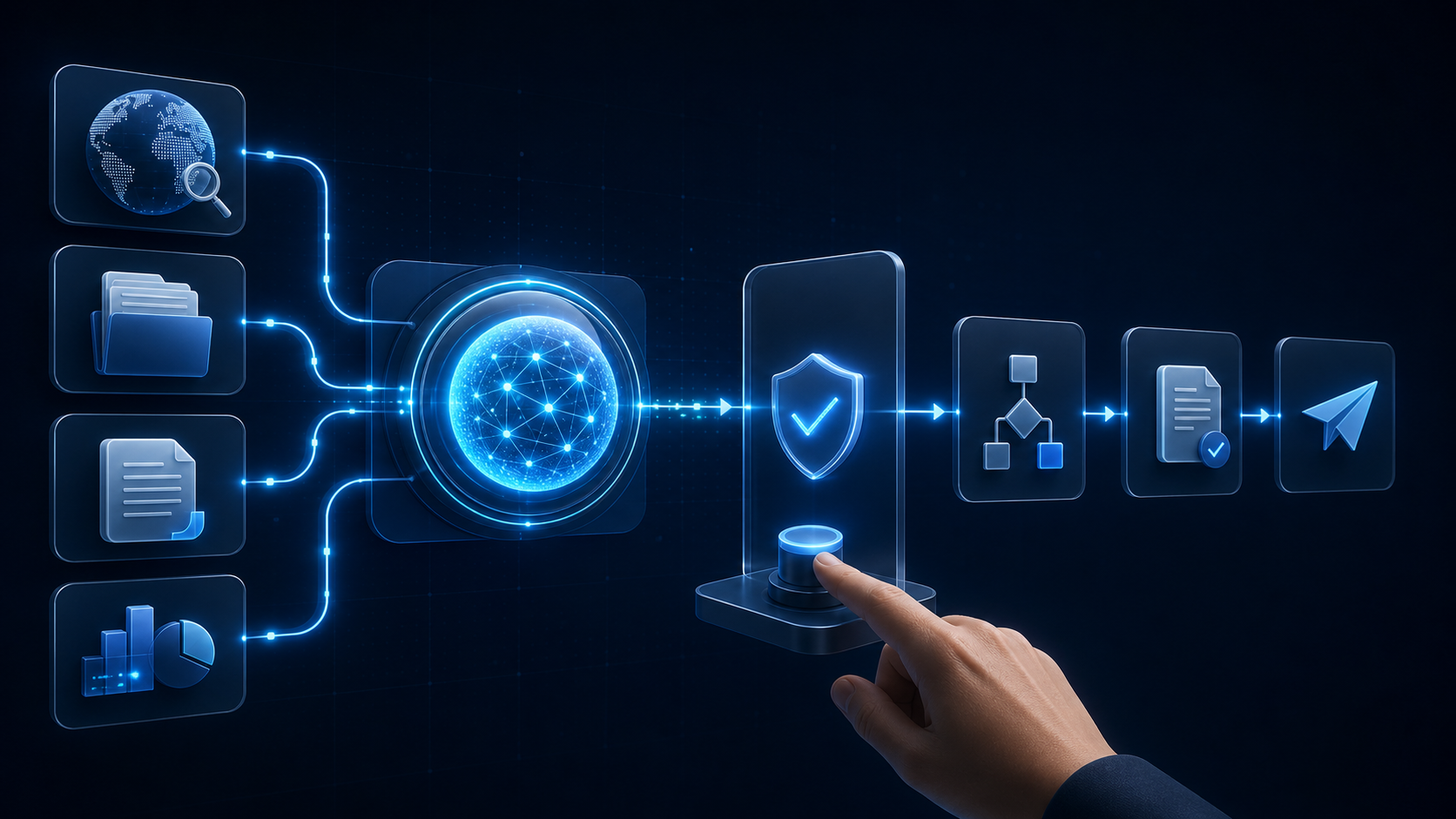
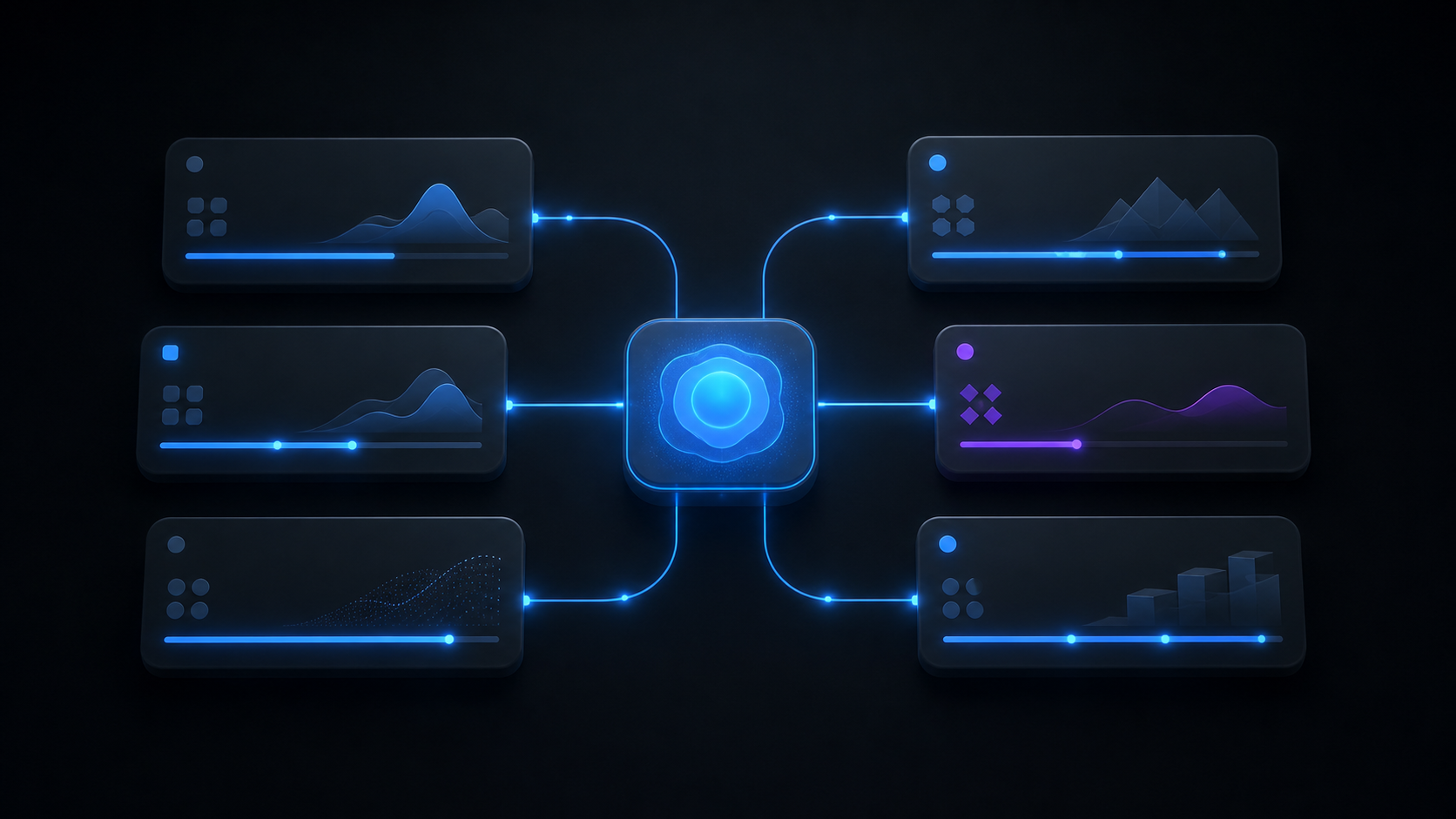
Here is my framework up front. Before an 800 VDC power path can run, it has to clear four gates, each with a different decision-maker and a different kind of evidence.
The first is component certification, judged against product standards by a Nationally Recognized Testing Laboratory (NRTL) or another certification body. The second covers assemblies and new product categories. Equipment with no published standard is evaluated under UL Solutions' Outlines of Investigation (OOIs) or case-by-case certification requirement decisions. The third is the installation code: the NEC (NFPA 70) in the United States, and IEC 60364 in most other countries. The fourth is site approval. That gate holds the inspection by the authority having jurisdiction (AHJ), any field evaluation, and the work practices that NFPA 70E governs.
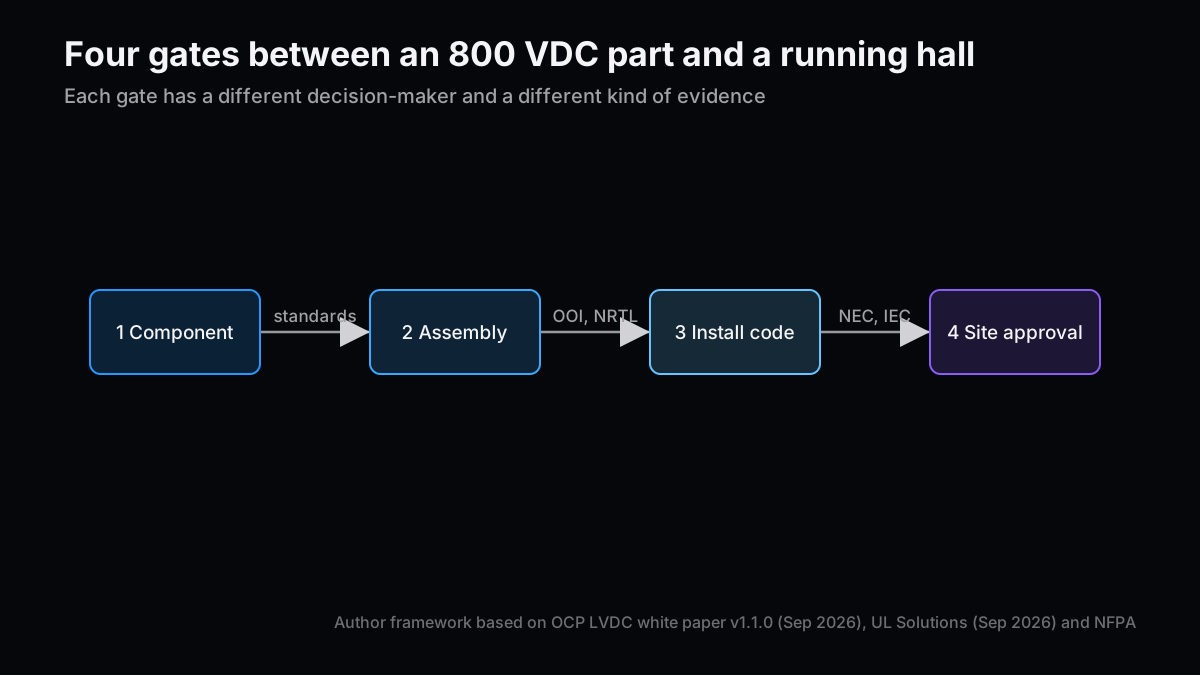
Lining up the public record as of October 2026 shows how far each gate has moved.
| Gate | Decision-maker | Governing documents | Public status, October 2026 |
|---|---|---|---|
| 1 Component certification | NRTLs and certification bodies | UL, IEC and IEEE product standards | OCP's white paper lists 70+ product standards; most cover 800 VDC, but few products have been tested for DC data-center use |
| 2 Assemblies, new categories | Certifiers (OOIs, decisions) | UL 2877, UL 2755, UL 2140 and others | UL launched an SST certification program based on UL 2877 on September 24 |
| 3 Installation code | Standards bodies, states, localities | NEC (NFPA 70), IEC 60364 | The NEC has no DC rules specific to data centers yet; its next revision completes in Q3 2028 |
| 4 Site approval | AHJs and operators | Inspection records, field evaluations, NFPA 70E | NEC editions in force vary by state, from the 2008 to the 2023 edition |
Read down the right-hand column and the evidence that someone has actually decided gets thinner at each gate. Component standards are mostly in place. Assemblies have just started moving under interim evaluation tools. The installation code and site approvals are still mid-revision.
OCP's Low Voltage DC Power Distribution white paper, version 1.1.0 (dated September 2, 2026), is candid about that asymmetry. Most of the more than 70 product-level standards it identified already address 800 VDC. But it also says most products in those categories have not yet been vetted or tested for 800 V or 1,500 V DC data-center use. Having a standard and having a product that passed it are two separate facts.
The 840 V protection ceiling against each limit
Next I wanted to check how well the voltage itself fits inside each standard's limits. This is where the numbers surprised me most.
Citing the industry group Current/OS, the OCP white paper treats U5 = 840 VDC as the highest designed protection voltage. I divided that 840 V by each relevant limit. The arithmetic is mine; the limits come from the white paper.
| Limit compared | Limit | 840 V ÷ limit | Headroom |
|---|---|---|---|
| IEC 62368-1 scope (IT equipment safety) | 600 V | 140.0% | −240 V |
| Interpretation under review at TC108 (600 V scope read as 850 VDC) | 850 V | 98.8% | 10 V |
| UK BS 7671 line-to-earth limit (unipolar 800 V case) | 900 VDC | 93.3% | 60 V |
| Low-voltage ceiling (IEC and NEC 2026 classes) | 1,500 VDC | 56.0% | 660 V |
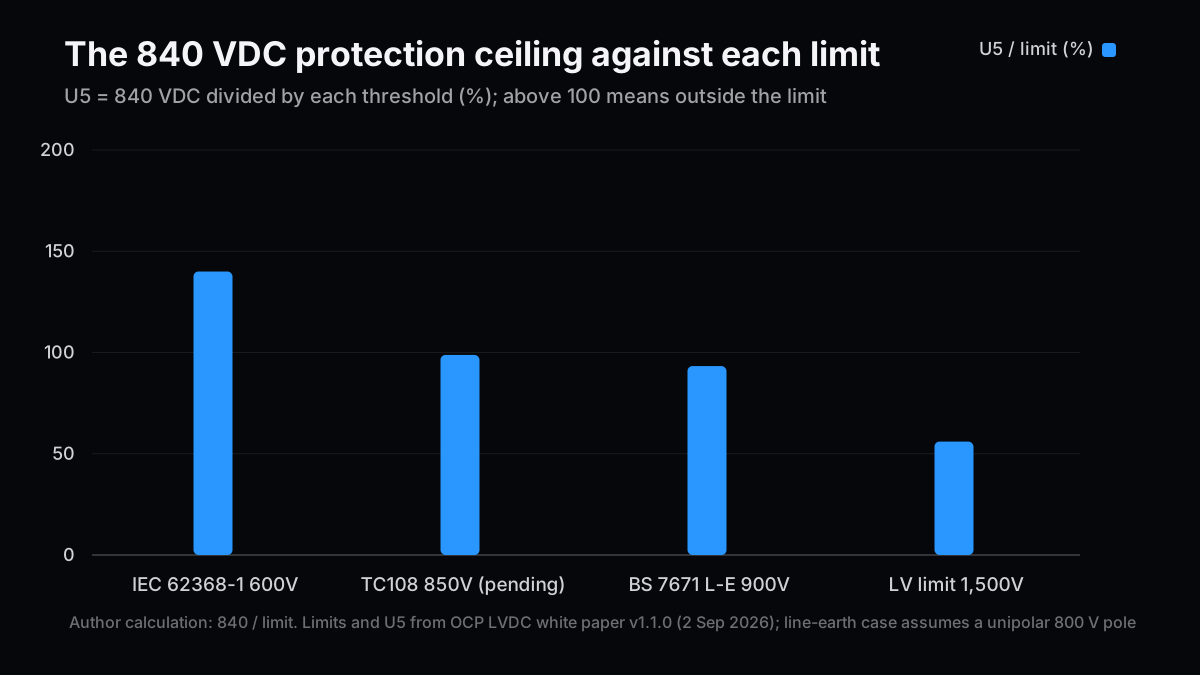
Start with IEC 62368-1, the safety standard for IT equipment. Its scope stops at a rated 600 V. At 800 V nominal, a rack input is already at 133% of that limit and outside it. That is why TC108, the IEC committee that owns 62368-1, is working on two tracks at once: interpretive guidance that would read the 600 V scope as covering 850 VDC, and a proposal to widen the scope itself to 1,000 VAC / 1,500 VDC.
The second row is the one that stopped me. Even if the 850 VDC interpretation is issued, the gap to the 840 V protection ceiling is just 10 V, or about 1.2% of 850 V. The voltage-band work still has to settle whether operation above 840 V should be allowed or required, and how to treat short-term withstand up to 1,080 V. That 1,080 V figure does not fit inside an 850 V reading. In a unipolar layout, it also exceeds BS 7671's 900 V line-to-earth limit by 20%.
The largest headroom is against the 1,500 VDC low-voltage ceiling. NEC 2026 keeps systems below 1,000 V AC or 1,500 V DC in Article 250 and moves anything above that into the new Article 270. Under the installation codes, 800 V sits comfortably inside low voltage. The white paper does flag one trap: 800 V sources connected in series can reach 1,600 V, so setpoint limits are needed. That would be 106.7% of 1,500 V.
So the standards problem with 800 VDC is not that the voltage is too high. It fits inside the low-voltage class of the installation codes. The friction is in the scope of IT-equipment product standards and in the details of protection and transient voltages. Grounding matters too. In a ±400 V bipolar layout with the midpoint earthed, the normal voltage to earth is half the 840 V ceiling, 420 V, or 46.7% of 900 V. In floating or impedance-grounded layouts, though, the healthy pole can approach 840 V to earth during a first ground fault. Going bipolar does not buy headroom by itself; the grounding method and ground-fault behavior are evaluated with it. The conversion choices covered in the 800 V, GaN and SiC comparison feed straight back into how easy certification will be.
The companies between display and certification
Below I sort the 2026 announcements by the gate each one has reached. Everything comes from public documents. None of it is a forecast of adoption or revenue.
| Company or group | 2026 public record | Gate reached | Next evidence to watch |
|---|---|---|---|
| Google, Microsoft, NVIDIA (via OCP) | SST specification rev 0.3 (effective June): 13.8 kV / 34.5 kV, 5–10 MW; short-circuit duration "TBD" | Specification drafting | Short-circuit terms and compliance list in v1.0 |
| UL Solutions | Launched SST certification based on UL 2877 (an OOI for medium-voltage power supplies), September 24 | Supplies the tool for gate 2 | The first certified product named in public |
| Delta Electronics | Showed a 660 kW in-row power rack and a 90 kW 800 V-to-50 V shelf (up to 98.5% efficiency), October 15 | Display; no shipping or certification stated | Certification and first shipments |
| Siemens and Reinhausen | Announced joint development and industrialization of an SST for grids up to 36 kV, August 14 | Development; no rating or timing stated | Ratings, efficiency, volume timing |
The "TBD" in the SST specification is a small entry with a large consequence. Until the spec says how many seconds the unit must withstand a short-circuit current, neither upstream protection coordination nor the assembly's evaluation conditions can be fixed. Together with the 0.3 revision number, I read it as evidence that this equipment is still short of gates 1 and 2.
I read Delta's release the same way. The numbers are specific, and putting 660–800 kW power racks and 2.5 MW of cooling into one picture was impressive. But the release does not say that anything is shipping or certified. Between being shown at a summit and passing an AHJ inspection, at least two gates remain.
Among listed companies, UL Solutions is the one that earns revenue from the gates themselves. Second-quarter 2026 revenue was $816 million, up 5.2% year on year with 6.6% organic growth, and the adjusted EBITDA margin was 26.8%. Data-center certification revenue is not disclosed, though. More gates are a tailwind, but from the outside there is no way to size it against the whole company.
This reminds me of building technology maps when I set investment themes as a VC. Back then, putting technology maturity and standards maturity on the same axis is exactly what led my reads astray. As a technology, 800 VDC has a track record in electric vehicles and solar. Standards maturity for the data-center use case runs on a separate clock.
Scenarios and my investment call
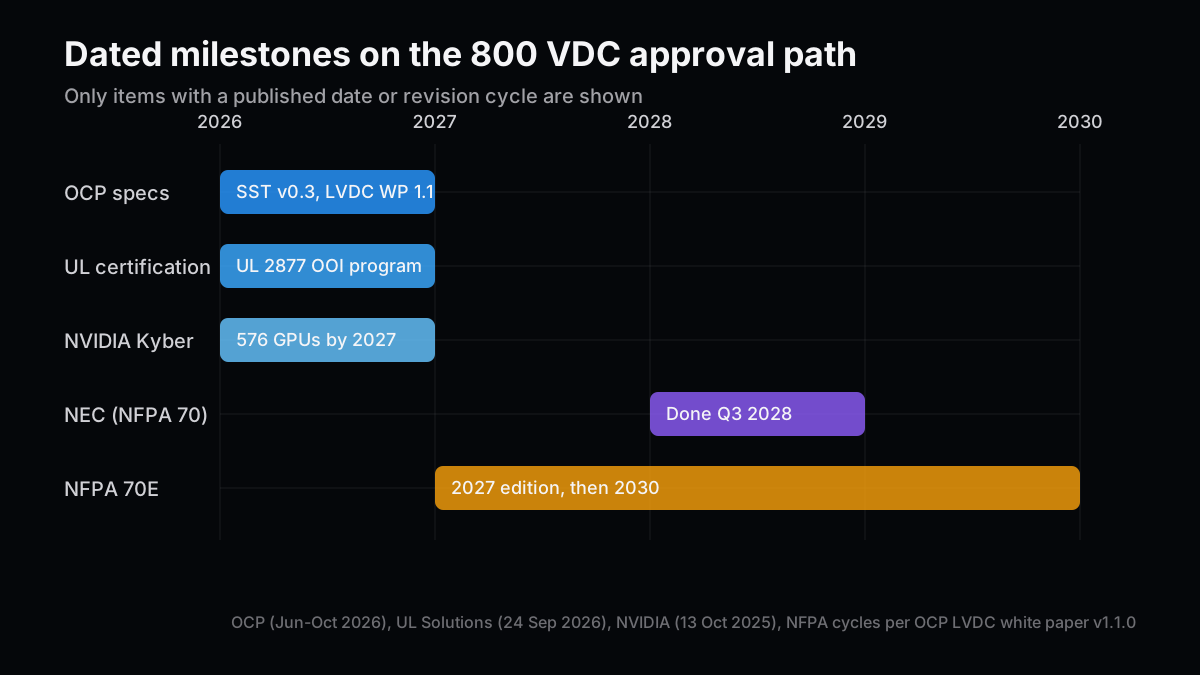
Plotting only the milestones with a published date gives the timeline below. NVIDIA has pointed to its 576-GPU Kyber rack "by 2027," while the next NEC edition is due to complete in the third quarter of 2028.
I split the possible outcomes into three scenarios, depending on how that gap gets closed. They are my own framework, not probabilities or revenue forecasts.
| Scenario | Assumed path | Evidence that should appear first | What would break it |
|---|---|---|---|
| Base case: phased rollout | Sidecar power racks go in early under OOIs, case-by-case NRTL evaluations and field evaluations | Sidecar certifications announced; AHJ approvals on record | Long field evaluations; re-evaluation for every assembly |
| Main scenario: standards first | TC108's 850 VDC interpretation arrives first and IT-equipment certifications move quickly | Interpretation issued for IEC 62368-1; a run of certification announcements | The 10 V margin to 840 V; the 1,080 V withstand question stays open |
| Tail risk: incident or rejection | An early arc incident or failed inspections push operators to wait for code revisions | NFPA 70E 2030 debate; AHJ bulletins | Adoption slips to 2029–2030, when codes and work practices line up |
Here is where I stand today.
- Testing and certification (UL Solutions and peers): positive in the short term. Every new gate adds evaluation demand. Data-center revenue is not disclosed, so the size of the effect cannot be measured.
- SSTs, sidecars and other power equipment: neutral over the medium term. There are plenty of displays and specifications; I will judge the group by announcements of certification and shipment.
- Protection components: selective. Beyond the efficiency race covered in the AI power bottleneck overview, the winners will be the designs that can answer protection near 840 V and transient withstand at 1,080 V.
What would change my mind: if 800 VDC sidecars obtain NRTL certification and AHJ approval and are energized at several sites during 2027, without waiting for the NEC revision. That would mean gate 3 was never the bottleneck. In the other direction, if the 850 VDC interpretation still has not appeared after 2027, I will plan for a path slower than the base case.
In the third part of the space series, I argued for watching flight cadence rather than ticket prices. The same rule applies here. I will count gates cleared, not announcements or displays.
Related Posts
- Protecting 800V AI Racks: Hot-Swap and DC Breaker Boundaries — the prequel, which split protection into tray, branch and facility layers
- AI Data Centers Move to 800V: The Roles of GaN and SiC — voltage conversion to 800 V and the semiconductors behind it
- AI Power Bottlenecks and Power Semiconductors — the wider picture of supply and conversion constraints
References
- Open Compute Project, Realizing the OCP Open Data Center Ecosystem Vision (October 12, 2026)
- Open Compute Project, Data Center Facility Low Voltage Direct Current Power Distribution White Paper v1.1.0 (September 2, 2026)
- Open Compute Project, Solid State Transformer Specification Revision 0.3
- UL Solutions, Certification Program for Emerging Power Technology Supporting AI Data Centers (September 24, 2026)
- Delta Electronics, 800 VDC power and cooling solutions at OCP Global Summit 2026 (October 15, 2026)
- IAEI Magazine, Modern Data Centers: Electrical Trends, Risks, and NEC 2026 Implications (January 2026)
Next Issue Ideas
- Idea 1: What sells while TC108 decides on 850 VDC — Track which certification routes let sidecars, power shelves and power distribution boards reach the market first, given that they sit outside IEC 62368-1's current scope.
- Idea 2: From SST spec v0.3 to v1.0, filling in the short-circuit "TBD" — Read the public specification for the short-circuit terms that the 13.8 kV and 34.5 kV models need to coordinate with upstream protection.
- Idea 3: How much certifiers earn from 800 VDC — Use the disclosures of UL Solutions, Intertek and other testing firms to estimate, from the outside, how fast data-center work is growing.
This article is not investment advice. The author may hold securities of companies discussed. Generative AI assisted its preparation. Review the disclaimer before making investment decisions.