Physical AI: The Next Investment Frontier
Why physical AI and world models — anchored by Yann LeCun's AMI Labs — are emerging as the next mega investment theme: value-chain angles, entry timing, and scenario-based portfolio adjustments.
Why physical AI and world models — anchored by Yann LeCun's AMI Labs — are emerging as the next mega investment theme: value-chain angles, entry timing, and scenario-based portfolio adjustments.


Physical AI: The Next Investment Frontier
I've spent years inside a corporate VC working on North American EV second-life storage and semi-solid battery startups, including the cross-functional task of mapping startup technologies into a synergy framework for the parent company. The single biggest lesson from that work: AI domains that touch hardware do not scale on the same clock as software AI. So when "Physical AI" gets called the next big wave, my instinct is to pull it apart by value-chain layer and entry timing rather than narrative — and that's what this piece is about.
How to Read the Center-of-Gravity Shift After the LLM Boom
Let me first reset the picture flat before adding any view on top.
LLMs have dominated the technology landscape for several years. The first generative-AI investment frenzy has settled, and capital is rotating toward the next wave. Physical AI — AI that goes beyond text and images to understand and act in the real world — is the leading candidate.
The defining signal of this shift came in early 2026 when Turing Award winner Yann LeCun launched AMI Labs (Advanced Machine Intelligence Labs), a Paris-based startup that closed Europe's largest seed round ever. The headline number — over $1 billion — matters less to me than the underlying fact that a top researcher walked away from digital AI to bet on physical AI.
| Item | Detail |
|---|---|
| Full name | Advanced Machine Intelligence Labs (AMI Labs) |
| Founded | 2026 (Yann LeCun × Alexandre Lebrun) |
| HQ | Paris, France |
| Raised | $1.03B (Europe's largest seed round ever) |
| Valuation | ~$3.5B (pre-money) |
| Key investors | Cathay Innovation, Greycroft, HV Capital, Toyota Ventures, NVIDIA, Bezos Expeditions, Temasek and others |
The Core: World Models
AMI Labs is building AI that learns how the physical world works — what the field calls "world models." It's a fundamentally different design from LLMs, grounded in JEPA (Joint Embedding Predictive Architecture), which LeCun proposed in 2022 as an alternative to the autoregressive paradigm.
LLM approach:    Text → Generate more text
World Model:     Sensor data → Understand physical world → Plan actions
LeCun has long argued that LLMs alone won't reach AGI. AMI Labs is that thesis turned into $1B of conviction.
Target Applications
| Domain | Examples |
|---|---|
| Industrial robotics | Complex assembly, quality inspection in factories |
| Autonomous vehicles | Adapting to unpredictable road environments |
| Healthcare | Surgical assist robots, diagnostic support |
| Wearables | Context-aware assistive devices |
| Aerospace | Autonomous operations in remote environments |
Why Physical AI, Why Now?
This is best read through the numbers.
Market sizing
| Metric | 2025 | 2030 forecast | 2033 forecast | CAGR |
|---|---|---|---|---|
| Physical AI market | $5.2B | — | $49.7B | 32.5% |
| Embodied AI market | $4.4B | $23.1B | — | 39.0% |
| Humanoid shipments (units) | ~10K | 0.5–1M | >2M | 60%+ |
Humanoids approach mass production
Goldman Sachs forecasts global humanoid shipments of 50,000–100,000 units in 2026, with per-unit cost trending toward $15,000–$20,000. From having worked on semi-solid battery investment reviews, I can read between those numbers: what's actually happening underneath is that cells, sensors, and actuators are converging on commodity pricing at the same time. That's the first time in a decade that has been true.
The wall LLMs cannot climb
LLMs are extraordinary at language and images, but they have structural limits:
- No physical common sense — they don't "know" a cup left on a ledge falls
- Weak long-horizon planning and physical action
- Poor fit for real-time robotic control
World models are designed to overcome those structurally — that's the source of the optimism around them.
The Investment Angle, Layer by Layer
This is where the whole piece comes together. Before picking names, decide which layer of the value chain you're betting on. That's the most important call.
| Layer | Description | Examples |
|---|---|---|
| Foundation models | World models, robot foundation AI | AMI Labs, Physical Intelligence (π) |
| Hardware | Sensors, chips, actuators | NVIDIA (NVDA), Mobileye, Sony Semiconductor |
| Robots | Humanoid, industrial machines | Apptronik, Figure AI, 1X, Boston Dynamics |
| Platforms | Data infra, simulation, ops | Foxglove, Dyna Robotics, NVIDIA Isaac Sim |
| End users | Manufacturing, logistics, healthcare | Amazon, Tesla, Toyota, Stellantis |
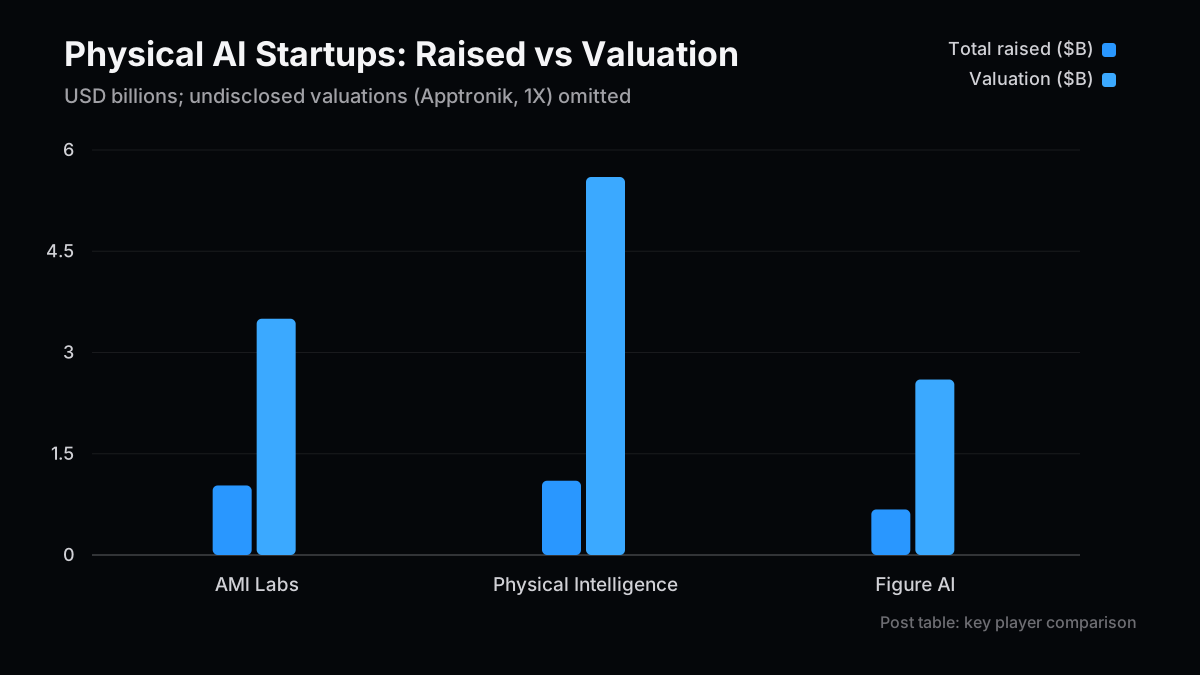
Competitive landscape
| Company | Total raised | Valuation | Technology |
|---|---|---|---|
| AMI Labs | $1.03B | ~$3.5B | World models (JEPA), LeCun-led |
| Physical Intelligence (π) | $1.1B | ~$5.6B | Robot foundation model (π0), home/industry |
| Apptronik | $350M+ | undisclosed | "Apollo" humanoid, NASA partnership |
| Figure AI | $675M | ~$2.6B | OpenAI partnership, Figure 01/02 |
| 1X Technologies | $100M+ | undisclosed | OpenAI-backed humanoids |
AMI Labs vs Physical Intelligence
AMI Labs:
  └── "Understand the world" first; robots are one application
  └── Research-led. JEPA learns abstract physical representations

Physical Intelligence (π):
  └── Specifically "make robots act"
  └── Provides the π0 model to robot manufacturers (an OpenAI-style position)
These two are complementary, not competitive. The combination of world models (AMI) × action models (π) is, in my view, the shortest path to general-purpose robots. A VC perspective: hold both. The case for picking only one is weak.
Realistic strategies for individual investors
Direct startup access is mostly closed at the pre-IPO stage, so secondary exposure dominates.
- NVIDIA (NVDA) — picks-and-shovels. GPUs plus Isaac Sim's ecosystem dominance.
- Robotics ETFs — ROBO, ARKQ (single-name risk dilution).
- Auto OEMs — Toyota, Honda, Stellantis (autonomous + factory automation upside).
- Indirect beneficiaries — sensor makers, chip designers, industrial connectors.
Scenario-Based Strategy & Watch Items
This is the most important part of this piece, in my opinion: Physical AI is hardware-rate-limited. Forget that, and you'll mis-price the timing. Having watched battery startups inside a CVC, I'd say it strongly: do not apply software-AI valuation multiples or growth curves to Physical AI without adjustment.
Scenario allocation matrix
| Scenario | Probability | Foundation models | Hardware | Robot bodies | Platforms | End users |
|---|---|---|---|---|---|---|
| A. Gradual adoption (base) | 50% | Core | Heavy | Wait & see | Core | Neutral |
| B. Mass-production acceleration (main) | 30% | Core | Heavy | Heavy | Core | Upgrade |
| C. Hardware bottleneck stalls scaling (tail) | 20% | Trim | Neutral | Trim | Maintain | Neutral |
Scenario A — Gradual adoption (base)
Physical AI scales reliably, but not as straight a line as software AI. The cleanest risk-reward in this regime, in my view, is NVIDIA + Isaac Sim ecosystem players, plus end-user automation beneficiaries (Toyota, Stellantis).
Scenario B — Mass-production acceleration (main)
Humanoid unit costs fall faster than expected, end-user adoption accelerates. Here you also tilt into public-market companies adjacent to Apptronik / Figure AI — defense contracting partners, industrial connector makers.
Scenario C — Hardware bottleneck stalls scaling (tail)
Sensor and actuator cost declines miss the schedule, mass production slips. This is the scenario I personally watch most closely, because it's where valuation compression on robot-body names is most likely. Funding chill propagates back to the foundation-model layer, so trim robot-body exposure preemptively.
Risk factors
- Technical uncertainty — most world models are still research-stage
- Hardware bottlenecks — robot body cost, durability, reliability
- Regulation — autonomous machines in healthcare and public spaces face evolving rules
- Long development cycles — unlike software AI, physical systems require validation and manufacturing scale-up
One thing from CVC investment-committee experience: hardware-touching investment reviews take twice as long as pure-software ones, period. I've personally been the person who flagged an over-valued hardware deal at IC and led the renegotiation, and that instinct applies double in robotics.
The ZYL0 Investment Call & Entry Timing
If LLMs were a revolution in information processing, Physical AI is a revolution in interaction with the physical world.
AMI Labs' $1B raise isn't the success story of one startup — it's a signal that the center of gravity of AI is migrating from digital to physical space.
In one line: core allocation now to foundation models and platforms; pick up robot-body exposure on a 2027 dip.
Watch items going forward
- Humanoid unit cost — does it actually break the $15K–$20K line?
- NVIDIA Isaac Sim adoption count (a leading indicator of ecosystem dominance)
- First commercial contracts from AMI Labs and Physical Intelligence (signals foundation models entering production)
- US/EU safety regulations for humanoids (the gating constraint on mass deployment)
Physical AI is not science fiction — it is an investment theme where real capital is flowing right now. The convergence of declining hardware costs and maturing foundation models makes 2026–2028 the critical window to watch.
Next Issue Ideas
- Idea 1: A data-updated follow-up — Revisit the thesis with fresh numbers and separate what strengthened from what broke.
- Idea 2: A practical template edition — Turn the article into a checklist readers can reuse for investing, pricing, or technical operations.
- Idea 3: The bear-case test — Define the conditions that would invalidate this view and map the indicators to watch next.
Related Posts
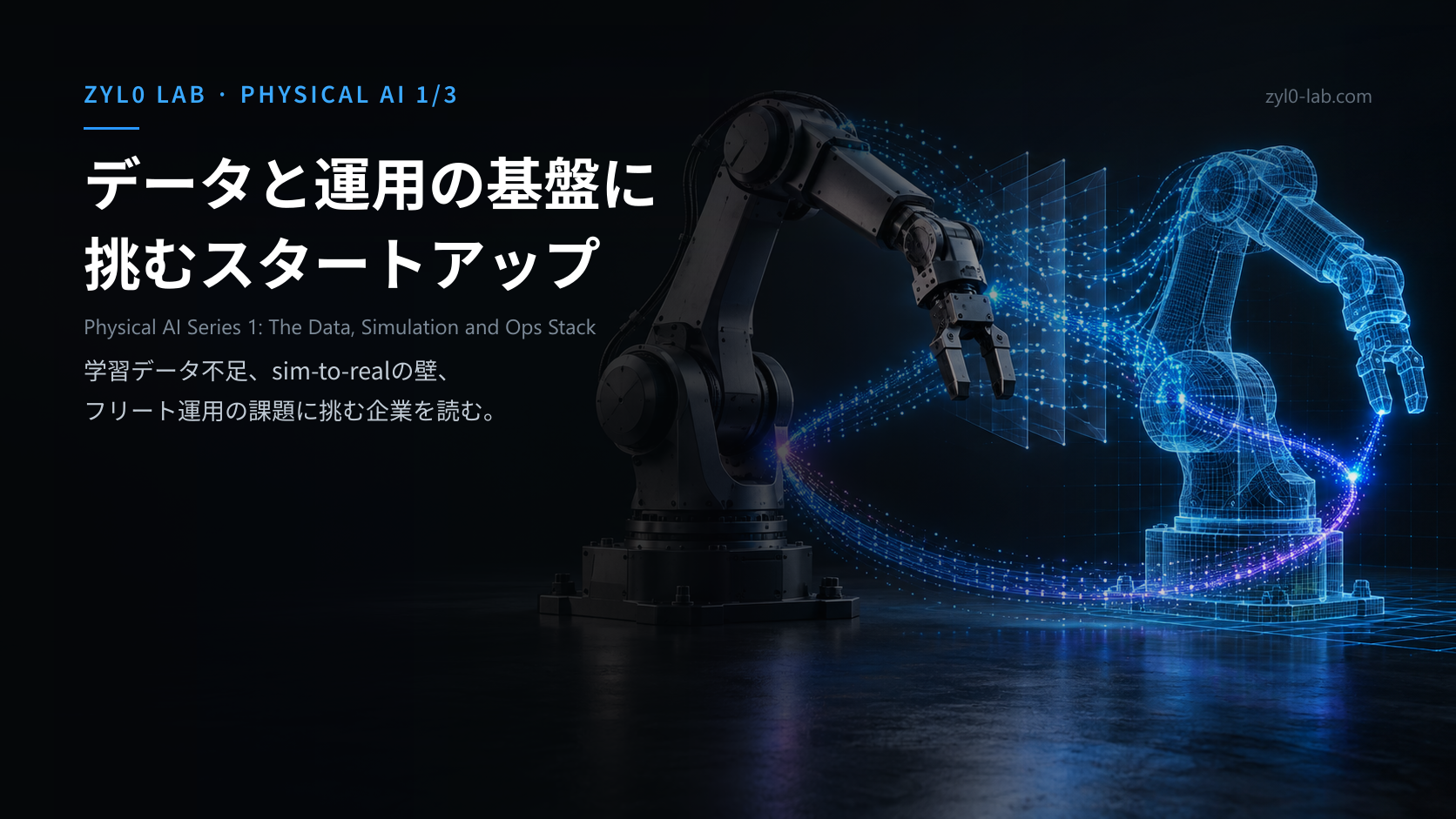
- Physical AI Series ①: The Startups Building the Data, Simulation and Ops Stack — The follow-up to this post: data, simulation and operations, company by company
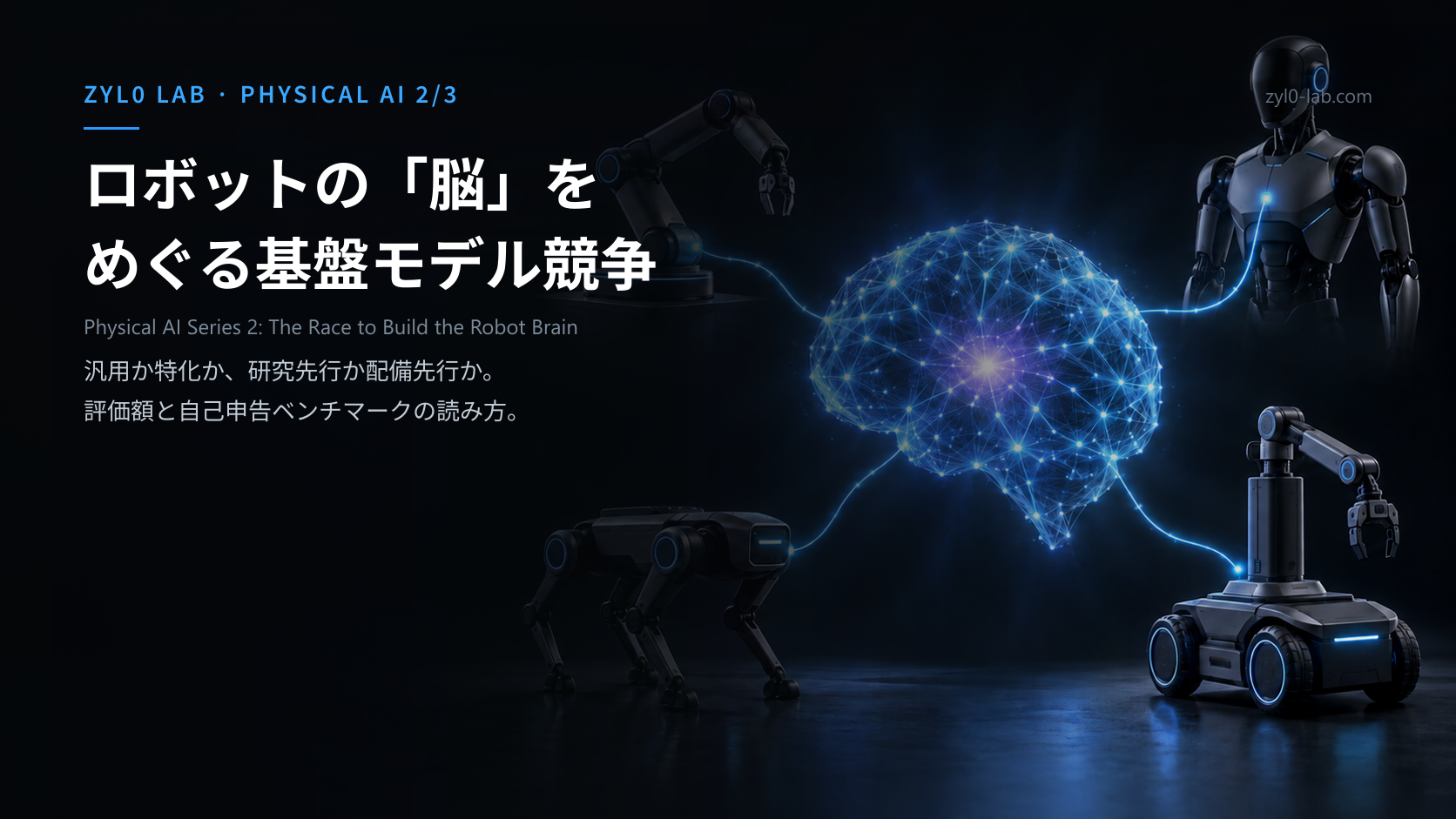
- Physical AI Series ②: The Race to Build the Robot Brain — Where Physical Intelligence and other model companies stand now
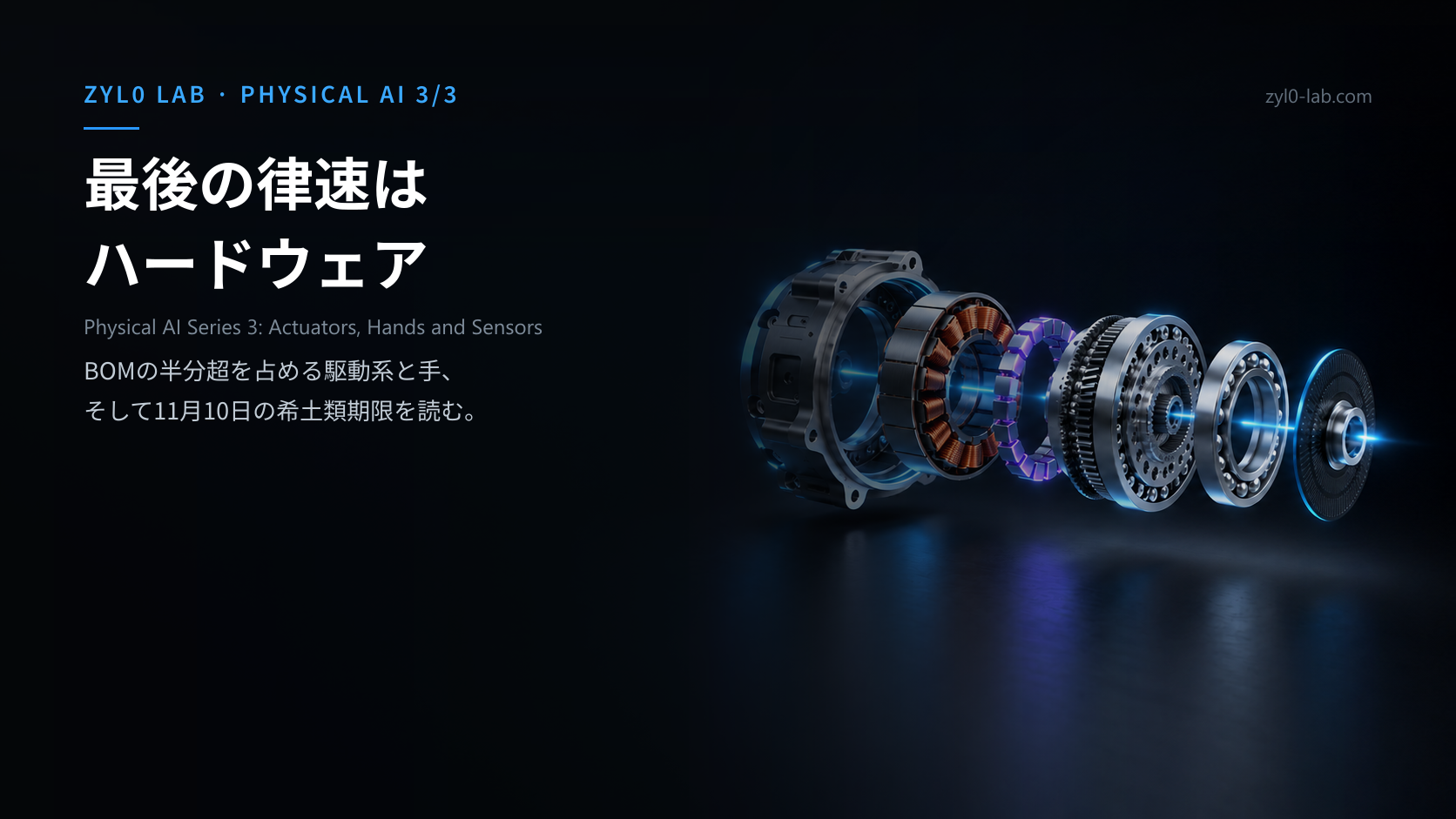
- Physical AI Series ③: Hardware Is the Last Bottleneck — Actuators, hands, sensors and the rare-earth magnet constraint
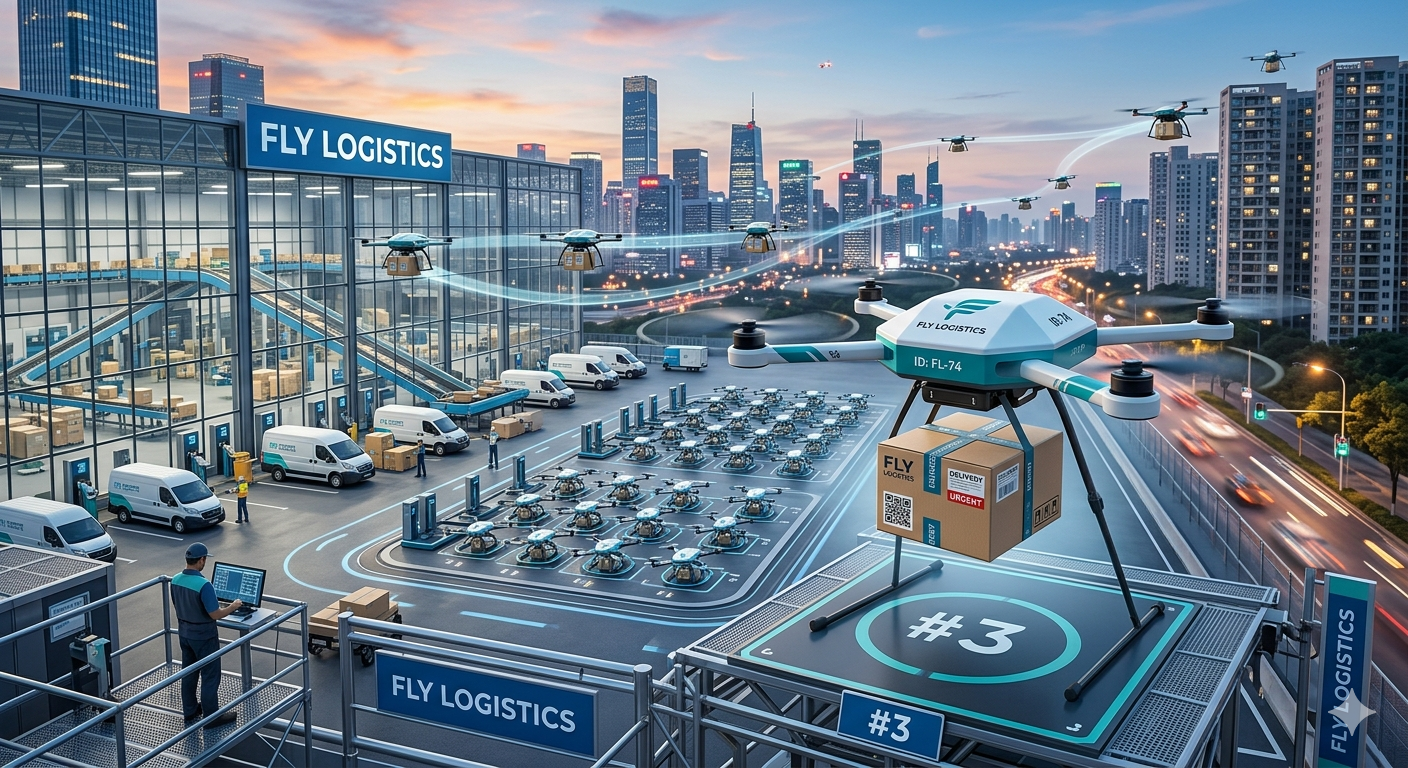
- Drone Logistics From Experiment to Everyday: Market Size and Top Companies — A deep dive into autonomous logistics, the physical-AI application scaling first
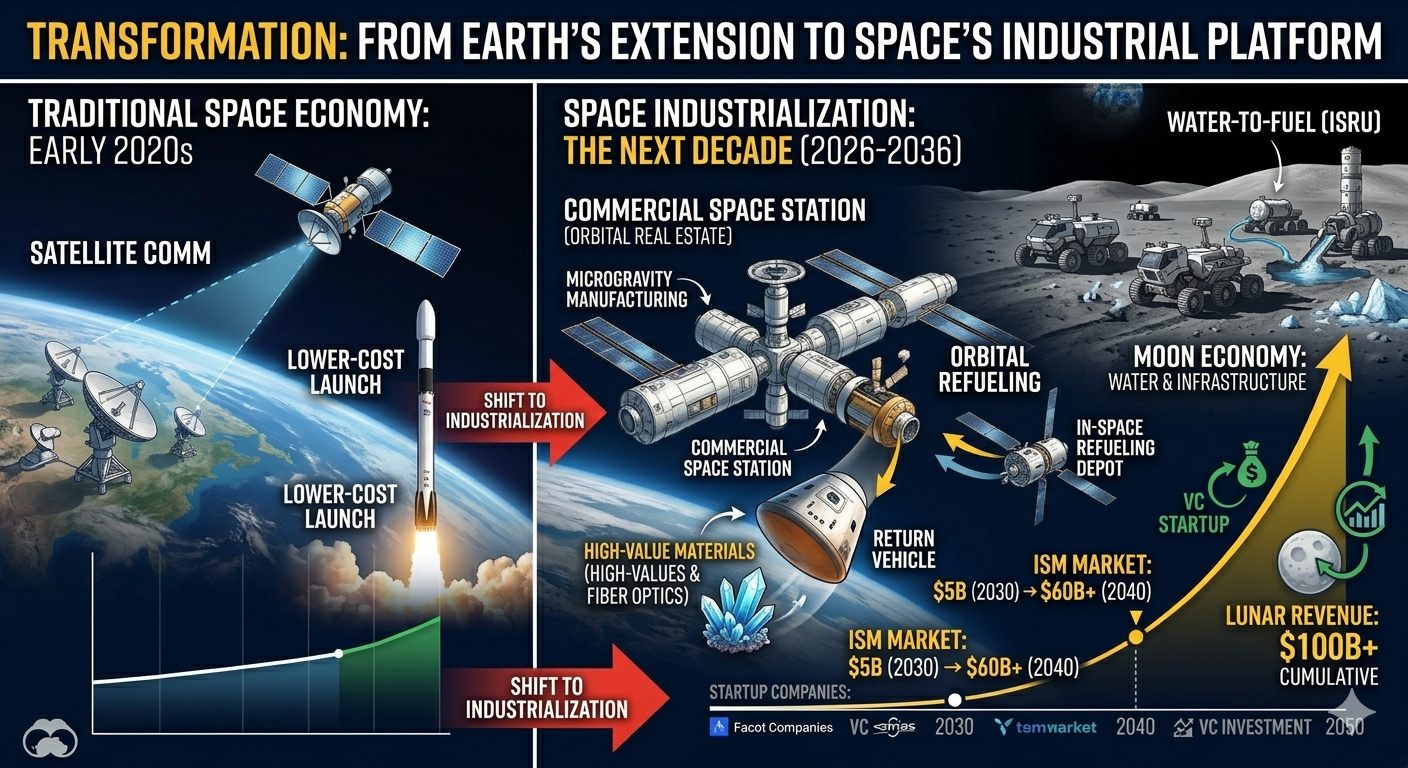
- 8 Megatrends in Space Startup Investing: From Earth Extension to Space Industrialization — The space-side investment themes where autonomous remote operations are the key enabler
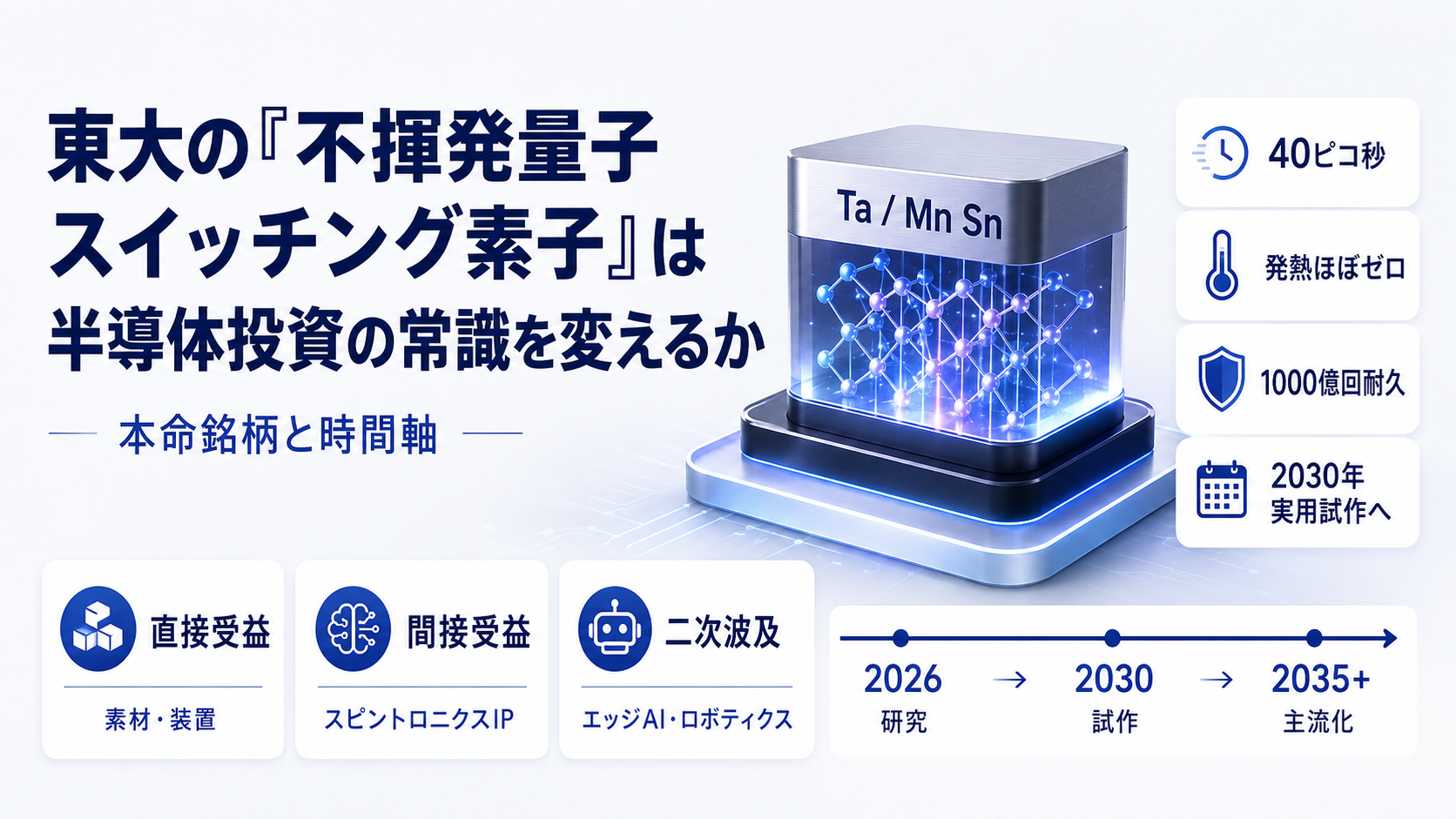
- Spintronics Investment Roadmap 2030: Equipment, Materials, and IP Before the UTokyo Device — The low-heat semiconductor timeline that underpins edge AI and robotics
References
The factual and numerical assumptions in this article are anchored to primary or public materials that readers can revisit during AdSense review and future updates.
- NVIDIA robotics and physical AI developer resources
- International Federation of Robotics statistics
- MIT Technology Review AI coverage
This article is for informational purposes only and does not constitute investment advice or a recommendation of any specific stock, service, or contract structure. The author may hold positions or interests related to companies or services mentioned. Generative AI was used for parts of research, translation, and proofreading, with final review by ZYL0. See the disclaimer for details.